pom cnc machining solutions are available with stable quality control, flexible manufacturing capacity, and responsive technical support. Contact us for drawings review and quotation.

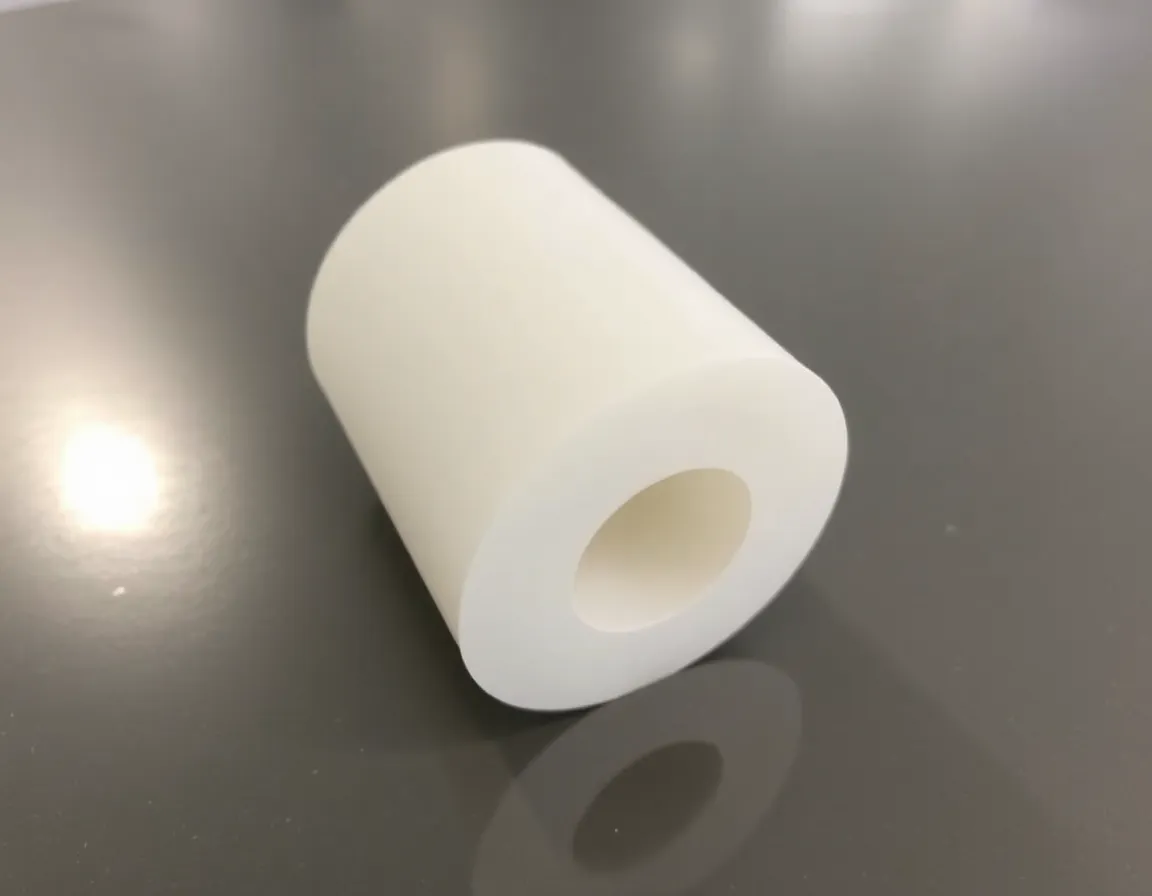
High-precision POM (Acetal/Delrin) CNC machining services. Get stable quality, fast prototypes, and custom plastic components. Submit your drawing for a quote. pom cnc machining
POM parts resist moisture absorption, ensuring consistent size and fit over time.
Self-lubricating material reduces wear, ideal for gears, bearings, and moving parts.
Machines to a smooth, clean finish with sharp edges and fine details directly.
High stiffness allows fast machining speeds, reducing production time and cost.
pom cnc machining solutions are available with stable quality control, flexible manufacturing capacity, and responsive technical support. Contact us for drawings review and quotation.
POM CNC machining is a precise manufacturing process that uses computer-controlled tools to cut and shape Polyoxymethylene (POM), commonly known as Delrin or acetal. This engineering plastic is renowned for its high stiffness, low friction, excellent dimensional stability, and good chemical resistance. The process is used to create high-precision components like gears, bushings, rollers, insulators, and intricate mechanical parts. POM CNC machining is ideal for applications requiring tight tolerances, smooth surfaces, and parts that need to operate with minimal lubrication in mechanical assemblies, medical devices, automotive systems, and consumer electronics.
The POM CNC machining process begins with a solid block or rod of POM plastic, which is securely clamped onto a CNC machine bed. A computer program (G-code), generated from a 3D CAD model, directs the machine's cutting tools—such as end mills, drills, and lathes—to remove material with high precision. The machining parameters, like spindle speed, feed rate, and depth of cut, are carefully optimized for POM to prevent overheating (which can cause melting) and to achieve a superior surface finish. Coolants or compressed air are often used to dissipate heat and clear chips. The result is a finished part that matches the digital design exactly, often requiring little to no post-processing.
Choosing POM for CNC machining offers several significant benefits. First, POM has exceptional dimensional stability and low moisture absorption, meaning parts maintain their shape and size reliably. Its natural lubricity and low coefficient of friction allow for smooth, wear-resistant moving parts without needing added lubricants. The material is also strong, rigid, and has good fatigue resistance, making it suitable for dynamic load-bearing components. Furthermore, POM machines beautifully, yielding clean edges and very smooth surfaces directly off the machine. These properties combine to produce durable, precise, and high-performance plastic components that are often a cost-effective alternative to metals like aluminum for specific non-conductive, low-friction applications.
While excellent for many applications, POM CNC machining has some limitations to consider. POM has poor resistance to strong acids and is not recommended for prolonged exposure to UV light without stabilization. A primary machining concern is its relatively low melting point; excessive heat from aggressive cutting can cause the material to melt or deform, requiring skilled machinists to use proper speeds and cooling. Additionally, POM is not suitable for high-temperature environments, typically performing best below 180°F (82°C). It also has limited adhesive bonding capabilities, often requiring mechanical fasteners or special surface treatments for assembly. Understanding these constraints ensures the material is selected appropriately for the part's end-use environment.
The pricing for custom POM CNC machined parts depends on part complexity, quantity, tolerances, and required finish. For prototypes or low volumes, unit costs are higher as they amortize programming and setup time. For higher quantities, the per-part cost decreases significantly. The ordering process typically involves: 1) Providing a 3D CAD file (e.g., STEP, IGES) of your design. 2) Discussing material specifications, tolerances, and post-processing needs (like deburring or tapping) with the machining service. 3) Receiving a quote based on machine time, material, and labor. 4) Approving the quote and lead time, after which the shop generates toolpaths and begins production. Many shops offer rapid prototyping with lead times of a few days, making POM CNC machining accessible for both development and production.
Our lab needed custom POM (Delrin) components for a fluidic device. The precision from their CNC mac
Great work on a complex POM gear assembly. The low friction and dimensional stability of the parts a
As a small inventor, I needed a prototype for a quiet, durable mechanism. I chose POM for its self-l
We ordered POM insulators for an electrical project. The machining quality is excellent, and the mat