Available PMMA (Acrylic) Grades
| Güteklasse |
Gängige Bezeichnung |
Hauptmerkmale |
Typische Anwendungen |
| Gegossenes Acrylglas |
Plexiglass / Lucite |
Highest optical clarity, lower internal stress, better chemical resistance. The preferred grade for machining. |
Optical lenses, medical manifolds, high-end display cases, awards. |
| Extrudiertes Acrylglas |
Standard PMMA |
More uniform thickness but higher internal stress. Lower melting point makes it “gummier” to machine. |
Signage, lighting fixtures, simple screens. |
| Impact Modified Acrylic |
Impact PMMA |
Blended with elastomers to improve toughness and reduce brittleness, slightly reducing clarity. |
Protective shields, skylights, outdoor displays. |
| Translucent/Tinted |
Colored Acrylic |
Available in various colors and opacities (smoked, frosted) for light diffusion. |
Automotive taillights, architectural lighting, privacy screens. |
PMMA Machining Capabilities
| Kapazität |
Technische Beschreibung |
Jucheng-Vorteil |
| Dampfpolieren |
Exposing the machined surface to solvent vapor to flow the material and create a crystal-clear finish. |
We achieve optical transparency on complex internal channels where hand polishing is impossible. |
| Diamond Turning |
Using single-crystal diamond tools on ultra-precision lathes to cut mirror finishes directly. |
Produces lens-quality surfaces without the need for extensive post-processing. |
| Micro-Milling |
Machining fine grooves and patterns for light guides and LCD backlights. |
High-speed spindles (20k+ RPM) ensure clean cuts on delicate features without chipping. |
| Stress Relieving |
Annealing acrylic parts in ovens to remove machining stresses. |
Prevents “crazing” (surface spider-web cracks) when the part is exposed to solvents or glues later. |
Fabrication Guidelines for PMMA
Coolant is Critical:
Acrylic is sensitive to heat buildup. If it gets too hot, it melts and re-welds behind the cutter. We use air blast or water-soluble coolants to keep chips cool and brittle for ejection.
Avoid Solvents:
Never clean machined acrylic with alcohol or standard solvents immediately after machining, as it will cause instant stress cracking. We use mild soap or specialized cleaners.
Workholding:
Acrylic is brittle and will crack if clamped too tightly. Vacuum tables are the best method for holding flat sheets. For vices, we use soft jaws with gentle pressure.
Drilling:
Standard drill bits can grab and crack acrylic upon exit. We use bits with a “dubbed” (flattened) cutting edge or specialized plastic drills with a 0-degree rake.
Wichtige Anwendungsbranchen
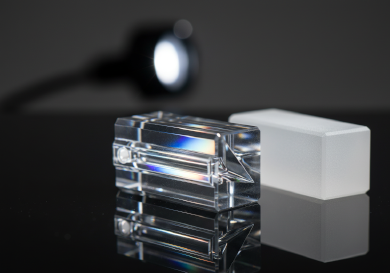
Lighting & Optics
Hauptteile: Light pipes, diffusers, lenses, reflectors.
Why PMMA: 92% light transmission and excellent UV resistance (doesn’t yellow like PC).
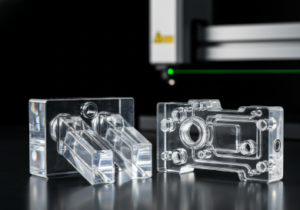
Medical & Diagnostics
Hauptteile: Microfluidic chips, incubator parts, fluid manifolds.
Why PMMA: Optical clarity allows for visual inspection of fluid flow; biocompatible grades available.
Displays & Signage
Hauptteile: POS display stands, museum cases, touch screen covers.
Why PMMA: Premium aesthetic look, high gloss, and easy to polish scratches out.
Subsea & Marine
Hauptteile: Submersible windows, aquarium panels, pressure housings.
Why PMMA: Massive cast blocks can withstand high pressure while maintaining perfect visibility.