
+86-188-7042-1176
project@jcproto.com
Mo-Fr: 8-18 Uhr (GMT+8)
EN
ISO 9001:2015 zertifiziert
Extrudiertes Acrylglas
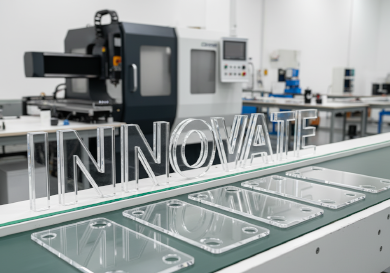
Extruded Acrylic (PMMA) is the industry standard for high-volume, cost-effective transparent components. While offering the same 92% light transmission as cast grades, extruded acrylic is distinguished by its exceptional thickness uniformity, making it the premier choice for display panels and signage that must fit into tight extrusions. At Jucheng Precision, we specialize in the high-speed CNC routing and drilling of extruded PMMA. Our optimized cutting strategies prevent the "gumming" or melting associated with lower-melting-point plastics, while our integrated flame polishing and solvent bonding services deliver clear, professional finishes for retail, electronic, and industrial display applications.
Acrylic (PMMA) Material Variants
| Güteklasse | Gängige Bezeichnung | Hauptmerkmale | Typische Anwendungen |
|---|---|---|---|
| Extrudiertes Acrylglas | Standard PMMA | Highly uniform thickness. Lower cost than cast acrylic. Ideal for large panels and automated machining. | Signage, display cases, lighting diffusers, front panels. |
| Gegossenes Acrylglas | Plexiglass / Lucite | Highest molecular weight and thermal stability. Best for complex 3D milling and optical lenses. | Microfluidic manifolds, high-end lenses, luxury goods. |
| Impact Modified PMMA | High-Impact Acrylic | Blended with elastomers to increase resistance to shattering and mechanical stress. | Machine guards, protective shields, outdoor displays. |
Extruded Acrylic Machining Capabilities
| Kapazität | Technische Beschreibung | Jucheng-Vorteil |
|---|---|---|
| High-Speed Automated Routing | Utilizing CNC routers to cut complex 2D shapes and panels from large extruded sheets with high efficiency. | Jucheng’s automated sheet-fed systems allow for rapid turnaround and extremely competitive unit pricing on high-volume panel orders. |
| Edge Flame Polishing | Using a precise hydrogen-oxygen flame to melt the machined edges, instantly restoring transparency. | Provides a fast and cost-effective way to achieve clear, professional edges on signage and display components. |
| Precision Panel Drilling | Drilling fastener and mounting holes with high positional accuracy across large format plates. | We use specialized “zero-chip” drill geometries to prevent the cracking or splintering common when drilling extruded PMMA. |
| In-House Adhesive Bonding | Using solvent-based cements to fuse machined acrylic sections into clean, robust assemblies. | We deliver high-quality, bubble-free joints for clear boxes, display cases, and specialized industrial enclosures. |
Fabrication Guidelines for Extruded Acrylic
Thickness Uniformity:
Extruded acrylic is manufactured to much tighter thickness tolerances than cast acrylic. Tipp: This makes it the superior choice for parts that must fit into precise slots or extrusions (e.g., display frames).
Heat Sensitivity Awareness:
Extruded PMMA has a lower melting point than cast grades. Tipp: We utilize high-speed spindles with very sharp tools to ensure heat is carried away by the chips, preventing the material from “gumming up” or melting on the tool.
Internal Stress & Crazing:
Extruded sheets contain more internal stress. Tipp: We recommend avoiding aggressive solvent cleaning or high-heat environments post-machining, as this can cause “crazing” (spider-web micro-cracking).
Directional Properties:
The extrusion process gives the material a slight grain direction. Tipp: For critical aesthetic parts, we maintain consistent sheet orientation across a batch to ensure uniform light transmission and reflection.
Hauptanwendungen
Advertising & Signage
Dimensional letters, backlit logos, and point-of-purchase (POP) displays where clarity and cost-effectiveness are key.
Elektronikgehäuse
Front panels for equipment, touch screen covers, and protective overlays requiring uniform thickness and high transparency.
Lighting & Fixtures
Diffusers, light guide plates (LGP), and architectural lighting covers that distribute light evenly.
Retail Displays
Clear shelves, product stands, and jewelry display cases that require a premium glass-like look without the fragility.
Eigenschaften
| Dichte | 1.19 g/cm³ |
| Zugfestigkeit | 65 - 72 MPa |
| Lichtdurchlässigkeit | 92% |
| Brechungsindex | 1.49 |
| Härte | 90 Rockwell M |
| Wärmeformbeständigkeitstemperatur | 85 - 95 °C |
| Dauereinsatztemperatur | 70 - 75 °C |
| Wasseraufnahme | 0.30% |
| Durchschlagfestigkeit | 20 kV/mm |
| Zerspanbarkeitsbewertung | Gut |
| Max. Teilegröße | 2000 x 800 x 600 mm |