
In the contemporary landscape of high-precision manufacturing, the demand for components with sub-micron tolerances and intricate geometries has never been higher. As industries like aerospace, medical device manufacturing, and micro-electronics push the boundaries of what is possible, traditional machining methods often fall short. This is where micro wire edm (Electrical Discharge Machining) emerges as a critical technology. By utilizing a thin wire as an electrode to erode material through controlled electrical sparks, this process allows for the creation of features that are virtually impossible to achieve through mechanical cutting. Whether you are looking for a small wire edm machine for a laboratory setting or a high-production small edm wire cutting machine for industrial use, understanding the technical nuances is essential for making an informed investment.
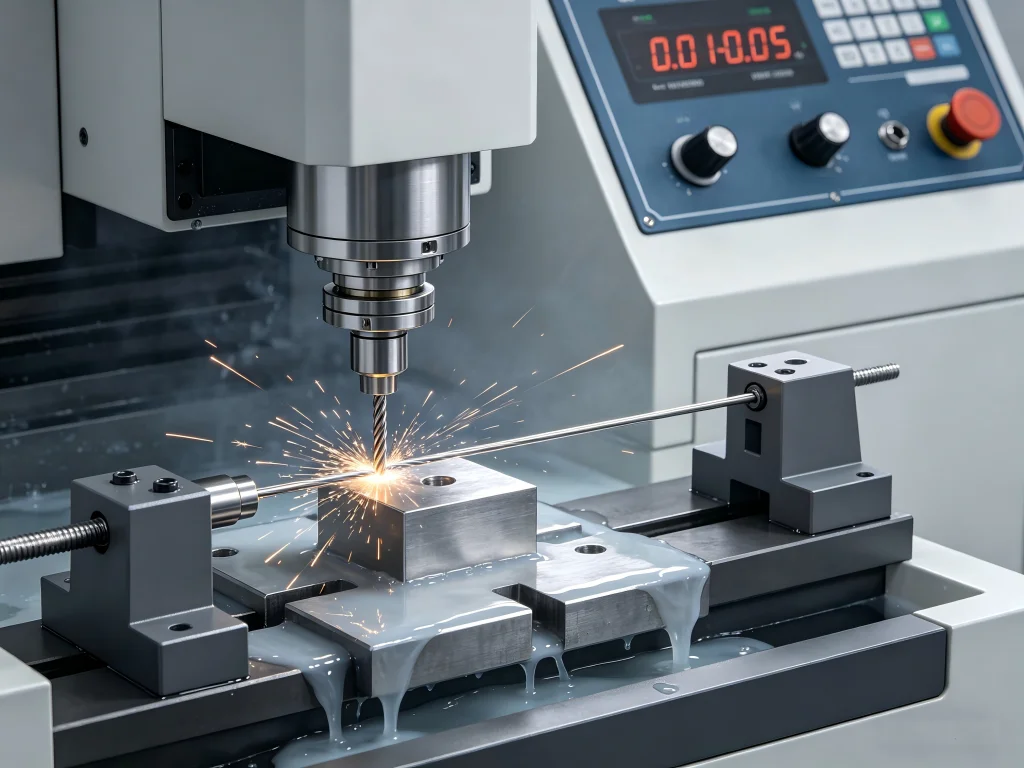
Understanding the Fundamentals of Micro Wire Electrical Discharge Machining
To appreciate the value of a micro wire edm machine, one must first understand the underlying physics of the process. Unlike milling or turning, which rely on physical force and tool hardness, micro wire electrical discharge machining is a thermal process. A thin wire, typically made of brass or tungsten and ranging from 0.02mm to 0.1mm in diameter, acts as the tool. A dielectric fluid, usually deionized water or oil, surrounds the wire and the workpiece. When a specific voltage is applied, a series of rapid electrical sparks occurs between the wire and the material, melting and vaporizing microscopic amounts of metal.
The “micro” aspect refers not just to the size of the machine, but to the precision of the spark control and the thinness of the wire used. On platforms like Reddit and various machining forums, professionals often discuss the “recast layer”—a thin layer of material that re-solidifies on the surface after the spark. In a high-quality micro wire cut process, this layer is minimized through advanced power supply units that deliver extremely short, high-frequency pulses. This level of control is what allows a small wire edm to achieve tolerances as tight as +/- 1 micron.
The Role of Dielectric Fluid and Wire Tension
In micro wire electrical discharge machining, the dielectric fluid serves three primary purposes: insulation, cooling, and flushing. It prevents the spark from triggering until the gap is perfectly bridged, cools the workpiece to prevent thermal distortion, and flushes away the “swarf” or eroded particles. For those researching a small wire edm machine for sale, the filtration system of the dielectric fluid is a vital specification. If the fluid is contaminated, the spark stability decreases, leading to wire breakage or poor surface finish. Furthermore, maintaining precise wire tension is crucial. Because the wire is so thin, even a slight fluctuation in tension could cause it to vibrate, which would compromise the geometric accuracy of the micro wire cut.
Core Application Scenarios for Micro Wire EDM
The versatility of micro wire edm makes it indispensable across several high-stakes sectors. While many consider it a niche technology, its footprint in modern supply chains is vast. For instance, in the medical industry, the production of stents and surgical tools requires the level of detail that only a small wire edm machine can provide. These components often involve complex lattice structures that would deform under the pressure of a physical cutting tool.
In the electronics sector, as devices become smaller and more powerful, the need for micro-connectors and lead frames has surged. A small wire edm is typically used to create the hardened steel molds required to mass-produce these parts. Similarly, the aerospace industry utilizes micro wire electrical discharge machining to create cooling holes in turbine blades and intricate fuel injection nozzles where high-temperature alloys, which are notoriously difficult to machine, are standard.
- Medical Devices: Production of biopsy needles, orthopedic implants, and cardiac rhythm management components.
- Aerospace & Defense: Machining of exotic alloys for engine components and micro-actuators for satellite systems.
- Tool & Die: Creating micro-cavities in injection molds and ultra-precise extrusion dies.
- Electronics: Manufacturing of high-density connectors, sensors, and micro-electromechanical systems (MEMS).
Key Factors to Consider When Selecting a Small Wire EDM Machine
When searching for a small wire edm machine price or evaluating different models, it is easy to get lost in the technical jargon. However, for a business owner or a production manager, the decision should be based on a balance of technical capability and long-term reliability. The first factor to consider is the minimum wire diameter the machine can handle. While many standard machines start at 0.1mm, a true micro wire edm machine should be capable of running 0.03mm or even 0.02mm wire to produce the tightest internal radii.
Another critical element is the CNC control system. Advanced software may offer “corner control” features that automatically adjust the cutting speed and spark energy when the wire approaches a sharp turn, preventing “washout” or rounding of the corner. Additionally, the availability of an Automatic Wire Threader (AWT) is a significant productivity booster. In micro-machining, where wire breakages can occur due to the fragile nature of the electrode, an efficient AWT can save hours of manual labor and downtime.
Comparison Table: Standard vs. Micro Wire EDM Capabilities
Minimum Feature Size~0.2mm~0.03mmCritical for micro-electronics and medical parts.
| Feature/Parameter | Standard Wire EDM | Micro Wire EDM | Impact on Quality |
|---|---|---|---|
| Wire Diameter Range | 0.15mm – 0.30mm | 0.02mm – 0.10mm | Allows for smaller internal radii and finer details. |
| Surface Finish (Ra) | 0.4 – 1.0 µm | < 0.1 µm | Reduces the need for secondary polishing. |
| Positioning Accuracy | +/- 3-5 µm | +/- 1 µm or better | Ensures extreme repeatability in complex assemblies. |
| Best Applied Materials | Steel, Aluminum, Brass | Carbide, Titanium, Nitinol, Inconel | Enables machining of hard and exotic alloys. |
Installation and Maintenance: Ensuring Long-Term Precision
Owning a small edm wire cutting machine is only half the battle; maintaining its precision is a continuous process. Because these machines operate at such high levels of accuracy, the environment in which they are installed is paramount. Ideally, a small wire edm should be placed in a temperature-controlled room. Thermal expansion of the machine casting or the workpiece itself may lead to deviations that exceed the required tolerances. Even a 2-degree Celsius shift can affect a 50mm workpiece by several microns.
Daily maintenance should focus on the “consumables” and the flushing system. The energizing plates (power feed contacts) must be rotated or replaced regularly to ensure consistent electrical conductivity. If the plates develop grooves, the micro wire cut will become unstable, leading to poor surface quality. Furthermore, the resin used in the deionization system must be monitored. If the conductivity of the water rises too high, the sparks will become uncontrollable, potentially damaging the part or the wire electrode.
- Temperature Control: Maintain a stable environment (typically 20°C +/- 0.5°C) to prevent thermal drift.
- Filter Replacement: Change dielectric filters based on the pressure gauges to ensure clean flushing.
- Wire Alignment: Perform regular verticality checks to ensure the wire is perfectly perpendicular to the worktable.
- Deionizing Resin: Monitor water conductivity levels to maintain the dielectric’s insulating properties.
Why Jucheng is Your Ideal Partner for Micro Wire EDM Solutions
When looking for a small wire edm machine for sale, the reputation of the manufacturer is just as important as the machine’s specs. Jucheng has established itself as a leader in the CNC field by focusing on the intersection of high technology and practical application. Our commitment to micro wire edm research and development has resulted in machines that are not only precise but also user-friendly and durable.
One of the core advantages of Jucheng is our vertical integration. We don’t just assemble machines; we understand the metallurgical requirements of the parts they produce. Our small edm wire cutting machine series features proprietary power supply technology that optimizes energy discharge for micro-scale work, significantly reducing the recast layer and improving the fatigue life of the finished components. Furthermore, Jucheng provides comprehensive training and after-sales support, ensuring that your team can maximize the potential of your micro wire cut operations from day one. Our machines are designed with a compact footprint, making them ideal for high-value workshops where space is at a premium but precision cannot be compromised.
Regarding small wire edm machine price, Jucheng offers a competitive value proposition. We believe that ultra-high precision should be accessible to specialized manufacturers and research institutions. By optimizing our manufacturing processes and sourcing high-quality components, we deliver machines that rival much more expensive European counterparts in performance and reliability. For more information on our capabilities, you might find external resources like Electrical Discharge Machining on Wikipedia or industry-leading journals helpful in understanding the broader context of this technology.
Frequently Asked Questions (FAQ) about Micro Wire EDM
1. What is the smallest wire diameter a micro wire edm can use?
Most high-end micro wire edm machine units can utilize wires as small as 0.02mm (20 microns). This allows for incredibly fine details and internal radii that are impossible to achieve with traditional 0.2mm or 0.25mm wires found on standard machines.
2. How does the small wire edm machine price compare to standard models?
While the initial small wire edm machine price may be higher than a standard model due to the specialized motion control and high-frequency power supplies, the ROI is found in the ability to produce high-value micro-components that cannot be made any other way. It is an investment in capability rather than just capacity.
3. Can micro wire edm cut through non-conductive materials?
Generally, micro wire electrical discharge machining requires the material to be electrically conductive. However, some advanced techniques involve using a conductive “starting” layer, though this is primarily for specialized research. Most applications involve metals like carbide, titanium, and steel.
4. Is a small wire edm machine difficult to maintain?
It requires more attention to detail than a standard CNC mill, but it is not necessarily “difficult.” The key is consistency in monitoring water quality, filter health, and wire tension. A small wire edm from a reputable provider like Jucheng includes automated sensors to help operators stay on top of maintenance tasks.
5. What surface finish can I expect from a micro wire cut?
With the right settings and high-frequency pulses, a micro wire cut can achieve a surface finish (Ra) of less than 0.1 µm. This is often described as a “mirror finish,” which is vital for medical implants where tissue adhesion or friction must be strictly controlled.
6. Why would I choose a small wire edm over a micro-milling machine?
Micro-milling is limited by tool strength; very small end mills break easily when cutting hard materials. micro wire edm is non-contact, meaning there is no mechanical force on the part. This allows you to cut very thin walls and deep slots in extremely hard materials like tungsten carbide without risk of tool breakage.
7. Is the small edm wire cutting machine suitable for mass production?
While EDM is generally slower than milling, a small edm wire cutting machine is excellent for “stack cutting.” You can layer multiple thin workpieces and cut them all at once with perfect uniformity, making it very efficient for small, flat components like gears or connectors.
Conclusion: The Future of Precision with Jucheng
The world of manufacturing is shrinking—not in scale, but in the size of the components that drive our most advanced technologies. Investing in micro wire edm is a strategic move for any shop looking to enter the high-precision market. By understanding the principles of micro wire electrical discharge machining and choosing a partner like Jucheng, you position your business at the forefront of technical excellence. Whether you are focused on the medical, aerospace, or electronic sector, the right small wire edm machine will allow you to solve the most complex geometry challenges with ease.
If you are ready to elevate your machining capabilities or have questions about small wire edm machine price and specifications, our team at Jucheng is here to help. Explore our range of solutions and discover how we can help you achieve sub-micron perfection in every cut.
Visit Jucheng Precision Machining to explore our latest micro wire edm solutions. Contact our engineering team today for a custom quote and technical consultation!