pmma cnc machining solutions are available with stable quality control, flexible manufacturing capacity, and responsive technical support. Contact us for drawings review and quotation.

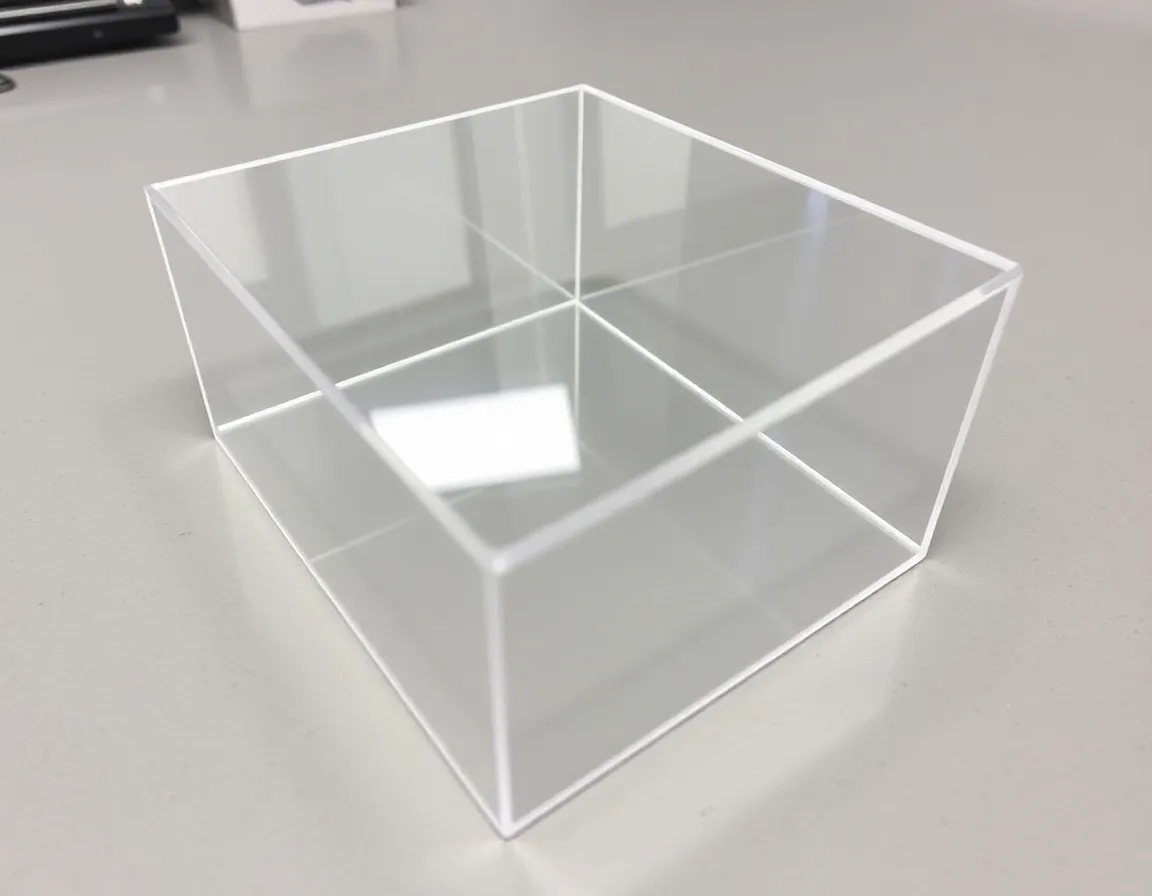
High-precision PMMA CNC machining for optical, prototype & custom plastic parts. Stable quality, fast quotes & expert technical support. Get your drawing reviewed.
CNC machining produces crystal-clear parts with excellent surface finishes, ready for optical applications.
Achieves tight tolerances and intricate designs impossible with standard molding or manual methods.
Ideal for rapid prototypes and small batches without expensive tooling, speeding time-to-market.
Machined PMMA parts maintain durability and appearance when exposed to elements and chemicals.
pmma cnc machining solutions are available with stable quality control, flexible manufacturing capacity, and responsive technical support. Contact us for drawings review and quotation.
PMMA CNC machining is a precise manufacturing process that uses computer-controlled (CNC) routers, mills, or lathes to cut, drill, and shape Polymethyl Methacrylate, commonly known as acrylic or by trade names like Plexiglas. It is a subtractive process where a solid sheet or block of PMMA is carved into a final part based on a digital design. This technique is extensively used to create high-clarity, durable components for a wide range of industries. Common applications include optical lenses and light guides, transparent machine guards, architectural signage and displays, medical device components, and intricate prototypes where visual appeal and dimensional accuracy are critical.
The process begins with a CAD (Computer-Aided Design) model of the desired part. This digital file is translated into machine instructions (G-code) using CAM (Computer-Aided Manufacturing) software. A solid sheet or block of PMMA material is then securely clamped to the CNC machine's bed. The machine uses specialized cutting tools, such as end mills and drills, which rotate at high speeds to precisely remove material. For optimal results with PMMA, parameters like spindle speed, feed rate, and toolpath strategy are carefully controlled to achieve a smooth edge finish and prevent melting or chipping. Coolants or compressed air are often used to manage heat and clear chips. After machining, parts typically undergo secondary finishing processes like flame polishing or sanding to enhance optical clarity.
CNC machining offers several distinct advantages for fabricating PMMA components. First, it provides exceptional precision and repeatability, allowing for tight tolerances and complex geometries that are difficult with other methods like laser cutting (which can create a tapered edge). Second, it produces parts with excellent optical clarity and smooth surface finishes directly from the machine, especially when proper tooling and techniques are used. Third, it is a highly versatile and rapid process suitable for both one-off prototypes and medium-volume production runs without the need for expensive molds. Finally, CNC machining maintains the inherent benefits of PMMA material itself, such as high impact resistance (compared to glass), excellent weatherability, and superb light transmission properties.
A primary concern is the potential for melting, chipping, or achieving a rough, cloudy surface finish due to PMMA's thermoplastic nature. This is addressed by using sharp, specialized (often single or double-flute) carbide tools, optimizing cutting speeds and feed rates to manage heat, and employing effective chip evacuation with air blasts. Another challenge is securing the material without causing stress marks or cracks; non-marring clamps and custom vacuum fixtures are common solutions. To achieve crystal-clear edges, post-processing is almost always required. Techniques like flame polishing, which melts the edge to a glass-like finish, or meticulous sanding and buffing with progressively finer grits, are standard practices to restore optical clarity after machining.
The cost and timeline for PMMA CNC machining depend on several key factors. Part complexity is a major driver; intricate designs with tight tolerances, deep pockets, or thin walls require more programming time, slower machining speeds, and potentially multiple setups, increasing cost. The size and quantity of parts also directly impact material costs and machine time. Secondary finishing requirements, such as flame polishing or protective film application, add both time and expense. Finally, the overall workflow—from design file preparation and proofing to machine scheduling and quality inspection—influences lead time. For simple parts, turnaround can be a few days, while complex projects may take weeks. Providing a clear, ready-to-machine CAD file is the best way to get an accurate quote and minimize delays.
Our lab needed custom PMMA microfluidic chips with extremely tight tolerances. The CNC machining ser
Great experience overall. The PMMA parts for our display stands were machined beautifully with a fan
I was skeptical about finding a shop that could handle the complex 3D contours for my art installati
Solid job on a batch of PMMA protective covers. The machining was precise and the anodized aluminum