
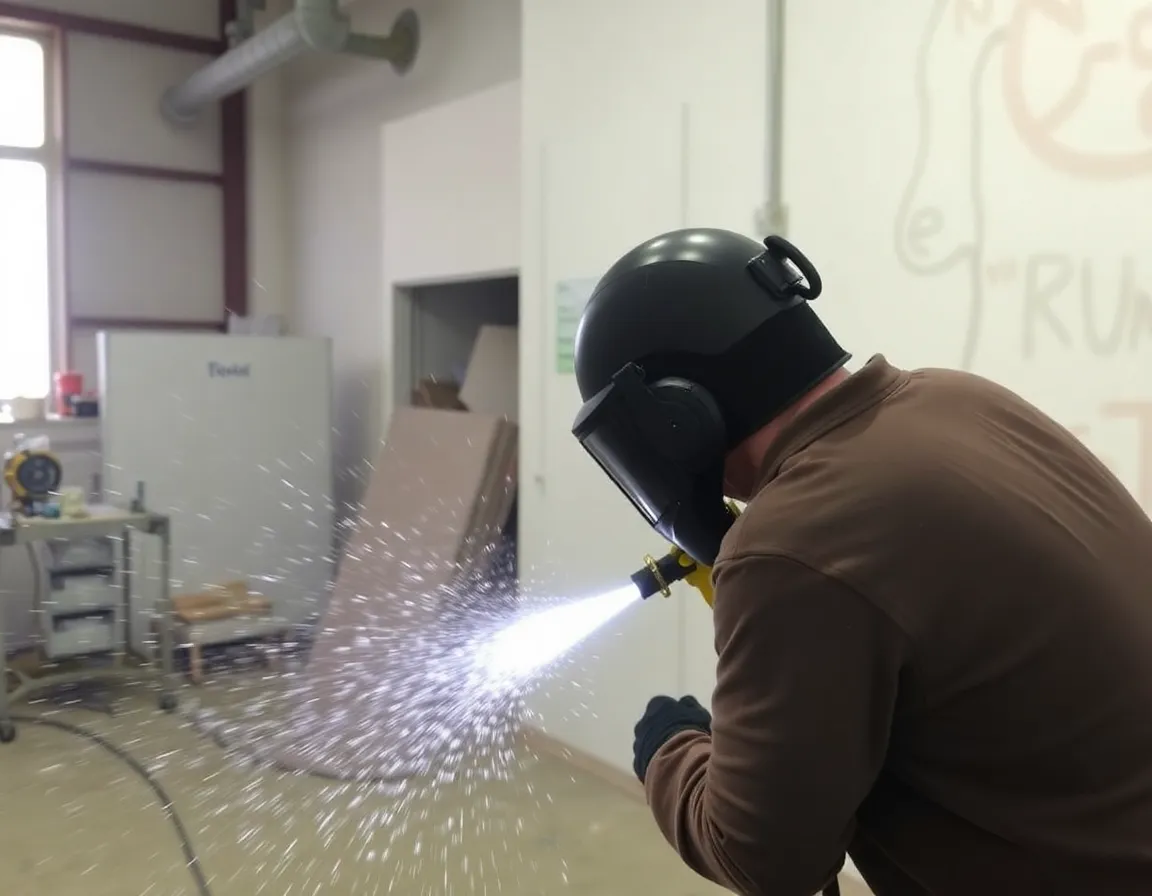
비드 블라스팅이란? 섬세한 복원의 과학
빈티지 자동차부터 항공우주 기술에 이르기까지 금속 부품이 모든 것의 중추를 이루는 세상에서, 부품의 무결성과 외관을 유지하는 것은 무엇보다 중요합니다. 다양한 표면 처리 기술 중에서 비드 블라스팅은 놀랍도록 효과적이고 다재다능하며 비파괴적인 공정으로 두드러집니다. 핵심적으로 비드 블라스팅은 미세한 구형 매체—일반적으로 유리 비드—를 고압으로 분사하여 금속 표면을 세척, 마감 또는 준비하는 연마 블라스팅의 한 형태입니다. 샌드블라스팅과 같은 더 강력한 방법과 달리, 비드 블라스팅은 기재를 손상시키지 않으면서 오염 물질과 결함을 제거하도록 설계된 더 부드러운 공정입니다. 그 결과는 균일하고 새틴처럼 매끄러운 무광 마감으로, 전문적으로 보일 뿐만 아니라 페인팅, 파우더 코팅 또는 아노다이징과 같은 후속 처리에 이상적인 표면을 만듭니다.
비드 블라스팅의 탁월함은 힘과 정밀함의 균형에 있습니다. 녹, 스케일, 오래된 페인트, 탄소 침전물 및 표면 부식을 효과적으로 제거하는 동시에 표면을 피닝(peening)합니다. 둥근 비드의 충격으로 인한 이 피닝 작용은 실제로 금속의 최상층을 가공 경화시켜 피로 저항성을 향상시킬 수 있습니다. 이는 변경 없이 복원하는 것이 목표일 때, 중요한 공차와 부품의 원래 특성을 보존하는 최적의 솔루션입니다.
비드 블라스팅의 작동 원리: 단계별 분석
비드 블라스팅 공정은 물리학과 공학의 통제된 적용입니다. 그 메커니즘을 이해하면 섬세한 복원 작업에 왜 이렇게 효과적인지 알 수 있습니다.
장비 및 매체
The process is performed inside a specialized blast cabinet or room. Key equipment includes a blasting gun, a media delivery system (a pressure pot or suction system), and a recovery system to separate used media from debris for potential recycling. The star of the show is the blasting media itself. While glass beads are the most common, the choice of media is critical and can be tailored to the job:
- Glass Beads: The standard choice, made from lead-free soda-lime glass. They produce a clean, bright, satin finish and are excellent for general-purpose cleaning and finishing.
- Ceramic Beads: Harder and more durable than glass, they are used for more aggressive cleaning or for achieving a specific surface profile on harder metals.
- Plastic Media: Softer still, used for ultra-gentle cleaning of sensitive components like aluminum aircraft parts or electronic casings without dimensional change.
- Stainless Steel Shot: Used for heavy-duty deburring, peening, and creating a more textured surface profile.
The Blasting Process
The operator directs a stream of compressed air mixed with the chosen beads onto the target surface. The velocity, angle, and distance of the blast gun are carefully controlled. The spherical beads impact the surface, fracturing upon contact. This micro-fracturing is what does the work: the sharp edges of the broken beads act like tiny scrapers, scouring away contaminants, while the impact of the whole beads knocks off larger particles. The spent media and dislodged contaminants are then vacuumed away, leaving an impeccably clean and textured surface. The size of the beads (measured in mesh) directly influences the final finish—finer beads create a smoother texture, while coarser beads produce a more pronounced matte finish.
The Multifaceted Benefits of Bead Blasting Services
Choosing professional bead blasting services offers a compelling array of advantages over manual cleaning methods or more aggressive blasting techniques.
- Non-Destructive Cleaning: This is its hallmark benefit. Bead blasting removes unwanted materials without etching, warping, or changing the dimensions of the base metal. This is crucial for engine components, machined parts, and delicate tools.
- Superior Surface Preparation: It creates a perfectly clean and uniformly textured "anchor profile." This dramatically improves the adhesion and longevity of paints, coatings, and adhesives, preventing premature failure like peeling or flaking.
- Enhanced Aesthetics: The process yields a consistent, attractive matte or satin finish that is highly sought after for consumer products, architectural metalwork, and automotive parts. It can also blend in minor scratches and tool marks.
- Stress Relief and Peening: The bombardment of the surface induces compressive stresses, which can help to minimize metal fatigue and improve resistance to cracking—a process known as shot peening when done intentionally for this purpose.
- Versatility and Efficiency: Bead blasting is effective on a wide range of metals, including aluminum, steel, brass, copper, and titanium. It is also significantly faster and more thorough than hand-sanding or chemical stripping, especially for complex geometries.
- Environmentally Friendlier Option: Compared to chemical stripping, it generates no toxic sludge or hazardous fumes. Modern systems often recycle and reuse the blasting media multiple times, reducing waste.
Key Applications Across Industries
The utility of bead blasting extends far beyond the automotive restoration shop. It is a critical process in numerous sectors where performance, safety, and appearance intersect.
Automotive and Motorcycle Restoration
From engine blocks and cylinder heads to carburetors, wheels, and intake manifolds, bead blasting is the preferred method for bringing old, greasy, and corroded parts back to a "like-new" condition. It meticulously cleans intricate cooling fins and internal passages without damage, providing the perfect canvas for rebuilding.
Aerospace and Precision Manufacturing
In these high-stakes industries, component integrity is non-negotiable. Bead blasting is used to remove oxidation from aluminum airframe parts, clean turbine components, prepare surfaces for thermal spray coatings, and deburr precision-machined parts without altering critical tolerances.
Tool and Die Maintenance
Molds, dies, and industrial tools accumulate residue, light rust, and carbon scoring. Bead blasting cleans them thoroughly, helping to prevent product defects and extending the tool's service life. It can also be used to create specific surface textures on molds for plastic injection or die-casting.
Architectural and Fabrication
Metal fabricators use bead blasting to prepare welds, remove heat tint (the rainbow discoloration from welding), and create a uniform finish on stainless steel railings, sculptures, and building facades before final passivation or coating.
Marine and Industrial Equipment
Saltwater exposure is brutal on metal. Bead blasting is essential for removing corrosion from boat fittings, propellers, and offshore hardware. Similarly, it cleans heavy machinery parts, valves, and pumps contaminated with industrial deposits.
Best Practices and Considerations for Optimal Results
To fully leverage the power of bead blasting, certain best practices must be followed, whether you're a DIY enthusiast or partnering with a professional service provider.
Choosing the Right Service Provider
Not all blasting is created equal. Look for a service with experience in your specific application. They should have a range of media types and sizes, modern dust collection and media recycling systems, and the ability to handle the size and volume of your parts. Ask about their process for masking critical areas (like threaded holes or bearing surfaces) to protect them.
Proper Part Preparation and Post-Blast Care
Before blasting, parts should be degreased to prevent embedding oils into the surface. After blasting, the newly cleaned metal is highly active and can begin to oxidize (flash rust) quickly. Immediate follow-up is crucial. The part should be handled with clean gloves, and a protective coating—such as a primer, oil, or dedicated metal protectant—should be applied as soon as possible to lock in the clean surface.
Understanding Limitations
While exceptional, bead blasting is not a cure-all. It may not remove deep pitting caused by severe corrosion; such parts might require welding or filling after blasting. It is also not typically used for heavy paint stripping on large surfaces, where other methods may be more cost-effective. A professional can advise if bead blasting is the optimal solution for your project.
In conclusion, bead blasting services represent the intersection of art and industrial science. It is a transformative process that breathes new life into worn metal, not by adding material, but by expertly and gently removing everything that doesn't belong. For anyone seeking to restore functionality, enhance durability, and achieve a flawless finish on metal components, bead blasting is an indispensable tool. By understanding its principles, benefits, and applications, you can make an informed decision to utilize this powerful technique and restore your metal surfaces to a state that is, truly, like new.