
서론: 5052 알루미늄 가공의 이해
가혹한 환경을 견디고, 균열 없이 구부러지며, 여전히 정밀하게 가공될 수 있는 부품이 필요할 때, 여러분은 곧 5052 알루미늄과 같은 소재를 마주하게 됩니다. 이 합금은 제조 분야에서 독특하고 때로는 오해받는 위치에 있습니다. 뛰어난 내식성과 성형성으로 칭송받지만, 가공성에 대한 경고가 따르곤 합니다. 이는 엔지니어와 기계 가공자에게 흔한 딜레마를 만듭니다: 이러한 트레이드오프가 가치가 있는가? 답은 확실히 그렇습니다. 하지만 중요한 단서가 있습니다—성공에는 특정한 접근 방식이 필요합니다. 이 가이드는 혼란을 걷어내고 명확하고 실용적인 이해를 제공합니다 5052 알루미늄 가공. 우리는 이 합금을 다르게 만드는 요소, 절삭 공구 아래에서 왜 그렇게 거동하는지, 그리고 그 특성을 활용해 고품질의 내구성 있는 부품을 생산하는 방법을 탐구할 것입니다. 해양 부품을 시제작하든 자동차 애플리케이션을 위한 양산 설계를 하든, 5052를 숙달하면 내구성이 타협 불가한 가능성의 세계가 열립니다.
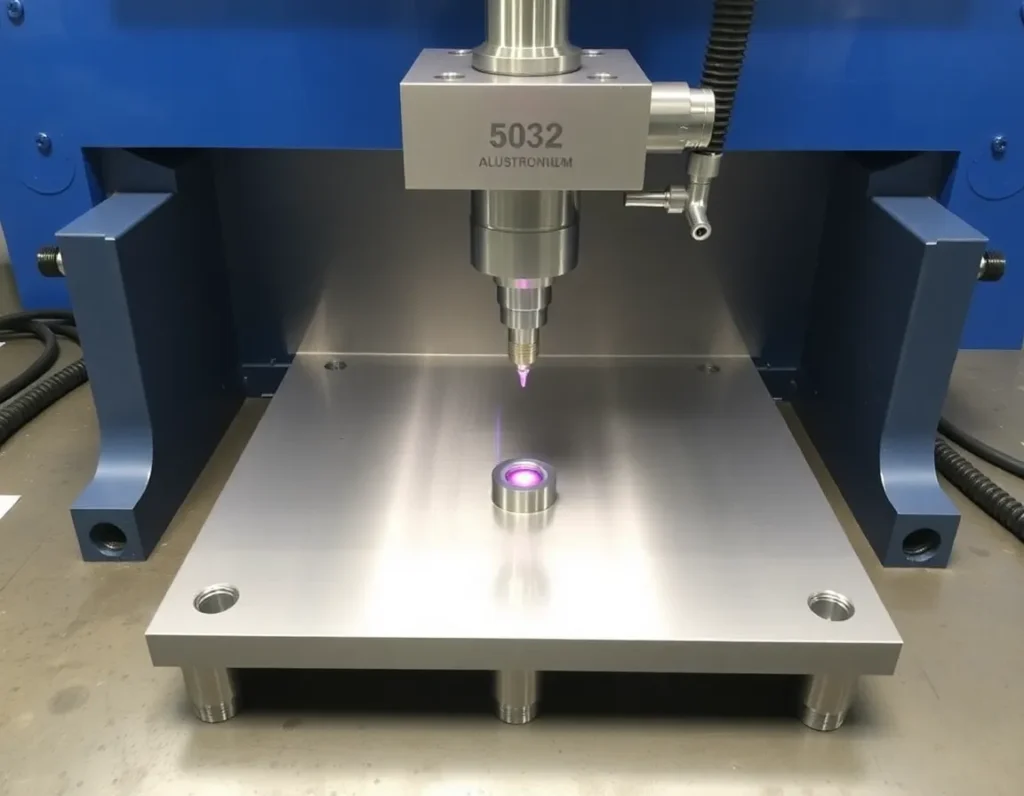
5052 알루미늄이란? 조성, 특성 및 일반적인 형태
핵심적으로 5052 알루미늄은 강도, 가공성 및 내성의 균형으로 정의되는 합금입니다. 그 기본 구성을 이해하는 것이 효과적으로 가공하는 첫걸음입니다.
화학 조성 및 합금 설계 철학
5052는 주로 마그네슘으로 합금된 5xxx 계열 알루미늄 합금에 속합니다. 이는 마그네슘과 규소를 사용하는 더 흔한 6xxx 계열(예: 6061)과의 중요한 차이점입니다. 일반적인 5052 조성은 약 97.2% 알루미늄, 2.5% 마그네슘, 0.25% 크롬입니다. 구리와 규소가 유의미한 양으로 존재하지 않는 것이 성능 프로파일의 핵심입니다. 구리는 강도를 높이지만 내식성을 급격히 떨어뜨립니다. 마그네슘 함량은 고용체 강화를 제공하여 열처리 없이도 5052에 양호한 강도를 부여합니다. 이로 인해 5052는 “비열처리성” 또는 “변형 경화성” 합금이 됩니다. 즉, 강도는 열처리가 아닌 기계적 가공(압연 또는 굽힘 등)을 통해 증가합니다.
주요 소재 특성
특정 조성은 응용 분야와 가공 거동을 결정하는 일련의 특성을 만들어냅니다:
- 뛰어난 내식성: 특히 해수에 대해 우수하여 해양 및 해안 응용 분야의 최고 선택입니다. 구리가 없다는 점이 이러한 탁월한 성능의 주된 이유입니다.
- 높은 피로 강도: 다른 많은 알루미늄 합금보다 반복 하중과 응력 사이클을 더 잘 견딜 수 있어 연료 탱크, 차량 패널, 보트 선체와 같은 부품에 매우 유용합니다.
- 우수한 성형성 및 연성: 특히 어닐링(O) 상태에서 뛰어난 가공성을 가집니다. 균열 없이 깊게 드로잉, 절곡, 스탬핑이 가능하여 판금 제작에 자주 사용됩니다.
- 중간 정도의 정적 강도: 일반적인 인장 강도 범위는 210-290 MPa(6061-T6의 310 MPa와 비교)로, 많은 구조용 응용 분야에 적합한 강도를 제공하지만, 사용 가능한 알루미늄 합금 중 가장 강한 것은 아닙니다.
- 우수한 용접성: MIG 및 TIG와 같은 일반적인 기술로 쉽게 용접할 수 있지만, 특정 상황에서는 균열을 방지하기 위해 주의가 필요합니다.
일반적인 템퍼 및 형태
5052는 거의 항상 가공 경화된 템퍼로 공급됩니다. 가장 일반적인 것은 H32로, 가공 경화 후 부분 연화 상태로 안정화되었음을 나타냅니다. 다음과 같은 형태로 널리 구할 수 있습니다:
- 시트 및 플레이트: 얇은 게이지(프로토타입에는 16게이지가 일반적)부터 두꺼운 플레이트까지, 절곡 및 성형에 이상적입니다.
- 코일 및 스트립: 대량 스탬핑 및 성형 작업용.
- 바 및 와이어: 6061보다 덜 일반적이지만, 특정 기계 가공 및 패스너 응용 분야에 사용 가능합니다.
시트 형태로의 이러한 공급 가능성과 성형성 덕분에, 절곡 형상과 기계 가공 세부 사항이 모두 필요한 작업에 이 재료가 자주 사용됩니다. 기계 가공자가 다른 재료를 예상했더라도 말입니다.
5052 vs. 6061 Aluminum: A Machinability and Application Showdown
The choice between 5052 and 6061 is one of the most frequent and consequential decisions in aluminum fabrication. They serve different masters, and selecting the wrong one can lead to manufacturing headaches or part failure.
| 특징 | 5052 알루미늄 | 6061 Aluminum (T6 Temper) |
|---|---|---|
| Primary Alloying | Magnesium (Mg) | Magnesium & Silicon (Mg & Si) |
| Strengthening Method | Strain-Hardened (Non-heat-treatable) | Heat-Treated & Precipitation Hardened |
| Typical Tensile Strength | 210 – 290 MPa | ≥ 310 MPa |
| 내식성 | 우수, especially in marine environments | Good, but lower than 5052; may require coating |
| Formability / Bendability | 우수; can be bent to tight radii with minimal risk of cracking | Good, but more prone to cracking on tight bends, especially across the grain |
| Machinability | Fair to Poor; tends to be gummy, leading to built-up edge and poor surface finish | 우수; produces clean chips and good surface finishes easily |
| 용접성 | Very Good | Good (requires specific filler wire) |
| 아노다이징 품질 | Good, produces a clean, uniform finish | Excellent, the benchmark for architectural and decorative anodizing |
| Cost | Generally comparable, can vary by form and market | Generally comparable, can vary by form and market |
Application-Based Decision Guide
Choosing between them isn’t about which is “better,” but which is better for the job.
- Choose 5052 when: The application demands maximum corrosion resistance (marine hardware, chemical tanks, offshore components). The part requires extensive forming, deep drawing, or tight bending (enclosures, chassis, ductwork). You need high fatigue strength in a corrosive environment. Weldability and formability are higher priorities than heavy machining.
- Choose 6061-T6 when: The design requires significant machining with tight tolerances and a fine surface finish (brackets, gears, precision fittings). Higher static strength is the primary concern. The part will be architecturally anodized for appearance. The component is structural but not in a continuously corrosive setting.
In practice, this is why a shop might receive 5052 for a prototype part that needs a bent flange and some drilled holes, while a complex, multi-axis machined bracket would almost exclusively be made from 6061. As one source bluntly put it, “5052 is not a good choice for milling,” but that’s only half the story if the part’s primary function depends on its other superior properties.
The Core Challenge: Why Machining 5052 Aluminum is Considered Difficult
So, why does 5052 have a reputation for being troublesome in the machine shop? The difficulty isn’t about hardness—it’s about stickiness. The very properties that make it excellent for forming make it suboptimal for cutting.
The “Gummy” Nature and Built-Up Edge (BUE)
The primary culprit is its ductility and relatively low silicon content. Silicon in alloys like 6061 acts like tiny, hard particles that help break up the chip as it forms, leading to small, clean “C-shaped” chips. 5052, with its high magnesium content, lacks these particles. During cutting, the material deforms plastically and adheres to the cutting tool’s edge instead of cleanly shearing away. This forms a built-up edge—a small, unstable mass of welded workpiece material on the tool’s cutting face. This BUE effectively changes the tool’s geometry, increasing cutting forces, generating more heat, and tearing at the workpiece surface instead of cutting it. The result is a poor, often ragged surface finish and accelerated tool wear.
Chip Evacuation Problems
Instead of breaking into manageable chips, 5052 tends to form long, stringy, continuous swarf. These ribbons can wrap around the tool holder, spindle, or workpiece, creating a significant safety hazard and potentially damaging the part or machine. This makes effective chip clearing—through air blast, flood coolant, or programmed chip-breaking moves—not just a suggestion but an absolute necessity.
Work Hardening During Machining
As a strain-hardenable alloy, 5052 becomes harder and stronger where it is deformed. If a cutting tool rubs instead of cuts (due to dullness, improper feeds and speeds, or a large built-up edge), it plastically deforms the surface without removing material. This work-hardens a thin layer, making the next pass even more difficult and increasing the likelihood of tool deflection and poor dimensional accuracy. It creates a vicious cycle of rubbing, hardening, and accelerated failure.
Contrast with “Free-Machining” Alloys
This is the inverse of the experience with 6061. Machinists describe 6061 as “buttery” and “forgiving”; it shears predictably, produces lovely chips, and leaves a good finish even with less-than-optimal parameters. 5052 demands respect and specific strategies. It’s not impossible—as one experienced machinist noted, it’s “soft but still machineable,” especially compared to pure grades like 1050, which is “basically impossible.” The challenge is real but manageable with the right knowledge, transforming a difficult material into a viable and often essential choice for the right application.