
In the contemporary landscape of high-precision manufacturing, the demand for intricate, miniature components has reached unprecedented levels. Whether it is a life-saving surgical implant or a critical aerospace connector, the margin for error is virtually non-existent. This is where cnc swiss machining emerges as the gold standard. Originally developed for the Swiss watchmaking industry, this specialized manufacturing process has evolved into a powerhouse for high-volume production of complex parts. At Jucheng, we recognize that understanding the nuances of this technology is vital for engineers and procurement specialists who require uncompromising quality. This comprehensive guide explores everything from the core mechanics of Swiss lathes to selecting the right service provider, ensuring your next project benefits from the pinnacle of machining precision.
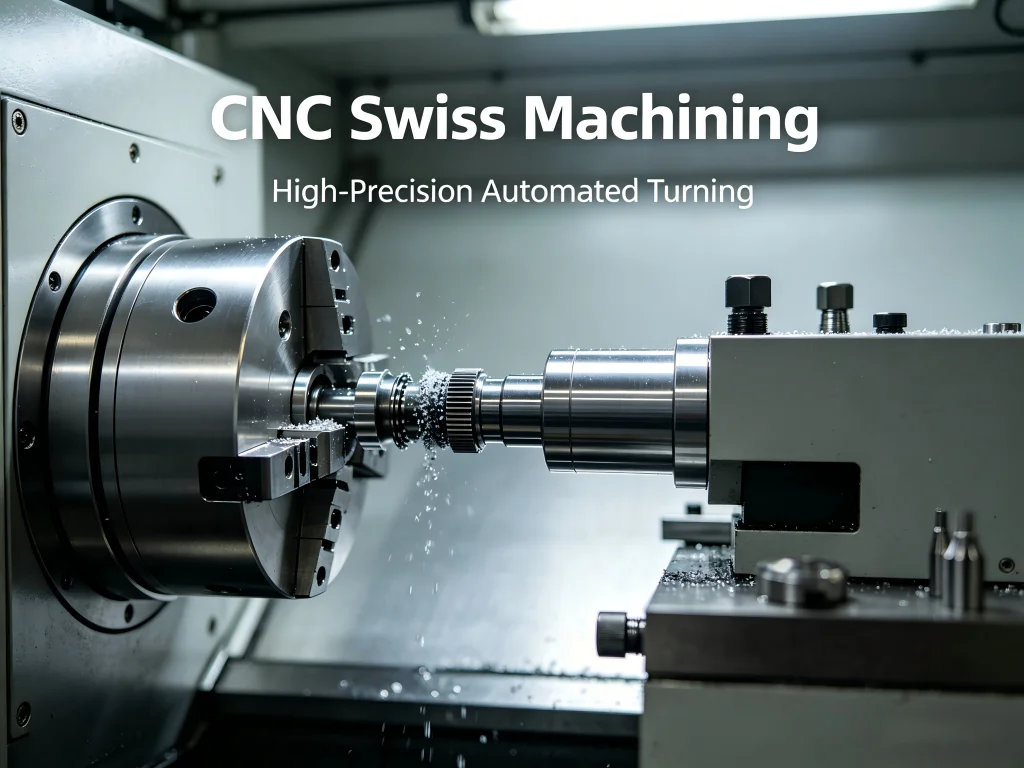
Understanding the Core: What is CNC Swiss Machining?
To the uninitiated, a Swiss-style lathe might look similar to a traditional CNC lathe, but the internal mechanics tell a different story. The fundamental difference lies in how the workpiece is supported. In conventional machining, the part rotates while the tool moves. However, as the part gets longer and thinner, it begins to deflect under the pressure of the cutting tool, leading to inaccuracies.
Cnc swiss machining solves this through a sliding headstock and a guide bushing. The material (bar stock) is fed through the guide bushing, and the cutting tool performs its work mere millimeters from the support point. Because the cutting action occurs right at the bushing, the deflection is nearly eliminated. This allows for the production of extremely long, thin parts with tolerances that could reach +/- 0.0002 inches. This mechanical advantage is why many cnc swiss machine shops are the primary choice for complex geometries that traditional lathes simply cannot handle.
The Kinematics: CNC Swiss Machine X, Y, and Z Axes
The complexity of a cnc swiss machine x y and z movement is a marvel of engineering. While a basic lathe might only operate on two axes, a modern Swiss machine often features 7 to 13 axes. The Z-axis typically represents the movement of the headstock, feeding the material through the guide bushing. The X and Y axes control the tool positions on the gang plate. Advanced machines also incorporate sub-spindles and live tooling, allowing for simultaneous machining on both ends of a part. This multi-axis capability means that a part which might have required three separate setups on different machines can now be completed in a single cycle, significantly reducing lead times and human error.
응용 분야의 다재다능한 세계: 정밀함이 목적을 만나는 곳
의 적용은 CNC 스위스 가공 서비스 실패가 용납되지 않는 산업 전반에 걸쳐 있습니다. 이 공정은 작고 복잡한 부품에 최적화되어 있기 때문에 여러 첨단 분야에서 필수적인 공정이 되었습니다.
- 의료 및 치과: 골 나사와 척추 임플란트부터 치과 포스트와 수술 기구에 이르기까지. 이러한 부품은 종종 티타늄과 같은 생체 적합성 소재를 필요로 하며 박테리아 성장을 방지하기 위해 결함 없는 표면 마감을 갖추어야 합니다.
- 항공우주 및 방위: 소형 연료 분사 부품, 센서 및 전기 커넥터. 항공우주의 높은 진동 환경은 스위스 가공 부품만이 제공할 수 있는 구조적 무결성을 요구합니다.
- 전자 및 통신: 기기가 소형화됨에 따라 초소형 핀, 하우징 및 커넥터의 필요성이 커지고 있습니다. 스위스 가공은 수백만 개의 동일한 부품에 필요한 반복 정밀도를 제공합니다.
- 자동차: 고압 연료 시스템과 센서 하우징은 차량 안전과 효율성을 유지하기 위해 cnc swiss machining 의 엄격한 공차에 의존합니다.
제조 엔지니어들 사이의 Reddit 토론에서는 부품의 길이 대 직경 비율이 3:1보다 클 때 스위스 가공이 유일하게 실행 가능한 경제적 해결책이 된다는 점을 종종 강조합니다. 이러한 의견은 CNC 작업에 초점을 맞춘 전문 Facebook 그룹 전반에서도 공감을 얻고 있으며, 전문가들은 복잡한 초소형 부품을 위한 “스위스 이점”에 대해 논의합니다.
비교: 스위스 가공 vs. 기존 CNC 선반
올바른 공정을 선택하는 것은 부품 형상, 생산량 및 예산의 균형을 맞추는 문제입니다. 다음 표는 언제 내 근처 CNC 스위스 가공.
| 특징 | Conventional CNC Lathe | CNC Swiss Machining |
|---|---|---|
| Support Mechanism | Fixed headstock, part may deflect. | Sliding headstock with guide bushing. |
| Best Part Diameter | Typically > 1.25 inches. | Typically < 1.25 inches (Micro-parts). |
| Length-to-Diameter Ratio | Lower ratios (max 3:1 without support). | High ratios (up to 20:1 or more). |
| Cycle Time | Slower for complex, long parts. | Highly efficient for simultaneous operations. |
| Setup Complexity | Moderate. | High (requires expert cnc swiss machine operator). |
Key Factors When Selecting CNC Swiss Machining Services
If you are searching for cnc swiss machine shops near me, simply finding a local vendor is not enough. The sophistication of the equipment requires a partner with deep technical expertise. Here are the critical factors to consider:
1. Technical Expertise and Certification
Does the shop hold ISO 9001 or AS9100 certifications? These are not just badges; they indicate a standardized quality management system. A reputable shop like Jucheng maintains rigorous quality control protocols to ensure every batch meets the client’s specifications. Expert shops often have a dedicated cnc swiss machine operator team with years of experience in handling exotic materials like Inconel, Nitinol, and surgical-grade stainless steel.
2. Tooling and Sub-Spindle Capabilities
A high-end cnc swiss machine for sale might cost upwards of $300,000. You want to ensure your service provider uses modern equipment with live tooling and sub-spindles. This allows for “done-in-one” machining, where milling, cross-drilling, and back-working are performed without removing the part from the machine. This drastically improves concentricity and reduces costs.
3. Material Knowledge
Different materials behave differently under the high-speed conditions of Swiss machining. Your chosen shop should be able to provide guidance on material selection to optimize for both performance and manufacturability. For instance, free-machining grades of steel may offer significant cost savings over more difficult alloys if the application allows.
Installation, Maintenance, and the Human Element
For those looking into cnc swiss machine training or even purchasing a cnc swiss machine for sale, understanding the operational side is vital. These machines are sensitive instruments. Installation requires a vibration-dampened floor and precise leveling to maintain micron-level accuracy.
Maintenance is equally critical. Because these machines often run 24/7 in “lights-out” manufacturing environments, the lubrication systems, coolant quality, and guide bushing alignment must be checked daily. A slight misalignment in the guide bushing could lead to “bar whip,” which destroys tool life and ruins part finishes. This is why cnc swiss machine jobs are highly sought after; they require a blend of mechanical intuition and advanced programming skills.
Why Partner with Jucheng for Your Machining Needs?
In a global market, Jucheng stands out by bridging the gap between high-end Swiss precision and cost-effective manufacturing solutions. Our facility is equipped with state-of-the-art multi-axis Swiss lathes designed to tackle the most challenging geometries.
Why do clients choose Jucheng over other cnc swiss machine shops? First, our engineering team provides a thorough DFM (Design for Manufacturing) analysis for every project. We may suggest slight design tweaks that could reduce cycle times and save you money without compromising part function. Second, our commitment to quality is absolute. Using advanced metrology equipment, we verify every dimension, ensuring that the 10,000th part is as perfect as the first. Whether you are looking for a prototype or high-volume production, Jucheng offers the scalability and reliability your business demands.
Frequently Asked Questions (FAQ)
What is the maximum diameter for CNC Swiss machining?
While most cnc swiss machining is focused on parts under 1.25 inches (32mm), some specialized machines can handle diameters up to 38mm or even 42mm. However, the “sweet spot” for efficiency and precision remains in the sub-1-inch range.
Why is Swiss machining more expensive than traditional turning?
The initial setup time for a Swiss machine is typically longer due to the complexity of the guide bushing and multi-axis programming. However, for high-volume runs of complex parts, the cost per piece is often lower because the machine can complete all operations in one cycle, eliminating secondary processes.
Can Swiss machines handle square or hex stock?
Yes, by using specific guide bushings designed for different profiles, CNC 스위스 가공 서비스 can easily process hex, square, or custom-profiled bar stock. This is particularly useful for parts that require integrated wrenches or anti-rotation features.
What industries benefit most from CNC Swiss machine jobs?
The medical, aerospace, and high-end electronics industries are the largest employers for those in cnc swiss machine jobs. These sectors require the highest level of skill and offer the most innovative challenges for operators and programmers.
Is “lights-out” manufacturing possible with Swiss machines?
Absolutely. One of the greatest advantages of cnc swiss machining is its suitability for unattended operation. With an automatic bar feeder and sophisticated chip management systems, these machines can run safely through the night, maximizing productivity.
How do I find the best cnc swiss machining near me?
When searching for local providers, look for those who offer more than just machining. Look for partners like Jucheng who provide comprehensive support, from material sourcing to surface finishing and assembly. Online reviews and case studies are also excellent indicators of a shop’s reliability.
Conclusion: Elevating Your Manufacturing Strategy
The world of cnc swiss machining is one of incredible detail and rigorous standards. It is a process where engineering theory meets practical excellence. By choosing to work with an expert shop, you are not just buying a part; you are investing in the reliability and performance of your final product. At Jucheng, we take pride in our ability to transform complex designs into tangible reality. Our combination of advanced technology, skilled operators, and a customer-centric approach makes us the ideal partner for your next project. Explore the possibilities of precision today and see how we can help your business stay ahead of the curve.
Ready to bring your complex designs to life with the precision of cnc swiss machining? Contact Jucheng today for a detailed quote and expert consultation. Visit our website at 주청 CNC 가공 to learn more about our capabilities and how we can support your manufacturing goals.