
A thin section can move during Wire EDM even though the wire never presses against it like a milling cutter. The cut changes how the remaining material is connected, releases residual stress, and exposes a slender feature to thermal and flushing effects. When a wall shifts or bows after rough cutting, adding skim cuts alone may not solve the cause. A reliable plan treats the part’s stress state, cut sequence, support, and inspection datums as one problem.
Why a non-contact cut can still move a thin wall
Wire EDM removes electrically conductive material through controlled discharges across a small gap. Because there is no conventional cutting force pushing a cutter into the workpiece, it can be suitable for fine profiles and delicate sections. That does not mean the part is immune to distortion. A wire path can separate material that was carrying residual stress, and the new geometry may be too flexible to preserve its original shape once that restraint disappears.
Stock history matters. Rolled, forged, cast, heat-treated, or previously machined material can contain nonuniform stress. Removing one side of a plate or opening a long slot changes the balance. A wall may spring toward or away from the cut; an internal profile may close, open, or twist. The direction and magnitude depend on material condition, geometry, prior processing, and how the part is held—not simply on the fact that Wire EDM is a low-force process.
Thermal conditions and dielectric flushing also influence the cutting zone. Finish cuts typically use different discharge conditions from rough cuts, but a “skim pass” is not a promise that a stressed component will return to its intended geometry. For the process fundamentals and through-cut constraints, see the site’s Wire EDM cutting capability and Wire EDM process guide.

Read the movement before changing the program
First identify when the shape changes. Does it move while the rough cut is still attached to tabs? Immediately after the contour is released? Only after unclamping? Or does the part appear straight in the machine and then bow during inspection? Those observations point to different causes: stress redistribution, insufficient support, clamping restraint, thermal condition, or a measurement setup that does not represent the part’s free state.
Map the movement to the geometry. A long free wall may bow across its span; a narrow bridge can twist; a ring segment can open or close as the circumference is separated. Record the datum orientation and the locations measured, because a single reading at one end can hide a changing profile. If the feature must fit an assembly, determine whether the controlled condition is measured while constrained, after unclamping, or in another defined state.
| Observed behavior | Possible contributors | Useful next check |
|---|---|---|
| Wall shifts as the contour breaks through | Stress release or inadequate remaining support | Review stock condition, cut order, and attachment strategy |
| Shape changes after unclamping | Fixture restraint or clamping distortion | Compare restrained and free-state measurements |
| Profile varies along its length | Geometry flexibility, stress gradient, or setup alignment | Measure multiple stations from stable datums |
| Finish improves but dimensions still drift | Thermal or residual-stress movement rather than surface condition | Separate finish evaluation from geometric inspection |
Sequence the cut to manage stress release
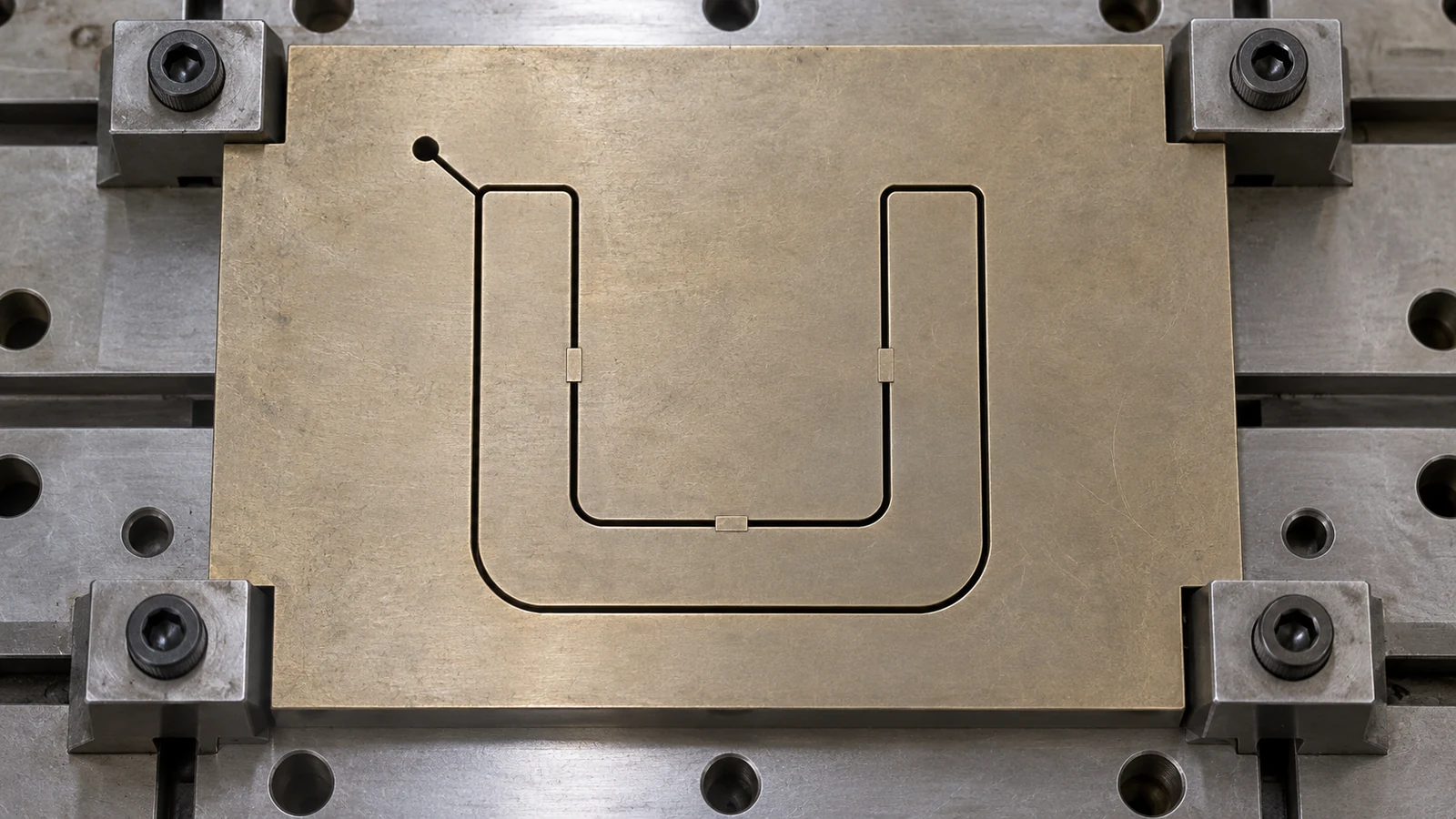
Cut order determines when a region loses support. On a thin or asymmetric part, planning the contour as one uninterrupted release may allow a large section to move suddenly. Depending on geometry and the machine plan, staged cutting, leaving temporary bridges, or cutting features in a balanced order can reduce abrupt changes. These are planning options, not universal recipes: tabs can also create local stress concentration or make removal and finishing more difficult.
Roughing and finishing should be treated as separate stages with a defined inspection checkpoint when movement risk justifies it. The rough cut opens the profile and may release stress; an intermediate check can reveal whether the geometry has shifted before the final skim path is committed. If the shape has moved beyond the available finishing allowance, a later pass cannot restore missing material.
For parts with critical thin walls, review the profile, attachment points, and datum scheme before programming. A machinist or engineer should decide whether the part can remain supported through the rough operation and how the final release will be handled. The sequence should preserve enough stock to finish the functional surfaces without assuming the rough-cut geometry stays fixed.
Support, tabs, and flushing: useful controls with limits
Support helps only when it restrains the intended motion without distorting the part. Excessive clamping can force a flexible wall into a temporary shape that disappears after release. A fixture should locate the part from suitable datums and apply only the restraint needed for the operation. Temporary tabs or bridges may retain a profile, but their locations need to avoid functional edges and leave access for final separation.
Flushing must clear eroded material and maintain stable discharge conditions. However, fluid flow can interact with a very flexible section, and poor access can affect cutting stability. The right approach depends on workpiece thickness, cut geometry, and machine configuration. Avoid treating flushing pressure, tab count, or skim-pass count as universal constants; validate them for the actual part and process.
Wire EDM can create delicate geometries, but the wire diameter, corner radius, taper requirements, start-hole access, and cut path still constrain what can be produced. For general feature feasibility, confirm the through-profile and corner details with the supplier before release of the drawing.
What skim cuts can—and cannot—correct
Additional skim cuts can refine the cut surface and improve profile control when the part remains stable and enough allowance is available. They are useful for a different problem than large-scale wall bow caused by stress release. If a thin section moves after the final cut, a skim pass may follow the moved profile rather than bring it back to nominal.
Keep three questions separate: Is the surface condition acceptable? Is the profile within its drawing tolerance? Is the part stable after release and under the intended inspection condition? A result can satisfy one and fail another. Before specifying extra passes, identify which requirement is at risk and whether the geometry still has material available for correction.
During process development, compare measurements at consistent stages: after roughing, after any intermediate release, after finishing, and after unclamping when relevant. That sequence helps locate when movement occurs. It also avoids confusing a finish issue with a shape change.
Plan the drawing and inspection around the free state
Buyers can help by identifying thin sections and critical datums clearly, calling out the profile or geometric tolerance that matters, and stating any required inspection condition. If the part must meet shape while installed or clamped, say so; otherwise, a supplier may reasonably evaluate it in an unconstrained condition. Material specification and heat-treatment condition should also be unambiguous because they influence how stock may behave when material is removed.
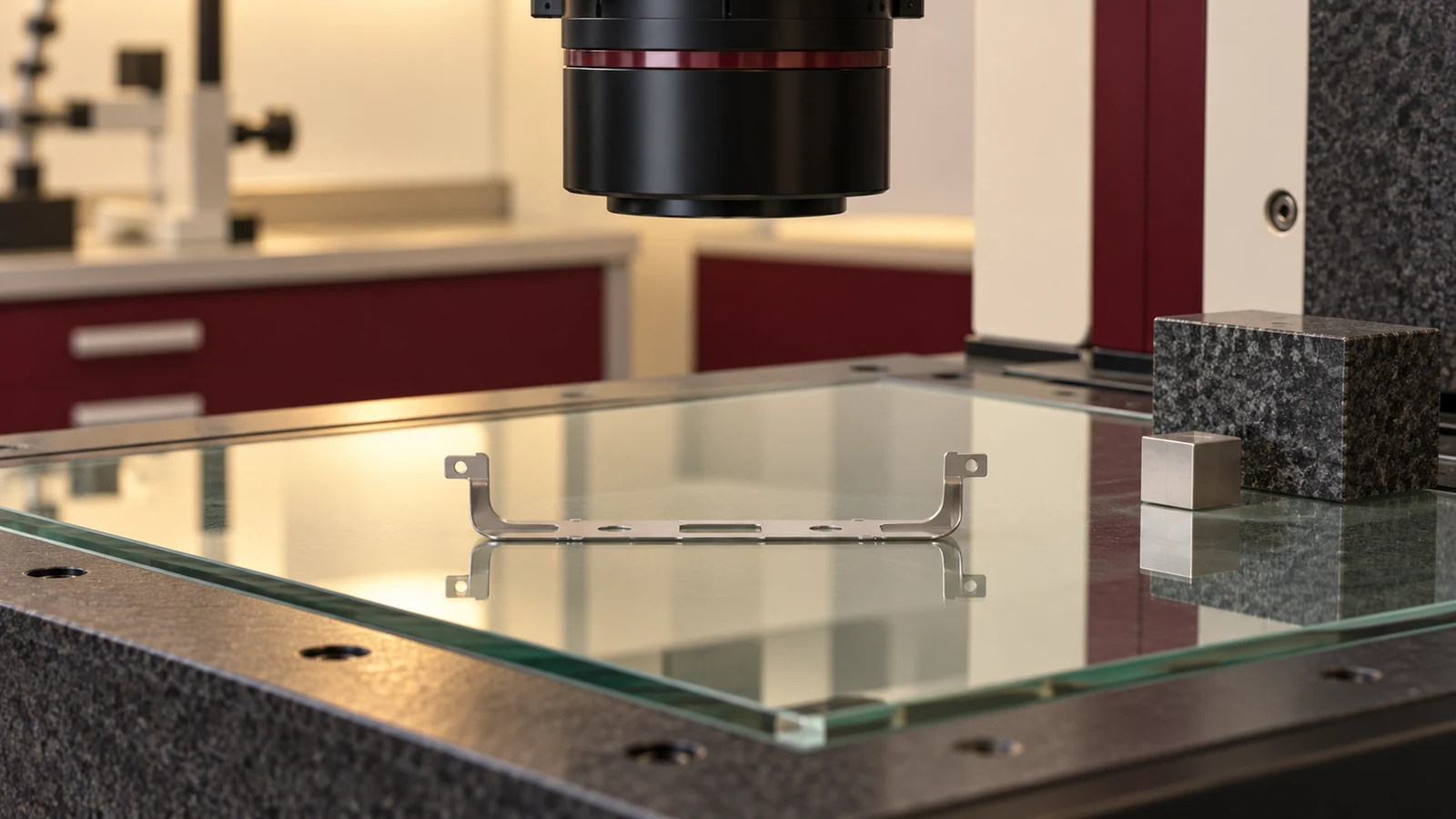
For prototypes or first articles, a staged measurement report can be more informative than a final pass/fail number alone. Ask for the agreed inspection evidence, not an assumed number of skim cuts. The process should be selected to meet the drawing while preserving the functional geometry after the relevant release and inspection steps.
Frequently asked questions
Can Wire EDM distort thin walls without cutting force?
Yes. Residual-stress release, thermal effects, workholding, and loss of support can change shape even though the wire does not mechanically push on the wall like a milling cutter.
Will more skim cuts straighten a bowed section?
Not necessarily. Skim cuts refine a stable cut surface; they cannot restore material already removed or guarantee that a stress-released wall returns to nominal.
Should temporary tabs always be used?
No. Tabs can retain support during a cut, but their location, removal, and effect on the final profile must be considered for the specific geometry.
How should a thin Wire EDM part be inspected?
Use the drawing’s datums and geometric requirements, define whether inspection is restrained or free-state, and measure multiple relevant locations when the profile can vary along its length.