
Every manufacturer sourcing custom machined components understands how critical post processing for cnc parts is to final performance, surface finish, dimensional accuracy, and long-term service life. Even the most precise CNC machining run may leave minor burrs, tool marks, surface roughness inconsistencies, or residual stress that could compromise fit, assembly, and durability without proper secondary finishing steps. Many buyers across the USA search for structured reference materials like post processing for cnc parts pdf, standardized workflow checklists such as post processing for cnc parts list, system integration guides for post processing for cnc parts in sap, and local service providers offering reliable post processing for cnc parts in usa. Understanding every stage of secondary finishing helps engineering teams, procurement managers, and factory operators avoid costly rework, delivery delays, and premature part failure in industrial and commercial applications.
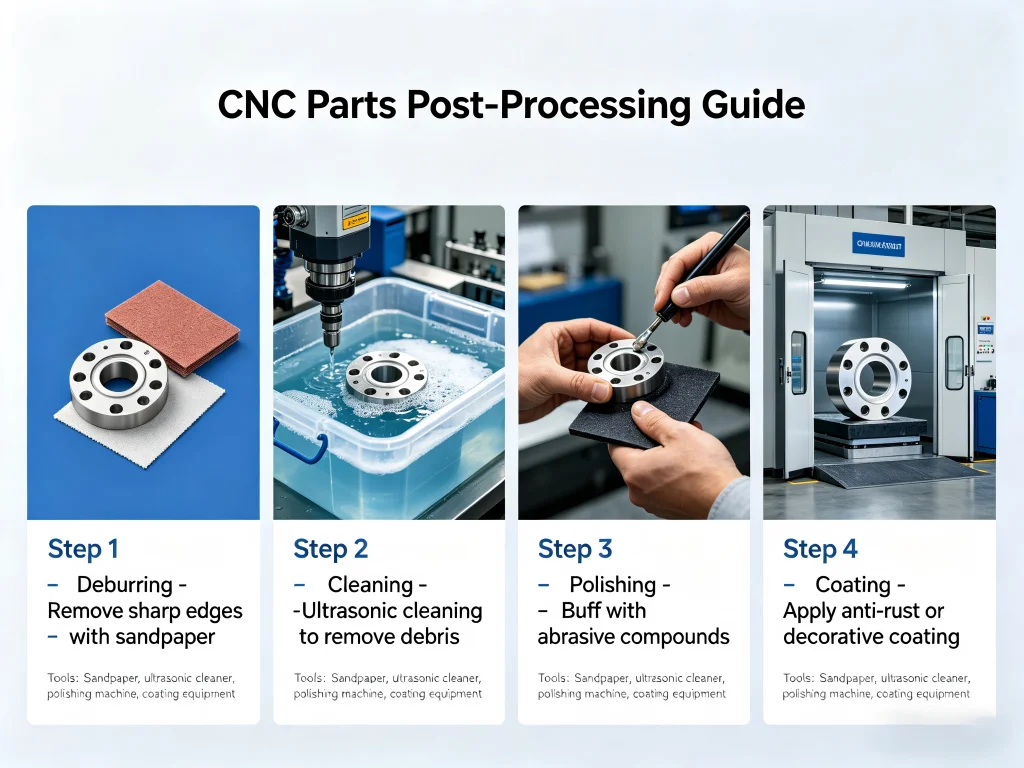
What Is Post Processing for CNC Parts and How It Works
Post processing refers to all secondary manufacturing operations performed after raw CNC machining is completed. It covers physical surface refinement, material removal, chemical treatment, heat conditioning, and protective coating applied to machined blanks before final inspection and shipping. The core principle behind these procedures is simple: CNC cutting creates sharp edges, micro-scratches, uneven surface texture, and internal residual tension within metal or plastic stock. Post processing methods gradually eliminate these imperfections while stabilizing material structure and enhancing visual and functional quality.
Core Working Principle Behind Secondary Finishing
- Material Micro-Removal: Gentle abrasion removes burrs, sharp corners, and tool path lines without altering critical dimensional tolerances.
- Surface Uniformization: Smoothing processes level out peak and valley textures left by cutting tools to meet Ra surface roughness requirements.
- Residual Stress Relief: Thermal and vibrational treatment could release internal tension formed during high-speed CNC cutting, preventing later warping or deformation.
- Corrosion and Wear Resistance Enhancement: Coatings and chemical treatments add a protective outer layer that extends component lifespan in harsh operating environments.
Many discussions on Reddit manufacturing forums and Facebook industrial machining groups often highlight that skipping standardized post processing steps may result in parts that dimensionally pass inspection but fail field testing due to rough edges, poor sealing performance, or rapid surface oxidation. This common industry feedback underscores why formalizing a post processing for cnc parts list becomes essential for factory quality control documentation.
Key Industry Applications of Post Processing for CNC Machined Components
Secondary finishing workflows are not limited to a single industry; they serve nearly every sector that relies on custom precision machined parts. Each field carries unique requirements for surface smoothness, edge safety, chemical resistance, and cosmetic appearance, making tailored post processing protocols necessary for consistent output quality.
Major Industrial Sectors That Require Standard Post Processing
- Automotive Industry: Engine components, transmission parts, suspension hardware, and interior structural CNC parts all need deburring, polishing, and anti-rust treatment to withstand vibration, temperature fluctuation, and long road service cycles.
- Aerospace and Aviation: Lightweight alloy CNC components demand strict stress relief and precision surface finishing to maintain structural integrity under extreme altitude and pressure conditions.
- Medical Equipment: Surgical tool parts and diagnostic device components require ultra-smooth surface finishing and sanitary chemical passivation to avoid bacterial accumulation and ensure biocompatibility.
- Electronics and Electrical Enclosures: CNC-machined switch boxes, heat sinks, and internal framework parts need deburring and anodizing to prevent sharp edges during assembly and improve thermal dissipation performance.
- Mold and Die Manufacturing: Mold cavity inserts and mold base components rely on fine polishing and texturing post processing to achieve precise surface replication on plastic injection products.
- General Industrial Machinery: Gear parts, shaft components, and custom fixture pieces use post processing to improve wear resistance and assembly compatibility across mass production lines.
Buyers searching for post processing for cnc parts in usa typically represent these industries, looking for local suppliers that follow international finishing standards and provide downloadable post processing for cnc parts pdf files for internal team training and process reference.
Critical Factors to Consider When Choosing CNC Part Post Processing Services
Selecting the right post processing solution involves more than picking basic deburring or polishing. Buyers and engineers should evaluate multiple practical factors that directly impact part quality, cost, lead time, and long-term operational reliability. Overlooking any key element may lead to over-processing costs or under-finished components that fail project specifications.
Essential Selection Criteria
- Dimensional Tolerance Preservation: Some aggressive finishing methods may remove excessive material and alter tight tolerance dimensions; suitable techniques must maintain original CNC accuracy.
- Material Compatibility: Aluminum, stainless steel, titanium, brass, and engineering plastics each respond differently to polishing, plating, and heat treatment, so processes should match material grade.
- Surface Roughness Targets: Projects may require standard commercial finish, fine polished finish, or mirror surface finish, each needing distinct post processing workflows.
- Batch Size Flexibility: Small-batch custom prototypes and large-volume mass production could demand automated or manual finishing setups accordingly.
- Lead Time Requirements: Complex multi-step post processing may extend delivery schedules, so project planning should reserve reasonable turnaround time.
- Compliance and Certification: Aerospace, medical, and automotive projects often require documented process records that could integrate easily into enterprise systems like post processing for cnc parts in sap for traceability.
Common Post Processing Methods for CNC Parts: Comparison Overview
| Post Processing Method | Main Function | Suitable Materials | Typical Application Scenario |
| Deburring & Edge Rounding | Remove sharp burrs, smooth sharp corners | All metals, hard plastics | General machinery, automotive parts |
| Manual & Mechanical Polishing | Improve surface smoothness, reduce tool marks | Aluminum, stainless steel, brass | Consumer hardware, cosmetic components |
| Anodizing | Corrosion resistance, decorative color finishing | Aluminum alloys | Electronics enclosures, outdoor hardware |
| Passivation | Enhance anti-rust performance without coating buildup | Stainless steel | Medical, food processing equipment |
| Heat Stress Relief | Release internal machining stress, prevent warping | Steel, titanium, thick alloy parts | Aerospace, heavy machinery components |
This simple comparison table helps procurement teams quickly match project needs with suitable finishing methods, and it is often included in downloadable post processing for cnc parts pdf reference documents shared within manufacturing communities online.
Installation, Handling and Basic Maintenance Tips After Post Processing
Proper handling after post processing for cnc parts directly protects finished surface quality and avoids secondary damage before assembly and installation. Many factory teams overlook basic storage and handling rules, which may scratch polished surfaces, damage coated layers, or introduce new contamination.
Practical Handling Guidelines
First, always use soft protective gloves when touching finished CNC parts to prevent fingerprint oil residue and surface scratches. Second, store processed components in anti-static foam or sealed plastic packaging to avoid dust accumulation and oxidation exposure in open air. Third, during assembly installation, avoid hard direct impact on polished or coated surfaces; use soft gaskets to buffer contact pressure. Fourth, for long-term inventory storage, place parts in temperature-controlled dry environments to slow down natural oxidation and surface fading. Regular visual inspection could also help identify minor surface issues early before mass installation begins.
Why Choose Jucheng for Professional Post Processing for CNC Parts
As a professional CNC machining service provider operating at https://www.jccncmachining.com/, Jucheng has built complete in-house post processing workflows tailored for custom machined components served to global clients, especially buyers searching for reliable post processing for cnc parts in usa markets. The company integrates precision CNC cutting, secondary finishing, quality inspection, and customized packaging into one streamlined production chain, bringing clear advantages for engineering and procurement partners.
- Full Process Capability: Jucheng supports all mainstream post processing options including deburring, precision polishing, anodizing, passivation, heat stress relief, and custom surface texturing to match diverse industry project demands.
- Material Expertise: The team holds rich experience working with aluminum alloys, stainless steel, titanium, brass, copper, and high-performance engineering plastics, ensuring every finishing method matches material characteristics perfectly.
- Strict Dimensional Control: Every post processing step is executed under precise measurement checks to guarantee original tolerance accuracy will not be compromised during surface refinement.
- Documented Standard Workflow: The company provides standardized post processing for cnc parts list for client reference, and process data could be formatted to support enterprise system integration such as post processing for cnc parts in sap.
- Flexible Batch Support: Jucheng handles small-batch prototype orders and large-volume mass production equally well, maintaining consistent finishing quality across all order sizes.
- Transparent Quality Documentation: Clients may request downloadable process files similar to post processing for cnc parts pdf for internal team training, project review, and supplier qualification records.
Industry discussions on Reddit and Facebook machining groups frequently mention that reliable CNC suppliers who control both machining and post processing internally can significantly reduce communication errors, shorten lead times, and lower overall project costs compared to sourcing separate vendors for each step.
Frequently Asked Questions About Post Processing for CNC Parts
FAQ 1: Is post processing mandatory for all CNC machined parts?
Not every component requires full multi-step finishing, but nearly all functional CNC parts need basic deburring and edge smoothing. Simple structural internal parts may only need minimal treatment, while visible exterior, medical, aerospace, and high-precision assembly parts must go through complete standardized post processing workflows.
FAQ 2: What is included in a standard post processing for cnc parts list?
A standard checklist usually covers deburring inspection, surface roughness testing, dimensional re-verification, coating or chemical treatment records, visual cosmetic check, packaging protection, and final batch labeling for traceability.
FAQ 3: Where can I get post processing for cnc parts pdf for team training?
Professional CNC service providers like Jucheng can supply structured process PDF documents covering method introductions, material compatibility charts, and quality control standards for internal engineering and production training use.
FAQ 4: How does post processing integrate with sap enterprise systems?
Process data, batch records, inspection reports, and workflow checklists could be formatted into compatible data structures, allowing seamless import for users needing post processing for cnc parts in sap inventory and production management modules.
FAQ 5: What are the typical cost factors of CNC part post processing in the USA?
Cost may depend on part complexity, material type, required surface finish grade, batch quantity, and number of finishing steps. Local service fees for post processing for cnc parts in usa often include labor, material consumption, inspection time, and compliance documentation costs.
FAQ 6: Can post processing fix dimensional errors from original CNC machining?
Basic finishing methods cannot correct major dimensional deviations. Post processing is designed for surface refinement and edge treatment only; significant tolerance errors require re-machining rather than relying on secondary finishing adjustments.
FAQ 7: How long does standard CNC part post processing usually take?
Simple deburring and polishing may take one to two business days, while multi-step processes including heat treatment, plating, and precision inspection could take three to seven days depending on batch size and project specifications.
Get Reliable Post Processing for CNC Parts From Jucheng Today
If you are sourcing high-quality custom CNC machined components with professional standardized secondary finishing, Jucheng delivers integrated solutions that combine precision machining, full-range post processing, strict quality control, and clear technical documentation. Whether you need prototype small batches, mass production components, reference process files like post processing for cnc parts pdf, standardized workflow checklists, or system-compatible records for post processing for cnc parts in sap, the team can tailor every detail to match your industrial project requirements. Reach out through https://www.jccncmachining.com/ to share your part drawings, material specifications, and surface finish demands, and receive a detailed solution and competitive quote within a short time frame.