
When your engineering drawing calls for a transparent plastic part that must withstand repeated impact, vibration, or thermal cycling, polycarbonate machining often emerges as the material of choice. Yet sourcing a reliable partner for custom polycarbonate machining can feel like navigating a maze of contradictory advice. Some machinists warn that polycarbonate is “difficult” and prone to cracking; others claim it machines beautifully. The truth, as with most things in precision manufacturing, lies in the details. This guide cuts through the noise to help you evaluate polycarbonate CNC machining service providers, compare polycarbonate vs acrylic for your specific application, and understand the critical parameters that separate a successful project from a costly rework.
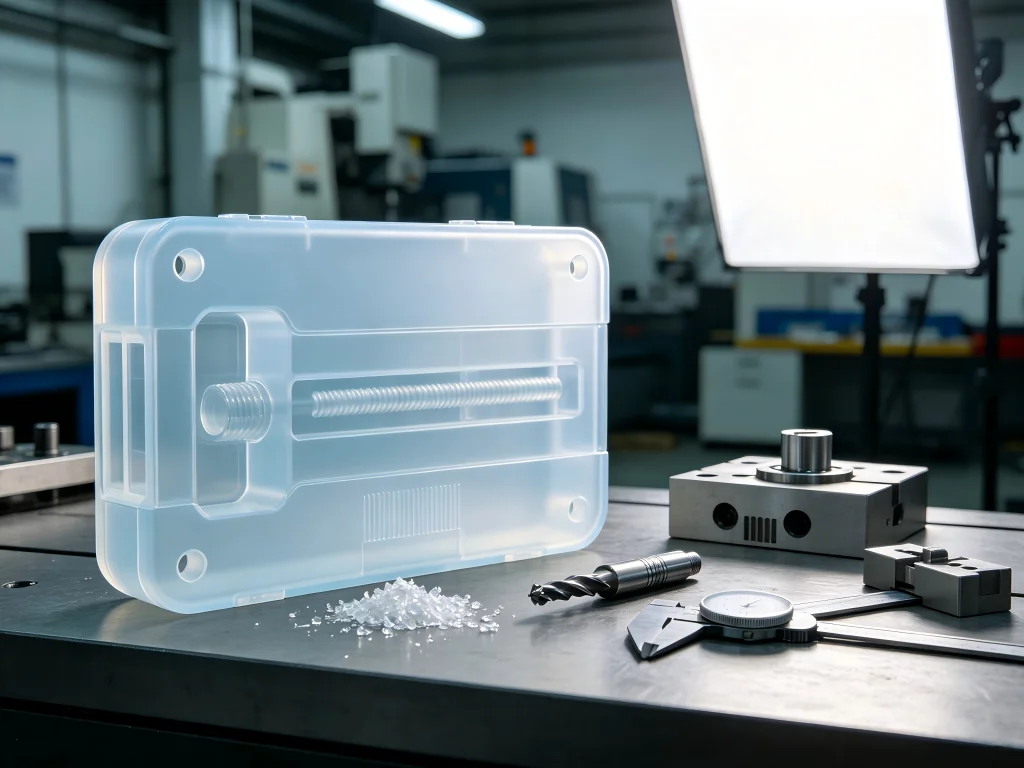
Understanding Polycarbonate: The Engineering Plastic That Demands Respect
Before diving into provider selection, it helps to understand what makes polycarbonate unique. Polycarbonate (PC) is an amorphous thermoplastic containing carbonate groups in its molecular chain. Commercial grades like Lexan™ and Makrolon® are widely recognized for their exceptional impact resistance—roughly 250 times stronger than glass and approximately 30 times stronger than acrylic. This toughness, combined with optical clarity of approximately 88–89% light transmission, makes polycarbonate indispensable for safety guards, machine enclosures, medical device housings, automotive lighting, and aerospace components.
Yet this same toughness creates machining challenges. Polycarbonate has a relatively low melting point compared to metals, and heat buildup during cutting can cause the material to melt, gum up cutting tools, or develop internal stress that leads to cracking. As one machinist on the Carbide 3D community forum noted, “To reduce friction (= heat) … this should run as slow as possible: slow speed. But in order … speed (rpm) as low as possible, feed as high as possible”. This balancing act between spindle speed, feed rate, and depth of cut is where experience matters most.
The material’s amorphous structure means it lacks a defined melting point; instead, it softens gradually. This behavior can work in your favor—polycarbonate is less likely to chip than acrylic and allows for more standard toolpath strategies. However, the sharpness of cutting tools remains critical, as dull tools generate friction that melts the material rather than shearing it cleanly.
The Polycarbonate vs Acrylic Decision: More Than Just Clarity
One of the most common questions engineers face is whether to specify polycarbonate or acrylic (PMMA) for a transparent plastic part. This decision significantly impacts not only part performance but also the machining approach and cost. The table below summarizes the key distinctions.
| Property | Polycarbonate (PC) | Acrylic (PMMA) |
|---|---|---|
| Impact Resistance | Exceptional (250x glass) | Moderate (brittle under stress) |
| Optical Clarity | 88–89% light transmission | Up to 92% light transmission |
| Heat Deflection Temperature | ~120–135°C | ~80–90°C |
| Machinability | Good with proper cooling, less chipping | Easier to cut but more prone to cracking |
| Surface Finish | Smooth, can be vapor polished to optical grade | Excellent clarity straight off the machine |
| Relative Cost | ~35–40% more expensive than acrylic | More economical |
| Scratch Resistance | Moderate | Better natural scratch resistance |
| UV Resistance | Poor without UV stabilizers | Excellent, does not yellow over time |
As the table illustrates, the choice depends on your application’s priorities. If your part must survive impacts, repeated handling, or elevated temperatures, polycarbonate is the clear winner. If optical clarity, surface finish, and cost are paramount—and impact risk is low—acrylic may serve you better.
One forum contributor on Chief Delphi succinctly captured polycarbonate’s appeal: “Polycarbonate’s super power is impact resistance, scratch resistance not so much”. For applications like machine guards, face shields, or bullet-resistant glazing, that impact resistance is non-negotiable.
Critical Parameters for Polycarbonate CNC Machining
When evaluating a potential machining partner, you need to understand the technical parameters that matter. A provider who cannot articulate their approach to these variables may lack the experience necessary for success.
Speeds and Feeds: The Heat Management Challenge
The single biggest risk in polycarbonate machining is heat-induced melting or stress cracking. Proper speed and feed selection prevents this. General guidelines suggest:
- Cutting speeds: 500–1000 ft/min, lower than for softer plastics
- Feed rates: Moderate to high to prevent heat buildup
- Spindle speeds: Many shops run 12,000–18,000 RPM with high-speed machining strategies
A Boston University resource provides specific starting points: for a 1/4″ end mill machining polycarbonate, use approximately 5,000 RPM with a 22 IPM entry feed and 25 IPM contour feed. For a 1/8″ end mill, 5,250 RPM with 18 IPM entry feed and 20 IPM contour feed works well.
One machinist on the Carbide 3D community emphasized the importance of aggressive feeding: “Polycarb works really well with high feed rate and rpm. We run 24k rpm, 4mm bit single flute”. The logic is counterintuitive but sound: higher feed rates reduce the time the tool spends in contact with the material, limiting heat transfer.
Tool Selection: Sharpness Is Everything
Dull tools are the enemy of successful polycarbonate machining. Experts recommend:
- High-speed steel (HSS) or carbide tools with sharp cutting edges
- Single-flute spiral bits to reduce heat generation
- Polycrystalline diamond (PCD) tools for high-volume production to minimize adhesion and extend tool life
A practical machinist on the Practical Machinist forum noted the dramatic effect of heat on hole accuracy: “I have 50k rpm, and find that polycarbonate will melt quite quickly if I use much of that. A strong air blast helps a lot”. This observation underscores why effective chip evacuation and cooling are as important as tool selection.
Thermal Management and Stress Relief
Polycarbonate’s amorphous structure makes it susceptible to internal stress from machining. These stresses can cause parts to warp or crack days or weeks after production. Experienced shops address this through:
- Annealing parts after rough machining to relieve stress before final finishing
- Maintaining workshop temperatures around 23±2°C and 40–60% relative humidity to prevent static buildup
- Using mist coolant or compressed air rather than flood coolant, which can cause thermal shock
Key Factors in Selecting a Polycarbonate Machining Partner
With the technical fundamentals established, let’s examine the criteria that should guide your provider selection. These factors distinguish a partner who delivers reliable, high-quality parts from one who produces inconsistent results.
1. Material Expertise and Handling
Not all CNC shops understand the nuances of engineering plastics. A provider who primarily machines metals may apply inappropriate strategies to polycarbonate. Look for a partner who:
- Maintains inventory of engineering-grade polycarbonate in various forms (sheet, rod, block)
- Understands the distinction between extruded and cast polycarbonate and their machining implications
- Can provide material certifications and traceability for regulated industries
Jucheng Precision, for example, maintains deep inventory of both cast acrylic and engineering-grade polycarbonate, with 5-axis CNC centers specifically calibrated for the thermal and chemical nuances of these materials.
2. Equipment Capability
The machine tool matters. Polycarbonate CNC machining benefits from equipment that offers:
- High spindle speeds (12,000+ RPM) for clean cutting
- Rigid machine construction to minimize vibration and tool deflection
- Multi-axis capability (4- or 5-axis) for complex geometries
- Effective coolant and chip evacuation systems
A facility with 150+ CNC machines, including 25+ 5-axis centers, demonstrates the scale and capability to handle projects from prototypes to production runs.
3. Quality Systems and Certification
For many applications—particularly in medical, aerospace, and automotive sectors—certification is non-negotiable. Key certifications to look for include:
- ISO 9001:2015 (quality management)
- ISO 13485 (medical devices)
- IATF 16949 (automotive)
- ISO 14001 (environmental management)
As one industry source notes, “JUCHENG’s ISO 13485 Pillar: Validated Excellence… the single most important technical specification in our facility is not a dimension on a print—it is our ISO 13485:2016 certification”. This commitment to certified quality systems ensures consistent, traceable production.
4. Inspection and Metrology Capability
You cannot manage what you cannot measure. A capable polycarbonate machining partner should operate a metrology lab with equipment such as:
- Coordinate Measuring Machines (CMM) for dimensional verification
- Optical comparators for surface and profile inspection
- Surface profilometers for finish quality assessment
- Spectrometers for material verification
Typical tolerances for precision polycarbonate machining range from ±0.05 mm standard to ±0.02 mm upon request. Some providers can achieve even tighter tolerances—Jucheng Precision, for instance, maintains typical tolerances of ±0.005 mm.
5. Finishing Capabilities
The surface finish of polycarbonate parts often determines their functionality and aesthetic appeal. Common finishing options include:
- Machined finish (as-machined, suitable for most applications)
- Flame polishing (thermal technique for glossy finish)
- Vapor polishing (chemical process achieving optical-grade clarity)
- Bead blasting (smooth matte texture)
- Buffed finish (high-gloss, decorative appearance)
Vapor polishing is particularly noteworthy for polycarbonate—it can achieve transparency and shininess comparable to acrylic. Jucheng Precision has integrated vapor polishing into their CNC polycarbonate workflow to meet the optical demands of aerospace and healthcare industries.
6. Lead Time and Prototyping Support
Product development timelines demand speed without sacrificing quality. Look for a partner who offers:
- Rapid prototyping with lead times as short as 3–7 days
- Low minimum order quantities (1 piece for prototypes)
- Seamless transition from prototype to production
- DFM (Design for Manufacturing) feedback to optimize your design for machinability
One satisfied customer noted, “Jcproto’s ability to handle our prototyping using 3D printing and then seamlessly transition into low-volume injection molding saved us weeks of development time”. This integrated approach reduces supply chain fragmentation and accelerates time-to-market.
Why Choose Jucheng Precision for Polycarbonate CNC Machining
When evaluating polycarbonate machining near me options—or partners anywhere in the world—Jucheng Precision offers several distinct advantages that address the criteria outlined above.
Scale and Capability
Founded in Shenzhen in 2012, Jucheng Precision operates from an 8,000-square-meter facility with 190+ employees, including 30+ senior engineers with over 13 years of experience. The manufacturing infrastructure includes:
- 150+ CNC machines (including 25+ Haas and Mazak 5-axis centers)
- 30+ sheet metal fabrication units
- 50+ industrial 3D printing systems
- 35+ injection molding machines
This comprehensive equipment portfolio enables Jucheng to handle projects of any scale, from single prototype parts to full production runs.
Certified Quality Systems
Jucheng Precision holds ISO 9001:2015, ISO 14001, ISO 13485, and IATF 16949 certifications. These certifications demonstrate verified capability to serve highly regulated and complex global supply chains. For medical and automotive applications, this certification provides assurance that quality systems meet the most demanding standards.
Advanced Metrology
Quality control at Jucheng is backed by advanced equipment including Zeiss CMM, optical comparators, surface profilometers, and hardness testers. Every component undergoes rigorous in-process and final inspections, with typical tolerances of ±0.005 mm. Material verification using on-site spectrometers ensures full traceability from raw material to finished part.
Specialized Polycarbonate Expertise
Jucheng has developed specific expertise in polycarbonate CNC machining, with 5-axis centers calibrated for the thermal and chemical nuances of this material. Their integrated vapor polishing capability delivers optical-grade clarity for demanding applications in aerospace and healthcare. The company maintains deep inventory of engineering-grade polycarbonate in both clear and black grades.
One-Stop Manufacturing Platform
By offering nine core manufacturing processes under one roof—including CNC machining, 3D printing, sheet metal fabrication, injection molding, and vacuum casting—Jucheng eliminates supply chain fragmentation. This integrated approach means your project moves from prototype to production without the delays and coordination headaches of managing multiple vendors.
Global Reach with Local Responsiveness
Despite being headquartered in China, Jucheng serves customers worldwide with fast turnaround times. Quotes are provided within hours, and parts can be delivered in as few as 4 days. The company maintains strict confidentiality protocols to protect customer intellectual property.
Frequently Asked Questions About Polycarbonate CNC Machining
Is polycarbonate hard plastic?
Yes, polycarbonate is considered a hard engineering plastic, but “hard” in this context refers to its strength and impact resistance rather than surface hardness. Polycarbonate has a Rockwell hardness of approximately M70, making it significantly tougher than acrylic but softer than many metals. Its combination of hardness and toughness—it can absorb impact energy without shattering—is what makes it valuable for protective applications. However, its surface is relatively soft compared to glass or metals, which means it can scratch more easily.
What are common examples of polycarbonate plastic products?
Polycarbonate appears in countless everyday and industrial products. Common polycarbonate plastic examples include: safety glasses and face shields, bulletproof windows and security glazing, automotive headlight lenses, machine guards and enclosures, medical device housings, electronic display covers, clear manifolds and fluid handling components, point-of-purchase retail displays, and greenhouse panels. The material’s combination of clarity, impact resistance, and dimensional stability makes it versatile across industries.
What is the difference between machining polycarbonate sheet vs block?
Machining polycarbonate sheet versus block presents different challenges. Sheet material is thinner and more prone to vibration and deflection during cutting, requiring careful workholding and potentially lower feed rates to prevent chatter. Sheet also has residual stress from the extrusion or casting process that can cause warping when material is removed unevenly. Solid polycarbonate block for machining offers greater stability and allows for thicker, more complex geometries. Block machining typically involves heavier cuts and more aggressive material removal, but the thermal management challenges are similar—heat buildup must be controlled to prevent melting and stress cracking. Both forms require sharp tools and appropriate speeds and feeds, though sheet machining often demands more attention to workholding and vibration control.
What are the recommended polycarbonate machining speeds and feeds?
While optimal polycarbonate machining speeds and feeds depend on your specific machine, tooling, and part geometry, general starting points include: spindle speeds of 12,000–18,000 RPM with high-speed machining strategies, feed rates of 0.05–0.15 mm per tooth adjusted for material thickness, and cutting speeds of 500–1000 ft/min. For a 1/4″ end mill, many shops run approximately 5,000 RPM with 22 IPM feed. The key principle is to maintain a balance—high enough feed to prevent heat buildup from prolonged tool contact, but not so high that tool deflection or surface finish suffers. As one machinist advised, “speed (rpm) as low as possible, feed as high as possible, with reasonable depth of cut”.
Can polycarbonate be machined on standard CNC equipment?
Yes, polycarbonate CNC machining can be performed on standard CNC milling and turning equipment with appropriate tooling and parameters. However, success depends on using sharp tools, effective chip evacuation, and proper speed/feed selection. Standard CNC equipment equipped with carbide tools works well for most polycarbonate machining. For high-volume production or demanding optical applications, specialized tooling like polycrystalline diamond (PCD) tools may be beneficial. The material’s tendency to melt under heat means that machines with effective coolant systems or air blast capabilities produce better results.
How do I find polycarbonate machining services near me?
Searching for polycarbonate machining near me is a common starting point, but geographic proximity should not be your only criterion. While local suppliers offer advantages in shipping time and communication, the best partner for your project may be located elsewhere. Jucheng Precision’s knowledge base advises B2B buyers to look beyond the “Near Me” trap and focus on the critical factors of capacity, precision, and global certification. With global shipping and digital communication, distance is less of a barrier than it once was. Evaluate potential partners based on their technical capability, quality systems, and track record with polycarbonate rather than simply their location.
What surface finishes are available for polycarbonate CNC parts?
Polycarbonate parts can receive various surface treatments depending on the application. Common finishing options include: as-machined finish (suitable for most functional parts), flame polishing for a glossy surface, vapor polishing for optical-grade clarity, bead blasting for a smooth matte texture, and buffing for high-gloss decorative finishes. Vapor polishing is particularly effective for polycarbonate, achieving transparency comparable to acrylic. The choice depends on whether optical clarity, durability, or aesthetic appearance is your priority.
Is polycarbonate easy to machine compared to other plastics?
Polycarbonate is generally considered easier to machine than acrylic because it is less likely to chip or crack during cutting. Its toughness allows for more standard toolpath strategies. However, polycarbonate presents its own challenges—primarily heat management. The material has a higher melting temperature than acrylic, so it’s less prone to melting at lower speeds, but it can still melt if too much heat builds up. Compared to softer plastics like HDPE or acetal, polycarbonate requires more careful attention to tool sharpness and cooling. Overall, with proper parameters, polycarbonate machines well and produces durable, high-quality parts.
Making Your Decision: A Practical Framework
Choosing the right partner for custom polycarbonate machining ultimately comes down to aligning your project requirements with a provider’s capabilities. Use this framework to guide your evaluation:
- Define your requirements clearly—tolerances, quantities, surface finish, certification needs, and timeline.
- Evaluate technical capability—does the provider have experience with polycarbonate? Do they understand the speed/feed nuances? Can they handle your geometry with appropriate equipment?
- Verify quality systems—do they hold relevant certifications? Can they provide material traceability and inspection documentation?
- Assess communication and responsiveness—do they ask smart questions about your application? Can they provide DFM feedback?
- Consider the total value proposition—not just price, but also lead time, quality consistency, and the ability to scale from prototype to production.
As one industry observer noted, “The most important technical specification… is not a dimension on a print—it is the certification and quality system behind the part”. When your polycarbonate part must perform reliably in a critical application, that certification and the expertise it represents matter far more than the lowest quote.
Jucheng Precision combines certified quality systems, extensive equipment capability, and specialized polycarbonate expertise to deliver parts that meet the most demanding specifications. With 150+ CNC machines, ISO 13485 and IATF 16949 certification, and integrated finishing capabilities including vapor polishing, Jucheng offers the technical depth and manufacturing scale to support projects from initial prototype through full production. Their one-stop manufacturing platform eliminates the fragmentation of managing multiple vendors, accelerating your time-to-market while maintaining quality consistency.
Whether you need a single optical-grade prototype or thousands of production parts, the right machining partner makes the difference between a project that succeeds and one that struggles. Choose a partner who understands polycarbonate’s unique properties, maintains rigorous quality systems, and has the equipment and expertise to deliver your parts precisely to specification.
Ready to discuss your polycarbonate CNC machining project?
Visit Jucheng Precision | Explore CNC Machining Capabilities
This guide was prepared by Jucheng Precision, an ISO 9001, ISO 13485, and IATF 16949 certified manufacturer with 150+ CNC machines and over 13 years of experience in precision polycarbonate machining. Contact our engineering team for expert guidance on your next project.