In the world of manufacturing, where precision and material versatility are paramount, CNC milling stands as a cornerstone technology. While often associated with metals, its application to plastics has unlocked a realm of possibilities for engineers and designers. Precision plastic parts, crafted through advanced CNC milling processes, are integral components across industries from medical devices to aerospace. This article delves into the intricacies of CNC milled plastic parts, explaining the process, its advantages, key applications, and best practices for optimal results.
What Are CNC Milled Plastic Parts?
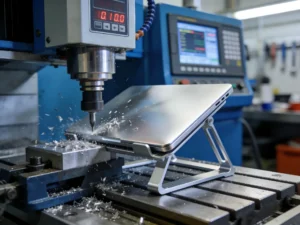
CNC (Computer Numerical Control) milled plastic parts are components manufactured by removing material from a solid plastic block, or billet, using rotating cutting tools directed by a computer program. Unlike injection molding, which relies on molds and is cost-effective for high volumes, CNC milling is a subtractive process ideal for prototyping, low-to-medium volume production, and parts requiring exceptionally tight tolerances and complex geometries. The computer-controlled machine follows a digital blueprint (a CAD model converted to G-code) with extreme accuracy, translating digital designs into tangible, high-performance plastic components.
The Core of the Process: How CNC Milling Works for Plastics
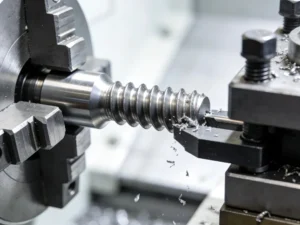
The journey of a milled plastic part begins with a 3D model created in Computer-Aided Design (CAD) software. This model is then translated into manufacturing instructions via Computer-Aided Manufacturing (CAM) software, which generates the G-code. This code dictates every movement of the CNC machine's tools. The plastic material, securely clamped to the machine bed, is approached by a spindle holding various cutters—end mills, face mills, drills. The spindle rotates at high speeds, while the tool or the workpiece moves along multiple axes (typically 3, 4, or 5) to carve away material, layer by layer, until the final part emerges. Coolants or compressed air are often used to manage heat and clear chips, though requirements are less stringent than with metals.
The Distinct Advantages of Choosing CNC Milling for Plastics
Selecting CNC milling for plastic components offers a compelling set of benefits that make it indispensable for many projects.
Unmatched Precision and Tight Tolerances
CNC machines excel at holding extremely tight tolerances, often within ±0.001 inches (±0.025 mm) or better. This makes them perfect for creating interlocking parts, precise housings, and components that must fit into complex assemblies without post-processing. The repeatability of the process ensures every part in a batch is virtually identical.
Rapid Prototyping and Design Flexibility
For prototyping, CNC milling is unparalleled. Design changes can be implemented quickly by modifying the CAD file and generating new toolpaths, without the need for expensive and time-consuming mold fabrication. This allows for rapid iteration and testing, accelerating the product development cycle significantly.
Material Versatility and Performance
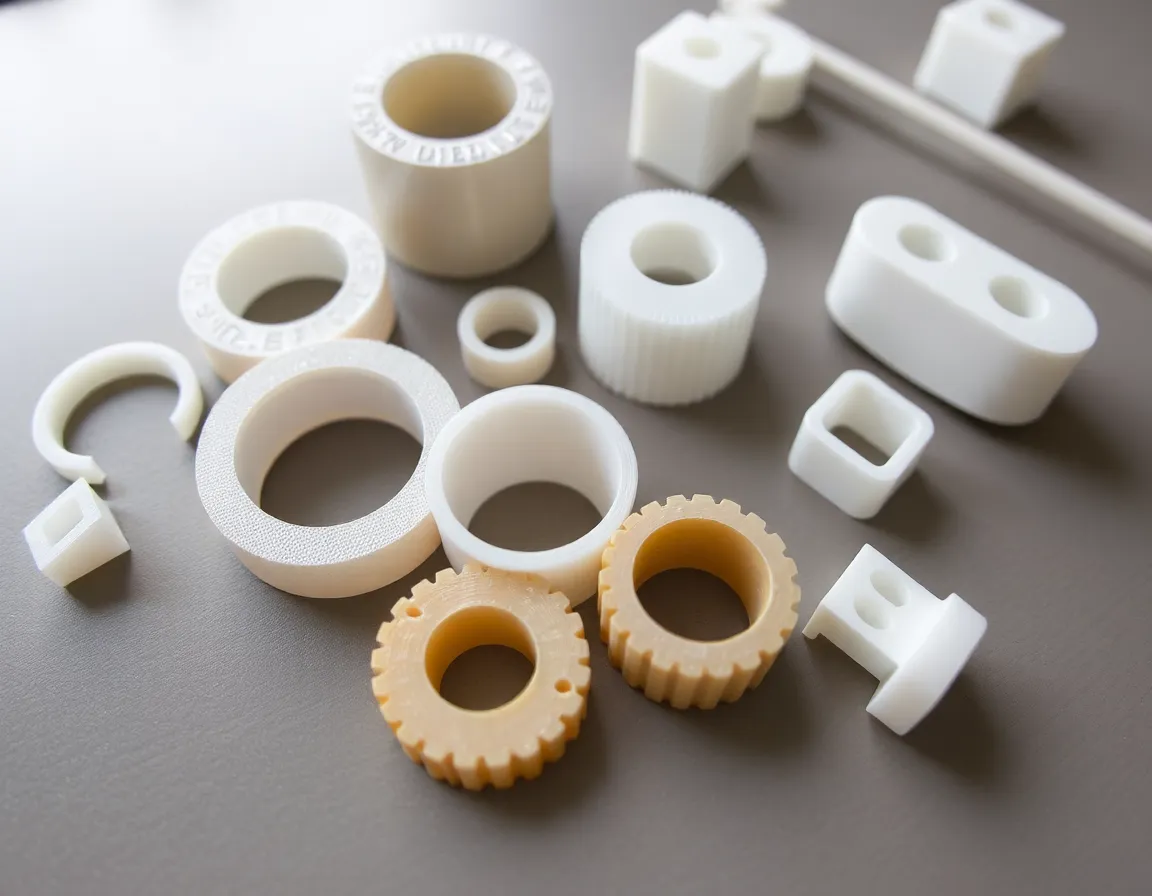
CNC milling can handle an enormous range of engineering thermoplastics, each chosen for specific properties:
- ABS: Tough, impact-resistant, good for functional prototypes.
- Polycarbonate (PC): Excellent clarity and very high impact strength.
- PEEK & PEI (Ultem):High-performance, heat and chemical-resistant, used in aerospace and medical.
- Acrylic (PMMA):Superior optical clarity for lenses and displays.
- Nylon (PA):Great wear resistance and strength.
- PTFE (Teflon):Exceptional chemical resistance and low friction.
Complex Geometries and Superior Surface Finish
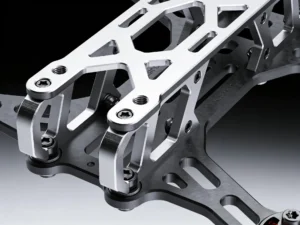
With 3-axis, 4-axis, and 5-axis CNC mills, it is possible to create highly complex geometries—undercuts, deep cavities, intricate contours, and true 3D shapes—in a single setup. Furthermore, the surface finish from a CNC mill can be exceptionally smooth, often eliminating the need for secondary finishing, or providing an ideal base for further treatments like painting or plating.
Key Applications Across Industries
The unique capabilities of CNC plastic milling make it the go-to solution in fields where performance, compliance, and precision are non-negotiable.
Medical and Life Sciences
This sector relies heavily on milled plastic parts for surgical guides, diagnostic device components, enclosures for sensitive equipment, and prototypes for FDA-approved devices. Materials like PEEK and medical-grade acrylics are sterilizable and biocompatible, meeting stringent regulatory standards.
Aerospace and Defense
Lightweight yet strong components are critical. CNC milling produces ducting, insulation panels, antenna housings, and mock-ups from advanced plastics that meet rigorous flame, smoke, and toxicity (FST) requirements while reducing overall aircraft weight.
Electronics and Telecommunications
From intricate jigs and fixtures used in assembly to prototype casings, waveguide components, and insulating parts, CNC milling offers the dimensional stability and dielectric properties necessary for electronic applications.
Automotive
Beyond prototypes, CNC is used for custom interior components, under-the-hood testing parts, and low-volume production runs for specialty or classic vehicles where injection molding tooling is not economical.
Consumer Products and R&D
Designers use CNC milling to create functional prototypes for user testing, marketing samples, and custom or high-end products where design intricacy and material choice are key selling points.
Best Practices for Optimal CNC Milled Plastic Parts
Success in milling plastics requires an understanding of the material's behavior, which differs significantly from metal. Adhering to best practices ensures quality, accuracy, and efficiency.
Material Selection and Preparation
Choose the plastic based on the part's functional requirements, not just cost. Consider moisture content; some plastics (like nylon) are hygroscopic and must be dried before machining to prevent dimensional instability or surface flaws.
Tooling and Machining Parameters
- Sharp Tools: Use sharp, polished carbide cutters designed for plastics. Sharp tools produce clean cuts, reduce heat buildup, and prevent material from gumming up.
- High Speeds, Moderate Feeds: Plastics generally require higher spindle speeds and moderate feed rates. This shears the material cleanly rather than tearing or melting it.
- Minimize Heat:Excessive heat is the enemy. It can cause melting, dimensional warping, or poor surface finishes. Use compressed air or coolants suitable for plastics to dissipate heat and evacuate chips.
- Secure Workholding:Plastic is less rigid than metal. Use appropriate fixtures and clamping pressure to hold the workpiece securely without causing deformation or marring.
Design for Manufacturability (DFM)
Engage with your machining partner early. Design with machinability in mind:
- Include fillets in internal corners (the radius of your cutter).
- Avoid excessively thin walls that may deflect or vibrate during machining.
- Specify tolerances that are realistic and necessary; tighter tolerances increase cost.
- Consider how the part will be oriented and held on the machine bed.
Post-Processing Considerations
While CNC milling can deliver ready-to-use parts, some applications may require secondary operations like sanding, polishing, annealing (to relieve internal stresses), or the application of specific coatings for enhanced wear or UV resistance.
In conclusion, CNC milling for plastic parts represents a fusion of digital precision and material science, offering unparalleled flexibility, accuracy, and speed for producing critical components. Whether for a one-off prototype or a batch of specialized parts, understanding this process empowers engineers and designers to push the boundaries of what is possible with plastic, driving innovation across virtually every modern industry. By leveraging its strengths and adhering to material-specific best practices, manufacturers can consistently produce plastic parts that are not just made, but engineered to perfection.