
The intersection of advanced mechanical engineering and clinical healthcare has birthed a sector where the margin for error is effectively zero. At the heart of this intersection lies the process of machining medical screws, a specialized manufacturing discipline that demands unparalleled precision, material integrity, and regulatory compliance. As surgical techniques evolve to become more minimally invasive, the components used—ranging from bone screws to dental implants—must meet increasingly stringent specifications. This comprehensive guide explores the complexities of manufacturing these critical components, providing insights into materials, processes, and why choosing the right manufacturing partner in regions like Malaysia is essential for global medical device success.
Understanding the Fundamental Principles of Machining Medical Screws
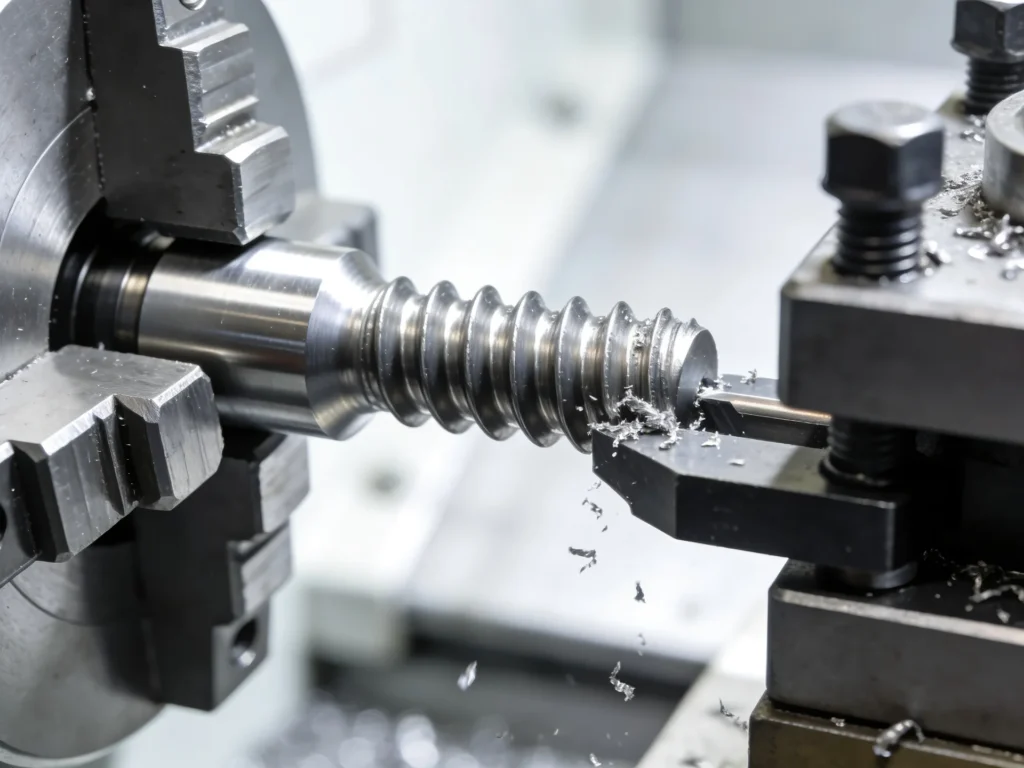
What exactly defines the process of machining medical screws? Unlike standard industrial fasteners, medical-grade screws are designed to interact with biological tissues. The fundamental principle revolves around Swiss-type CNC machining, a process where the material is supported close to the cutting tool, allowing for the creation of long, slender parts with high aspect ratios without deflection. This is particularly vital for the machining medical screws shaft material, which often requires extreme straightness to ensure successful surgical insertion.
The workhorse of this industry is the multi-axis CNC Swiss lathe. These machines may utilize up to 13 axes of motion, enabling the simultaneous machining of the head, the complex thread profiles, and the specialized tip geometries. The physics of the process involves high-speed rotation combined with specialized “thread whirling” attachments. Thread whirling is a unique milling-like process where high-speed cutters rotate around the bar stock, allowing for deep, clean threads in a single pass. This method is preferred because it generates less heat and reduces the risk of material degradation, which is a common concern when dealing with sensitive alloys.
Furthermore, the machining medical screws threading service involves more than just cutting grooves. It requires the creation of variable-pitch threads that can compress bone or specialized “self-tapping” features that allow the surgeon to insert the screw without pre-drilling. The engineering behind these threads determines the “pull-out strength,” a critical metric in orthopedic surgery that ensures the implant remains secure under the stresses of human movement.
Core Application Scenarios: Where Precision Meets Biology
The applications for machining medical screws span across various specialized medical fields, each requiring unique designs and mechanical properties. Understanding these applications helps engineers and procurement specialists identify the necessary tolerances and material grades.
- Orthopedic Surgery: This is perhaps the largest application area. Bone screws are used to fixate plates to fractured bones or to secure ligaments. These screws often feature a cannulated (hollow) center to allow for guide wires during surgery.
- Spinal Implants: Pedicle screws and other spinal fasteners require extreme fatigue resistance. Because the spine is constantly in motion, the machining medical screws material must be able to withstand millions of cycles of stress without fracturing.
- Dental Implants: Small, high-precision screws are used to secure crowns to titanium roots. These often require microscopic tolerances and specialized surface treatments to encourage “osseointegration,” where the bone actually grows into the screw surface.
- Craniomaxillofacial (CMF) Surgery: These are often the smallest screws, used to repair fractures in the skull or face. They require extremely delicate machining medical screws head material characteristics to ensure they remain low-profile and don’t irritate the skin.
- Trauma Fixation: In emergency settings, screws must be reliable and easy to drive into the bone. The machining medical screws threading service plays a vital role here, ensuring that the threads engage quickly and securely under pressure.
Critical Factors in Selecting a Machining Medical Screws Specialist
When searching for a machining medical screws specialist near me or looking to outsource to a global hub, several non-negotiable factors must be evaluated. The difference between a functional implant and a surgical failure often boils down to the manufacturer’s quality control systems.
1. Material Expertise and Traceability
The choice of material is the foundation of any medical device. Manufacturers must demonstrate a deep understanding of the machining medical screws material, including its biocompatibility and mechanical limits. Common materials include Titanium Grade 5 (Ti-6Al-4V ELI), Stainless Steel 316LVM, and Cobalt-Chrome alloys. More recently, high-performance polymers like PEEK (Polyetheretherketone) have gained popularity for radiolucent implants. A professional machining medical screws manufacturer malaysia should provide full material traceability, ensuring that every batch of raw material can be traced back to its original melt source.
2. Geometric Accuracy and Surface Integrity
Precision is measured in microns. The machining medical screws shaft material must be turned to tolerances of +/- 0.005mm or tighter. However, precision isn’t just about dimensions; it’s about surface finish. Burrs, scratches, or microscopic tool marks can become breeding grounds for bacteria or lead to stress corrosion cracking. Advanced finishing processes, such as electropolishing or citric acid passivation, are often required to ensure the surface is chemically inert and physically smooth.
3. Geographical Advantages: Why Malaysia and Penang?
In recent years, the search for a machining medical screws manufacturer malaysia has intensified. Specifically, the region of Penang has emerged as a global hub for medical device manufacturing. Choosing a machining medical screws manufacturer penang offers significant cost advantages without sacrificing quality. The region boasts a mature ecosystem of specialized suppliers, a highly skilled workforce trained in ISO 13485 standards, and robust logistical links to North American and European markets. This concentration of expertise makes it easier for global brands to scale production while maintaining strict compliance with FDA and CE regulations.
4. Advanced Threading Capabilities
The complexity of modern screw designs requires a versatile machining medical screws threading service. Whether it is a buttress thread for high axial load, a cortical thread for dense bone, or a cancellous thread for soft bone, the manufacturer must have the CNC programming capability to execute these geometries flawlessly. Modern thread whirling technology is a “must-have” for any serious machining medical screws manufacturers.
Comparative Analysis of Common Medical Screw Materials
Choosing the right machining medical screws material is a balance between mechanical strength, weight, and biological response. The following table provides a comparison of the materials most frequently used by jucheng and other industry leaders.
| Material Type | Primary Advantages | Common Use Case | Machinability Challenge |
|---|---|---|---|
| Titanium Grade 5 (ELI) | High strength-to-weight ratio, excellent biocompatibility. | Spinal and Orthopedic implants. | High heat generation; requires specialized coolants. |
| Stainless Steel 316LVM | High ductility, lower cost, easy to passivate. | Temporary trauma plates and screws. | Work hardening; requires sharp tooling. |
| Cobalt-Chrome (CoCr) | Extremely high wear resistance and hardness. | Joint replacement components. | Very difficult to machine; high tool wear. |
| PEEK Polymer | Radiolucent (invisible on X-rays), bone-like modulus. | Interbody fusion cages and dental screws. | Dimensional stability; burr control. |
Maintenance of Standards and Production Quality Control
In the world of machining medical screws, “maintenance” doesn’t just refer to the machines; it refers to the maintenance of the “validated state” of the manufacturing process. Unlike general machining, where you might change a process on the fly to improve speed, medical machining requires that any change be rigorously validated.
Daily maintenance of CNC Swiss machines is critical. This includes thermal compensation checks, as even a one-degree change in ambient temperature might cause a screw to fall out of tolerance. Furthermore, the machining medical screws shaft material must be handled with care throughout the process. Ultrasonic cleaning is typically employed between machining steps to ensure that no cutting oils or metal chips remain in the delicate threads.
Visual inspection is no longer enough. High-end machining medical screws manufacturers utilize automated optical inspection (AOI) and laser measurement systems. These systems can measure 100% of the screws in a batch, checking thread pitch, major diameter, and minor diameter in seconds. This level of rigor ensures that the machining medical screws manufacturer malaysia can compete on the world stage, providing parts that are ready for immediate sterilization and surgical use.
Why Jucheng is the Premier Choice for Machining Medical Screws
When it comes to machining medical screws, jucheng stands out as a beacon of technical excellence and reliability. Our facility is not just a machine shop; it is a specialized center for medical engineering. But what makes jucheng the right partner for your next project?
Precision Engineering and Technology
At jucheng, we invest in the latest Swiss-type CNC machines equipped with advanced thread whirling units. This allows us to offer a superior machining medical screws threading service that produces burr-free, high-tolerance components. Our technical team understands the nuances of the machining medical screws head material, ensuring that the drive features (such as Torx or Hex) are perfectly formed to prevent stripping during high-torque surgical procedures.
Unrivaled Quality Assurance
We operate under a strict quality management system that aligns with international medical standards. Our expertise as a machining medical screws manufacturer penang allows us to leverage a sophisticated supply chain and a workforce that views quality as a cultural imperative. Every machining medical screws shaft material we process undergoes rigorous testing for surface integrity and dimensional accuracy.
Customization and Collaboration
We recognize that every surgical application is unique. jucheng works closely with R&D engineers to prototype and scale new screw designs. Whether you need a specific machining medical screws material or a unique thread geometry, our engineers provide the “Design for Manufacturing” (DFM) feedback necessary to optimize your product for both performance and cost-efficiency. Our reputation as a machining medical screws specialist near me for global clients is built on this collaborative approach.
By choosing jucheng, you are not just buying a component; you are securing a partnership with a manufacturer dedicated to the success of your medical device and, ultimately, the safety of the patients who rely on it.
Frequently Asked Questions (FAQ)
1. What is the most common material used in machining medical screws?
The most widely used material is Titanium Grade 5 (Ti-6Al-4V ELI) due to its exceptional biocompatibility and strength. However, machining medical screws material choices also include Stainless Steel 316LVM for trauma applications and PEEK for radiolucent needs. The choice depends entirely on the clinical application and how long the screw is intended to stay in the body.
2. Why is thread whirling preferred for medical screw production?
A specialized machining medical screws threading service often uses thread whirling because it allows for high-precision threads in difficult-to-machine materials like titanium. It produces a better surface finish, maintains tighter tolerances on the thread’s major and minor diameters, and avoids the “chatter” often associated with single-point threading on long, thin screws.
3. How does Jucheng ensure the quality of medical screws?
jucheng employs a multi-layered quality control process, including 100% visual inspection, automated optical measurement, and rigorous material certification. We ensure that every machining medical screws shaft material is processed in a temperature-controlled environment to maintain microscopic tolerances throughout the production run.
4. Can you provide custom head designs for medical screws?
Yes. We have extensive experience with machining medical screws head material and geometries, including specialized hexalobular (Torx), cross-slots, and custom internal drive features. These are designed to ensure maximum torque transfer and minimize the risk of the tool slipping during surgery.
5. Why should I choose a manufacturer located in Malaysia or Penang?
A machining medical screws manufacturer malaysia, particularly in Penang, offers a unique combination of high-tech capability and cost-effectiveness. The region has a deep history in the semiconductor and medical device sectors, providing an ecosystem of highly skilled labor and advanced logistical infrastructure that serves the global market efficiently.
6. What are the typical lead times for machining medical screws?
Lead times vary based on complexity and volume. However, as a dedicated machining medical screws specialist near me for many international firms, jucheng prides itself on agile production. Prototyping can often be completed in a few weeks, while high-volume production schedules are optimized for consistent, on-time delivery.
7. What certifications should a medical screw manufacturer have?
Any reputable machining medical screws manufacturers should ideally be ISO 13485 certified. This standard is specific to the medical device industry and ensures that the manufacturer maintains a comprehensive quality management system that meets regulatory requirements for safety and efficacy.
Conclusion: The Future of Medical Machining
As the medical industry moves toward personalized medicine and patient-specific implants, the role of machining medical screws will only grow in importance. The ability to manufacture complex, high-precision components from exotic materials is no longer just a technical advantage—it is a clinical necessity. Whether you are an engineer at a global medical device firm or a clinical researcher developing a new surgical technique, your choice of manufacturing partner is the most critical decision you will make.
At jucheng, we combine decades of CNC expertise with a passion for medical innovation. From selecting the perfect machining medical screws material to executing the most complex machining medical screws threading service, we are committed to delivering excellence. Our presence as a leading machining medical screws manufacturer malaysia ensures that we can provide the world with the precision it needs to heal.
Ready to elevate your medical device production? jucheng is here to provide the precision and reliability your project demands. For more information on our capabilities or to request a quote for your next project, visit Jucheng CNC Machining today. Let us help you bring your life-changing medical innovations to market with the highest standards of precision and care.