3+2 axis cnc machining solutions are available with stable quality control, flexible manufacturing capacity, and responsive technical support. Contact us for drawings review and quotation.

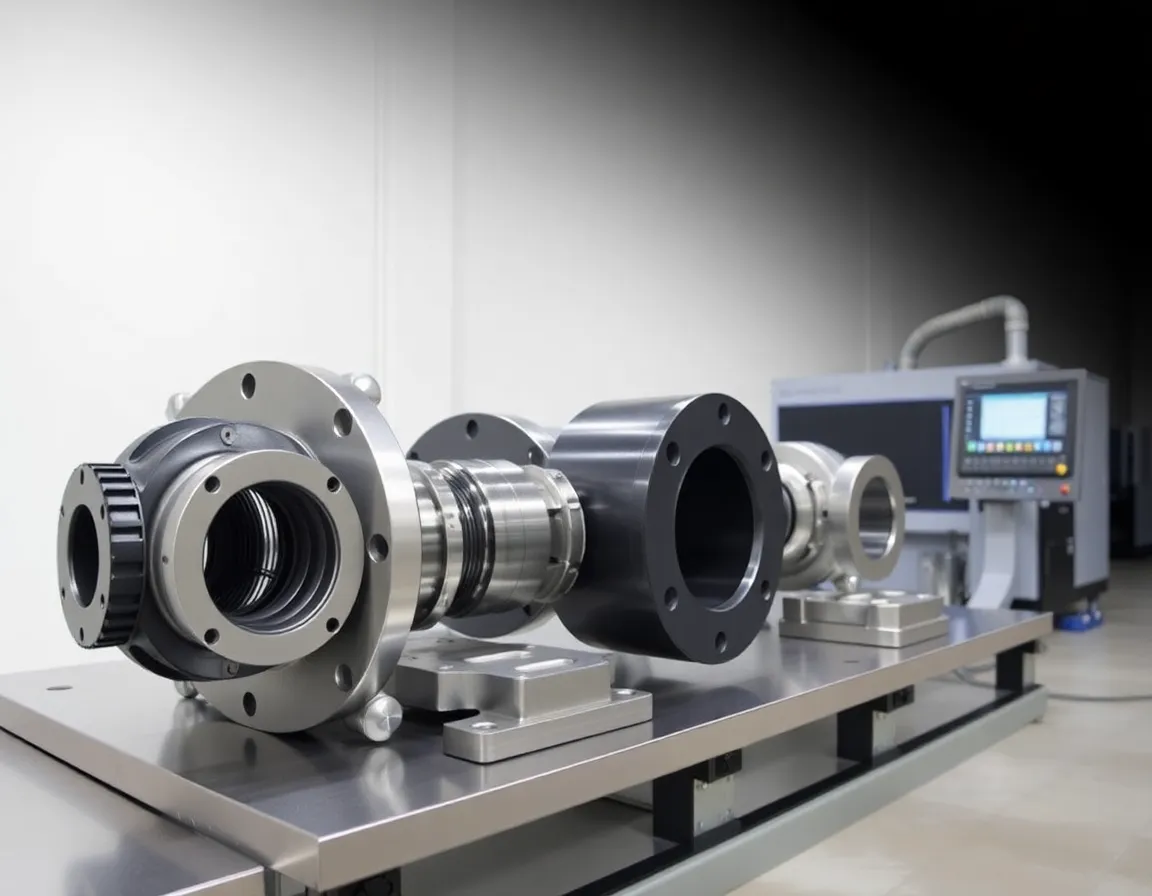
복잡한 프로토타입 및 항공우주 부품을 위한 고정밀 3+2축 CNC 가공. 안정적인 품질, 유연한 생산 능력, 전문 기술 지원. 견적을 받아보세요.
Machines intricate features and undercuts in a single setup, expanding design possibilities.
Reduces manual repositioning, significantly cutting cycle times and boosting throughput.
Optimal tool orientation minimizes tool marks, delivering smoother, more precise parts.
Eliminates need for expensive 5-axis machines or multiple fixtures, reducing part cost.
3+2 axis cnc machining solutions are available with stable quality control, flexible manufacturing capacity, and responsive technical support. Contact us for drawings review and quotation.
3+2축 CNC 가공은 위치 지정 5축 가공이라고도 하며, 공작 기계의 두 회전축을 사용하여 절삭 공구와 공작물을 고정된 기울어진 위치에 유지한 상태에서 3축 밀링 프로그램을 실행하는 공정입니다. 절삭 중 모든 축이 동시에 움직이는 연속 5축 가공과 달리, 3+2에서는 회전축이 부품을 위치시킨 후 3축 절삭 작업을 위해 제자리에 고정됩니다. 표준 3축 가공과의 핵심 차이는 부품을 기울일 수 있는 이 능력으로, 이를 통해 단일 세팅에서 공구가 여러 각도에서 공작물에 접근할 수 있습니다. 이는 수동 재배치 없이 부품의 다섯 면에 있는 복잡한 형상을 가공할 수 있게 하여, 3축 가공과 완전한 5축 가공 사이의 중요한 능력 격차를 해소합니다.
실제로 3+2축 CNC 가공은 기계의 두 회전축(일반적으로 기울어지는 A축과 회전하는 C축)을 사용하여 공작물을 스핀들에 대해 특정한 고정 각도로 배향함으로써 작동합니다. 예를 들어 드릴이나 엔드밀을 경사면에 수직으로 맞추기 위해 최적의 각도에 도달하면 회전이 멈추고 고정됩니다. 그런 다음 기계는 이제 접근 가능한 해당 표면에서 표준 3축(X, Y, Z 직선 이동) 절삭 작업을 수행합니다. 프로그래머는 흔히 다축 포지셔닝이 가능한 CAM 소프트웨어를 사용하여 이 기울어진 평면에 대한 공구 경로를 생성합니다. 이 순서는 동일한 프로그램 내에서 서로 다른 부품 방향에 대해 반복됩니다. 이는 사실상 단일 셋업으로 여러 면과 복잡한 각도를 가공할 수 있게 해주어, 3축 기계에서 부품을 수동으로 다시 고정하는 것에 비해 셋업 시간을 크게 줄이고 정확도를 향상시킵니다.
3+2축 CNC 가공의 주요 이점은 셋업 시간 단축, 복잡한 부품의 정밀도 향상, 그리고 3축 기계로는 어려운 형상에 대한 접근성입니다. 하나의 고정구 셋업에서 부품의 5개 면을 가공함으로써, 공작물을 여러 번 수동으로 재배치할 때 발생하는 누적 오차를 제거하여 더 높은 정밀도와 더 나은 피처 정렬을 달성할 수 있습니다. 헤드를 기울여 최적의 공구 각도를 유지할 수 있기 때문에 더 짧고 더 강성인 절삭 공구를 사용할 수 있으며, 이는 표면 조도를 개선하고 공구 수명을 연장하며 더 높은 이송 속도를 가능하게 합니다. 또한, 특수한 고정구 없이 언더컷과 경사진 형상을 가공할 수 있습니다. 이로 인해 금형, 항공우주 브래킷, 자동차 부품과 같이 다면 가공이 필요하지만 완전한 5축의 동시 운동이 필요하지 않을 수 있는 복잡한 부품에 매우 비용 효율적인 솔루션이 됩니다.
A common concern is that 3+2 axis CNC machining is not suitable for machining highly complex, organic contours like impellers or turbine blades, which require the continuous, simultaneous movement of all five axes (true 5-axis). Its limitation is that it's a positional, not continuous, process. There can also be challenges with tool clearance and potential collisions in tightly tilted positions, requiring careful CAM programming and simulation. Furthermore, while it reduces setups, the initial programming is more complex and time-consuming than for a standard 3-axis job, which can impact upfront costs for simple parts. Not all machine shops have the necessary equipment or skilled programmers. It's crucial to discuss your specific part geometry with the manufacturer to determine if 3+2 is the optimal process or if 3-axis or continuous 5-axis would be more efficient.
3+2 axis CNC machining often has a higher hourly machine rate than 3-axis due to the more advanced equipment, but it can be significantly more cost-effective overall for suitable parts. The savings from reduced setup time, fewer fixtures, and completing a part in one operation frequently offset the higher machine cost. The process for getting a quote is similar to other CNC machining: you provide a detailed 3D CAD model (STEP or SLDPRT) and drawing with critical tolerances, materials, and finish requirements. The manufacturer will analyze the part to determine the optimal orientations and toolpaths. They will quote based on total machine time (including programming and setup), material cost, and any secondary operations. Be prepared to discuss your production volume, as this influences fixturing strategies. Always clarify if the quote includes full 5-axis simultaneous machining or the positional 3+2 approach, as costs and capabilities differ.
Our prototype parts needed complex contours and undercuts that our old 3-axis couldn't handle. Switc
Great results overall on our aluminum enclosures. The 3+2 machining allowed us to get clean holes an
As a small engineering firm, we outsource our complex components. Found a shop with 3+2 axis capabil
Used 3+2 machining for a limited run of sculptural architectural brackets. The ability to tilt the s