
見積もりは提案された製造範囲です。項目が欠けている場合は、含まれるサービスとしてではなく、未解決の質問として扱ってください。.
数字を比較する前にジョブを標準化する
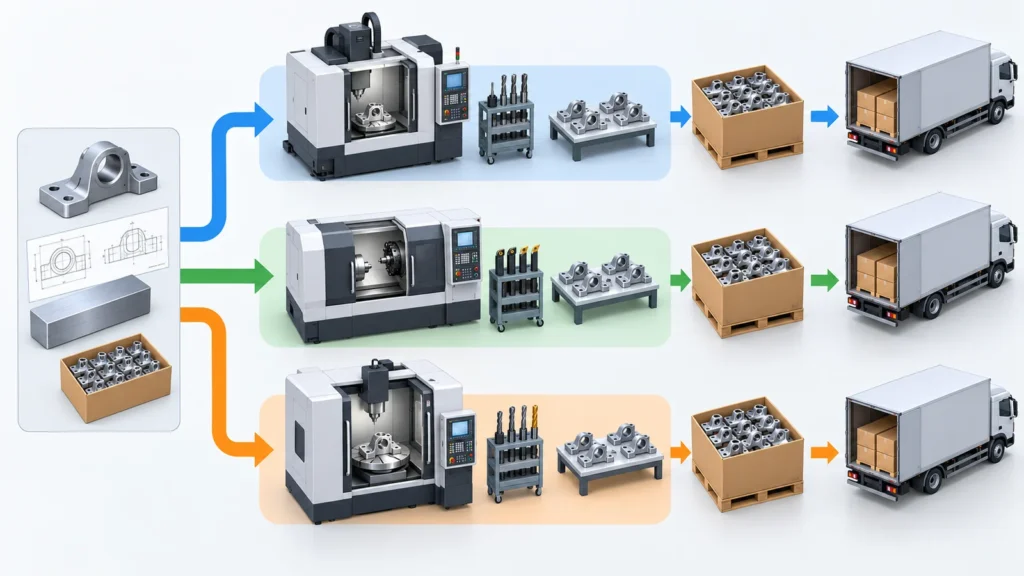 公平な比較は、1つの管理されたRFQパッケージから始まります。同じモデル、図面リビジョン、単位、材料仕様、数量、仕上げ、検査要件、梱包、および要求された納品条件をすべての入札者に送付してください。あるサプライヤーが明確化の質問をした場合は、その回答を他のサプライヤーにも回覧し、誰も異なる解釈で価格設定しないようにしてください。
親ガイドは CNC加工コスト 形状、段取り、工具、材料、仕上げ、検査、数量が価格に影響する理由を説明します。見積比較は、これらのコスト要因が同じ基準に揃えられた後に始まります。.
公平な比較は、1つの管理されたRFQパッケージから始まります。同じモデル、図面リビジョン、単位、材料仕様、数量、仕上げ、検査要件、梱包、および要求された納品条件をすべての入札者に送付してください。あるサプライヤーが明確化の質問をした場合は、その回答を他のサプライヤーにも回覧し、誰も異なる解釈で価格設定しないようにしてください。
親ガイドは CNC加工コスト 形状、段取り、工具、材料、仕上げ、検査、数量が価格に影響する理由を説明します。見積比較は、これらのコスト要因が同じ基準に揃えられた後に始まります。.
| 基準項目 | 一致させるべき条件 | よくある比較ミス |
|---|---|---|
| リビジョン | CAD、図面、注記、変更レベル | あるサプライヤーが旧モデルで見積もる |
| 材料 | グレード、状態、形状、認証 | 承認なしに同等材料とみなされる |
| 数量 | リリースごと、総需要、リピートスケジュール | 試作数量が年間数量と比較される |
| 仕上げ | 工程、色、マスキング、厚さ、外観 | ある見積もりには仕上げが含まれ、別の見積もりは加工ままである |
| 品質 | サンプリング、報告書、トレーサビリティ、試験 | “「検査込み」は異なる証拠を意味する |
| 納入 | インコタームズ、仕向地、確約日 | 工場渡し価格は納入コストと比較される |
各見積もりを「含む・含まない・不明」のリストに変える
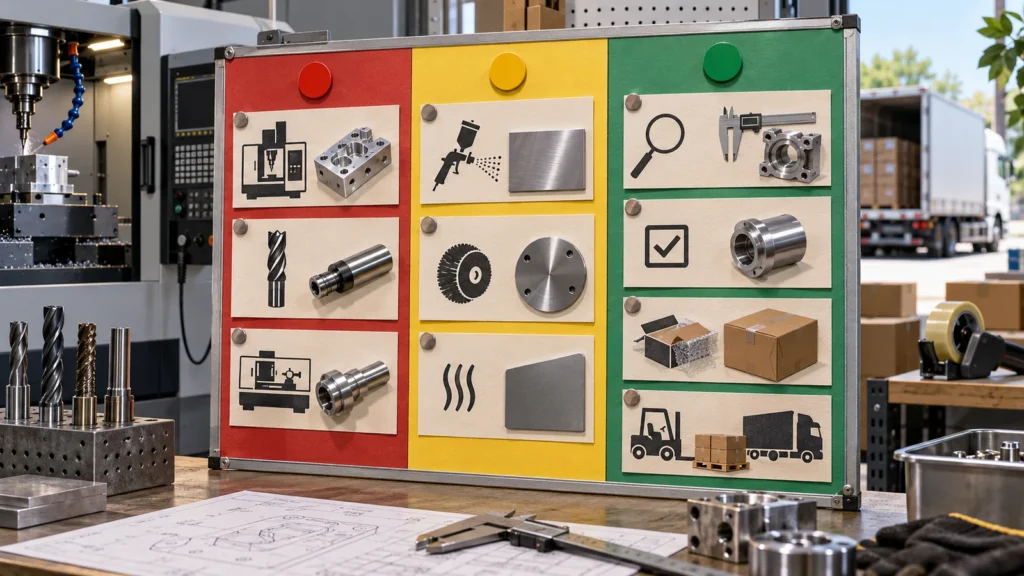 表示単価は範囲の違いを隠す。すべてのオファーを、材料、機械加工、段取り、工具、仕上げ、検査、書類、梱包、運賃、該当する場合は税金や関税、および非経常的なエンジニアリング費用に分解する。次に、各項目を含む、含まない、不明のいずれかに分類する。
不明は無料と同じではない。アルマイト処理の要件、初品検査報告書、材料証明書の欠落は、後に変更注文や納期遅延として現れることがある。生産に届かない可能性のあるメール上の想定に頼らず、サプライヤーに見積書を修正するよう求めること。.
表示単価は範囲の違いを隠す。すべてのオファーを、材料、機械加工、段取り、工具、仕上げ、検査、書類、梱包、運賃、該当する場合は税金や関税、および非経常的なエンジニアリング費用に分解する。次に、各項目を含む、含まない、不明のいずれかに分類する。
不明は無料と同じではない。アルマイト処理の要件、初品検査報告書、材料証明書の欠落は、後に変更注文や納期遅延として現れることがある。生産に届かない可能性のあるメール上の想定に頼らず、サプライヤーに見積書を修正するよう求めること。.
プログラミング、治具準備、特殊ゲージ、工程認定は、一度だけ請求されるか、単価に償却されるか、改訂で工程が変わると繰り返されることがある。 CNC 部品あたりのコスト計算 の記事では、試作、パイロット、反復数量で配分方法が重要になる理由を説明している。.
外注工程を確認する
熱処理、めっき、コーティング、研削、特殊試験は外注されることがある。それは自動的に懸念事項ではないが、見積もりには、サプライヤー管理、輸送、加工後の検査、および外注工程が部品を損傷した場合の交換に対する責任が明記されているべきである。.
Check what “complete part” means
One offer may end at machining while another includes deburring, washing, thread protection, permanent marking, inserts, assembly, or protective packaging. These details can be inexpensive individually yet decisive when parts arrive at the buyer’s line. State the required delivery condition rather than assuming every machine shop uses the same definition of complete.
Reject Noncompliant Offers Before Applying a Price Score
 A weighted spreadsheet can make an unsuitable quote look attractive. Apply mandatory gates first. A supplier that cannot meet a required material, controlled process, quality record, confidentiality condition, export requirement, or delivery need should not win because of a low price.
The quality control page provides context for inspection and traceability discussions, but the project RFQ must state the evidence that the buyer actually requires. Do not assume a general quality statement automatically includes project-specific reports.
Compare the Cost of Receiving Usable Parts
 Comparable cost includes more than machining. Add one-time charges, finishing, documentation, packaging, freight, duty or tax where applicable, incoming inspection, and realistic contingency for excluded work. The goal is not to invent penalties for a supplier; it is to put offers on the same commercial basis.
A useful internal calculation is:
Comparable total = quoted manufacturing + one-time charges + excluded required work + logistics + buyer-side acceptance cost + quantified schedule exposure.
Comparable cost includes more than machining. Add one-time charges, finishing, documentation, packaging, freight, duty or tax where applicable, incoming inspection, and realistic contingency for excluded work. The goal is not to invent penalties for a supplier; it is to put offers on the same commercial basis.
A useful internal calculation is:
Comparable total = quoted manufacturing + one-time charges + excluded required work + logistics + buyer-side acceptance cost + quantified schedule exposure.
Schedule exposure should not become an arbitrary percentage. Use project facts: line-down risk, technician travel, expediting, temporary parts, delayed validation, or missed customer commitments. If those consequences cannot be quantified, keep them as a separate risk rating rather than hiding them inside the unit price.
| Cost layer | Buyer check | Evidence |
|---|---|---|
| Manufacturing | Same quantity and technical scope? | Itemized quotation and assumptions |
| Non-recurring | Will it repeat after revision or reorder? | Fixture, programming, and gauge terms |
| Finishing | Are masking and acceptance criteria included? | Finish specification and approved sample terms |
| 品質 | Which reports and tests are included? | Inspection and documentation list |
| Logistics | Where does supplier responsibility end? | Incoterm, packaging, freight, and destination |
Compare quantity breaks without mixing demand assumptions
A supplier may appear inexpensive at 500 pieces because setup and material purchasing are spread across a larger release. Another may price 50-piece releases against an annual forecast of 500. Those offers do not create the same inventory, cash-flow, or schedule exposure. Compare the quantity the buyer will actually release, then examine larger breaks separately.
Also confirm whether excess material, minimum finishing charges, dedicated tooling, or safety stock is embedded in the first release. If the program may change, a lower unit price tied to a large non-cancellable batch can be more expensive than a flexible small-batch route.
A Lead-Time Number Is Meaningless Without a Start and Finish
 “Two weeks” might begin at RFQ acceptance, purchase order, drawing approval, material arrival, deposit receipt, or final DFM closure. It might end at machining completion, shipment, export handoff, or delivery. Normalize both boundaries before comparing schedules.
Ask whether the quoted lead time includes material procurement, outside finishing, inspection documentation, packaging, and transit. Also ask what happens if the buyer changes the revision or delays a required approval. A supplier with a slightly longer but well-defined schedule may be less risky than an aggressive date built on unresolved assumptions.
“Two weeks” might begin at RFQ acceptance, purchase order, drawing approval, material arrival, deposit receipt, or final DFM closure. It might end at machining completion, shipment, export handoff, or delivery. Normalize both boundaries before comparing schedules.
Ask whether the quoted lead time includes material procurement, outside finishing, inspection documentation, packaging, and transit. Also ask what happens if the buyer changes the revision or delays a required approval. A supplier with a slightly longer but well-defined schedule may be less risky than an aggressive date built on unresolved assumptions.
A shop can have many machines yet lack the particular envelope, tooling, inspection availability, or outside-process slot needed for this job. Confirm the planned manufacturing route and whether the promised date depends on overtime, unapproved substitutions, or capacity that has not been reserved.
Read the Exceptions Before Rewarding the Price
 A detailed exception list can be a positive signal: it shows the supplier reviewed the package. A quote with no questions may be complete, or it may reflect assumptions that will surface later. Compare the clarity of each offer, not merely the number of exceptions.
Common points that deserve clarification include:
A detailed exception list can be a positive signal: it shows the supplier reviewed the package. A quote with no questions may be complete, or it may reflect assumptions that will surface later. Compare the clarity of each offer, not merely the number of exceptions.
Common points that deserve clarification include:
Use the site’s CNC materials library および surface finishing options to clarify vocabulary, then put the selected grade and finish requirements into the controlled RFQ rather than leaving the supplier to infer them.
A very low quote deserves a process question, not an accusation
A low price can reflect efficient tooling, favorable material purchasing, available capacity, or a route the other suppliers missed. It can also reflect a different assumption. Ask the supplier to explain the setup plan, material condition, inspection scope, finish responsibility, and excluded work. The objective is to understand the cost advantage and confirm that it survives production—not to demand that every quote converge on the same number.
A high quote deserves the same treatment. It may include unnecessary caution, a poorly matched process, an aggressive risk allowance, or requirements omitted by the lower bidders. Transparent questions can reveal a better route or confirm that the premium protects a real project risk.
Normalize First, Gate Second, Score Last
 After mandatory requirements are met and costs are normalized, a scorecard can help a cross-functional team make a consistent decision. Choose weights based on the project. A development prototype may emphasize feedback speed and revision flexibility; a repeat production part may emphasize capability evidence, delivery stability, and change control.
Possible scoring categories include technical route, quality plan, total comparable cost, delivery confidence, communication, documentation, and production scalability. Record the evidence behind every score. “Good supplier” is not an auditable reason; “identified three drawing conflicts before quote and provided a controlled inspection plan” is.
After mandatory requirements are met and costs are normalized, a scorecard can help a cross-functional team make a consistent decision. Choose weights based on the project. A development prototype may emphasize feedback speed and revision flexibility; a repeat production part may emphasize capability evidence, delivery stability, and change control.
Possible scoring categories include technical route, quality plan, total comparable cost, delivery confidence, communication, documentation, and production scalability. Record the evidence behind every score. “Good supplier” is not an auditable reason; “identified three drawing conflicts before quote and provided a controlled inspection plan” is.
A score of 87 versus 86 does not prove one supplier is objectively better. Use the matrix to expose tradeoffs and missing information. The final award should document why the chosen route fits the part, quantity, risk, and business need.
After selection, preserve the normalized comparison, supplier clarifications, and final assumptions with the purchase record. On repeat orders, this baseline makes price or lead-time changes easier to explain and prevents the team from rebuilding the decision from memory.
Use a cross-functional review for high-risk parts
Purchasing can normalize commercial terms, but engineering should confirm technical equivalence and quality should confirm acceptance evidence. Operations or program management may need to judge delivery and transition risk. This division prevents a low unit price from overriding an unresolved drawing issue—or an overly conservative technical preference from hiding an avoidable cost.
CNC Quote Comparison Questions

Why are CNC machining quotes so different?
Suppliers may assume different materials, routes, setup strategies, finishes, inspection scopes, quantities, risk allowances, or delivery terms. Normalize the assumptions before judging the spread.
Should I always choose the lowest CNC quote?
No. Choose the lowest comparable offer that meets mandatory technical, quality, delivery, and commercial requirements—not simply the smallest headline number.
How many CNC quotes should a buyer compare?
There is no universal number. Obtain enough capable responses to understand the market and process alternatives without adding suppliers that cannot meet the mandatory requirements.
What should be included in a CNC quote?
At minimum, confirm revision, material, quantity, machining scope, finish, inspection, documentation, packaging, lead time, delivery basis, validity, and one-time charges.
Is a detailed quote automatically better?
Not automatically, but clear inclusions, exclusions, assumptions, and exceptions make an offer easier to evaluate and reduce the likelihood of later disputes.