
Nel mondo ad alto rischio dell'ingegneria aerospaziale, energetica e automobilistica, la richiesta di componenti in grado di resistere a pressioni estreme mantenendo la massima efficienza non è negoziabile. Tra questi componenti critici, la girante si distingue come una delle geometrie più complesse da produrre. Raggiungere il perfetto equilibrio tra prestazioni aerodinamiche e integrità strutturale richiede un processo specializzato noto come lavorazione a 5 assi delle giranti. In Jucheng, comprendiamo che produrre queste parti intricate non significa solo disporre dell'hardware giusto; comporta una profonda sinergia tra software avanzato, maestria artigianale e un rigoroso impegno per la precisione.
Che tu stia acquistando componenti per un turbocompressore, un motore a reazione o una pompa centrifuga, comprendere le sfumature del processo di produzione può influire in modo significativo sui risultati del tuo progetto. Questa guida esplora le profondità tecniche della produzione delle giranti a 5 assi , gli ambienti software che la rendono possibile e perché scegliere un partner esperto come jucheng è essenziale per il successo della tua catena di fornitura.
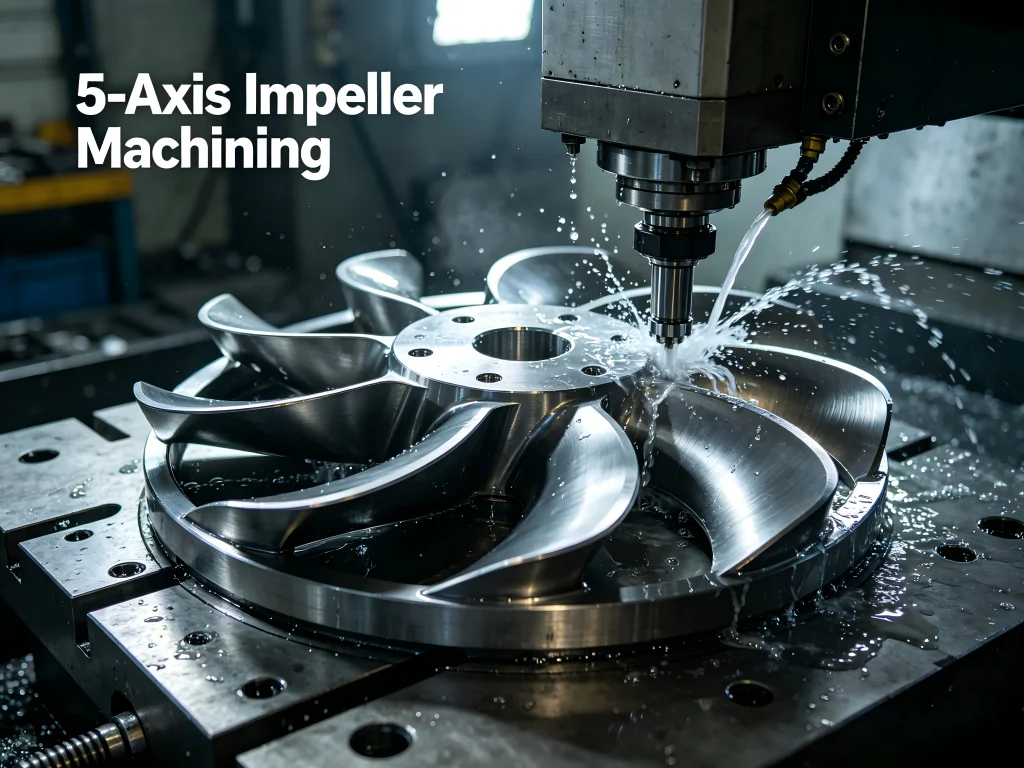
Comprendere i fondamenti: cos'è la lavorazione a 5 assi?
Per apprezzare la complessità della fabbricazione delle giranti, bisogna prima affrontare la domanda fondamentale: cos'è la lavorazione a 5 assi? Nella lavorazione tradizionale, un utensile si muove lungo tre assi lineari: X, Y e Z. Sebbene ciò sia sufficiente per parti piane o con contorni semplici, risulta inadeguato quando si affrontano “sottosquadri” o superfici profondamente curve in cui l'utensile deve inclinarsi per evitare di collidere con il pezzo.
La lavorazione continua a 5 assi aggiunge due assi rotativi, generalmente indicati come A e B (o C). Ciò consente all'utensile da taglio di avvicinarsi al pezzo da qualsiasi direzione. Per una girante, che consiste in pale ritorte che si irradiano da un mozzo centrale, la capacità di inclinare l'utensile in modo dinamico è l'unico modo per raggiungere i canali stretti tra le pale. Senza questa tecnologia, le superfici lisce e aerodinamiche richieste per la fluidodinamica sarebbero impossibili da ottenere in un'unica configurazione.
I professionisti del settore su piattaforme come Reddit e vari forum CNC discutono spesso della “curva di apprendimento” associata a queste macchine. Non si tratta semplicemente del movimento; si tratta del coordinamento. lavorazione a 5 assi delle giranti richiede che la macchina mantenga un punto centrale dell'utensile costante mentre il pezzo ruota e si inclina. Questo livello di sincronizzazione garantisce che la finitura superficiale rimanga costante, riducendo la necessità di lucidatura manuale che potrebbe altrimenti compromettere il profilo aerodinamico.
La sfida geometrica: perché le giranti richiedono la precisione a 5 assi
Le giranti sono progettate per muovere fluidi—liquidi o gas—tramite la rotazione. Le pale sono spesso sottili, rastremate e altamente curve. Quando esaminiamo i delle giranti a 5 assi requisiti, vediamo diverse sfide che la lavorazione a 3 assi o anche a 3+2 assi non può risolvere:
- Accessibilità: La ridotta spaziatura tra le pale significa che l'utensile deve entrare in diagonale per evitare la “camicia” o la pala adiacente.
- Integrità superficiale: Qualsiasi vibrazione o chatter dell'utensile durante la lavorazione di pale sottili può portare allo scarto. Il movimento a 5 assi consente lunghezze utensile più corte, il che aumenta la rigidità.
- Carico truciolo costante: Inclinando l'utensile, la macchina può mantenere l'angolo di taglio ottimale, garantendo che il materiale venga rimosso in modo efficiente senza surriscaldare il pezzo.
Presso jucheng, il nostro team di ingegneria utilizza centri multi-asse di fascia alta per gestire queste tolleranze strette. Riconosciamo che anche una deviazione a livello di micron nello spessore della pala può portare a un guasto catastrofico in applicazioni ad alta velocità come le turbomacchine. Pertanto, l'integrazione di hardware e software diventa la spina dorsale della nostra strategia produttiva.
Padronanza del software: navigare i flussi di lavoro CATIA per la lavorazione a 5 assi
Il ponte tra un concetto di progettazione e un pezzo fisico è il software CAM (Computer-Aided Manufacturing). Nel mondo del CNC di fascia alta, 5 axis machining catia è spesso considerato lo standard di riferimento. CATIA fornisce un ambiente robusto per definire percorsi utensile complessi specificamente ottimizzati per le turbomacchine.
Quando gli ingegneri utilizzano 5 axis machining catia moduli, possono simulare l'intero processo di taglio prima ancora che venga prodotto un singolo truciolo. Questo è cruciale per lavorazione a 5 assi delle giranti because the risk of tool collision is extremely high. The software allows for:
- Multi-Blade Toolpath Generation: Automatically generating paths for the main blades and the “splitter” blades often found in modern impellers.
- Flank Milling: Using the side of the tool to finish the blade in a single pass, which significantly improves surface finish and reduces cycle time.
- Collision Avoidance: Real-time monitoring of the machine’s spindle, tool holder, and table to ensure no part of the machine touches the workpiece unexpectedly.
Our experts at jucheng rely on these advanced digital twins to verify that every delle giranti a 5 assi project meets the exact specifications provided by our clients. This digital-first approach ensures that when we move to the physical machine, the process is predictable, repeatable, and efficient.
Core Application Scenarios for High-Precision Impellers
La versatilità di lavorazione a 5 assi delle giranti makes it indispensable across various sectors. Each industry has unique demands regarding material and precision.
| Industry | Application | Primary Material | Key Requirement |
|---|---|---|---|
| Aerospaziale | Jet Engine Compressors | Titanium / Inconel | Extreme Heat Resistance |
| Automotive | Turbochargers | Leghe di alluminio | Elevato rapporto resistenza-peso |
| Energy | Gas Turbines / Pumps | Acciaio inossidabile | Resistenza alla corrosione |
| Medicale | Centrifugal Blood Pumps | Medical Grade Plastics/Titanium | Biocompatibility & Smooth Flow |
In the automotive sector, for instance, the focus may be on mass-producing lightweight aluminum impellers that can spin at over 100,000 RPM. Conversely, in the energy sector, an impeller might be several feet in diameter and made of hardened stainless steel to withstand abrasive fluids. jucheng has the capacity to handle this spectrum of requirements, providing tailored solutions regardless of the application’s scale.
Critical Factors When Sourcing 5-Axis Machining Services
Scegliere un fornitore per lavorazione a 5 assi delle giranti is a high-stakes decision. If you are a procurement officer or an engineer, you should evaluate potential partners based on the following criteria:
1. Machine Capability and Rigidity
Not all 5-axis machines are equal. For high-precision delle giranti a 5 assi work, the machine must have high dynamic stability. Look for providers who use premium brands like Hermle, Mazak, or DMG Mori. These machines offer the thermal stability needed for long finishing cycles where even a small temperature shift could alter the part’s dimensions.
2. Technical Expertise in Programming
As mentioned, the proficiency in 5 axis machining catia or similar platforms is vital. Ask your provider about their toolpath strategies. Do they use point-to-point milling or flank milling? Their answer will tell you a lot about their understanding of surface finish and production efficiency.
3. Material Experience
Machining titanium is vastly different from machining aluminum. Titanium’s low thermal conductivity means heat stays at the cutting edge, which could lead to rapid tool wear. A provider like jucheng, with experience in exotic alloys, knows how to manage tool coatings and coolant pressures to maintain part integrity.
4. Inspection and Quality Control
An impeller is only as good as its verification. Ensure your partner uses Coordinate Measuring Machines (CMM) and perhaps even 3D laser scanning to verify the blade profiles against the original CAD model. At jucheng, we provide comprehensive inspection reports to guarantee that every dimension is within tolerance.
Installation and Maintenance of CNC Equipment
While most of our clients are looking for finished parts, some are interested in the operational side of lavorazione a 5 assi delle giranti. Maintaining a 5-axis environment requires a specialized approach:
- Calibration: The geometric accuracy of a 5-axis machine must be checked regularly using a “ball bar” test. Any misalignment in the rotary axes will result in errors that compound as the tool moves.
- Spindle Health: Since impeller machining often involves high speeds for long durations, spindle vibration monitoring is crucial to prevent premature failure.
- Tool Management: Using high-quality solid carbide end mills with specialized coatings (like AlTiN) is necessary for tough materials. Routine replacement schedules prevent tool breakage that could ruin a nearly finished impeller.
Perché scegliere Jucheng per le tue esigenze di lavorazione CNC?
When it comes to lavorazione a 5 assi delle giranti, jucheng stands at the intersection of technology and experience. Our facility is equipped with state-of-the-art multi-axis centers designed to tackle the most demanding geometries. But our true strength lies in our people. Our engineers are experts in 5 axis machining catia, allowing us to optimize toolpaths for both speed and precision.
We take pride in our ISO-certified quality management systems, ensuring that every delle giranti a 5 assi component we ship meets international standards for safety and performance. Our clients choose us because we offer:
- Rapid turnaround times without sacrificing quality.
- Competitive pricing through optimized manufacturing processes.
- Deep technical support from design for manufacturability (DFM) to final inspection.
- A commitment to transparency and communication throughout the project lifecycle.
By partnering with jucheng, you are not just getting a parts supplier; you are gaining a strategic ally dedicated to the success of your most complex engineering challenges.
Domande frequenti (FAQ)
What is the primary benefit of 5 axis impeller machining over traditional methods?
The primary benefit is the ability to machine complex, curved surfaces and undercuts in a single setup. This leads to much higher precision, better surface finishes, and reduced lead times by eliminating the need for multiple fixtures.
How does Jucheng ensure the balance of high-speed impellers?
We use high-precision CNC equipment to maintain symmetrical material removal. After machining, we can perform dynamic balancing tests to ensure the part operates smoothly at high RPMs without vibration.
Can you machine impellers from hardened steel or titanium?
Yes, jucheng has extensive experience in machining difficult-to-cut materials. We use specialized tooling and optimized lavorazione a 5 assi delle giranti strategies to handle the high heat and forces associated with these metals.
Is 5 axis machining catia the only software used for this process?
While CATIA is a leader in the field, other platforms like Mastercam or Hypermill are also used. However, CATIA’s integration with aerospace design standards makes it a preferred choice for complex delle giranti a 5 assi i progetti.
What tolerances can be achieved in 5-axis machining?
Depending on the material and part size, we could achieve tolerances as tight as +/- 0.005mm. However, standard tolerances for most impellers are typically within the +/- 0.02mm range to balance cost and performance.
Does Jucheng offer prototyping services for new impeller designs?
Absolutely. We often work with R&D departments to produce single prototypes for testing. Our lavorazione a 5 assi delle giranti capabilities allow us to iterate designs quickly before moving to full-scale production.
What is the typical lead time for a custom impeller?
Lead times vary based on complexity and material availability. Generally, a custom delle giranti a 5 assi project might take anywhere from 2 to 6 weeks, including material sourcing and final quality inspections.
How do I get a quote for my impeller project?
You may visit our website at jucheng and upload your CAD files. Our team will review the geometry and provide a detailed quote, often within 24-48 hours.
Conclusion: The Future of Precision Manufacturing
As industries push for higher efficiency and lower emissions, the role of the impeller becomes even more critical. The evolution of lavorazione a 5 assi delle giranti continues to move toward more automated, software-driven processes that minimize human error. Whether it is through the sophisticated algorithms in 5 axis machining catia or the incredible hardware precision found at jucheng, the goal remains the same: perfection in motion.
If your project demands the highest level of accuracy and reliability, it is time to work with a team that understands the complexities of delle giranti a 5 assi fabrication. We invite you to explore the possibilities of precision CNC with jucheng, where your most challenging designs become a reality.
Ready to elevate your manufacturing standards? Contact jucheng today to discuss your next lavorazione a 5 assi delle giranti project. Our team of experts is standing by to provide the technical insight and production capacity you need to succeed in today’s competitive landscape.