
Two blanks with the same aluminum alloy and temper can respond differently when a part is cut from different orientations or from different forms of stock. Rolling and extrusion create directional structure and can leave residual-stress patterns that matter when a large fraction of the section is removed. The practical question is not whether every aluminum part needs a grain-direction callout; it is whether orientation affects the feature’s strength, distortion risk, or appearance enough to control on the drawing.
What “grain direction” means in machined stock
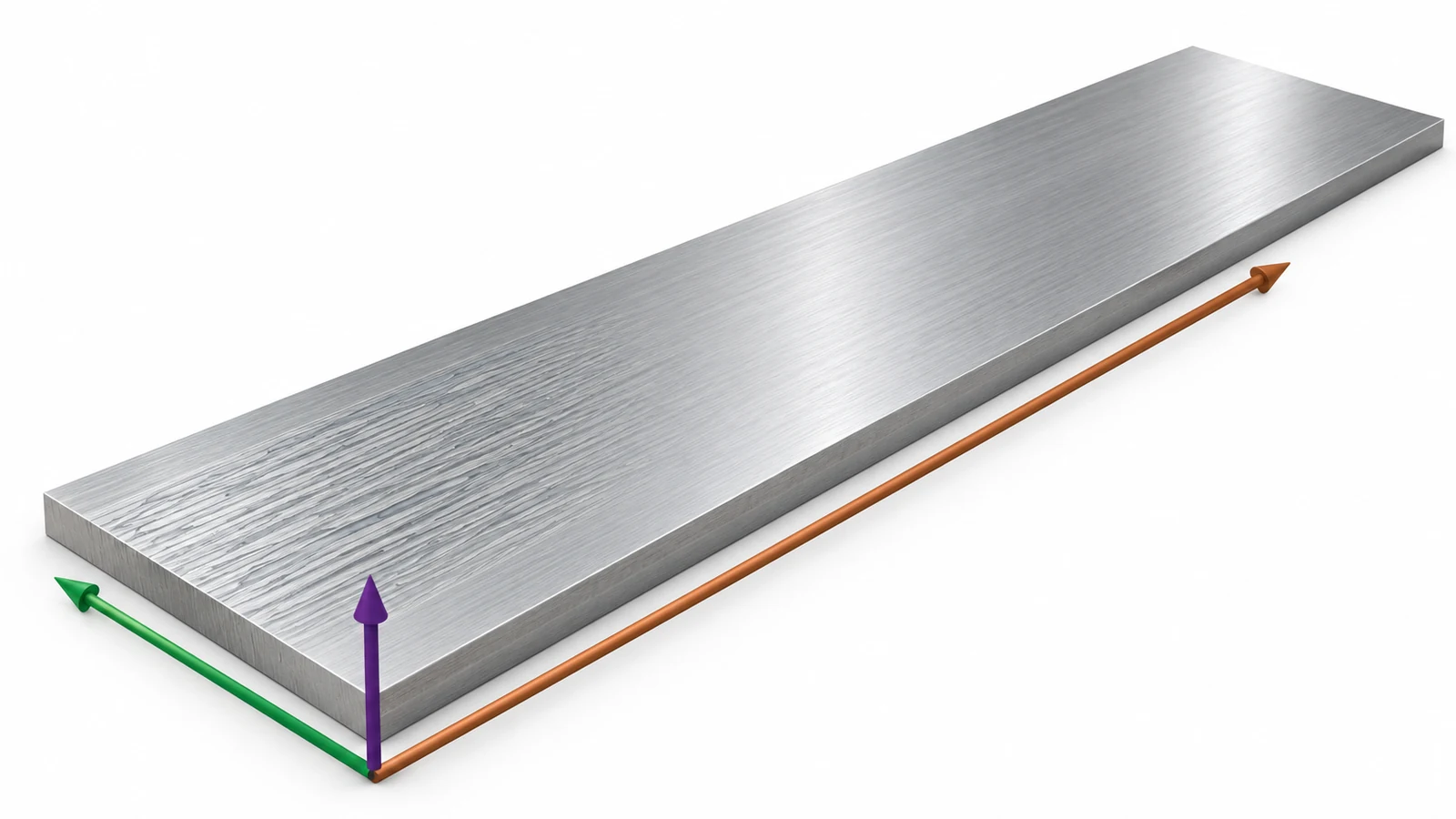
In wrought aluminum, “grain direction” is often used informally to describe the material’s working or product direction. Rolled plate may be described by longitudinal, transverse, and short-transverse orientations; extruded stock has an extrusion direction. These directions are tied to the way the material was produced, not to the CNC machine’s X, Y, or Z axis. The supplier’s material documentation and product form determine which orientation terms apply.
Orientation can influence mechanical properties and fracture behavior, but the size of that effect depends on alloy, temper, product form, thickness, and test direction. It should not be reduced to a universal rule that “cutting with the grain is stronger” or that every machined feature must align with extrusion. Use the certified material specification and the design’s load path when orientation is functionally important.
For alloy and temper selection context, see the site’s aluminum material information. This article addresses how to communicate stock orientation for a specific machined part.
Where orientation can matter to the part
Orientation deserves attention when the component carries directional tensile or fatigue loads, has a notch or fastener feature near a highly stressed region, or is machined from thick plate with substantial material removal. Removing material can redistribute residual stress and move a part, particularly when stock condition, geometry, and cut sequence combine unfavorably. Orientation is one factor to assess; it does not by itself predict whether a part will distort.
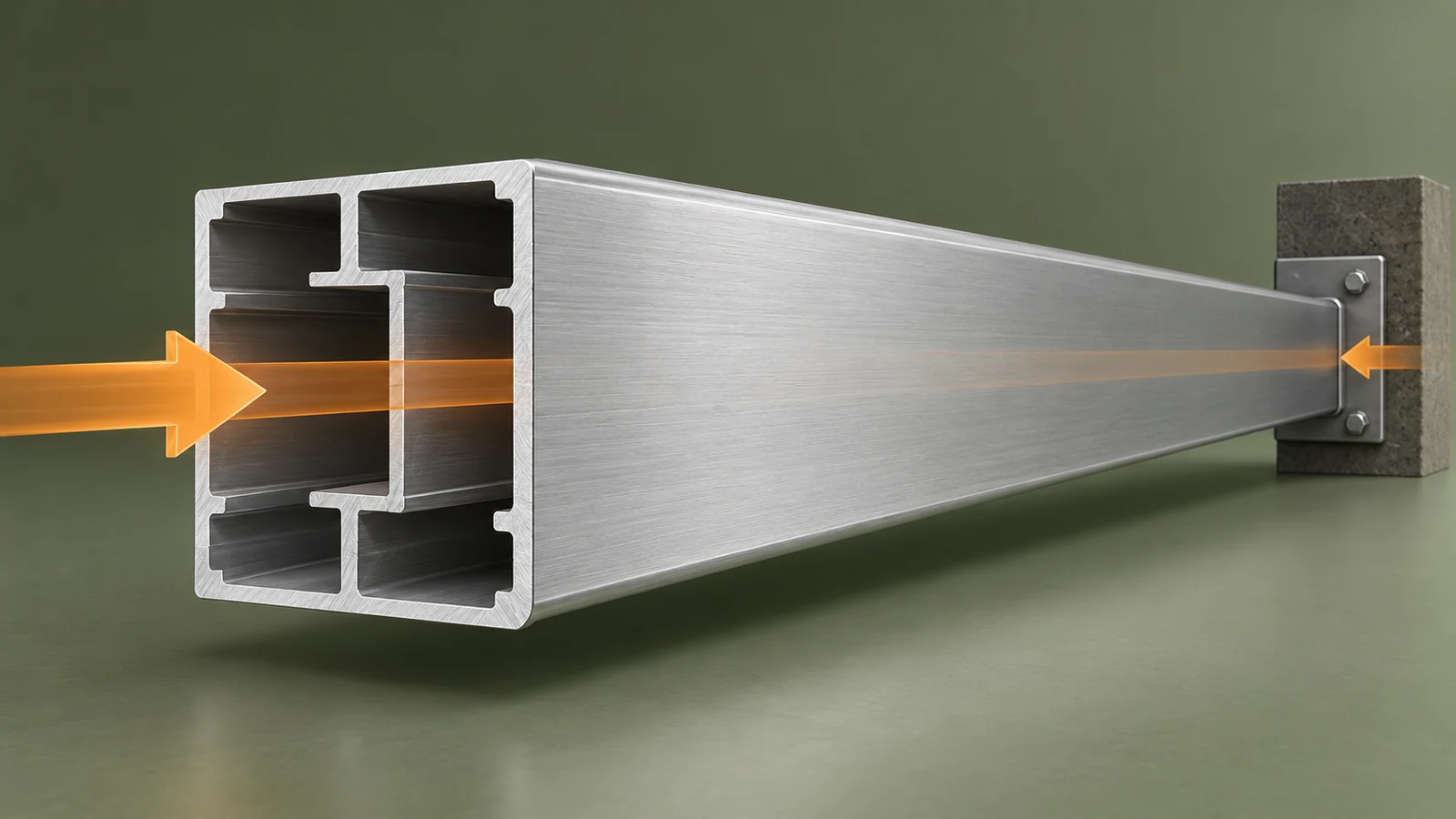
Extrusions create another design situation. The profile is formed along a known product direction, so a feature or load path may be aligned with or across that direction. In long structural parts, datum placement, support during machining, and the amount of stock removed can matter as much as the nominal orientation. For cosmetic surfaces, directional texture or grain-like appearance may also be visible after machining or finishing, but appearance requirements should be specified separately rather than inferred from a structural grain callout.
| Part concern | Orientation question | Drawing or sourcing action |
|---|---|---|
| Directional tensile or fatigue load | Does the design depend on properties along a specific material direction? | Design engineering defines the required orientation and supporting material evidence |
| Large plate with deep pockets | Could stress release and asymmetric removal affect stability? | Identify stock form and temper; review machining sequence and inspection datums |
| Extruded structural profile | How does the extrusion axis relate to the load path and machined features? | Mark the relevant orientation datum if function requires it |
| Visible directional appearance | Is the requirement structural, cosmetic, or both? | Define surface appearance and finishing direction independently |
When to call out direction on the drawing
Add an explicit orientation requirement when the design authority has established that material direction is a functional condition—such as a specified test orientation, a critical load relationship, or a controlled relationship between an extrusion axis and a feature. Tie the direction to a datum or clearly marked stock orientation so the supplier can preserve it through cutting and machining.
Do not add a vague note such as “machine with grain” if the stock form or direction is undefined. A generic note may be impossible to verify on a finished part, especially after the original stock edges have been removed. If the purpose is to manage distortion, specify the relevant material condition and functional geometry, then agree on the process and inspection evidence rather than treating orientation alone as a guarantee.
For noncritical parts, a standard alloy and temper callout with traceable material documentation may be sufficient. Unnecessary orientation restrictions can constrain stock availability and increase sourcing complexity without a demonstrated design benefit.
What to confirm with the material supplier
Before releasing a drawing, clarify the stock product form, alloy, temper, thickness or section, and the direction terminology used by the supplier. For a critical application, engineering may need property data or test evidence for the relevant orientation; generic handbook values do not necessarily describe every product form and thickness. Confirm traceability requirements and how the stock orientation will be identified before blanking.
For an extrusion, ask which axis is the extrusion direction and whether the supplied profile has a traceable orientation mark or documentation. For plate, establish which edge represents the longitudinal direction and how blanks will be nested. If blanks are cut from a larger parent piece, retain enough identification to link part orientation to the original stock records.

Connect orientation to machining and inspection
Once orientation is defined, the machining plan can keep it visible through setup, roughing, finishing, and inspection. A large removal from one face may be more important to stability than the direction of a single cutter pass. Balanced material removal, suitable support, and an intermediate check can help reveal movement, but the method must be selected for the part rather than applied as a universal sequence.
Inspection records should identify the part datum and the orientation reference when either affects acceptance. If a drawing specifies only dimensional limits, the supplier should not be expected to infer an unmarked grain orientation from a finished component. Keep the material certificate, blank identification, and inspection record connected when traceability is required.
Orientation is therefore a design and sourcing control, not a substitute for a machining plan or a measurement strategy. Define it only when it changes the decision or acceptance of the part.
Frequently asked questions
Does aluminum always machine better in one grain direction?
No universal direction guarantees better machinability. Cutting response depends on alloy, temper, stock form, tool geometry, setup, and the feature. Orientation should be tied to a verified functional or process concern.
Is extrusion direction the same as CNC X-axis?
No. Extrusion direction belongs to the material profile. It may be aligned with a machine axis during setup, but that relationship must be defined if it matters to the part.
Can grain direction prevent aluminum parts from warping?
No. Orientation may be relevant, but distortion also depends on residual stress, stock condition, geometry, material removal, clamping, and thermal effects.
Should every aluminum drawing include a grain-direction note?
No. Add one when engineering has established a functional requirement and can define a verifiable orientation reference. Otherwise, specify alloy, temper, product form, and traceability as needed.