
Compare the complete route, not one cycle
A quote comparison should separate material price from conversion cost. A higher raw-stock price can be offset by fewer machine interruptions, but the reverse can also be true if the part needs welding, special handling, or extra approval. Ask which operation creates the expected saving, how much of the lot experiences that operation, and whether the estimate includes deburring, inspection, and any secondary fabrication. For a prototype, engineering time may outweigh a small cycle difference; for a repeated lot, stable unattended production may matter more.
Include changeover and quality costs as well. A grade change can affect tool offsets, chip management, surface condition, and the supplier’s incoming material checks. If the process requires a new setup or qualification, count that effort instead of comparing only the cutting segment. The most useful estimate distinguishes recurring production time from one-time process validation.
Consider finish and acceptance together
Machining grade alone does not establish the finished appearance or dimensional result. Edge condition, tool wear, feed marks, handling, and any coating or plating step can influence what the inspector sees. Define the critical surfaces and dimensions on the drawing, and make sure the supplier knows whether the part will be joined or finished after machining. A material substitution should not be justified by a good-looking sample if the sample skipped a downstream step that is part of normal production.
For close-fit features, consider whether heat from joining or finishing could alter the machining sequence. One route may rough-machine, fabricate, stress-relieve where specified, and finish-machine; another may machine the final surface before assembly. The right sequence depends on the design and qualified process. Make the sequence visible in the manufacturing plan so the material choice is evaluated against a realistic part, not an isolated bar-stock test.
A practical decision record
Keep the selection traceable with a short note that names the drawing revision, requested grade, proposed alternative if any, downstream joining route, and the person who approved the change. Record the evidence used: representative part geometry, trial scope, inspection results, and any process limitation. This is especially helpful when a buyer, machining supplier, and assembly shop each own a different segment of the route.
Do not use a generic statement such as “same strength” or “equivalent machinability” to close the review. Those claims do not answer whether the grade supports the specified weld, finish, traceability, or customer qualification. If a property or requirement is unknown, keep it as an open engineering question rather than treating it as permission to substitute.
Choosing between 12L14 and 1018 steel is not simply a contest between a fast-cutting grade and a cheaper substitute. The useful question is what the part must do after machining. 12L14 can be attractive when cycle time, fine detail, and repeatable chip breaking dominate; 1018 is often the more practical starting point when welding, forming, or broader fabrication flexibility matters. The decision should be made from the full route—machining, finishing, joining, and inspection—not from a single shop-floor metric.
Contents
- Start with the part’s next operation
- What the free-machining advantage changes
- Why welding changes the grade decision
- Match the stock to the feature set
- Questions to settle before release
- FAQ
Start with the part’s next operation
A turned spacer that is cut, deburred, and installed has a different material brief from a bracket that will be welded into a frame. List the real operations in sequence: roughing, drilling, threading, deburring, plating or coating, joining, and final inspection. Then mark which are fixed requirements and which are merely familiar choices. If welding is a drawing requirement, a supplier process, or a later assembly possibility, do not treat it as a minor future detail. A grade selected for easy chip control can become a poor choice if it forces a redesign of the joining method.
Likewise, the word “machinable” is incomplete without the actual geometry. A high-volume component with many small drilled features may benefit more from consistent chip evacuation than a simple low-volume block. A long slender pin may be limited by deflection and support, not by nominal cutting speed. Part size, stock form, tolerance, finish, lot size, and machine setup all shape whether the alloy’s cutting behavior produces a meaningful total-cost advantage.
| Decision condition | 12L14 deserves a closer look when… | 1018 deserves a closer look when… |
|---|---|---|
| Primary objective | Machining productivity and chip breaking dominate | Fabrication flexibility or joining is important |
| Downstream route | Part is mainly machined and finished | Welding or forming is specified or likely |
| Geometria | Repeated small features create chip-control burden | Simple machining does not justify a special grade |
| Qualification | Grade and process are already approved | Existing design or supplier controls name 1018 |
This table is a screening aid, not a material certification. Confirm the purchase specification, condition, and documentation required for the actual order. The site’s 12L14 material information che 1018 steel information are useful starting points for checking which grade is being discussed; they do not replace the governing drawing or material certificate.
What the free-machining advantage changes
12L14 is commonly selected for free-machining behavior associated with its lead-bearing chemistry. In a suitable operation, easier chip fracture can reduce long stringy chips and help maintain a steady production rhythm. That can matter on automatic turning work where repeated chip entanglement causes pauses, tool-area cleanup, or inconsistent unattended running. The potential gain is not just “higher speed”; it may be fewer interruptions and more predictable handling of a feature sequence.
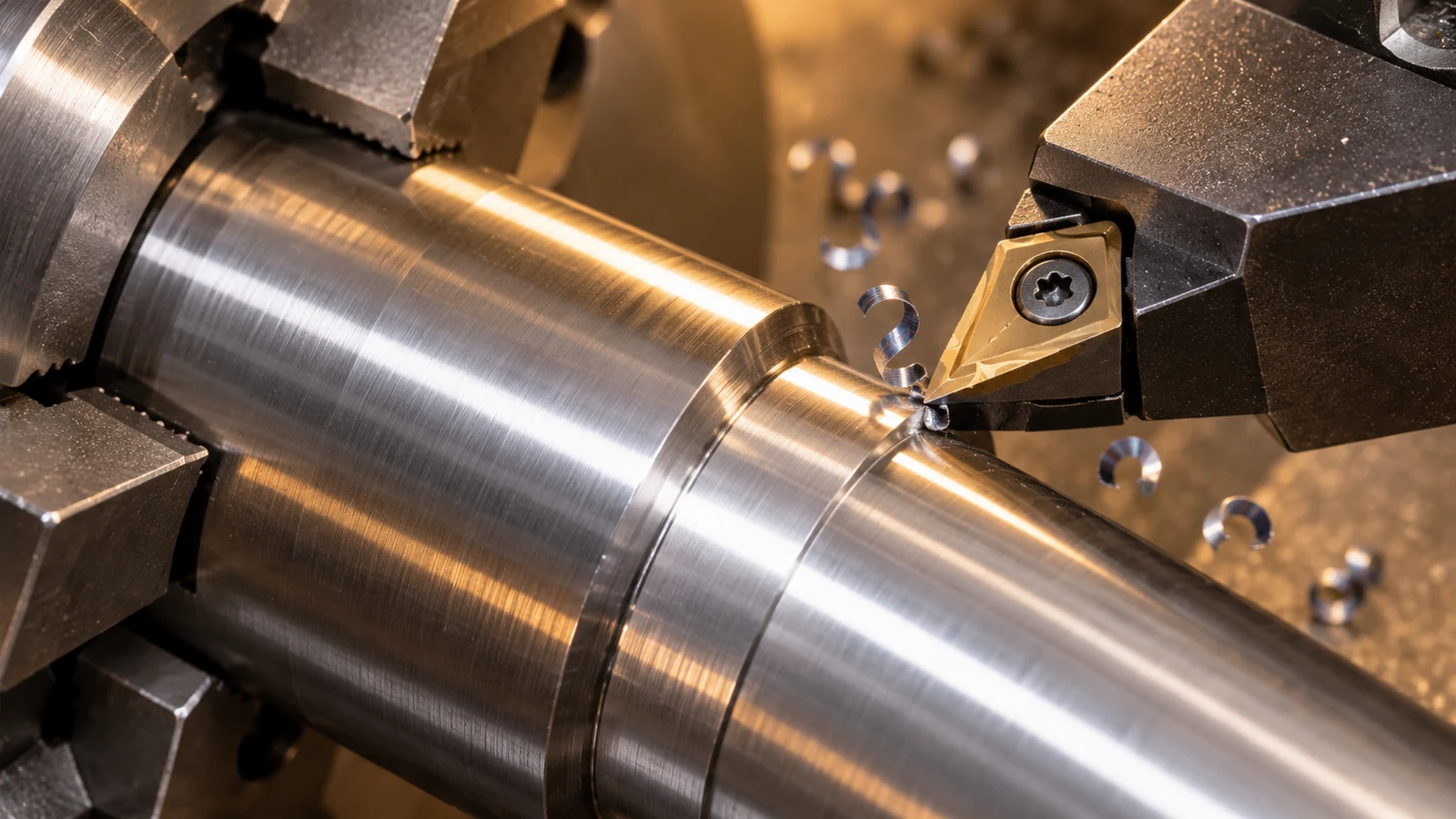
But the benefit is process-specific. Tool geometry, edge condition, feed, depth of cut, coolant delivery, bar quality, and machine rigidity still influence the result. If the part is mostly a few broad faces and one drilled hole, chip management may not be the bottleneck. If a tiny bore, narrow groove, or cross-hole generates difficult swarf, the grade may influence the operation more strongly. Validate the production route with representative features rather than applying a general machinability ranking to every part.
1018 can still machine successfully in a well-chosen process. The relevant comparison is the stable cycle for the required geometry and quality, including setup, tool life, and finishing—not a catalog number considered in isolation. For turned components, review the site’s Capacità di tornitura CNC in the context of the feature and stock form being quoted.
Why welding changes the grade decision
The most consequential distinction may appear after machining. 12L14’s free-machining chemistry is generally not the straightforward choice when a part must be welded; the same alloying additions that promote chip breaking can complicate welding behavior. Welding requirements should therefore be confirmed with the responsible design authority and qualified welding procedure, rather than inferred from the fact that the part is steel. 1018 is often considered where conventional fabrication and welding are part of the route, but the exact specification, thickness, joint design, condition, and procedure still govern.
Ask where the joint is made and what it must withstand. Is the part welded to a structural member, tack-positioned before final machining, or joined only for a noncritical cover? Will heat input distort a precision bore or shift a datum? Is post-weld machining required? These questions may make a nominally easy-to-machine choice expensive once fixtures, sequence changes, and inspection are included. Never replace a named weldable grade with 12L14 based only on a shop trial that checked cutting time.
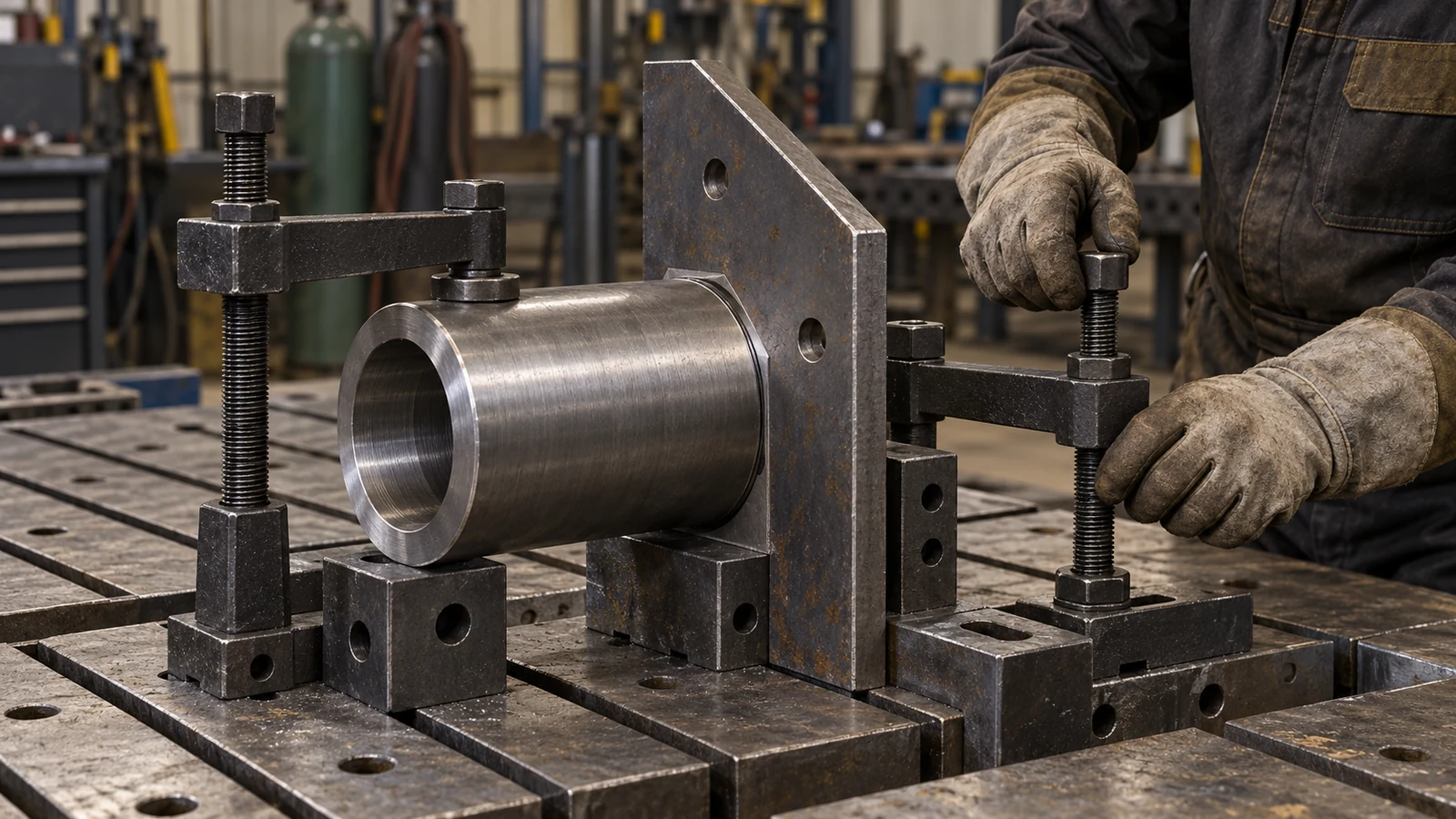
When joining is not clearly specified, resolve the ambiguity before procurement. A buyer’s assumption that a component will be “just machined” may differ from the assembler’s actual route. The material note, drawing, and supplier purchase order should agree on grade and any required condition or certification.
Match the stock to the feature set
Material selection also interacts with how the part is held and cut. For a slender shaft, turning forces can cause deflection, taper, or chatter; a free-machining grade will not eliminate an unsuitable support strategy. For a block with intersecting holes, tool access and burr removal may dominate. For a threaded feature, the thread form, engagement, and inspection method matter more than a broad label such as “easy to machine.” Separate the features that control function from those that merely consume cycle time.
Build a small feature-risk list before choosing the grade:
- Identify operations that produce long or difficult chips.
- Flag cross-holes, deep bores, narrow grooves, and interrupted cuts.
- Mark surfaces that will be welded, formed, coated, or used as datums.
- Specify which dimensions and finishes are acceptance-critical.
- Confirm whether the lot is prototype, repeat production, or unattended volume work.
This makes it possible to compare material options using the actual cost drivers. If 12L14 saves time on a high-frequency operation but creates a downstream joining problem, it is not a net gain. If 1018 requires a modestly different cutting approach but keeps the assembly route simple and approved, its total manufacturing risk may be lower.
Questions to settle before release
Before releasing the drawing or purchase order, state the material grade explicitly and identify the source of the requirement. Confirm the required material certificate, condition, dimensions, and any traceability expectations. If a substitution is proposed, compare the whole production route and obtain approval from the design or quality owner. “Equivalent steel” is not a sufficient change-control record when weldability, mechanical behavior, or customer qualification may be affected.
For a make-versus-substitute review, ask the supplier to identify the operation expected to benefit, how the benefit will be measured, and what downstream process could be affected. A controlled trial can compare cycle stability, tool changes, chip handling, and finished-part inspection. It should not silently change a material requirement on released production.
FAQ
Is 12L14 always faster to machine than 1018?
It is selected for free-machining behavior, but actual cycle performance depends on the operation, tooling, setup, and acceptance requirements. A representative process trial is more useful than assuming a universal speed advantage.
Can 12L14 be used for a welded component?
Do not assume it is suitable for a specified weld. Its free-machining chemistry can make welding less straightforward. Confirm the grade with the design authority and a qualified welding procedure before use.
When is 1018 the more practical choice?
It may be preferable when the part must fit a specified fabrication route, when welding or forming matters, or when the machining advantage of another grade does not offset its downstream risks.
Can a shop substitute one grade without changing the drawing?
Only if the applicable approval and change-control process permits it. Material substitutions can affect fabrication, qualification, and inspection even when the finished geometry appears unchanged.