
S45C and SAE 1045 are often treated as close carbon-steel counterparts, but a name-to-name match is not enough to approve substitution. Before changing a drawing or purchase order, compare the governing standard and edition, product form, chemistry limits, delivery condition, heat treatment, section size, and required mechanical properties. For a machined part, those details can affect cutting behavior, distortion, hardness, and the final acceptance test even when the nominal carbon range looks similar.
Use the comparison to manage a specification decision, not to claim that every S45C bar is equivalent to every 1045 product. If the design depends on strength, hardness, weldability, or traceability, the actual material certificate and condition matter more than a casual grade cross-reference.
What the two designations actually tell you
S45C is a Japanese carbon-steel designation associated with JIS G 4051; 1045 is an SAE carbon-steel designation. The designations point toward similar nominal carbon-steel families, but they do not by themselves define every requirement imposed by a drawing, supply contract, or product standard. SAE J403 explains that carbon-steel chemistry is expressed through limits or ranges and recognizes product-analysis allowances; its tables also reflect product-form considerations. That is why a cross-reference should be checked against the actual specification rather than copied from a chart.
Also avoid describing “AISI 1045” as though the AISI still issues current grade designations. SAE’s J403 page notes that the grades in that document are SAE grades. In engineering documents, preserve the designation and standard actually called out, then verify the current contract language.
Compare the standards and product forms
Build a side-by-side comparison from controlled source documents. Check the chemistry limits, permitted product analysis, heat or cast analysis reporting, dimensions and form covered, delivery condition, and mechanical-property requirements. A grade equivalency table is only a screening aid unless it identifies the standard editions, product forms, and conditions used to create the match.
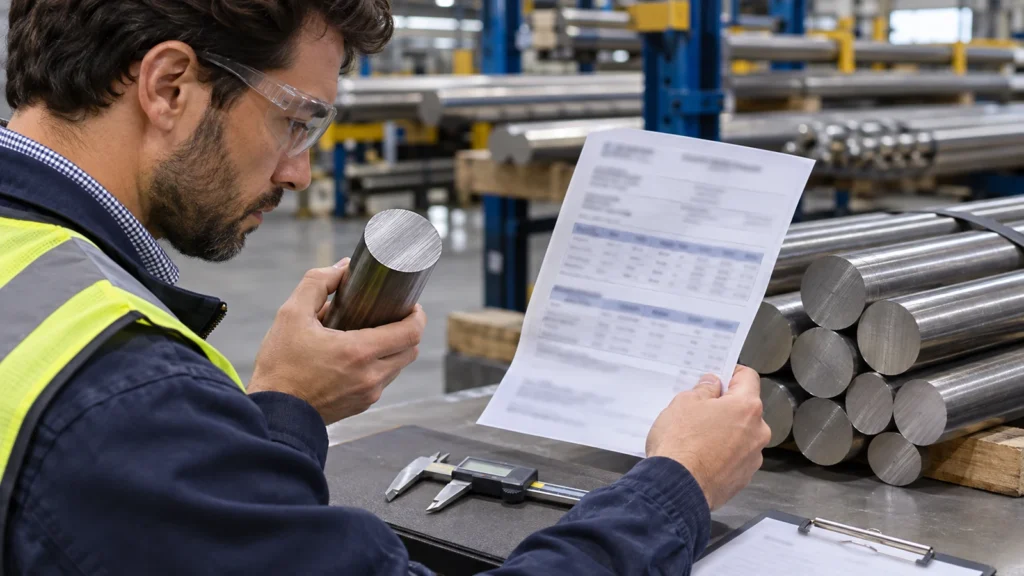
For example, a hot-rolled bar, a cold-finished bar, and a heat-treated shaft can share a grade family while arriving with different hardness, residual stress, surface condition, and machining allowance. If the drawing requires a particular bar size, normalized condition, tensile range, or hardness, check that requirement separately. The site’s 1045 steel page is a material reference, not approval to substitute another standard’s product.
Condition can change machining and performance
Machining response is influenced by the delivered condition as well as chemistry. Harder or cold-worked material can increase tool load and change chip behavior; a stress-relieved or heat-treated condition may machine differently and move differently when material is removed. The part’s geometry matters too: long slender sections, asymmetric pockets, and interrupted cuts create different risks from a short, symmetrical turned part.
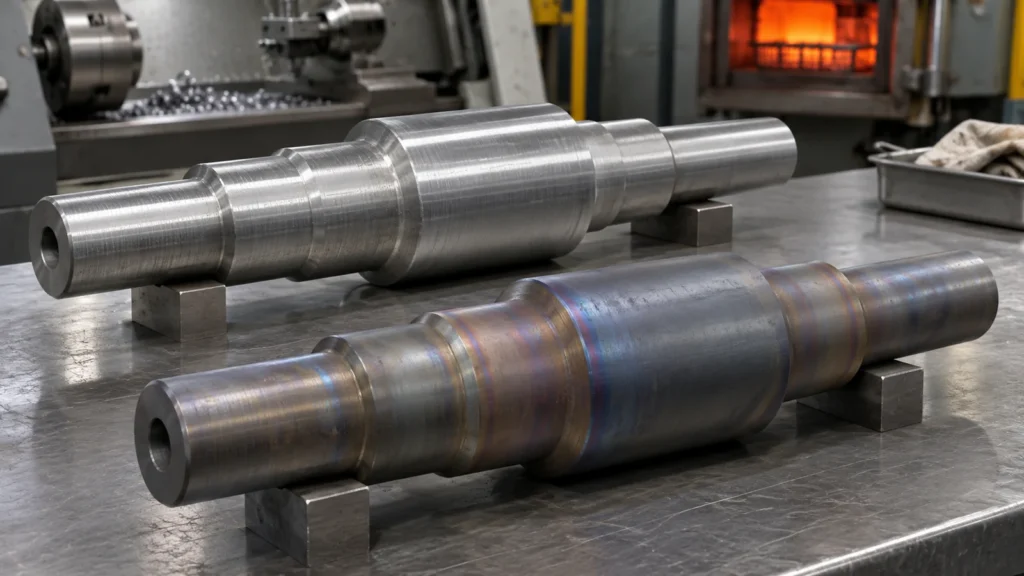
Plan the sequence around the final function. Identify whether rough machining precedes heat treatment, whether finishing stock remains, and which datums must be recovered after treatment. Do not assume a generic distortion allowance applies to every section or supplier. If a critical bore or face is accepted after heat treatment, state the measurement stage and reference surfaces. For applicable machining routes, the site’s CNC milling capability page explains the service context, while the drawing remains the acceptance authority.
A disciplined substitution review
When a supplier proposes S45C for 1045 or the reverse, ask for the exact standard and edition, material grade, product form and size, heat number, delivery condition, and certificate. Compare chemistry and the mechanical properties actually required by the design. If heat treatment or surface hardening is involved, verify the process specification and the resulting acceptance method. If weldability, fatigue, or impact behavior matters, review those requirements directly; nominal grade similarity cannot answer them.
Next identify the consequence of a mismatch. A noncritical spacer may need only documented chemistry and dimensional fit. A drive component or locating shaft may require mechanical-property evidence, surface condition, hardness, or a functional test. The review should be proportional to the risk and recorded before the purchase order changes.
A drawing-release checklist
| Check | Evidence to compare | Why it matters |
|---|---|---|
| Designation and standard | Exact grade, standard number, edition, and any supplementary requirements | Prevents a family-level cross-reference from replacing contract requirements |
| Product form and size | Bar, plate, forging, section size, and delivery condition | Condition and section can affect properties and machining movement |
| Chemistry | Heat analysis and any required product analysis | Checks compliance against the specified limits, not a generic table |
| Mechanical condition | Hardness, tensile or other specified results, and test basis | Confirms the property that drives part performance |
| Process and acceptance | Heat treatment, machining stage, critical datums, and inspection record | Keeps the delivered part tied to the design’s acceptance logic |
Use the current revision of the governing standards. If one standard does not state a required property for the supplied form, do not fill the gap with a value from a different product condition.
Keep approval tied to the delivered heat
Once substitution is approved, make the purchase record, material certificate, and inspection plan agree. Capture the delivered designation, standard, heat or lot identification, condition, and any supplemental test results. If parts are split between multiple heats, preserve the relationship between each batch and the records required for acceptance. The material and dimensional traceability guide covers how to connect material evidence with the finished component record.
The safe conclusion is straightforward: S45C and 1045 may be close enough for a particular application, but only a requirement-by-requirement review can make the substitution defensible. Approve the supplied condition and evidence—not a shorthand equivalency label.