
عندما يتطلب نظام الطاقة المائعة أو التجميع الهوائي لديك وصلة لا يمكن أن تفشل بأي حال، يتحول الحديث حتماً إلى وصلات نحاسية مُشكّلة بالماكينات. على عكس البدائل المصبوبة أو المبثوقة، توفر مكونات النحاس المُشكّلة بالمخرطة CNC الدقة الأبعادية، وسلامة السطح، واتساق المادة التي أصبح مهندسو تصنيع السيارات وأنظمة التدفئة والتهوية والتكييف والأجهزة الطبية يعتمدون عليها. هذا الدليل ليس نظرة عامة شاملة—بل هو تحليل معمّق يركز على المشتريات ومصمم لمساعدتك في التنقل بين المقايضات الحرجة بين قدرات الموردين، ودرجات المواد، ومعايير الأسنان، وهياكل التكلفة. سواء كنت تبحث عن التوريد لإنتاج بكميات كبيرة أو نموذج أولي بكميات صغيرة بتفاوتات ضيقة، فإن إطار القرار الموضح هنا يستند إلى خبرات واقعية من أرضية المصنع ومبادئ علم المعادن لضمان أن مشترياتك القادمة تحقق موثوقية طويلة الأمد.
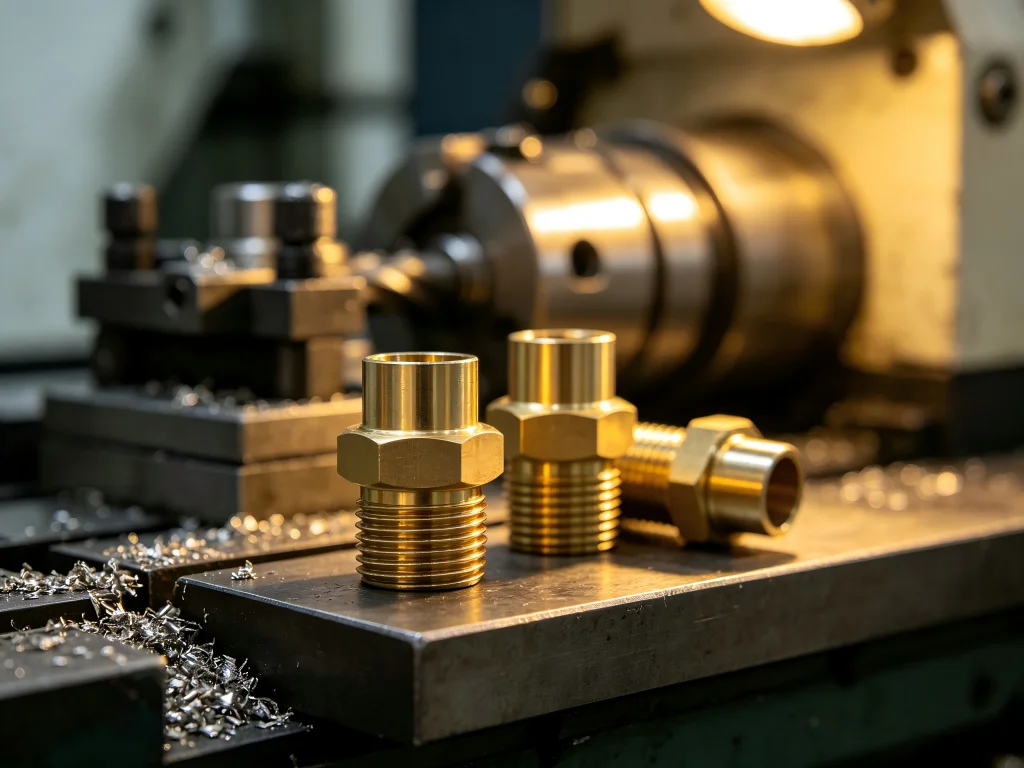
لماذا يظل النحاس المادة المفضلة للوصلات الدقيقة
قبل فحص عملية التشكيل بالتحكم الرقمي نفسها، يجدر بنا فهم سبب استمرار النحاس في السيطرة على سوق الوصلات على الرغم من توفر بدائل الفولاذ المقاوم للصدأ والبلاستيك والألومنيوم. يوفر النحاس—وهو سبيكة من النحاس الأصفر والزنك—مزيجاً فريداً من قابلية التشكيل ومقاومة التآكل والتوصيل الحراري يصعب تكراره. تحتوي درجات النحاس سهلة التشكيل، مثل C36000 (التي يشار إليها غالباً بالنحاس 360)، على كميات صغيرة من الرصاص تعمل ككسّارات للرقائق أثناء عمليات القطع. تتيح هذه الميزة المعدنية لمخارط CNC تحقيق أوقات دورة أسرع وتشطيبات سطحية فائقة مقارنة بالعديد من المعادن الأخرى، مما يخفض مباشرة تكاليف التصنيع لكل قطعة.
من منظور تصميم النظام، توفر الوصلات النحاسية خصائص إحكام موثوقة عند توصيلها بأنابيب النحاس أو الأنابيب الفولاذية الملولبة. تقلل قابلية التشحيم الطبيعية للمادة من التآكل أثناء التجميع، وهي مشكلة شائعة مع الأسنان الفولاذية المقاومة للصدأ. بالإضافة إلى ذلك، يُظهر النحاس مقاومة ممتازة لإزالة الزنك في البيئات المائية العدوانية، بشرط تحديد التركيب الصحيح للسبيكة. هذه الخصائص تجعل وصلات نحاسية مُشكّلة بالماكينات لا غنى عنها في تطبيقات تتراوح من مشعبات السباكة السكنية إلى الدوائر الهيدروليكية عالية الضغط في المعدات المتنقلة.
ما هي بالضبط الوصلات النحاسية المُشكّلة بالتحكم الرقمي؟
في جوهرها، الوصلة النحاسية المُشكّلة بالتحكم الرقمي هي مكون يُنتج عن طريق إزالة المادة من قضيب نحاسي صلب باستخدام أدوات قطع يتم التحكم فيها بالحاسوب. تبدأ العملية عادةً بمخرطة CNC من نوع Swiss أو مركز خراطة، والذي يدوّر قطعة العمل بينما تشكّل الأدوات الثابتة أو المتحركة الملامح الخارجية والداخلية. تشمل العمليات الشائعة الخراطة، والحفر، والتنصيب، والقلوظة، والتجويف، والشطف—وكلها تُنفذ في إعداد واحد للحفاظ على التمركز والدقة الموضعية.
يكمن الفرق الرئيسي بين الوصلات المُشكّلة بالتحكم الرقمي وتلك المنتجة بالصب أو الطرق في مستوى التحكم في الأبعاد الحرجة. يمكن لمخرطة CNC الحفاظ على تفاوتات تصل إلى ±0.005 مم على أقطار الإحكام الحرجة، وهو مستوى من الدقة لا يمكن تحقيقه ببساطة بطرق التصنيع بالشكل الصافي. تترجم هذه الدقة مباشرة إلى وصلات خالية من التسرب، وتشابك متسق للأسنان، وتقليل تباين عزم التجميع—وهي عوامل مهمة للغاية في بيئات الإنتاج حيث كل ثانية مهمة.
قرار الشراء الحرج: اختيار المورد المناسب
اختيار مورد لـ وصلات نحاسية مُشكّلة بالماكينات يتضمن أكثر بكثير من مقارنة السعر لكل قطعة. يعتمد الأداء طويل الأمد لنظام السوائل لديك على تتبع المواد، وقدرة العمليات، وأنظمة إدارة الجودة، وقدرة المورد على توسيع الإنتاج دون المساس بالتفاوتات. استناداً إلى ملاحظات من منتديات الهندسة ومناقشات المشتريات على منصات مثل r/AskEngineers و r/PLC على Reddit، بالإضافة إلى مجموعات Facebook المخصصة للتصنيع والتشكيل، تظهر عدة موضوعات متكررة كعوامل حاسمة للنجاح أو الفشل.
1. شهادة المواد واختيار السبائك
ليست كل أنواع النحاس الأصفر متساوية. السبيكة الأكثر شيوعًا المحددة للوصلات المشغّلة آليًا هي النحاس الأصفر سهل القطع C36000، الذي يوفر توازنًا ممتازًا بين قابلية التشغيل الآلي والخصائص الميكانيكية. ومع ذلك، بالنسبة للتطبيقات التي تتضمن مياه الشرب أو معالجة الأغذية، قد تكون هناك حاجة إلى بدائل خالية من الرصاص مثل C69300 (نحاس البزموت) أو C46400 (النحاس البحري) للامتثال للمعايير التنظيمية مثل NSF/ANSI 61 أو توجيهات RoHS. يجب على المورد الموثوق تقديم تقارير اختبار المواد (MTRs) التي تشهد على التركيب الكيميائي والخصائص الميكانيكية لكل دفعة صهر من المواد المستخدمة.
غالبًا ما تسلط النقاشات في مجتمعات التشغيل الآلي الضوء على أهمية التحقق من أن النحاس الأصفر المورَّد هو فعلًا من الدرجة سهلة القطع. يستبدل بعض الموردين منخفضي التكلفة النحاس الأصفر القياسي الذي يحتوي على كمية غير كافية من الرصاص أو عناصر السبك الأخرى، مما يؤدي إلى تكوّن رقائق سيئ، وزيادة تآكل الأدوات، وتشطيبات سطحية خشنة. لا يؤثر هذا على أداء إحكام الوصلة فحسب، بل يرفع أيضًا التكلفة الإجمالية للملكية بسبب التغييرات المتكررة للأدوات والأجزاء التالفة.
2. الدقة الأبعادية والتحكم الإحصائي في العمليات
الدقة هي جوهر التشغيل الآلي بالتحكم الرقمي. عند تقييم الموردين المحتملين، اطلب دراسات القدرة التي تُظهر قدرتهم على الحفاظ على الأبعاد الحرجة للوظيفة ضمن نطاقات التفاوتات المحددة. ابحث عن الموردين الذين يستخدمون القياس أثناء العملية والفحص بعد العملية باستخدام آلات القياس الإحداثي (CMMs) أو المقارنات البصرية. من المرجح أن يقدم المورد القادر على الحفاظ على قيمة Cpk تبلغ 1.33 أو أعلى في الأبعاد الرئيسية جودة متسقة عبر دفعات الإنتاج.
للسياق، تحقق Jucheng Precision، وهي شركة مصنعة حاصلة على شهادتي ISO 9001:2015 وIATF 16949، بشكل روتيني تفاوتات تبلغ ±0.005 مم في مكونات النحاس الأصفر الدقيقة. تضم منشأتها التي تبلغ مساحتها 8,000 م² أكثر من 150 آلة CNC، بما في ذلك 25 وحدة عالية الدقة بخمسة محاور من Haas وMazak، مما يتيح قابلية توسع سلسة من النماذج الأولية الفردية إلى دفعات تتجاوز 100,000 قطعة. يوفر هذا المستوى من الاستثمار في المعدات وأنظمة الجودة ضمانًا ملموسًا لقدرة العمليات قد تجد المتاجر الأصغر والأقل رأسمالًا صعوبة في مجاراتها.
3. أوقات التسليم وقابلية توسع الإنتاج
في بيئة التصنيع السريعة اليوم، غالبًا ما يكون وقت التسليم بنفس أهمية السعر. المورد القادر على تسليم كميات النماذج الأولية خلال 3–7 أيام ودورات الإنتاج خلال 2–5 أسابيع يوفر ميزة تنافسية واضحة. هذه المرونة ذات قيمة خاصة للشركات التي تعمل باستراتيجيات مخزون رشيقة أو تواجه طفرات طلب غير متوقعة.
ومع ذلك، من المهم التمييز بين أوقات التسليم المعلنة وأداء التسليم الفعلي. اطلب من الموردين المحتملين مراجع أو دراسات حالة تُظهر سجلهم في التسليم في الوقت المحدد. تؤكد Jucheng، على سبيل المثال، على الالتزام بمبدأ “نقول ما نفعل ونفعل ما نقول”، مع فريق مخصص لإدارة المشاريع يوفر تحديثات إنتاج منتظمة ويشارك صور المعالجة طوال دورة التصنيع. هذه الشفافية مؤشر قوي على الانضباط التشغيلي.
4. تشطيب السطح وقدرات المعالجة اللاحقة
يؤثر تشطيب سطح وصلة النحاس الأصفر مباشرة على أداء إحكامها ومقاومتها للتآكل وجاذبيتها الجمالية. عادةً ما تُظهر الأسطح كما هي مشغّلة آليًا قيم خشونة (Ra) تتراوح بين 0.8 و3.2 ميكرومتر، اعتمادًا على هندسة الأداة ومعدل التغذية وسرعة القطع. بالنسبة للتطبيقات التي تتطلب جودة سطح فائقة، قد تكون هناك حاجة إلى عمليات معالجة لاحقة إضافية مثل إزالة النتوءات بالتدوير أو التشطيب الاهتزازي أو التلميع الكهربائي.
تقدم Jucheng أكثر من 30 عملية تشطيب لاحق، مما يوفر حلًا متكاملًا للعملاء الذين يحتاجون إلى وصلات مطليّة أو مغطاة أو مصقولة. تلغي هذه القدرة حاجة العملاء إلى إدارة عدة موردين للعمليات الثانوية، مما يقلل من تعقيد سلسلة التوريد واحتمال عدم الاتساق في الجودة.
أنواع وصلات النحاس الأصفر وتطبيقاتها النموذجية
فهم الأنواع المختلفة لوصلات النحاس الأصفر يُعد التوفر أمرًا ضروريًا لتحديد المكوّن الصحيح لتطبيقك. يلخّص الجدول التالي فئات التركيبات الشائعة ووظائفها الأساسية وحالات الاستخدام النموذجية في الصناعة.
| نوع التركيب | الوظيفة الأساسية | التطبيقات الشائعة | معيار اللولب النموذجي |
|---|---|---|---|
| الوصلات | ربط أنبوبين أو ماسورتين في خط مستقيم | إصلاحات السباكة، الخطوط الهيدروليكية، الأنظمة الهوائية | NPT، BSPP، BSPT |
| الأكواع (45° و90°) | تغيير اتجاه التدفق في أنظمة الأنابيب | التدفئة والتهوية والتكييف، التبريد، أجهزة القياس | NPT، BSPP، الضغط |
| المحامل الثلاثية | تفرّع خط رئيسي إلى مساري تدفق منفصلين | مجموعات المشعبات، شبكات التوزيع | NPT، BSPP |
| المهايئات | الانتقال بين أنواع الخيوط أو أحجام الأنابيب المختلفة | ربط الأنظمة غير المتشابهة، التعديلات | من NPT إلى BSPP، من ذكر إلى أنثى |
| الوصلات | تسمح بفصل وصلات الأنابيب بسهولة | نقاط الوصول للصيانة، المعدات المعيارية | NPT، BSPP مع صامولة وصل |
| الأغطية والسدادات | إغلاق نهاية أنبوب أو وصلة | اختبار النظام، الإغلاقات المؤقتة، الخطوط المسدودة | NPT، BSPP |
عند الاختيار من بين هذه الأنواع، ضع في اعتبارك ليس فقط المتطلبات الهندسية بل أيضًا تصنيف الضغط ونطاق درجة حرارة التطبيق. تكون وصلات النحاس الأصفر مناسبة عمومًا لضغوط التشغيل حتى 1,000 psi في الأنظمة الهيدروليكية ودرجات حرارة تتراوح من -20°C إلى 150°C، على الرغم من أن هذه الحدود تختلف حسب تركيب السبيكة وتصميم الوصلة.
هل يمكنك لحام النحاس الأصفر بالنحاس الأصفر؟ فهم سلامة الوصلة
أحد أكثر الموضوعات التي يتم النقاش حولها بشكل متكرر في منتديات السباكة والتدفئة والتهوية وتكييف الهواء هو ما إذا كان هل يمكنك لحام النحاس الأصفر بالنحاس الأصفر بفعالية. اللحام، أو القصدير، هو طريقة ربط تعتمد على الخاصية الشعرية لسحب اللحام المنصهر إلى الفجوة بين سطحين معدنيين متقاربين التلاؤم. وبينما يُستخدم اللحام عادةً لربط أنابيب النحاس بتركيبات النحاس الأصفر، فإن ربط النحاس الأصفر بالنحاس الأصفر يمثل تحديات فريدة.
يتمثل القلق الأساسي عند لحام وصلات النحاس الأصفر بالنحاس الأصفر في خطر التسخين المفرط. يحتوي النحاس الأصفر على الزنك، الذي له درجة حرارة تبخر منخفضة نسبيًا. إذا تم تسخين المعدن الأساسي بشكل مفرط أثناء اللحام، فقد يتبخر الزنك ويتسرب من السبيكة، تاركًا وراءه بنية مسامية غنية بالنحاس تُعرف باسم “التعفن الأحمر”. هذه المادة المُضعَفة تُقوّض بشكل كبير القوة الميكانيكية وقدرة الوصلة على احتجاز الضغط، مما يجعلها عرضة للتسرب أو الفشل الكارثي تحت ظروف الخدمة.
للحام النحاس الأصفر بالنحاس الأصفر بنجاح، يلزم اتخاذ عدة احتياطات:
- استخدم صهورًا عالي الجودة مُصممًا خصيصًا للنحاس الأصفر، ويظل نشطًا في نطاق درجة حرارة اللحام (عادةً من 400°ف إلى 600°ف).
- طبّق الحرارة بالتساوي وتجنب تركيز اللهب على نقطة واحدة. يُفضّل لهب كبير وناعم من شعلة غاز البروبان أو غاز MAPP على لهب شديد ومركّز.
- راقب درجة الحرارة بعناية. يجب أن يذوب اللحام ويتدفق إلى الوصلة بمجرد أن يصبح الصهور صافيًا ونشطًا—فالتسخين المطوّل بعد هذه النقطة يزيد من خطر تبخر الزنك.
- فكّر في طرق ربط بديلة للتطبيقات الحرجة. تُلغي الوصلات الملولبة أو تركيبات الضغط المخاطر الحرارية المرتبطة باللحام وتوفر ميزة إضافية تتمثل في كونها قابلة للفك للصيانة.
بالنسبة للمهندسين الذين يحددون المواصفات وصلات نحاسية مُشكّلة بالماكينات في التصاميم الجديدة، غالبًا ما يُنصح بتحديد تركيبات ملولبة أو من نوع الضغط بدلاً من الوصلات الملحومة، لا سيما في الأنظمة التي تتعرض للدورات الحرارية أو الاهتزاز. يبسّط هذا النهج التجميع، ويقلل مستوى المهارة المطلوبة للتركيب، ويلغي احتمال تدهور المواد الناتج عن الحرارة.
Can You Mix Brass and Copper Fittings? Compatibility Considerations
The question can you mix brass and copper fittings arises frequently in both residential and industrial contexts. The short answer is yes—brass and copper are metallurgically compatible and can be joined using soldering, brazing, or threaded connections. In fact, brass fittings are commonly used as transition components in copper piping systems because brass offers superior machinability for threads and complex geometries compared to wrought copper.
However, there are important considerations when mixing these materials:
- Galvanic corrosion: Brass and copper are close on the galvanic series, meaning the potential for accelerated corrosion due to dissimilar metals is minimal in most environments. However, in the presence of an electrolyte (such as water containing dissolved salts), some galvanic activity may occur. Using dielectric unions or ensuring proper grounding can mitigate this risk in sensitive applications.
- Thermal expansion: Brass has a slightly higher coefficient of thermal expansion than copper. In systems subject to wide temperature swings, this differential expansion can impose additional stress on joints. Designing with adequate flexibility—such as incorporating expansion loops or using flexible connectors—can accommodate this movement.
- Solder joint integrity: When soldering brass to copper, the same principles apply as for brass-to-brass joints. Use appropriate flux, control the heat input carefully, and select a solder alloy that is compatible with both base metals. Lead-free solders, such as those containing tin-silver or tin-copper alloys, are recommended for potable water systems.
From a procurement standpoint, specifying وصلات نحاسية مُشكّلة بالماكينات that are compatible with copper tubing (e.g., fittings with sweat ends or compression connections) simplifies inventory management and reduces the number of unique part numbers required. Many suppliers offer combination fittings that feature a brass body with copper-compatible ends, providing a cost-effective solution for mixed-material systems.
Brass Fitting Malaysia: Sourcing Considerations in Southeast Asia
For companies operating in or sourcing from Southeast Asia, the term brass fitting Malaysia often appears in procurement searches. Malaysia has developed a robust precision machining ecosystem, with numerous shops offering CNC turning and milling services for brass components. The country’s strategic location, competitive labor costs, and established logistics infrastructure make it an attractive sourcing destination for manufacturers in the region.
When evaluating Malaysian suppliers for وصلات نحاسية مُشكّلة بالماكينات, the same criteria apply as for any global supplier: material certification, process capability, quality management systems, and lead time performance. Additionally, consider the following region-specific factors:
- Regulatory compliance: Ensure that the supplier can provide the necessary certifications for your target market, such as NSF/ANSI 61 for potable water applications in North America or CE marking for European markets.
- Communication and technical support: Effective communication is critical when specifying complex geometries or tight tolerances. Suppliers with English-speaking technical sales teams and responsive quoting processes can significantly reduce the risk of misunderstandings.
- Shipping and logistics: Malaysia’s major ports, including Port Klang and Penang, offer efficient container shipping to global destinations. However, verify that the supplier has experience with export documentation and can provide reliable delivery schedules.
Jucheng Precision, while headquartered in China, serves customers in over 25 countries and offers competitive pricing that is 15–25% lower than US and European suppliers. Their technical sales team is fluent in English and provides dedicated project support from quotation through delivery, making them a viable alternative for customers who may not have established relationships with Malaysian vendors.
Fitting Brass Pipe: Thread Standards and Selection Criteria
The phrase fitting brass pipe encompasses a wide range of connection methods, but threaded connections remain the most common approach for industrial and commercial applications. Understanding thread standards is essential for ensuring leak-free joints and interchangeability between components.
The two dominant thread standards for brass pipe fittings are:
- NPT (National Pipe Taper): Used primarily in North America, NPT threads are tapered, meaning the diameter decreases along the length of the thread. This taper creates a wedging action that seals the joint when the threads are engaged. NPT fittings require the use of thread sealant or PTFE tape to prevent leakage along the thread helix.
- BSP (British Standard Pipe): Prevalent in Europe, Asia, and Australia, BSP threads come in two variants: BSPP (parallel) and BSPT (tapered). BSPP threads seal via a gasket or O-ring at the face of the fitting, while BSPT threads rely on the taper for sealing, similar to NPT.
When specifying وصلات نحاسية مُشكّلة بالماكينات with threaded connections, consider the following:
- Thread class: For NPT, classes 2A (external) and 2B (internal) are standard for general-purpose fittings. Class 3 threads are available for applications requiring tighter tolerances.
- Thread length: Ensure that the fitting provides sufficient thread engagement for the intended service pressure. Industry guidelines typically recommend a minimum of five full threads of engagement for NPT connections.
- Coating or plating: Some applications benefit from plated threads (e.g., nickel or zinc plating) to improve corrosion resistance or reduce galling during assembly. However, plating can affect thread dimensions, so it is important to specify the plating thickness when ordering.
Suppliers with extensive experience in وصلات نحاسية مُشكّلة بالماكينات can provide guidance on thread selection and offer custom thread configurations to meet unique requirements. Jucheng, for instance, leverages its in-house engineering team to optimize thread designs for specific applications, ensuring reliable sealing and ease of assembly.
Brass Pipe Fittings Male Female: Understanding Gender in Fittings
The terms brass pipe fittings male female refer to the gender of the connection ends. Male fittings have external threads that screw into female fittings, which have internal threads. This gender distinction is fundamental to specifying the correct fitting for a given application.
When designing a piping system, consider the following best practices for specifying male and female fittings:
- Avoid male-to-male connections: Whenever possible, design the system so that a male fitting connects to a female fitting. Male-to-male connections require an additional coupling or union, increasing part count and potential leak points.
- Use unions for disconnection points: Unions consist of a male nut, a female nut, and a gasket or sealing ring. They allow easy disconnection of piping sections without rotating the entire pipe, which is particularly useful for maintenance access.
- Consider stress concentrations: Male threads can act as stress risers, particularly in applications with cyclic loading or vibration. Using female-threaded components on the more critical side of a connection can sometimes improve fatigue life.
From a manufacturing perspective, CNC machining is ideally suited to producing both male and female threaded fittings with high precision. The ability to thread components in a single setup ensures that the thread axis remains concentric with the fitting’s body, reducing the risk of cross-threading during assembly.
Installation and Maintenance Best Practices for Brass Fittings
Proper installation and maintenance are essential for maximizing the service life of وصلات نحاسية مُشكّلة بالماكينات. While brass is a durable material, it is not immune to damage from improper handling or operating conditions.
Installation Guidelines
- Use the correct tools: Always use wrenches that fit the fitting’s flats or hex surfaces. Avoid using pipe wrenches on finished surfaces, as the teeth can mar the brass and create leak paths.
- Apply thread sealant correctly: For NPT and BSPT threads, apply PTFE tape or pipe dope to the male threads only, leaving the first two threads bare to prevent sealant from entering the system. For BSPP threads, use a suitable gasket or O-ring at the sealing face.
- Torque to specification: Over-tightening brass fittings can deform the threads or crack the fitting body. Use a torque wrench and follow the manufacturer’s recommended torque values for the specific fitting size and material.
- Support heavy components: For large or heavy fittings, provide adequate pipe supports to prevent excessive stress on the joint. Unsupported weight can cause the fitting to leak or fail over time.
Maintenance Considerations
- Inspect for corrosion: Regularly check brass fittings for signs of dezincification, which appears as a reddish or pinkish discoloration on the surface. This condition indicates that zinc has been selectively leached from the alloy, weakening the fitting.
- Check for thread wear: Repeated assembly and disassembly can wear the threads, reducing their sealing effectiveness. Replace fittings that show signs of thread damage or galling.
- Monitor for leaks: Even small leaks can indicate a developing problem. Address leaks promptly by re-torquing connections, replacing seals, or, if necessary, replacing the fitting.
Suppliers like Jucheng provide detailed DFM (Design for Manufacturing) feedback during the quoting process, helping customers optimize their designs for manufacturability and assembly. This proactive approach can prevent installation issues before they occur, saving time and money in the long run.
Frequently Asked Questions About Machined Brass Fittings
Q1: What is the difference between CNC machined brass fittings and cast brass fittings?
CNC machined brass fittings are produced by removing material from solid bar stock using computer-controlled cutting tools, offering superior dimensional accuracy, surface finish, and material integrity. Cast brass fittings are formed by pouring molten brass into a mold, which can introduce porosity, shrinkage, and less precise dimensions. Machined fittings are generally preferred for critical applications where leak-tightness and consistency are paramount.
Q2: Can brass fittings be used with stainless steel pipes?
Yes, brass fittings can be used with stainless steel pipes, provided that appropriate thread sealants are used and galvanic corrosion is considered. Brass and stainless steel are far apart on the galvanic series, so in the presence of an electrolyte, the brass may corrode preferentially. Using dielectric unions or isolating the materials can mitigate this risk.
Q3: How do I choose between NPT and BSP threads?
The choice between NPT and BSP threads depends on the geographic region and the existing system standards. NPT is standard in North America, while BSP is prevalent in Europe, Asia, and other regions. When in doubt, consult the system design specifications or the equipment manufacturer’s recommendations.
Q4: What is the typical lead time for custom machined brass fittings?
Lead times vary depending on the complexity of the part, the quantity ordered, and the supplier’s production schedule. For prototype quantities, lead times of 3–7 days are achievable with suppliers that maintain dedicated prototyping capacity. For production runs, lead times of 2–5 weeks are typical. Always confirm lead times with the supplier before placing an order.
Q5: Are brass fittings suitable for high-pressure hydraulic systems?
Brass fittings are suitable for hydraulic systems operating at moderate pressures, typically up to 1,000 psi, depending on the fitting design and alloy. For higher pressures, steel or stainless steel fittings are generally recommended. Always consult the fitting manufacturer’s pressure rating data before specifying brass for high-pressure applications.
Q6: What post-processing options are available for brass fittings?
Common post-processing options for brass fittings include deburring, tumbling, vibratory finishing, electropolishing, nickel plating, zinc plating, and powder coating. These processes can improve surface finish, enhance corrosion resistance, or provide a decorative appearance. Choose a supplier that offers a range of finishing options to meet your specific requirements.
Q7: How can I verify the quality of machined brass fittings from a new supplier?
Request material test reports (MTRs), dimensional inspection reports, and, if possible, a sample of the actual production parts. Ask about the supplier’s quality management system certifications (e.g., ISO 9001, IATF 16949) and their inspection equipment (e.g., CMM, optical comparator). Visiting the supplier’s facility or conducting a third-party audit can also provide valuable assurance.
Q8: What is the shelf life of brass fittings?
Brass fittings have an essentially indefinite shelf life when stored in a dry, indoor environment. However, exposure to corrosive atmospheres or prolonged contact with moisture can cause tarnishing or dezincification. Store fittings in their original packaging or in sealed containers to protect them from environmental degradation.
Why Jucheng Precision Stands Out for Machined Brass Fittings
When selecting a partner for وصلات نحاسية مُشكّلة بالماكينات, the supplier’s technical capabilities, quality systems, and commitment to customer service are as important as the price per piece. Jucheng Precision brings over 20 years of manufacturing expertise to every project, supported by an 8,000 m² facility equipped with more than 150 CNC machines, including 25 high-precision 5-axis Haas and Mazak units.
Key differentiators that make Jucheng a compelling choice for engineers and procurement professionals include:
- Comprehensive certifications: Jucheng is ISO 9001:2015, ISO 14001, ISO 13485, and IATF 16949 certified, demonstrating a commitment to quality management, environmental responsibility, and automotive industry standards.
- Exceptional precision: The company routinely achieves tolerances of ±0.005 mm on critical dimensions, with the capability to hold ±0.0002 inches (±0.005 mm) on request.
- Competitive pricing: Jucheng offers pricing that is 15–25% lower than US and European suppliers, without compromising on quality or service.
- Fast turnaround: Prototypes can be delivered in 3–7 days, and production runs in 2–5 weeks, with a dedicated project manager providing regular updates and processing photos.
- One-stop solution: With over 30 post-finishing processes available, Jucheng can handle everything from raw machining to final surface treatment, reducing supply chain complexity.
- Global reach: Serving customers in over 25 countries, Jucheng has the logistics infrastructure to deliver parts worldwide via DHL, FedEx, or UPS within 3–7 days.
Whether you are developing a new product, optimizing an existing design, or scaling up production, Jucheng’s technical sales team is available to provide DFM feedback, material recommendations, and ongoing engineering support. Upload your 2D or 3D CAD drawings to receive a free quote and DFM analysis within 24 hours.
In the competitive landscape of precision machining, Jucheng’s combination of technical expertise, quality systems, and customer-centric approach makes it a reliable partner for وصلات نحاسية مُشكّلة بالماكينات and other CNC-machined components. By choosing a supplier that prioritizes both precision and partnership, you ensure that your fluid systems perform reliably over their entire service life.
Ready to specify your next batch of machined brass fittings? Contact Jucheng Precision today to discuss your project requirements, request a sample, or obtain a competitive quote. With their extensive experience in brass machining and commitment to quality, Jucheng is well-positioned to support your success from prototype to production.
Conclusion: Making the Right Choice for Your Brass Fitting Needs
Selecting the right supplier for وصلات نحاسية مُشكّلة بالماكينات is a decision that reverberates throughout the product lifecycle—from initial design and prototyping to production, installation, and long-term maintenance. By prioritizing material certification, dimensional precision, lead time performance, and post-processing capabilities, you can mitigate risks and ensure that your fluid systems operate reliably in even the most demanding environments.
This guide has explored the critical factors that distinguish exceptional suppliers from the rest, drawing on real-world engineering insights and community discussions to provide a practical decision-making framework. Whether you are sourcing for a plumbing system, an HVAC installation, an automotive assembly, or a medical device, the principles outlined here will help you navigate the complex landscape of brass fitting procurement with confidence.
Remember that the lowest price is rarely the best value when the cost of failure—in terms of downtime, repairs, and reputation—is factored in. Invest the time to evaluate potential suppliers thoroughly, request documentation, and, where possible, visit facilities or conduct audits. The peace of mind that comes from knowing your fittings are manufactured to the highest standards is well worth the effort.
Additional Resources
For further reading on brass metallurgy, CNC machining processes, and fitting standards, consider the following authoritative sources:
- Copper Development Association – Brass Alloys for Plumbing
- ASTM International – Standards for Brass Fittings
- ISO – International Standards for Threaded Fittings
- Jucheng Precision – CNC Machining Services
This guide was developed by Jucheng Precision’s technical team in collaboration with industry engineers and procurement professionals. For personalized assistance with your وصلات نحاسية مُشكّلة بالماكينات project, contact us today.