The Dawn of a New Manufacturing Era
In the high-stakes world of modern manufacturing, the quest for perfection is unending. Tolerances shrink, materials grow tougher, and the demand for complex, high-quality components surges. At the heart of this evolution lies a critical, often challenging process: the machining of joint surfaces. These are the precisely engineered interfaces where components mate—flanges on pipes, mounting faces on engine blocks, or sealing surfaces in aerospace assemblies. Traditional methods, while reliable, are increasingly bottlenecked by human limitations and the rigidity of conventional CNC machines. Enter 로봇 조인트 가공, a transformative fusion of industrial robotics and advanced machining technology that is redefining precision, speed, and flexibility on the factory floor.
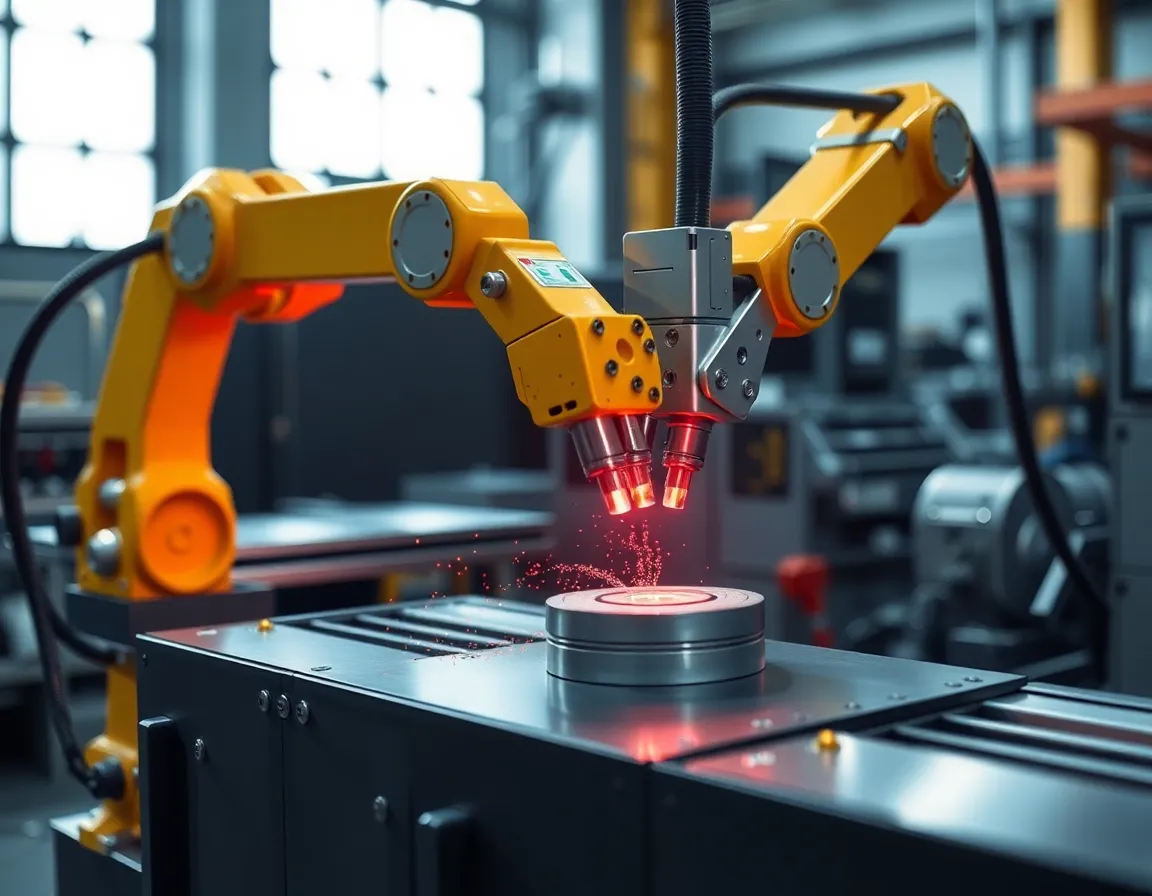
Robotic joint machining utilizes a multi-axis industrial robot arm, typically equipped with a high-speed spindle and specialized cutting tools, to perform milling, grinding, deburring, and finishing operations directly on large or complex workpieces. Unlike a CNC machine where the part moves to the tool within a fixed enclosure, the robotic system brings the tool to the part, often in-situ. This paradigm shift is unlocking unprecedented capabilities, particularly for industries dealing with large-scale, one-off, or difficult-to-transport items.
How Robotic Joint Machining Works: Beyond Simple Automation
This technology is far more than just attaching a cutter to a robot. It is a sophisticated integration of hardware, software, and sensory feedback designed to overcome the traditional stiffness limitations of robots and achieve CNC-level accuracy.
The Core System Components
A complete robotic machining cell consists of several key elements:
- The Industrial Robot: Usually a heavy-payload, 6- or 7-axis articulated arm providing extensive reach and dexterity.
- High-Frequency Spindle: A specialized, often liquid-cooled spindle mounted on the robot's wrist, capable of high RPMs for effective material removal.
- Stiffening & Vibration Damping: Critical subsystems like active or passive vibration dampers and rigid tool holders compensate for the robot's inherent flexibility, ensuring stable cuts.
- Advanced CNC Controller & Path Planning Software: This is the brain. Software converts CAD/CAM toolpaths into optimized robot trajectories, accounting for robot kinematics and potential singularities.
- Real-Time Tracking & Feedback: Systems like laser trackers or force-torque sensors constantly measure the robot's position and the forces at the tool tip, making micro-corrections on the fly to maintain path accuracy and compensate for part misalignment or thermal drift.
The Process in Action
The workflow begins with a 3D scan of the actual workpiece, which is compared to its digital twin. Any deviations are automatically compensated for in the toolpath. As the robot executes the machining program, the feedback loop ensures the tool follows the intended path with sub-millimeter precision, even on curved or uneven surfaces. This allows for first-part correctness, eliminating costly setup trials and scrap.
The Compelling Advantages: Why Industry is Making the Shift
The adoption of robotic joint machining is driven by a powerful combination of benefits that address core manufacturing challenges.
Unmatched Flexibility and Accessibility
A single robotic cell can be programmed to machine a vast array of part geometries and joint types. It can access confined or complex angles that are impossible for a traditional milling machine's bed or gantry. Machining can be performed in-situ on assembled structures—like truing the flange on a pre-welded pressure vessel—eliminating the need for disassembly and remounting.
Dramatic Increases in Speed and Productivity
Robots excel at continuous operation. They can work multiple shifts without fatigue, performing not only the machining but often the ancillary tasks of tool changing, probing, and deburring in a single setup. This drastically reduces non-cutting time and overall cycle time, accelerating throughput and time-to-market.
Enhanced Precision and Repeatability
With modern tracking technology, robotic systems achieve consistent, high-quality surface finishes and tight tolerances (often within ±0.1mm or better). This repeatability ensures every joint is machined identically, leading to better sealing, stronger welds, and perfect alignment in final assembly, which reduces leak rates and structural failures.
Significant Cost Reduction and Ergonomic Improvement
The technology reduces labor costs associated with manual grinding or the operation of multiple dedicated machines. It minimizes material waste by enabling accurate "right-first-time" machining. Furthermore, it removes human operators from hazardous, noisy, and dusty environments, improving workplace safety and ergonomics.
Key Applications Across Critical Industries
Robotic joint machining is not a niche solution; it is becoming standard practice in sectors where precision and scale intersect.
- Wind Energy: Machining the massive mounting flanges and bolt holes on wind turbine towers and hubs in the field or in fabrication yards, ensuring perfect alignment for assembly and structural integrity.
- Shipbuilding & Offshore: In-situ machining of propeller shaft bearings, engine foundations, and large pipe weld preparations on mega-yachts, cargo ships, and oil rigs.
- 항공우주 및 방위: Precision trimming and drilling of composite aircraft components, and machining of critical mating surfaces on large airframe structures and landing gear assemblies.
- Heavy Machinery & Energy: Finishing joint faces on construction equipment frames, machining sealing surfaces on large valve bodies, and preparing weld joints for power generation turbines and transformers.
- Transportation: Machining railcar components and preparing joints for the assembly of high-speed train bodies.
Best Practices for Successful Implementation
Deploying robotic machining successfully requires careful planning and expertise. Here are key considerations:
Rigorous System Selection and Integration
Not all robots are suitable for machining. Selecting a robot with sufficient rigidity, payload (to carry the spindle), and reach is paramount. The integration of the spindle, tool changer, and feedback system must be engineered as a complete, harmonious solution, not a collection of parts.
Invest in Advanced Software and Simulation
Powerful offline programming (OLP) and simulation software are non-negotiable. They allow programmers to create, optimize, and collision-check complex toolpaths in a virtual environment, minimizing costly downtime on the physical cell. The software must accurately model robot kinematics and process forces.
Prioritize Calibration and Metrology
The foundation of accuracy is a well-calibrated system. Regular calibration of the robot, spindle, and tracking system is essential. Implementing in-process metrology—using probes or scanners to verify dimensions during machining—closes the quality loop and ensures specifications are met.
Develop Specialized Process Knowledge
Machining with a robot differs from CNC machining. Teams must develop expertise in selecting optimal feeds, speeds, and depth of cuts for the robotic system, understanding how to manage cutting forces to avoid exciting vibrations in the robot structure.
Conclusion: The Future is Adaptive and Autonomous
Robotic joint machining represents a significant leap forward from static, dedicated machine tools to dynamic, intelligent manufacturing systems. It is boosting precision and speed not through brute force, but through unparalleled flexibility and integration. As the technology matures, we are moving towards even more adaptive machining systems, where artificial intelligence and machine learning analyze sensor data in real-time to optimize toolpaths, predict tool wear, and compensate for material inconsistencies autonomously.
The future of large-part manufacturing is being written by these robotic artisans. By embracing robotic joint machining, industries are not just solving today's challenges of precision and efficiency; they are building the agile, responsive, and cost-effective production capabilities required to thrive in the competitive landscape of tomorrow. The era of bringing the mountain to Mohammed is over; now, the robotic craftsman comes to the mountain, ready to shape it with unerring accuracy.