ptfe cnc machining solutions are available with stable quality control, flexible manufacturing capacity, and responsive technical support. Contact us for drawings review and quotation.

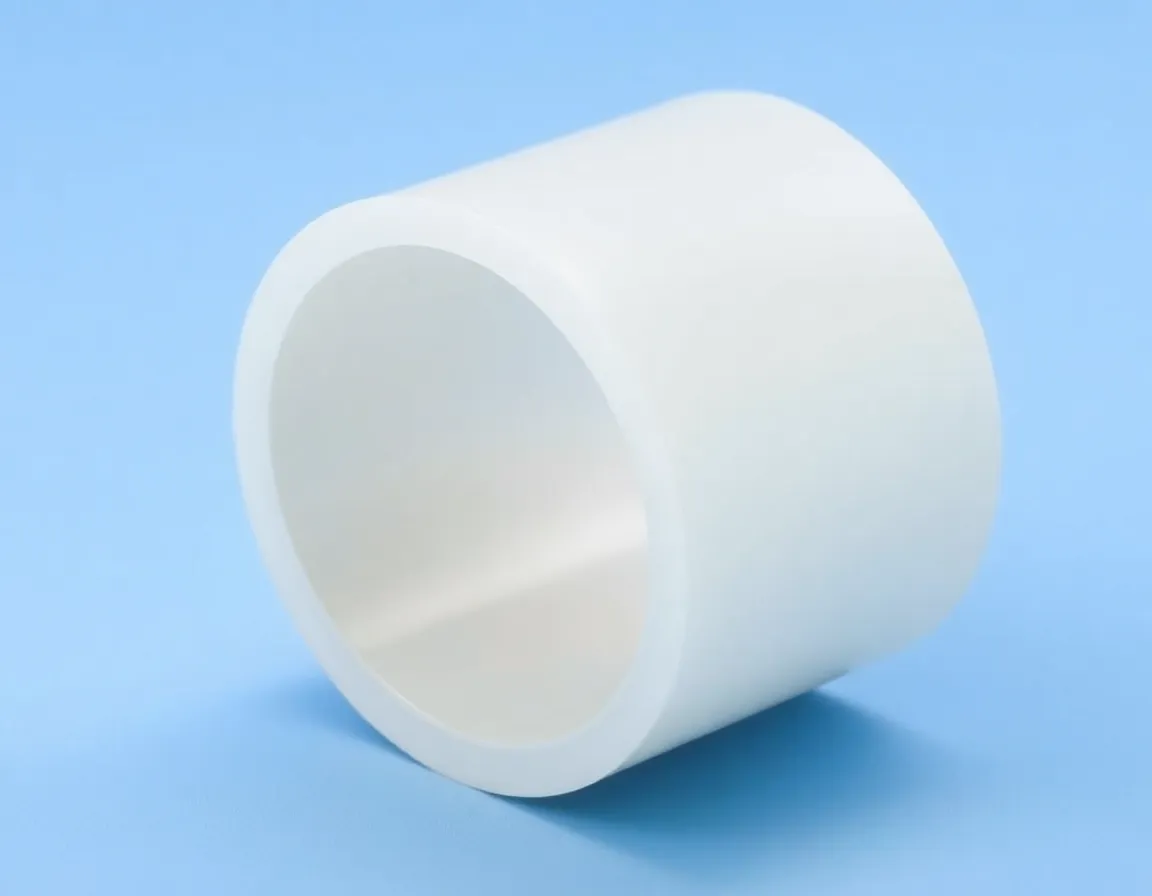
Services d'usinage CNC de PTFE (Téflon) de haute précision. Obtenez une qualité stable, une capacité flexible et un support technique expert pour des composants plastiques sur mesure. Demandez un devis. usinage CNC de ptfe
PTFE parts withstand extreme temperatures and harsh chemicals, ensuring long-term reliability.
CNC machining creates intricate, high-tolerance parts with excellent dimensional accuracy.
Machined PTFE components reduce wear and prevent material adhesion, improving performance.
Ideal for sensitive industries; machining avoids additives and maintains material integrity.
ptfe cnc machining solutions are available with stable quality control, flexible manufacturing capacity, and responsive technical support. Contact us for drawings review and quotation.
L'usinage CNC du PTFE est un procédé de fabrication spécialisé qui utilise des machines à commande numérique par ordinateur (CNC) pour couper, fraiser et façonner avec précision le PTFE (polytétrafluoroéthylène) massif, couramment connu sous la marque Teflon®. Il est utilisé pour créer des composants hautes performances aux géométries complexes difficiles ou impossibles à produire par moulage. Les applications typiques incluent les joints d'étanchéité, les garnitures, les bagues, les isolateurs et les pièces sur mesure pour des industries telles que la fabrication de semi-conducteurs, l'aérospatiale, la pharmacie et la transformation alimentaire. Le procédé est idéal pour produire des prototypes, des séries de production de faible à moyen volume et des pièces exigeant des tolérances extrêmement serrées à partir de ce polymère unique et chimiquement inerte.
Le processus commence par un bloc, une tige ou une feuille de PTFE massif qui est solidement fixé sur la table de la machine CNC. Un programme informatique (code G), généré à partir d'un modèle CAO 3D, dirige les outils de coupe de la machine. En raison de la nature molle et collante du PTFE, un outillage spécialisé avec des angles de coupe positifs élevés et tranchants ainsi que des vitesses de coupe élevées sont utilisés pour obtenir une coupe nette sans déformer le matériau. La machine CNC enlève précisément la matière par des opérations de fraisage, de tournage ou de perçage pour créer la pièce finale. Les liquides de refroidissement ne sont souvent pas nécessaires, mais de l'air comprimé est utilisé pour évacuer les copeaux. Après l'usinage, les pièces peuvent subir des opérations secondaires telles que le nettoyage ou le contrôle qualité afin de garantir qu'elles répondent à toutes les spécifications dimensionnelles et d'état de surface.
CNC machining offers several distinct advantages for fabricating PTFE components. First, it provides exceptional dimensional accuracy and repeatability, crucial for parts like seals and insulators. Second, it allows for incredible design freedom, enabling complex shapes, intricate features, and tight tolerances that are unachievable with molding. Third, it is perfect for prototyping and short runs without the high cost of custom molds. Furthermore, CNC machining produces parts with excellent surface finishes directly from the machine. Most importantly, it preserves the inherent properties of PTFE, such as its supreme chemical resistance, very low coefficient of friction, high-temperature stability (up to 260°C/500°F), and excellent dielectric properties, ensuring the final part performs as required in demanding environments.
A primary concern is PTFE's softness and tendency to deform under clamping pressure or during cutting, which can affect tolerances. Machinists address this by using specialized, sharp tooling, proper fixturing with low clamping force, and optimized feed and speed rates. Another challenge is material creep (cold flow) under sustained load; designers must account for this in the part geometry. PTFE also has a high thermal expansion rate, so temperature control during machining and in the final application is considered. Chip formation can be stringy, requiring effective chip evacuation. Experienced CNC shops mitigate these issues through proven techniques, ensuring the final part meets specifications. Choosing a machine shop with specific expertise in plastics and PTFE is critical to overcoming these challenges successfully.
The cost and lead time for custom PTFE CNC machining depend on several key factors. Part complexity is the biggest driver; intricate designs with tight tolerances and thin walls require more machining time and specialized setups, increasing cost. The quantity of parts also affects price, as higher volumes reduce the per-part cost by amortizing programming and setup time. The type and grade of PTFE (e.g., virgin, glass-filled, carbon-filled) influence material costs. Secondary operations like deburring, cleaning, or additional quality checks add time and cost. Finally, the machine shop's capacity and your project's urgency impact lead time. To get the best value, provide a detailed CAD drawing, specify tolerances clearly, and discuss your application needs with the manufacturer for an accurate quote.
Our lab needed custom PTFE components for a chemical analysis device. The precision of the CNC machi
Great experience overall. We ordered PTFE insulators for an electrical project. The parts were machi
As a small engineering startup, we needed a complex, one-off PTFE manifold. Not only did they nail t
I've used several shops for PTFE machining, and this one is solid. The parts for our food processing