Unlocking the Intricate: The Power of Wire EDM
In the high-stakes world of modern manufacturing, where complexity is a constant and precision is paramount, a quiet yet revolutionary technology has become indispensable: Wire Electrical Discharge Machining, or Wire EDM. This process transcends the limitations of conventional cutting tools, enabling the creation of parts so intricate and precise they were once deemed impossible. From the delicate gears in a medical device to the robust components of a jet engine, Wire EDM parts are the unsung heroes of advanced engineering, simplifying the fabrication of the extraordinarily complex.
What is Wire EDM and How Does It Work?
At its core, Wire EDM is a non-traditional, thermoelectric machining process that uses a thin, electrically charged strand of brass or coated wire to cut through conductive materials with exceptional accuracy. Unlike milling or turning, there is no physical contact between the "tool" (the wire) and the workpiece. This fundamental difference is the source of its remarkable capabilities.
The Science of Spark Erosion
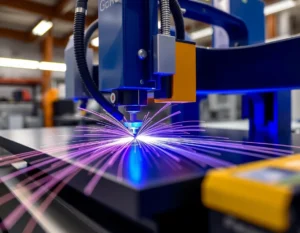
The process operates on the principle of spark erosion. A continuously fed wire electrode is positioned close to the workpiece, submerged in a bath of deionized water (dielectric fluid). A powerful electrical charge is applied, creating a series of controlled, rapid-fire sparks between the wire and the material. Each tiny spark generates an intense heat of thousands of degrees Celsius, instantly melting and vaporizing a microscopic particle of the workpiece. The dielectric fluid then flushes away the debris and cools the area, preventing thermal distortion. This cycle repeats tens of thousands of times per second, with the wire guided along a pre-programmed CNC path, "eroding" the desired shape with incredible fidelity.
The Wire EDM Machine: Key Components
A modern Wire EDM machine is a marvel of precision engineering. Its critical components include:
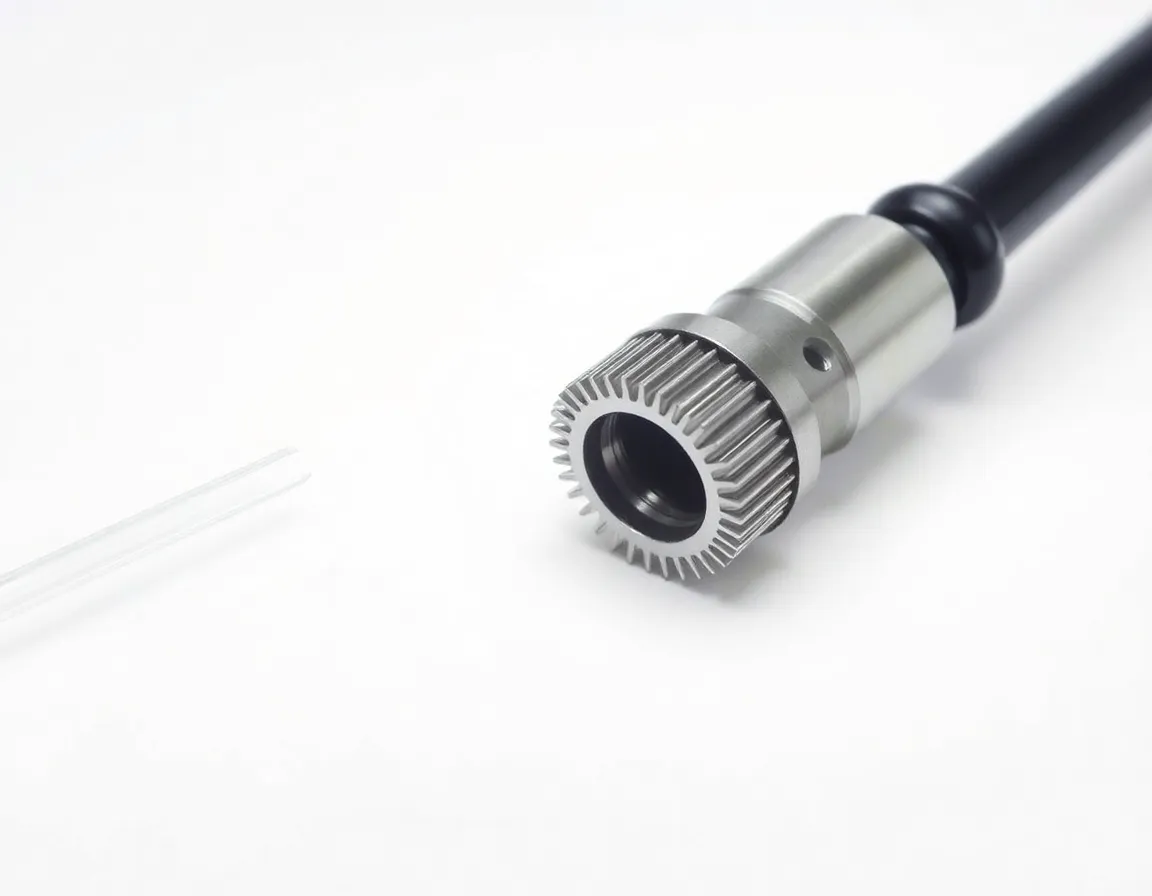
- The Wire Electrode: Typically ranging from 0.004" to 0.013" (0.10mm to 0.33mm) in diameter, it is fed from a spool, used once, and discarded.
- The Power Supply & CNC Control: Generates the electrical discharges and precisely controls the wire's movement along complex X, Y, U, and V axes, often enabling tapers and complex 3D shapes.
- The Dielectric System: A filtration and deionization unit that maintains the purity and temperature of the water, crucial for stable sparking and accuracy.
- The Worktable & Fixturing: Holds the workpiece, often with precision vises or custom fixtures, and may move in coordination with the wire for complex cuts.
The Unmatched Benefits of Wire EDM Parts
Choosing Wire EDM for part fabrication offers a suite of advantages that solve persistent manufacturing challenges.
Extreme Precision and Fine Detail
Wire EDM is renowned for achieving tolerances within ±0.0001" (0.0025mm) and producing razor-sharp corners, intricate contours, and ultra-fine features that are simply unattainable with mechanical cutters. This makes it ideal for micro-machining and delicate components.
Capacité à usiner des matériaux trempés
Since the process relies on electrical conductivity rather than tool hardness, Wire EDM excels at cutting fully hardened tool steels, carbides, Inconel, and other exotic alloys after heat treatment. This eliminates the distortion risks associated with post-machining heat treatment.
No Mechanical Stress or Tool Wear
The absence of physical contact means there is no mechanical force exerted on the workpiece, preventing burrs, stress, and distortion—even on thin, delicate sections. The constantly fed, fresh wire also means there is no "tool wear" in the conventional sense, ensuring consistent accuracy from the first part to the last.
Exceptional Surface Finish
Modern Wire EDM machines can achieve surface finishes as fine as 2-3 Ra µin (0.05-0.08 Ra µm) through multiple "skim cuts." This reduces or even eliminates secondary finishing operations, saving time and cost.
Diverse Applications Across Industries
The unique capabilities of Wire EDM have made it a cornerstone technology in fields where failure is not an option and precision is non-negotiable.
Aérospatial et défense
From turbine blades with intricate cooling channels to lightweight structural components and hardened flight control parts, Wire EDM handles heat-resistant superalloys and complex geometries critical for performance and safety.
Medical & Life Sciences
The technology is vital for producing surgical tools, orthopedic implants, and components for diagnostic devices. Its ability to create biocompatible, burr-free parts with smooth surfaces from materials like titanium and stainless steel is essential for patient safety.
Tool & Die Making
This is the traditional heartland of Wire EDM. It is used to fabricate precision stamping dies, extrusion dies, and injection molds—often from ultra-hard materials like carbide. Its accuracy ensures long tool life and perfect part replication.
Automotive & Electronics
In automotive, it creates prototypes, fuel injection components, and transmission parts. In electronics, it machines delicate fixtures, semiconductor components, and micro-connectors where miniaturization is key.
Best Practices for Optimal Wire EDM Parts
To fully leverage the potential of Wire EDM and ensure part quality, adherence to certain best practices is crucial.
Design for Manufacturability (DFM)
Collaborate early with your EDM supplier. Consider the wire's start hole location, minimize the depth of cut when possible, and specify realistic tolerances and surface finishes. Small radii are possible, but communicating critical features is essential.
Material Preparation and Fixturing
The workpiece must be properly stress-relieved and squared. Robust, stable fixturing is non-negotiable to prevent movement during the cut, which can take hours. Strategic clamping avoids interference with the wire path.
Strategic Start Hole Placement
Since the wire must thread through a pre-drilled hole to begin an internal cut, planning the size and location of start holes is a critical step in the programming phase to optimize cutting time and wire path efficiency.
Leveraging Advanced Machine Capabilities
Utilize modern machine features like automatic wire threading (AWT) for unattended operation of multiple parts, and tapered cutting for creating draft angles in molds or complex 3D forms. Programming software can also optimize cutting paths for speed and accuracy.
Conclusion: Simplifying Complexity Through Precision
Wire EDM stands as a testament to human ingenuity in manufacturing. It transforms the daunting task of creating complex, high-precision components from tough materials into a reliable, repeatable, and remarkably accurate process. By harnessing the subtle power of electrical sparks, it cuts through the constraints of traditional machining, empowering engineers to design with newfound freedom. For industries pushing the boundaries of technology, Wire EDM doesn't just make complex parts; it makes the impossible, simple. As materials advance and designs grow ever more sophisticated, this versatile technology will undoubtedly continue to be a fundamental pillar in the creation of the precision parts that drive our world forward.