
+86-188-7042-1176
project@jcproto.com
Mon-Fri: 8am-6pm (GMT+8)
EN
ISO 9001:2015 Certified
Powder Coating
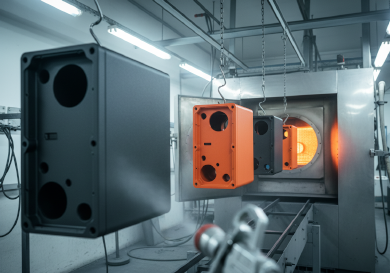
Powder Coating is a dry finishing process where free-flowing thermoplastic or thermoset powder is applied electrostatically to a metal part and then cured under heat to form a “skin.” Unlike wet paint, powder coating provides a much thicker, harder, and more durable finish that is resistant to scratching, chipping, and UV fading.
At Jucheng Precision, we utilize Powder Coating for rugged industrial components, automotive parts, and electronic enclosures. We offer a vast library of RAL colors and surface textures (from high gloss to sand texture). Since powder coating adds significant thickness, our team specializes in precision masking techniques to protect critical machined features like threaded holes and bearing surfaces from being coated.
Key Specifications
| Specification | Technical Range | Note |
|---|---|---|
| Max Part Size | 2000 mm x 1500 mm x 1000 mm | Large oven capacity |
| Coating Thickness | 60 – 150 µm (0.002″ – 0.006″) | Much thicker than anodizing |
| Color System | RAL Classic System | Thousands of colors available |
| Gloss Levels | Matte, Satin, High Gloss | Percentage based (e.g., 30% gloss) |
| Compatible Materials | Aluminum, Steel, Stainless, Zinc | Must conduct electricity & withstand heat |
| Curing Temperature | 180°C – 200°C | Material must handle this heat |
| Standard Lead Time | 3 – 5 Days | Masking labor affects time |
Powder Types & Textures
| Type | Description | Key Benefits & Applications |
|---|---|---|
| Polyester Powder | The most common type for general use. Excellent UV stability and weather resistance. | Benefit: Does not chalk or fade in sunlight. Great for outdoor use. App: Architectural panels, outdoor enclosures, automotive wheels. |
| Epoxy Powder | Offers superior chemical and corrosion resistance but poor UV stability (chalks in sun). | Benefit: Extremely hard and resistant to acids/solvents. App: Indoor machinery, chemical pumps, under-hood car parts. |
| Textured / Sand Finish | Powder formulated to create a rough, grainy surface (like sandpaper) after curing. | Benefit: Excellent at hiding CNC machine marks and fingerprints. App: Heavy-duty industrial equipment, handheld device grips. |
Design Guidelines for Powder Coating
Thickness Allowance:
Powder coating is thick (up to 0.15mm / 0.006″). It will interfere with tight tolerances. Tip: Undersize your shafts or oversize your holes if they are to be coated, or specify “Masking Required” for mating surfaces.
Thread Masking:
Standard threads will become unusable if coated. We use high-temp silicone plugs to mask threaded holes. Tip: Always identify threaded holes that need protection on your drawings.
Faraday Cage Effect:
Electrostatic powder struggles to reach into tight inside corners or deep recesses (the Faraday Cage effect). Tip: Avoid deep, narrow pockets or sharp internal corners; use large radii to allow powder to flow evenly.
Hanging Points:
Every part must be hung on a hook to be sprayed. This leaves a small “hook mark” where the powder is missing. Tip: Design a small hole for hanging or specify a non-cosmetic surface where the hook mark is acceptable.
Industry Applications
Heavy Machinery
Used on chassis, brackets, and panels for agricultural and construction equipment to prevent rust in harsh outdoor environments.
Automotive
Suspension arms, subframes, and brake calipers are powder coated for resistance to road salt, stone chips, and brake dust.
Electronic Enclosures
Aluminum die-cast or CNC machined housings for servers and outdoor telecom units utilize textured powder coating to provide a rugged, professional look.
Consumer Products
Bicycle frames, gym equipment, and furniture frames benefit from the vast color options and scratch resistance of powder coating.