
Have you ever run your fingers across a sleek smartphone case, admired the subtle grain on a car’s dashboard trim, or wondered why your kitchen appliances resist those annoying fingerprint smudges? That texture is likely a brushing finish metal treatment. In precision manufacturing, achieving this aesthetic isn’t just about running a sander over a part; it requires deep metallurgical knowledge and rigorous process control. At Jucheng, we treat surface finishing not as an afterthought, but as a core component of the engineering process.
In the context of CNC machining and fabrication, a brushing finish metal is a subjective texture characterized by unidirectional, continuous abrasive lines. Unlike a mirror polish that seeks to eliminate all visual lines (resulting in a high Ra value, often below 0.05µm), a brushed finish deliberately introduces topography. According to industry discussions on platforms like Engineers Edge, professionals often quantify this by referencing roughness values, typically aiming for a microfinish between 16 and 32 microinches (Ra 0.4 to 0.8µm) . This surface is created by friction. Abrasive belts or rotary wire brushes travel across the metal surface in a single direction, physically displacing minute peaks of material to create a uniform “grain.” At Jucheng, we distinguish this from “as-machined” surfaces, which retain visible tool chatter marks, or sandblasted finishes, which create a random, cratered matte texture . The brushed metal finish paint or laminate products available at hardware stores attempt to mimic this look optically but cannot replicate the cold-to-the-touch feel or the way light scatters across the real grain. When we specify a brush finish metal texture at our CNC facility, we are engineering friction. The process involves a specific sequence of grits, starting with a coarser material (like 120-grit) to establish the depth of the line, and finishing with a finer grit (400-grit) to soften the sharp peaks that cause snagging. During a recent project for an automotive client, we needed to match an existing brushed metal finish car interior trim piece. The challenge was that the OEM used a rolled stainless steel finish, but our part was machined billet aluminum. Aluminum is softer and loads abrasives differently than steel. By switching to a stearated abrasive belt (which prevents “loading” or clogging) and reversing the spindle direction every 30 seconds (a technique mentioned by finishing experts to “self-sharpen” the abrasive filaments), we replicated the exact brushed bronze finish metal texture for a custom vent ring . The takeaway is that brushed finish metal sheet stock behaves differently than a 3D machined component due to varying contact pressure. While brushed metal finish paint is cheap, real machined brushing is specified in high-wear or high-touch environments. The shift towards “haptic” interiors has made the brushed metal finish car interior a standard for luxury vehicles. Real brushed aluminum on center consoles or door handles offers a thermal conductivity that plastic laminates cannot fake. Furthermore, as noted in automotive material science, “soft-touch” lacquers applied over a brushed substrate can yield an anti-fingerprint property, solving a major pain point for glossy piano-black finishes . When you look at a brushed finish metal sheet used for elevator panels or backsplashes, the choice of brushing direction is crucial. Vertical brushing on elevator walls is standard practice because it hides vertical scratches caused by sliding luggage, whereas horizontal brushing would catch every bit of debris and show scuffs immediately. A brushed metal finish ring (jewelry) requires a different approach than a chassis. For titanium rings, the brushing must be circumferential to match the rotational axis of the finger, preventing the grain from looking “off” when the light hits it. For electronics, the finish must be fine enough (often 320-grit or higher) to avoid trapping skin oils, making it easier to wipe clean. Industry Insight: In the architectural sector, the choice between a physical brushed finish and a laminate often comes down to fire safety codes; real metal is non-combustible, whereas brushed metal finish laminate products may fail certain commercial building inspections. Choosing the right provider for brushing finish metal parts requires balancing aesthetic requirements against mechanical constraints. Here is a comparison of how different processing tiers handle the same request for a “400-grit brushed finish on 304 Stainless.” As the matrix suggests, not all brush finish metal texture services are equal. A part machined by Jucheng retains tighter tolerances because the brushing step is calibrated to the exact toolpath used to cut the part, ensuring the grain runs perfectly parallel to critical edges. One of the biggest misconceptions about brushed metal finish paint or real brushed surfaces is that they are “self-cleaning.” In reality, they require specific care to avoid “polishing” the grain away. Based on feedback from metal finishing communities and maintenance guides, the longevity of a brushed finish metal part depends entirely on the cleaning direction . For facilities using brushed finish metal sheet in high-traffic areas, apply a clear, sacrificial anodized layer or e-coating. While this slightly dulls the “scratch depth” of the brush lines, it prevents the oxidation that turns aluminum brushing into a messy black smudge over time. A medical device manufacturer approached Jucheng with a problem. They needed a brushed bronze finish metal enclosure for a diagnostic tool. The issue was weld seams. Bronze alloys conduct heat rapidly, causing warping. Previous vendors tried to brush after welding, which resulted in a “halo” effect where the softer welded material brushed deeper than the parent metal. Our solution utilized a pre-finishing technique. We rough-machined the parts, applied a preliminary 180-grit brushing finish metal texture, then welded, then came back with a robotic arm holding a non-woven abrasive wheel. The non-woven wheel (nylon impregnated with abrasive) conforms to the weld seam without digging in. By matching the rotational speed of the wheel to the travel speed (something we can program via CNC code), we blended the weld to a Ra of 0.6µm, invisible to the naked eye . This highlights why selecting a partner who understands abrasive engineering is as important as selecting one who understands machining. You could, but it rarely looks like real metal. Brushed metal finish paint relies on metallic flakes aligning in the paint film. On a rough surface, these flakes settle unevenly, creating a splotchy “orange peel” effect rather than a linear grain. Real brushing physically cuts the surface. Yes. Industry standards like ANSI B46.1 suggest that a standard #4 architectural finish on stainless steel correlates to an Ra between 0.2 and 0.4 micrometers (approx. 8-16 microinches) . However, a #4 “Cooking surface” is often rougher (Ra ~0.8µm) to hold oil, so always request the Ra value, not just the grit number. This is aluminum oxide. Unsealed brush finish metal sheet aluminum abrades slightly when touched. The black residue is microscopic aluminum particles that have oxidized. The fix is an anodizing or clear coat sealing layer, which hardens the surface and prevents this “transfer.” Yes, but it is risky. Thin brush finish metal sheet warps under heat and pressure. At Jucheng, we use a “backer” method—adhering the thin sheet to a rigid sacrificial plate with double-sided tape—before brushing. This absorbs the vibration and prevents the “oil-canning” distortion typical of thin-gauge work. Paradoxically, no. While a mirror polish shows every water spot and fingerprint instantly (high gloss contrast), a brushed metal finish car interior or appliance diffuses light. The textured surface hides smudges and microscopic dust far better than a high-gloss brushed metal finish paint or chrome surface. At Jucheng (https://www.jccncmachining.com/), we do not treat brushing finish metal as a “hand-off” secondary service. It is an integrated axis of our CNC operations. When a client requests a brushed bronze finish metal part or a specific brush finish metal texture for a prototype, we simulate the abrasive path in our CAM software before cutting a single chip. Our advantage lies in consistency. A human operator gets tired; a CNC-controlled abrasive head does not. We guarantee grain alignment within +/- 1 degree across a 2-meter sheet. Furthermore, we offer a “Library of Textures” from pre-machining consultation. Whether you need the rugged look of a 60-grit industrial finish or the velvet touch of a 600-grit electronic housing finish, we document the exact parameters (Surface Feet per Minute, contact force, oscillation width) for repeatable, certification-ready production. We actively monitor forums and Reddit threads discussing brushed metal finish laminate failures and brushed metal finish ring durability to ensure our physical manufacturing processes solve the complaints users voice online. Ready to move beyond adhesive films and brushed metal finish spray paint? Let us engineer a surface that feels as premium as it looks.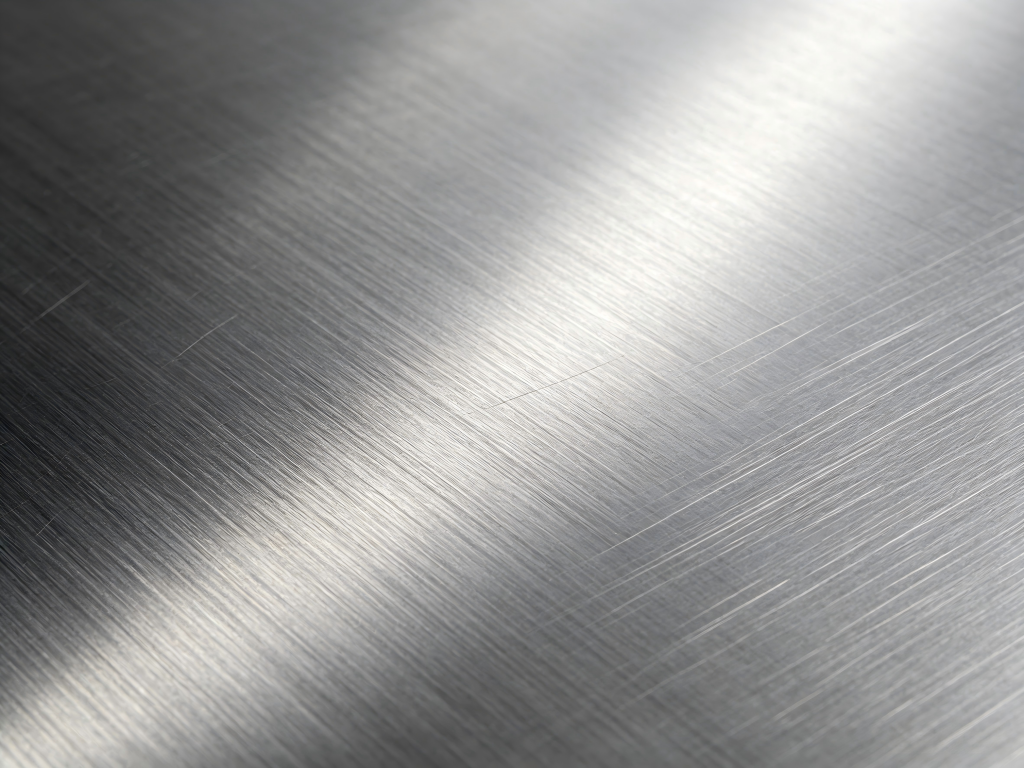
Defining the Brushed Metal Aesthetic: More Than Just Scratches
The Science of the Grain: How Abrasives Interact with Metals
Core Applications: Where Brushed Finishes Dominate
Automotive and Transportation
Architectural Hardware
Consumer Goods (The “Ring” & Electronics)
Navigating the Buying Decision: A Comparative Matrix
Edge Deformation
High (rounded edges, “doughnut” effect)
Moderate
Minimal (Masking or Post-CNC precision)
Grain Consistency
Variable (Hand-held fatigue)
Good
Excellent (Programmable feed rates)
Material Suitability
Steel/Aluminum only
Steel/Plastic
Steel, Aluminum, Brass, Titanium, Copper
Lead Time (100 units)
5-7 days
2-3 days
3-4 days (with machining)
Installation & Maintenance: Preserving the Grain
Maintenance Do’s and Don’ts
Pro Tip for Industrial Users
Case Study: Solving the “Blending” Nightmare
Frequently Asked Questions (FAQ)
1. Can I apply brushed metal finish paint over a rough casting to save money?
2. Is there a standard Ra value for a #4 Architectural Brushed Finish?
3. Why does my brushed aluminum sheet turn my hands black?
4. Can you brush finish metal that is only 0.5mm thick?
5. Is brushed metal harder to keep clean than polished metal?
Why Precision Engineering Firms Choose Jucheng