
In the high-stakes world of precision engineering, the ability to manipulate hardened materials into intricate geometries is not just an advantage; it is a necessity. Among the most sophisticated methods available today, wire edm machining stands as a cornerstone for industries requiring unparalleled accuracy. Often referred to as wire cut machining, this process has revolutionized how we approach tool and die making, aerospace components, and medical device manufacturing. Unlike traditional milling or turning, this technique utilizes a thin, electrically charged wire to “slice” through conductive materials, regardless of their hardness. Whether you are a procurement specialist searching for wire edm machining near me or an engineer designing a complex component, understanding the nuances of this technology is essential for project success.
What is Wire Electric Discharge Machining (WEDM)?
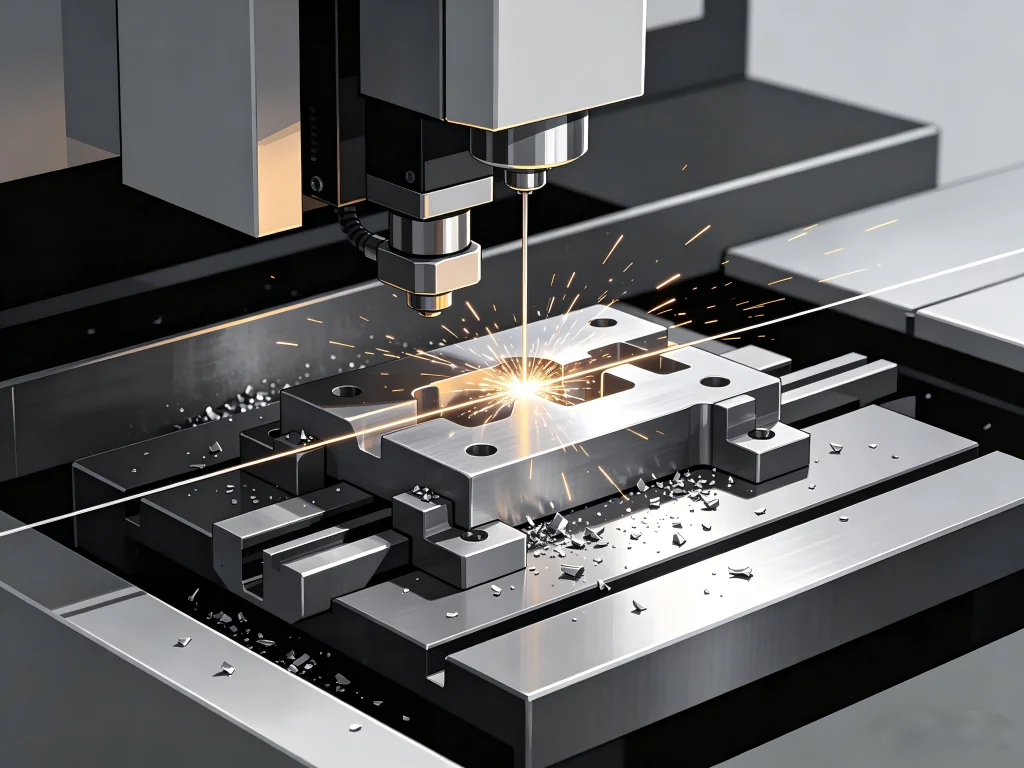
To grasp the significance of this technology, one must look beyond mechanical cutting. Wire electric discharge machining is a non-traditional thermal process that uses electrical sparks to remove material from a workpiece. A thin wire, typically made of brass or coated copper, acts as the electrode. This wire is constantly fed from a spool, ensuring that a fresh cutting surface is always in contact with the workpiece, which prevents the wire from breaking due to wear.
The Wire Electric Discharge Machining Working Principle
The wire electric discharge machining working principle relies on the controlled erosion of material through a series of rapid, repetitive electrical discharges. The workpiece and the wire are submerged in a dielectric fluid, usually deionized water. This fluid serves three critical purposes: it acts as an insulator until a specific voltage is reached, it cools the machining area, and it flushes away the microscopic debris (sludge) generated during the process.
When the CNC controller brings the wire close to the workpiece, the electrical intensity overcomes the barrier of the dielectric fluid, creating a spark. This spark generates temperatures reaching up to 12,000 degrees Celsius, melting and vaporizing a tiny amount of the material. Because the wire never actually touches the workpiece, there is zero mechanical force involved. This allows for the creation of extremely fragile parts and prevents the distortion that often occurs with mechanical cutting tools. The wire edm machining process is therefore ideal for materials that are too hard or too delicate for conventional methods.
A Simplified Wire Electric Discharge Machining Diagram Concept
If you were to visualize a wire electric discharge machining diagram, you would see a vertical wire held by upper and lower diamond guides. The workpiece is mounted on a table that moves in the X and Y axes. The upper guide can also move in the U and V axes, allowing the wire to tilt. This multi-axis movement enables the machine to cut complex tapers and different shapes at the top and bottom of the workpiece. This capability is what makes wire electric discharge machining wedm so indispensable for creating extrusion dies and injection molds.
The Technical Advantages of Using Wire Cut Machining
Why do industry leaders consistently opt for wire edm machining services over traditional CNC milling? The answer lies in the unique physical properties of the spark erosion process. Since the hardness of the material does not affect the cutting speed significantly—only its conductivity matters—we can machine hardened tool steel, tungsten carbide, and exotic alloys like Inconel with ease.
- Extreme Precision: We can routinely achieve tolerances as tight as +/- 0.002mm. This level of accuracy is nearly impossible to maintain across large batches with mechanical cutters that suffer from tool wear.
- Complex Geometries: Because the wire can be as thin as 0.1mm, we can produce internal corners with almost zero radii. This is a game-changer for intricate splines and keyways.
- Superior Surface Finish: The wire edm machining process can produce a mirror-like finish, reducing or even eliminating the need for secondary polishing.
- Stress-Free Machining: Without physical contact, the material remains free of mechanical stress, which is vital for maintaining the structural integrity of aerospace and medical components.
Comprehensive Analysis of Wire EDM Machining Cost
Understanding the wire edm machining cost is crucial for budget planning. Many professionals on platforms like Reddit often discuss whether the higher hourly rate of EDM is justified compared to milling. While the “sticker price” of an EDM hour might be higher, the total cost of ownership often tells a different story. In the following table, we compare the cost drivers associated with this technology.
| Cost Factor | Impact on Budget | Optimization Strategy |
|---|---|---|
| Material Hardness | Low Impact | Use EDM for hardened steels to avoid pre-heat treat machining. |
| Part Complexity | Moderate Impact | Stacking multiple parts can reduce the cost per unit. |
| Wire Consumption | Continuous Cost | Use standard brass wire unless high-speed coated wire is required. |
| Machine Run Time | High Impact | Plan for “lights-out” overnight manufacturing to maximize ROI. |
| Tolerances Required | Variable | Avoid over-specifying tolerances where they aren’t necessary. |
It is important to note that the wire edm machining cost may be offset by the reduction in scrap rates. When working with expensive materials like titanium or gold, the precision of wire cut machining ensures that every cut is exactly as intended, saving significant material costs in the long run. Furthermore, the ability to cut after the material has been heat-treated eliminates the risk of part distortion that often occurs during the quenching process.
Core Application Scenarios for WEDM
The versatility of wire electric discharge machining wedm allows it to permeate almost every sector of high-end manufacturing. Our experience at jucheng has shown that certain industries benefit more significantly from this technology than others.
1. Tool and Die Industry
This is the traditional home of EDM. Creating hardened steel dies for stamping or injection molding requires accuracy that only wire edm machining can provide. The ability to cut complex apertures through thick plates of carbide is essential for producing high-volume consumer goods.
2. Aerospace Components
In aerospace, where weight reduction and high-temperature resistance are paramount, we often work with heat-resistant alloys. Wire edm machining services are frequently used to create turbine blades, fuel system components, and structural brackets where material integrity is a non-negotiable safety requirement.
3. Medical Device Manufacturing
The medical field requires biocompatible materials like titanium and stainless steel, often in very small, intricate shapes. From surgical instruments to orthopedic implants, wire electric discharge machining ensures that the parts are burr-free and meet the strict regulatory standards for surface quality.
4. Prototype Development
For engineering firms looking for wire edm machining near me, the speed of setup for prototypes is a major draw. Unlike milling, which requires custom fixtures and a variety of cutting tools, EDM only requires a simple work-holding setup and a spool of wire, making it ideal for low-volume, high-complexity prototypes.
Key Factors to Consider When Selecting a Service Provider
Not all wire edm machining services are created equal. When evaluating a partner like jucheng or any other provider, you should look beyond the price quote. Technical expertise and quality management systems are the true indicators of a reliable partner.
- Machine Quality: Does the provider use high-end equipment like Sodick, Fanuc, or Mitsubishi? High-quality machines offer better thermal stability and more precise wire tension control.
- Operator Expertise: The wire edm machining process is highly dependent on the skill of the programmer. Understanding how to manage the “gap” and wire offset is the difference between a part that fits and a part that fails.
- Certifications: Look for ISO 9001 or AS9100 certifications. These ensure that the provider has a documented system for quality control and traceability.
- Secondary Capabilities: Can the provider also offer CNC milling, grinding, or surface treatments? A one-stop shop like jucheng reduces logistics overhead and ensures better compatibility between different manufacturing stages.
Maintenance and Setup: Ensuring Longevity and Accuracy
Maintaining the precision of wire cut machining requires a rigorous maintenance schedule. Unlike a lathe that might tolerate a bit of dust, an EDM machine is a precision instrument that lives in a sensitive environment. To keep the wire electric discharge machining working principle functioning at its peak, several factors must be managed.
First, the deionized water must be kept at a specific conductivity level. If the water becomes too conductive, the sparks will become uncontrollable, leading to poor surface finish and wire breakage. Filters must be changed regularly to remove the eroded particles. Second, the wire guides—usually made of industrial diamonds—must be cleaned and inspected for wear. Even a few microns of wear in the guide can lead to inaccuracies in the final part. Finally, the power feed contacts must be rotated or replaced to ensure a consistent electrical flow to the wire.
At jucheng, we implement a proactive maintenance protocol that includes daily calibration checks. This ensures that every project, whether it is a single prototype or a large production run, meets the exact specifications provided by our clients.
Why Choose jucheng for Your Wire EDM Needs?
When it comes to wire edm machining, jucheng stands out as a leader in the Chinese manufacturing landscape. Our commitment to precision is backed by state-of-the-art technology and a team of veteran engineers who understand the nuances of spark erosion. We don’t just “cut parts”; we provide comprehensive engineering solutions.
Our facility is equipped with the latest wire electric discharge machining wedm centers, capable of handling large-scale components and micro-machining tasks alike. We understand that in today’s market, delivery speed is just as important as quality. By optimizing our wire edm machining process, we are able to offer competitive lead times without compromising on the tight tolerances our clients expect. Furthermore, our transparency regarding wire edm machining cost ensures that our customers receive the best value for their investment, with no hidden fees for setup or tooling.
With a robust quality control department and a focus on customer satisfaction, jucheng has become a trusted partner for global brands in the automotive, medical, and electronics sectors. We invite you to experience the difference that professional-grade wire cut machining can make for your next project.
Frequently Asked Questions (FAQ)
1. What materials can be machined using wire EDM?
Any material that is electrically conductive can be processed. This includes all metals like steel, aluminum, brass, and copper, as well as hardened alloys like titanium, carbide, and Inconel. Non-conductive materials like ceramics or plastics cannot be cut using the wire edm machining process.
2. How accurate is wire EDM compared to laser cutting?
While laser cutting is faster for thin materials, wire edm machining is significantly more accurate. EDM can achieve tolerances of +/- 0.002mm, whereas lasers usually range around +/- 0.1mm. Additionally, EDM does not create a heat-affected zone (HAZ) as severe as laser cutting, which can be critical for structural parts.
3. Is the wire edm machining cost higher for thicker materials?
Generally, yes. The speed of the wire cut machining process is measured in square inches per hour. Therefore, a thicker workpiece will take longer to cut, which increases the machine time and the overall cost. However, EDM is often the only viable way to cut very thick, hardened materials with high precision.
4. Does wire EDM leave a burr on the part?
One of the greatest benefits of wire electric discharge machining is that it is a burr-free process. Because there is no physical contact or shearing action, the edges of the part remain clean and sharp, which is ideal for medical and electronic applications.
5. Can I cut tapers or angled holes with wire EDM?
Yes. By utilizing the 4-axis or 5-axis capabilities (X, Y, U, V, and sometimes Z), the machine can tilt the wire to create tapers. This is a standard feature in wire edm machining services used for making extrusion dies.
6. What is the typical surface finish of a wire EDM part?
The finish depends on the number of “skim cuts” performed. A single roughing cut provides a functional finish, but with multiple skim cuts, we can achieve a surface roughness (Ra) of less than 0.1 microns, which is equivalent to a polished or lapped surface.
7. Why is deionized water used instead of oil?
In wire electric discharge machining wedm, deionized water is preferred because it has a high cooling capacity and is efficient at flushing the small gap between the wire and the workpiece. Oil is typically reserved for Sinker EDM (RAM EDM), where different electrical properties are required.
8. How do I find reliable wire edm machining near me?
While local shops are convenient, many companies now look for global partners like jucheng in China to take advantage of advanced technology and cost-efficiencies. When searching, always check for equipment lists and quality certifications to ensure they can meet your technical requirements.
Ready to Elevate Your Precision Manufacturing?
At jucheng, we specialize in turning complex designs into high-precision reality. Our wire edm machining services are designed to meet the most demanding specifications with speed and reliability. Whether you need a single prototype or high-volume production, our team is ready to assist.
Contact us today to discuss your project requirements and receive a detailed quote. Experience the pinnacle of wire cut machining technology with jucheng.
Visit us at: https://www.jccncmachining.com/