
When a component emerges from a CNC mill, it often looks like a ghost of its final self. For transparent polymers like PMMA, the machining process leaves behind a microscopic landscape of ridges and valleys that scatter light in every direction. This scattering manifests as a milky haze or frosted texture—and for engineers designing optical systems, that haze represents failure. Optical PMMA machining is the discipline of transforming that machined haze into crystal-clear, light-transmitting components, and it requires far more than standard CNC capabilities.
This guide explores the challenges of achieving optical-grade clarity in PMMA components, why standard machining approaches fall short, and how specialized techniques—from diamond tooling to vapor polishing—can deliver the 92% light transmission that optical applications demand.
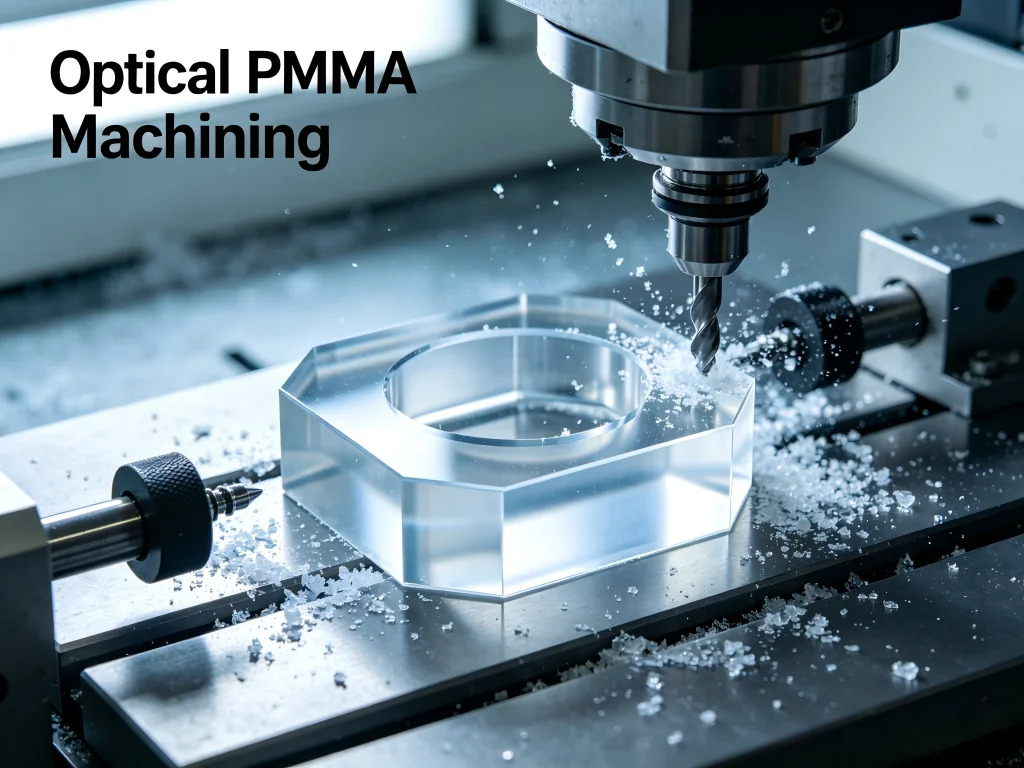
The Problem: Why Optical PMMA Machining Is So Difficult
PMMA (polymethyl methacrylate), commonly known as acrylic or by trade names like Plexiglass® and Lucite®, is a transparent thermoplastic that offers exceptional optical clarity, UV stability, and shatter resistance. It transmits up to 92% of visible light—higher than polycarbonate and comparable to glass. But this optical beauty comes with a brittleness that makes CNC machining treacherous.
Acrylic is “notch-sensitive,” meaning a small crack can propagate rapidly through the material. The process of machining it is a delicate balancing act where the wrong tool or incorrect cutting speed can chip the material or create subsurface stress fractures called “crazing” that permanently ruin optical clarity.
The Thermal Challenge
The biggest threat to PMMA’s optical quality during CNC machining is heat. Friction at the cutting edge generates heat that softens the material, leading to several catastrophic outcomes:
- Material Smearing: Excessive heat causes the plastic to soften and smear across the surface rather than forming clean chips. This destroys the surface finish and requires extensive, costly polishing.
- Internal Stress: Rapid, localized heating and cooling during the cut can lock internal stress into the material. This stress is invisible but can later cause the part to crack spontaneously or fail prematurely when exposed to mild solvents or physical load.
- Tool Marking: Even with optimal parameters, standard tooling leaves microscopic ridges that scatter light—what the industry perceives as a frosted or hazy finish.
Standard water-based coolants are often avoided during PMMA machining to prevent chemical interaction and water absorption. Instead, high-pressure air blast or vaporized oil mist is used to rapidly evacuate heat and clear chips from the cutting zone. This thermal management strategy is non-negotiable for optical applications.
The Solution: Specialized Optical PMMA Machining Techniques
Achieving optical-grade transparency in PMMA requires mastery of thermal and mechanical control. At Jucheng Precision Technology, this mastery is demonstrated through integrated specialized tooling, thermal management protocols, and mandatory annealing procedures.
Diamond Tooling: The Foundation of Clarity
Specialized tooling is mandatory for PMMA. The tool must slice the plastic cleanly, minimizing the friction that generates heat:
- Positive Rake Angle: Tools designed for PMMA feature a large positive rake angle. This geometry presents a very sharp, acute cutting edge to the material, facilitating a clean slicing action instead of pushing, which generates less friction and heat.
- Polished Flutes: The flutes (the channels that evacuate chips) of the cutter must be highly polished. This prevents plastic chips from sticking to the tool, which would cause immediate friction, heat buildup, and subsequent melting.
- Tool Material: High-quality, polished carbide tools are generally preferred over high-speed steel for their superior rigidity and ability to hold a sharp edge during high-speed cutting.
Jucheng utilizes diamond-polished tooling that produces transparent chips and a semi-clear surface directly off the machine, significantly reducing the polishing time required.
Operational Parameters for Optical Success
A specific set of operational parameters is required to manage the thermal and chip evacuation challenges of PMMA:
- High Spindle Speed (RPM): Running the spindle at high speed minimizes the time the tool spends in contact with the material, reducing the total heat input per cut.
- Aggressive Feed Rate: The tool should move quickly through the material to create a thick, continuous chip. A thin chip leads to rubbing and heat buildup; a thick chip carries the heat away from the workpiece.
- Chip Evacuation: Continuous, high-volume air blast is used to clear the large, stringy PMMA chips instantly. Allowing chips to accumulate causes rubbing and instantly ruins the finish.
Optimal speeds for CNC acrylic machining typically range from 18,000 to 24,000 RPM. Using a high-speed setting helps achieve smooth cuts and minimizes chipping. For optical applications exceeding standard tolerances, diamond tooling and cast material selection are non-negotiable.
The Art of Post-Processing: From Machined Haze to Optical Clarity
Even the best CNC cut leaves fine tool marks. Achieving a true optical or mirror finish requires a meticulous, multi-stage polishing sequence:
- Precision Sanding: The process begins with a multi-step sequence of wet sanding, starting with medium grits (e.g., P400) and progressing through ultra-fine grits (P1200, P2000) to remove all visible tool marks.
- Buffing and Polishing: This is followed by buffing, which uses specialized polishing compounds and soft cloth wheels. The process requires gentle pressure and continuous movement to ensure the surface is uniform and the heat generated is insufficient to cause smearing.
- Vapor Polishing: For internal features and complex geometries, vapor polishing using solvents like dichloromethane can achieve optical clarity on surfaces that are inaccessible to mechanical buffing.
At Jucheng Precision, technicians use a cross-hatch technique, changing the direction of sanding with each grit change to make it instantly obvious if a stubborn scratch from a lower grit remains. By the time a part reaches the 2000-grit stage, it should no longer be white or opaque; it should be a smooth, semi-transparent satin.
Core Application Scenarios for Optical PMMA Components
Optical PMMA machining serves a diverse range of industries where clarity, light transmission, and precision are paramount:
Automotive Lighting Systems
PMMA is widely used for taillight lenses, instrument cluster covers, interior ambient lighting, and light pipes. The material’s ability to be “edge-lit”—acting like a fiber optic cable where light entering one edge travels through the material and exits at another edge—makes it indispensable for modern automotive lighting design.
Medical Devices and Optical Instruments
The medical industry relies on PMMA for transparent housings, microfluidic devices, and diagnostic equipment components. The material’s biocompatibility and optical clarity make it suitable for applications ranging from surgical instruments to laboratory analysis equipment.
Consumer Electronics and Displays
Display panels, light guides, and protective covers for electronic devices frequently utilize PMMA. The material’s UV stability ensures it doesn’t yellow over time, maintaining clarity for the product’s lifespan.
Signage and Architectural Elements
Illuminated signs, architectural glazing, and decorative panels leverage PMMA’s light transmission and aesthetic appeal. The material can be machined into complex shapes while maintaining the optical quality required for premium visual applications.
Material Selection: Cast vs. Extruded Acrylic
Understanding the differences between cast and extruded acrylic is critical for successful optical PMMA machining. The table below compares the key characteristics:
| Property | Cast Acrylic | Extruded Acrylic |
|---|---|---|
| Internal Stress | Low (±0.5 MPa) | High (±8 MPa) |
| Machinability | Excellent (no cracking, chips nicely) | Prone to chipping and gumming |
| Tolerance Holding | ±0.02 mm achievable | ±0.1 mm typical |
| Light Transmission | ~92% | ~90% |
| Cost | 20-30% higher | Lower |
| Ideal Applications | Optical prototypes, lenses, medical devices | Signage, light panels, simple enclosures |
For critical optical and mechanical components, specifying cast acrylic is essential to prevent stress-related failures. Cast acrylic has a higher molecular weight, machines better, and polishes to a higher clarity. Extruded acrylic, while more cost-effective, has lower clarity and can “gum up” during machining due to its lower melting point.
Key Selection Factors for Optical PMMA Machining Services
When selecting a partner for optical PMMA machining, several factors should guide your decision:
Thermal Management Capability
A manufacturer’s approach to heat management is the single most important indicator of their ability to produce optical-grade components. Look for providers that use high-pressure air cooling or vaporized oil mist rather than standard water-based coolants. Ask about their spindle speed capabilities and feed rate optimization—these parameters directly affect the thermal profile of the cut.
Tooling Strategy
The use of diamond-polished, positive-rake tooling is non-negotiable for optical applications. Inquire about the specific tooling your potential partner uses and their approach to maintaining tool sharpness throughout production runs.
Post-Processing Capabilities
Optical clarity is rarely achieved directly off the machine. A comprehensive post-processing suite—including precision sanding, mechanical buffing, and vapor polishing—is essential. Ask about their polishing protocols and quality verification methods.
Material Sourcing and Quality Control
Verify that your partner stocks optical-grade cast acrylic and has quality control procedures to ensure material consistency. Jucheng maintains stock of clear, tinted, and frosted acrylic in various thicknesses, and their post-processing capabilities—including vapor polishing and hand buffing—ensure machined prototypes achieve the same level of transparency as molded or extruded parts.
Lead Time and Production Scalability
CNC machining remains the fastest method for precision acrylic prototypes, with typical lead times of 24-48 hours. For production runs, verify that your partner can scale while maintaining quality standards.
Installation and Maintenance Considerations
Proper handling and maintenance of optical PMMA components are essential to preserve their clarity and performance:
Installation Best Practices
- Avoid Stress Concentrations: PMMA is sensitive to stress. Use soft gaskets or rubber mounts when installing components to distribute pressure evenly.
- Chemical Compatibility: Avoid using alcohol or solvent-based fluids near PMMA components, as they can cause immediate crazing.
- Temperature Considerations: PMMA has a maximum service temperature of approximately 80-90°C. Ensure components are not exposed to temperatures exceeding this range during installation or operation.
Maintenance Guidelines
- Cleaning: Use mild soap and water with a soft, lint-free cloth. Avoid abrasive cleaners or solvents.
- Scratch Prevention: While PMMA is harder and more scratch-resistant than polycarbonate, it can still be scratched. Handle components with care and use protective covers when possible.
- Inspection: Regular visual inspection for crazing, stress fractures, or surface degradation can prevent premature failure.
Frequently Asked Questions About Optical PMMA Machining
1. What is the difference between optical PMMA and standard acrylic?
Optical-grade PMMA offers higher purity, better light transmission (up to 92%), and more consistent refractive properties than standard acrylic. It is manufactured with tighter quality controls to minimize inclusions, bubbles, and internal stress that could affect optical performance.
2. Can CNC machining achieve optical clarity in PMMA?
Yes, but it requires specialized techniques including diamond tooling, optimized cutting parameters, and multi-stage post-processing. Standard CNC machining without these considerations will produce a frosted or hazy finish that scatters light rather than transmitting it.
3. How does optical PMMA compare to glass for lens applications?
PMMA is 50% lighter than glass, significantly more impact-resistant, and can be machined to optical quality with the right techniques. While glass offers superior scratch resistance and thermal stability, PMMA provides comparable light transmission at a lower weight and with greater design flexibility.
4. What causes crazing in PMMA during machining?
Crazing is caused by internal stress fractures that develop beneath the surface during machining. These fractures are typically the result of excessive heat, improper tool geometry, or aggressive feed rates. Using sharp, positive-rake tooling and maintaining proper thermal management prevents crazing.
5. What is the typical lead time for optical PMMA prototypes?
CNC machining remains the fastest method for precision acrylic prototypes, with lead times typically ranging from 24 to 48 hours. Production runs may require additional time depending on volume and complexity.
6. What polishing method provides the best optical clarity?
Vapor polishing is considered the gold standard for achieving optical clarity, particularly for internal features and complex geometries. However, the best approach often combines precision sanding, mechanical buffing, and vapor polishing in a multi-stage process.
7. What are the most common applications for optical PMMA components?
Common applications include automotive lenses and light guides, medical device housings, display panels, optical fibers, light pipes, and illuminated signage.
Why Choose Jucheng for Optical PMMA Machining
Jucheng Precision Technology has established itself as a leader in optical PMMA machining, combining technical expertise with comprehensive manufacturing capabilities. Several factors distinguish Jucheng in this demanding field:
Specialized Optical Expertise
Jucheng integrates specialized tooling, thermal management protocols, and mandatory annealing procedures to deliver flawless, stress-free acrylic components. Their understanding of the thermal and mechanical challenges unique to PMMA enables them to achieve optical-grade transparency consistently.
Comprehensive Post-Processing Suite
From precision sanding to mechanical buffing and vapor polishing, Jucheng offers a full suite of finishing services. Their technicians use cross-hatch sanding techniques and progressive grit sequences to ensure complete removal of tool marks before final polishing.
Material Variety and Quality
Jucheng stocks clear, tinted, and frosted acrylic in various thicknesses to suit display and functional needs. They understand the critical differences between cast and extruded acrylic and guide clients toward the optimal material choice for their application.
5-Axis Capabilities for Complex Geometries
Unlike simple laser cutting, Jucheng’s 5-axis CNC mills can create complex 3D shapes, pockets, and undercuts in acrylic blocks. This capability enables the production of sophisticated optical components that would be impossible with traditional manufacturing methods.
Quality Assurance and Verification
Jucheng employs rigorous quality control procedures, including optical inspection to verify final mirror finishes. Their commitment to quality ensures that each component meets the demanding requirements of optical applications.
For engineers and procurement professionals seeking a partner who understands that optical clarity is not a luxury but a functional requirement, Jucheng Precision Technology offers the expertise, capabilities, and quality assurance necessary to succeed in optical PMMA machining.