
If you are developing a lightweight drone frame, an automotive prototype, or a medical device housing, aluminum CNC machining is likely at the center of your manufacturing strategy. This subtractive process uses computer-controlled cutting tools to transform aluminum billet into precision components with tolerances as tight as ±0.012mm. But beneath this straightforward definition lies a complex ecosystem of alloy selection, machine capabilities, surface finishing, and supply chain decisions that can make or break your project.
This guide draws on insights from engineering communities on Reddit and Facebook, where professionals frequently debate topics like “which aluminum alloy machines best,” “how to reduce CNC machining costs,” and “whether to source locally or from China.” We have synthesized these discussions with technical expertise to create a comprehensive resource for anyone navigating the world of aluminum CNC machining.
What Is Aluminum CNC Machining and How Does It Work?
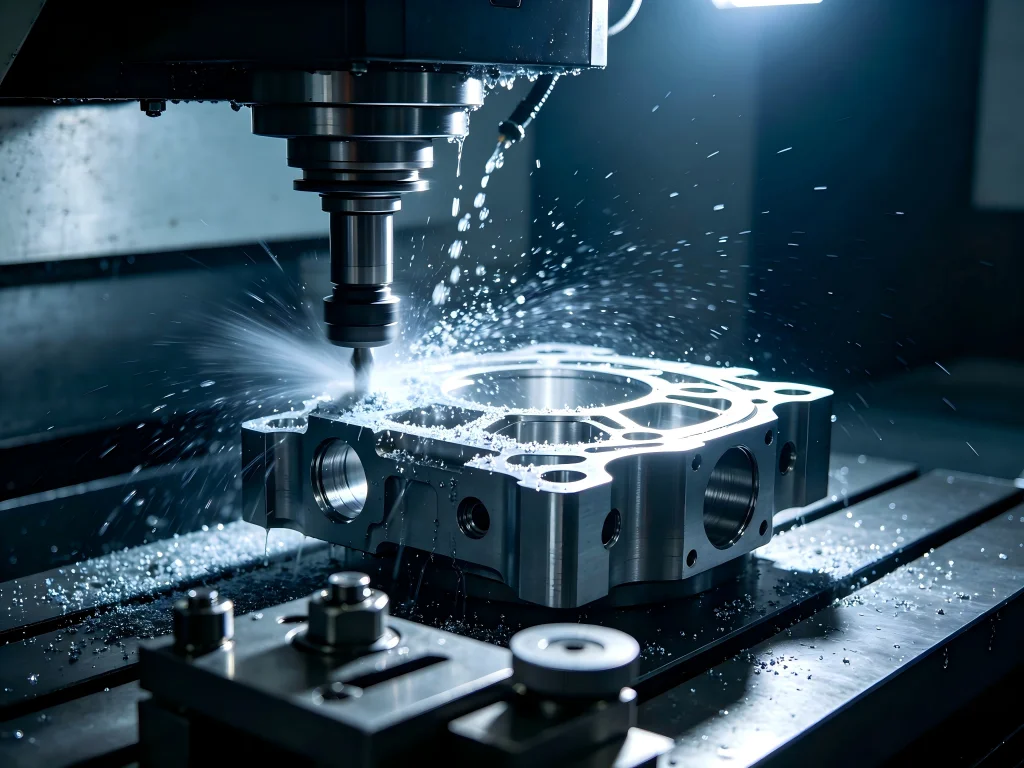
At its core, aluminum CNC machining is a manufacturing process that removes material from a solid aluminum workpiece using rotating cutting tools guided by pre-programmed computer instructions. The “CNC” stands for Computer Numerical Control, meaning the machine follows a digital blueprint with minimal human intervention once set up.
The Fundamental Workflow
The process typically follows these stages:
- CAD Design: Engineers create a 3D model of the desired part using software like SolidWorks or Fusion 360.
- CAM Programming: The CAD file is converted into tool paths using Computer-Aided Manufacturing software, determining exactly how the cutting tools will move.
- Material Preparation: The appropriate aluminum alloy—whether 6061-T6, 7075-T6, or another grade—is selected and secured to the machine bed.
- Machining Execution: The CNC machine follows the programmed paths, removing material through milling, turning, drilling, or other operations.
- Quality Inspection: Finished parts undergo dimensional verification using Coordinate Measuring Machines (CMMs), optical projectors, and spectrometers.
Common CNC Machine Types for Aluminum
Different machine configurations suit different part geometries and production volumes:
- 3-Axis CNC Milling Machines: The most common configuration, moving the cutting tool along X, Y, and Z axes. Suitable for simpler geometries and cost-effective for many applications.
- 4-Axis and 5-Axis Machining Centers: These add rotational axes, allowing the machine to access multiple sides of a part in a single setup. This reduces setup errors and enables complex geometries like aerospace components with compound angles. Jucheng Precision operates twenty-five high-end 5-axis centers specifically for this purpose.
- CNC Turning Centers (Lathes): Used for cylindrical parts, where the workpiece rotates while stationary tools shape it.
- CNC Routers: Often used for larger, less complex aluminum parts, particularly in prototyping and low-volume production.
As one Reddit user in the r/Machinists community noted, “The difference between a 3-axis and a 5-axis job isn’t just about complexity—it’s about how many times a human has to touch the part. Every setup is a chance for error.” This observation aligns with industry best practices that prioritize minimizing setups for critical components.
Core Application Scenarios: Where Aluminum CNC Machining Excels
Aluminum’s exceptional strength-to-weight ratio, corrosion resistance, and machinability make it a material of choice across numerous industries. Here is how different sectors leverage aluminum CNC machining:
Aerospace and Aviation
The aerospace industry demands components that are lightweight yet extraordinarily strong. Aluminum 7075-T6, with its tensile strength approaching that of many steels, is frequently used for aircraft frames, structural ribs, and instrumentation housings. The zero-defect culture required in this sector means every part undergoes rigorous spectrometer verification of material composition and CMM inspection of every critical dimension. Manufacturers operating under IATF 16949 quality management systems—while originally developed for automotive—share the same DNA as AS9100 aerospace standards: fanatical risk mitigation and complete traceability.
Automotive and Motorsports
From engine blocks to transmission housings, aluminum CNC machining enables automotive engineers to test new designs without waiting months for production tooling. The “billet prototyping” approach—machining complex components from solid aluminum blocks—delivers parts with finer grain structure and higher density than cast alternatives, providing superior strength for high-performance applications. The electric vehicle revolution has further accelerated demand for machined aluminum battery enclosures and lightweight structural components. IATF 16949 certification is particularly important here, as it demonstrates a supplier’s commitment to process stability and defect prevention.
Medical Devices
Medical instrumentation requires biocompatible materials and absolute precision. Aluminum 6061-T6, when properly anodized, offers excellent corrosion resistance and can be sterilized repeatedly. ISO 13485 certification, which Jucheng Precision holds alongside IATF 16949, is the gold standard for medical device manufacturing, ensuring rigorous quality management throughout production.
Robotics and Automation
Robot arms, grippers, and frames require high stiffness with minimal weight. 5-axis machining enables the production of complex joints and motor mounts with tolerances down to ±0.01mm. The ability to machine entire assemblies from a single block of aluminum eliminates fasteners, reducing weight and potential failure points.
Consumer Electronics and Drones
The drone industry has embraced aluminum CNC machining for lightweight airframes that must withstand high-G maneuvers and vibration. 7075-T6 aluminum is the material of choice for high-end drones, though its tendency toward internal residual stress requires careful machining strategies to prevent warping.
Key Selection Factors: What to Consider When Choosing Aluminum CNC Machining Services
When sourcing aluminum CNC machining services, several critical factors determine project success. These considerations frequently appear in discussions on engineering forums and B2B sourcing platforms.
Material Selection: The Foundation of Performance
The choice of aluminum alloy directly impacts the part’s strength, machinability, corrosion resistance, and cost:
| Alloy | Key Properties | Typical Applications | Relative Cost |
|---|---|---|---|
| 6061-T6 | Excellent machinability, good strength (yield ~276 MPa), superior anodizing quality, weldable | Automotive brackets, semiconductor equipment, structural components, consumer products | Low-Moderate |
| 7075-T6 | Very high strength (comparable to steel), aerospace-grade, prone to residual stress | Aerospace frames, high-stress military prototypes, drone arms, racing components | Moderate-High |
| 5052 | Excellent formability and corrosion resistance, good weldability | Marine hardware, fuel tanks, sheet metal enclosures | Low |
| 2024 | High strength, good fatigue resistance, lower corrosion resistance | Aerospace structures, aircraft fittings | Moderate |
As highlighted in a popular CNC machining Facebook group, “6061 is the universal donor of modern hardware—it offers a density of 2.70 g/cm³ and highly predictable machinability”. For most applications, 6061-T6 represents the best balance of performance and cost, which is why it accounts for the majority of aluminum production at many precision machining facilities.
Precision and Tolerances
Dimensional accuracy is often the deciding factor in supplier selection. Different applications demand different tolerance levels:
- Standard Tolerances: ±0.025mm to ±0.125mm (±0.001″ to ±0.005″) for most commercial applications.
- Precision Tolerances: As tight as ±0.012mm (±0.0005″) for critical features in aerospace, medical, and high-performance automotive components.
- Surface Finish: Standard machined finish is Ra 1.6-3.2 µm, with Ra 0.4-0.8 µm achievable through fine finishing passes.
It is worth noting that aluminum generally allows tighter tolerances than steel due to lower cutting forces and reduced distortion risk. However, achieving precision tolerances requires specialized equipment and significantly increases costs.
Machine Capabilities and Setup Strategy
The number of setups required to machine a part directly affects both quality and cost. Each time a part is repositioned, there is an opportunity for misalignment and “tolerance stack-up”—the cumulative effect of small errors across multiple setups. Five-axis machining addresses this by allowing access to five sides of a part in a single setup, maintaining feature-to-feature accuracy that fixed-table machines cannot replicate. As one engineer on Reddit’s r/CNC put it, “Designing for 5-axis isn’t about making curvy parts—it’s about killing setups. Every setup you eliminate is a quality problem you never have to solve.”
Quality Certifications and Inspection
Certifications provide third-party validation of a manufacturer’s quality systems:
- IATF 16949: The automotive industry standard, focused on defect prevention and process stability.
- ISO 13485: The medical device quality management standard.
- ISO 9001: The foundational quality management standard.
Inspection equipment matters as much as certifications. Advanced manufacturers use Coordinate Measuring Machines (CMMs), optical projectors, and spectrometers to verify material composition and dimensional accuracy. A 99.8% product qualification rate is achievable with rigorous in-process and final inspection protocols.
Lead Time and Production Capacity
Speed without quality is simply accelerated failure. However, when timelines are tight, manufacturers with significant capacity can deliver parts in as few as 4 days. Typical lead times range from 3-5 business days for simple prototypes to 2-4 weeks for complex, high-volume production. Facilities with 150+ CNC machines and 8,000 sq.ft. of production space can often outpace local bottlenecks through sheer scale.
Surface Finishing Capabilities
The finish applied to a machined aluminum part is often as critical as the machining itself. Common finishing options include:
- Anodizing (Type II & III): Creates a hard, durable, corrosion-resistant oxide layer. Type III (hard coat) provides increased wear resistance.
- Chemical Film Conversion Coating: Provides corrosion resistance and serves as a base for painting.
- Powder Coating and Painting: Used for durable, high-quality decorative finishes.
- Bead Blasting and Sandblasting: Creates uniform matte textures.
It is important to note that coatings like anodizing add material thickness (typically 25-50 microns for hard anodizing). For parts with critical functional dimensions, manufacturers must apply pre-plate compensation during machining.
Installation and Maintenance: Ensuring Long-Term Performance
While the end-user rarely installs CNC machines themselves, understanding installation and maintenance considerations helps when evaluating a supplier’s operational stability.
Machine Installation Considerations
Proper installation of CNC machining equipment involves several critical steps:
- Foundation Preparation: Heavy CNC machines require reinforced concrete foundations to prevent vibration and maintain alignment. For high-speed spindles operating up to 24,000 RPM, even minor foundation issues can affect part quality.
- Environmental Control: Temperature fluctuations can affect machine accuracy. Many precision machining facilities maintain climate-controlled environments to ensure dimensional stability.
- Power and Air Requirements: CNC machines require stable three-phase power and clean, dry compressed air for tool changers and cooling systems.
- Calibration and Leveling: Precision levels and laser interferometers are used to ensure the machine is perfectly level and all axes are square.
Daily Maintenance Practices
Regular maintenance prevents costly downtime and ensures consistent part quality:
- Coolant Management: Flood coolant is recommended for aluminum machining to flush chips and maintain thermal stability. Coolant should be regularly tested for concentration and pH levels.
- Tool Inspection: Cutting tools should be inspected for wear before each job. For aluminum, uncoated carbide tools or those with aluminum-specific coatings (like ZrN) prevent material build-up on the cutting edge (BUE).
- Way Lubrication: Machine ways and ball screws require regular lubrication to maintain accuracy and prevent wear.
- Chip Evacuation: Aluminum chips can be stringy and prone to wrapping around tools. Effective chip conveyors and regular cleaning are essential.
As one experienced machinist noted in a forum discussion, “The best CNC machine in the world is useless if you don’t maintain it. I’ve seen million-dollar machines produce scrap because someone forgot to check the way lube.”
Frequently Asked Questions About Aluminum CNC Machining
Based on common queries from engineering forums, Reddit discussions, and customer inquiries, here are answers to the most frequently asked questions about aluminum CNC machining.
1. What is the best aluminum alloy for CNC machining?
6061-T6 is the most versatile and widely used aluminum alloy for CNC machining. It offers an excellent balance of machinability, strength (yield ~276 MPa), corrosion resistance, and anodizing quality. For applications requiring higher strength, 7075-T6 is the aerospace-grade choice, though it is more expensive and requires more careful machining to manage residual stress.
2. How much does aluminum CNC machining cost?
CNC machining costs vary widely based on complexity, tolerances, and quantity. Machine time typically ranges from $30 to $150+ per hour for standard 3-axis operations, with 5-axis machining running $70 to $150+ per hour. Material costs for aluminum range from $2 to $6 per pound, with 7075-T6 costing more than 6061-T6. Per-part costs can range from $20 for simple components to $1,000+ for complex precision parts. Setup costs, programming, and fixturing add to the total, typically $50 to $200 per hour.
3. What tolerances can aluminum CNC machining achieve?
Standard tolerances for aluminum CNC machining are ±0.025mm to ±0.125mm (±0.001″ to ±0.005″). For critical features, precision tolerances as tight as ±0.012mm (±0.0005″) are achievable. Aluminum generally allows tighter tolerances than steel due to its lower cutting forces and reduced tendency to distort during machining.
4. How does anodizing affect aluminum CNC machined parts?
Anodizing creates a hard, corrosion-resistant oxide layer on the aluminum surface. Type II anodizing provides decorative and moderate wear protection, while Type III (hard anodizing) offers significantly increased wear resistance. However, anodizing adds material thickness—typically 25-50 microns for hard anodizing—so parts with critical dimensions require pre-anodizing compensation during machining.
5. Should I source aluminum CNC machining locally or from China?
This is a frequently debated topic in manufacturing forums. While “near me” searches imply a need for speed, speed without verifiable quality is simply accelerated failure. Chinese manufacturers with ISO 9001, IATF 16949, or ISO 13485 certifications can offer competitive pricing, significant capacity (150+ machines, 8,000 sq.ft. facilities), and delivery times as fast as 4 days. The key is evaluating the supplier’s quality systems, certifications, and inspection capabilities rather than focusing solely on location.
6. What is the difference between 3-axis and 5-axis CNC machining for aluminum?
3-axis machining moves the cutting tool along X, Y, and Z axes, requiring multiple setups to machine complex parts. 5-axis machining adds two rotational axes, allowing access to five sides of a part in a single setup. This reduces setup errors, improves feature-to-feature accuracy, and enables complex geometries that would be impossible with 3-axis machines. While 5-axis machines have higher hourly rates ($70-$150+ vs. $30-$60 for 3-axis), the reduced setup time and improved quality often justify the cost for complex components.
7. What surface finishes are available for aluminum CNC machined parts?
Common finishes include anodizing (Type II and III), chemical film conversion coating, powder coating and painting, bead blasting and sandblasting, and various plating options like nickel or chrome. Each finish offers different combinations of corrosion resistance, wear protection, and aesthetic appearance.
8. How do I protect my design IP when sourcing from a CNC machining service?
Reputable manufacturers take intellectual property protection seriously. They are willing to sign Non-Disclosure Agreements (NDAs) before discussing project details. Customer files should be stored on secure servers with access limited to essential project personnel. Designs should never be shared or used for any other purpose without explicit permission.
Why Jucheng Precision Stands Out in Aluminum CNC Machining
With over 13 years of experience and IATF 16949 and ISO 13485 certifications, Jucheng Precision has established itself as a trusted partner for aluminum CNC machining across aerospace, automotive, medical, and robotics industries.
Technical Capabilities That Deliver Results
Jucheng’s facility spans 8,000 sq.ft. and houses 150+ CNC machines, including twenty-five high-end 5-axis machining centers. This equipment enables complex contouring and access to five sides of an aluminum block in a single setup, drastically improving accuracy and surface finish. High-speed spindles operating up to 24,000 RPM achieve mirror-like surface finishes directly off the machine.
Quality Assurance That Builds Trust
Every aluminum component undergoes inspection using imported international advanced CMMs, optical projectors, and spectrometers. This rigorous quality control, combined with a 99.8% product qualification rate, ensures parts meet the most demanding specifications. Material verification using X-Ray Fluorescence (XRF) ensures all incoming stock meets ASTM B221 standards.
Comprehensive Surface Finishing
In-house surface finishing capabilities include anodizing (Type II and III), chemical film conversion coating, powder coating, painting, bead blasting, and plating. This vertical integration ensures rapid turnaround and quality control.
Proven Industry Expertise
Jucheng’s specialized knowledge is derived from deep engagement in industries where aluminum CNC machining is paramount. From aerospace structural parts and automotive components to medical instrumentation and drone frames, the company has demonstrated the ability to deliver high-precision parts that meet rigorous industry standards.
Customer-Centric Service Model
Jucheng assigns a dedicated project manager to each order, providing clear communication throughout the manufacturing process. The standard workflow—from quoting and DFM feedback to first article inspection and final shipment—is transparent and designed to minimize surprises. With no strict Minimum Order Quantity (MOQ) and competitive pricing at any quantity, Jucheng serves both prototype developers and volume production customers.
Intellectual Property Protection
Jucheng takes client IP extremely seriously, signing NDAs before discussing project details and storing all customer files on secure servers with limited access. Designs are never shared or used for any other purpose without explicit permission.
Whether you are developing a prototype that requires precision tolerances of ±0.012mm or scaling to production volumes with IATF 16949-certified quality systems, Jucheng Precision offers the technical depth, capacity, and quality culture to bring your aluminum components to life.