
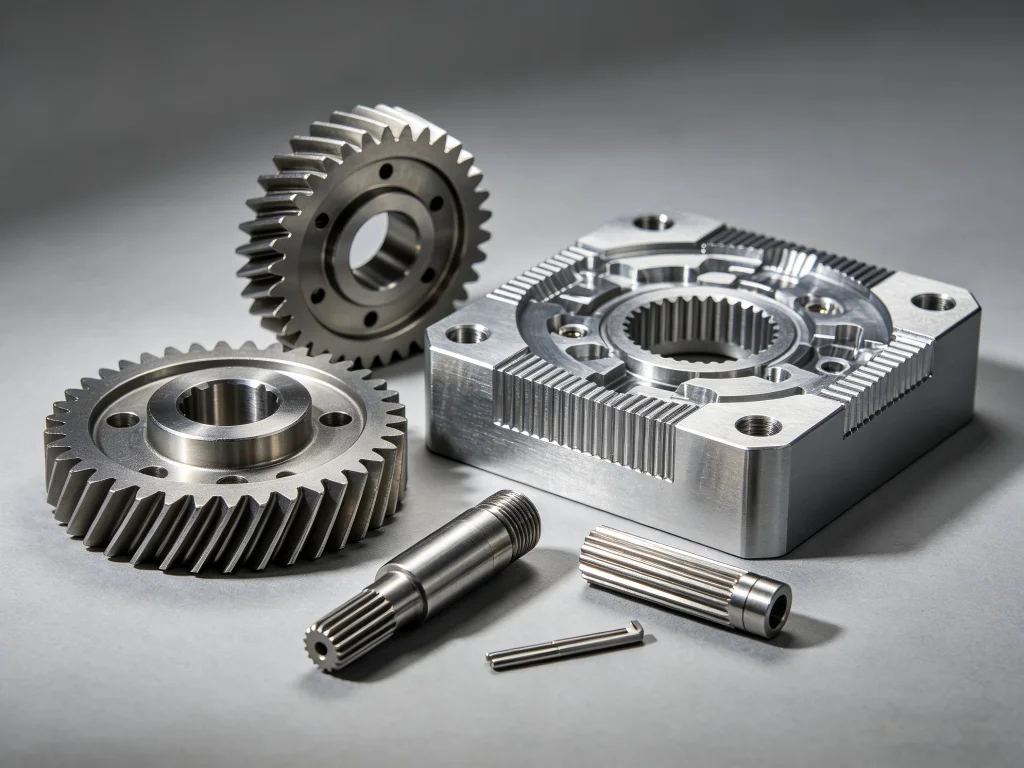
In the modern manufacturing landscape, the demand for extreme precision and the ability to work with ultra-hard materials has pushed traditional milling and turning to their limits. This is where edm machined components become indispensable. Whether you are developing complex aerospace housings or intricate medical instruments, understanding the nuances of Electrical Discharge Machining (EDM) is vital for achieving tolerances that conventional tools simply cannot touch. At jucheng, we specialize in bridging the gap between theoretical design and tangible, high-performance edm machined parts.
Understanding the Core: What is EDM in Manufacturing ?
To grasp the value of these parts, one must first ask, what is edm in manufacturing? Unlike traditional machining that relies on physical contact and cutting forces, the edm manufacturing process is a non-traditional method that uses electrical sparks to erode material. This thermal process allows for the creation of shapes that are otherwise impossible to produce.
The edm machine mean or definition refers to a controlled metal-removal process where an electric spark is used to cut the workpiece. The process occurs in a dielectric fluid, which acts as both an insulator and a conductor at different stages. When the distance between the electrode (the tool) and the workpiece is small enough, the electrical intensity overcomes the barrier of the dielectric fluid, creating a spark. This spark generates intense heat, melting and vaporizing a tiny amount of the material.
An edm machine function is centered around this repetitive sparking—thousands of times per second. Because there is no mechanical force exerted on the part, wire edm machine components can be incredibly thin and delicate without the risk of distortion. This makes the process ideal for fragile geometries and materials with high hardness ratings, such as titanium, hardened steel, and inconel.
The Mechanics of the EDM Manufacturing Process
The technical journey of creating edm machined components involves several critical phases:
Electrode Design or Wire Selection: Depending on whether you use Sinker EDM or Wire EDM, the “tool” must be prepared. In Sinker EDM, a graphite or copper electrode is shaped to the negative of the desired cavity. In Wire EDM, a thin brass or zinc-coated wire is used.
Submerged Environment: The workpiece is submerged in a dielectric fluid. For wire-cut processes, deionized water is standard, while sinker processes often use specialized oils.
The Spark Gap: The machine maintains a precise “spark gap” between the tool and the part. If the gap is too wide, no spark occurs; if too narrow, a short circuit happens.
Material Erosion and Flushing: As sparks erode the metal, the dielectric fluid flushes away the “swarf” (microscopic metal particles) to ensure a clean path for the next spark.
Comparing the Pillars: Wire EDM vs. Sinker EDM
When sourcing edm machined components, it is essential to understand which variation of the technology fits your project requirements. At jucheng, we utilize a range of high-end equipment to meet diverse engineering needs.
| Feature | Wire EDM (WEDM) | Sinker EDM (RAM EDM) | Hole Drilling EDM |
|---|---|---|---|
| Core Tooling | Thin traveling wire (Brass/Copper) | Machined Graphite or Copper electrode | Tubular electrode |
| Best For | Through-holes, complex 2D shapes, tight radii | Blind cavities, internal threads, molds | Deep, small diameter starter holes |
| Surface Finish | Extremely smooth, mirror-like possible | Varies based on spark energy settings | Functional, usually requires finishing |
| Material Hardness | Independent of hardness; works on all conductors | Excellent for hardened tool steels | Ideal for hardened alloys |
Key EDM Machining Examples Across Industries
The versatility of edm machined components is best illustrated through real-world applications. Discussion in engineering forums like Reddit often highlights how EDM saves projects where CNC milling failed due to tool breakage in hard metals.
- Aerospace Propulsion Systems: High-pressure turbine blades often require intricate cooling holes and slots that only wire edm machine components can provide with the necessary heat resistance.
- Medical Device Manufacturing: Surgical staples and orthopedic implants require biocompatible materials like Titanium. EDM allows for the burr-free finish required for surgical safety.
- Injection Mold Making: This is perhaps the most classic use. Creating deep, sharp-cornered cavities in hardened steel molds is the primary role of sinker edm machine components .
- Satellite Components: Lightweighting parts without sacrificing structural integrity often results in thin-walled sections that would collapse under the pressure of a milling cutter.
As experts at jucheng often note, the primary advantage in these edm machining examples is the lack of residual stress. Since the tool never touches the part, the crystalline structure of the metal remains stable, preventing warping after the machining process is complete.
Critical Selection Factors for EDM Machined Parts
When you are looking for a partner to produce your edm machined components, several factors determine the success of the final product. It is not just about having the machine; it is about the mastery of the process.
1. Precision and Tolerances
Standard CNC machining might struggle to hold tolerances tighter than +/- 0.005mm consistently. However, high-end edm machine components can be produced to tolerances as tight as +/- 0.002mm. If your design requires this level of accuracy, verify that your supplier uses premium edm machine brand equipment, such as Sodick, Fanuc, or AgieCharmilles, which are known for their thermal stability and linear motor technology.
2. Surface Integrity and Recast Layer
A common point of discussion among quality engineers is the “recast layer” or “white layer.” This is the small amount of molten material that re-solidifies on the surface of the part. Top-tier providers like jucheng optimize the edm manufacturing process by using multiple “skim passes” with lower energy settings to minimize this layer, ensuring the fatigue strength of the part is not compromised.
3. Material Conductivity
While EDM is legendary for cutting hard materials, the material must be electrically conductive. While most metals qualify, some composites or ceramics may require specialized techniques or may not be suitable for this specific process.
4. Lead Times and Cost Efficiency
EDM is generally slower than milling. Therefore, it is often used as a secondary process or for specific features. A knowledgeable partner will advise you on “hybrid machining”—milling the bulk of the material and using EDM only for the high-precision or complex features to keep your costs down.
Installation and Maintenance of EDM Machine Components
For those who operate their own facilities or want to understand the lifecycle of their parts, maintenance is paramount. The internal edm machine components, such as power feed contacts, filters, and resins, must be managed with extreme care.
- Filter Systems: The dielectric fluid must be kept pristine. Clogged filters lead to poor flushing, which causes “arcing” and can ruin an edm machined component .
- Deionization (DI) Resin: In wire EDM, the water’s conductivity must be precisely controlled. Monitoring the DI resin ensures the spark remains stable and predictable.
- Wire Tensioning: For wire edm machine components , the tension of the wire determines the straightness of the cut. Regular calibration of the tensioning pulleys is a non-negotiable task.
At jucheng, we maintain a rigorous preventative maintenance schedule. We believe that the quality of our edm machined parts is a direct reflection of the health of our machinery.
FAQ: Everything You Need to Know About EDM
What materials can be used for edm machined components ?
Virtually any conductive material can be machined, including tungsten carbide, hardened tool steels, inconel, titanium, and even some conductive ceramics. The hardness of the material does not affect the cutting speed significantly.
Why is EDM more expensive than traditional milling?
The primary drivers of cost are the slower material removal rate and the cost of consumables like high-purity graphite electrodes or specialized brass wire. However, for complex geometries, EDM is often the only viable and therefore most cost-effective method.
Can EDM produce a mirror finish?
Yes. By using advanced power supply settings and multiple finishing passes, edm machined parts can achieve a surface roughness (Ra) as low as 0.1 µm, which often eliminates the need for manual polishing.
What is the difference between an edm machine brand and its performance?
While many machines look similar, top brands like those used at jucheng offer better power supply control. This allows for faster cutting with less electrode wear, which directly translates to better price points for the customer.
Is there a size limit for edm machined components ?
The limit is typically defined by the size of the work tank. Most high-precision EDM work is focused on small to medium-sized parts, though large-scale EDM machines do exist for specialized industrial applications.
Does EDM change the properties of the metal?
Because it is a thermal process, there is a very thin Heat Affected Zone (HAZ). However, with proper settings and finishing passes, this effect is negligible for almost all engineering applications.
Why Choose jucheng for Your EDM Machined Components ?
Selecting a manufacturing partner is a decision that impacts your entire supply chain. At jucheng, we don’t just provide a service; we provide an engineering solution. Our expertise in edm machined parts is backed by years of research and a commitment to the latest technological advancements.
Technological Edge: We utilize state-of-the-art edm machine brand technology that features automatic wire threading and advanced “fuzzy logic” controllers to prevent wire breakage and ensure 24/7 production consistency. This allows us to offer competitive lead times even for the most complex wire edm machine components.
Quality Assurance: Our facility is ISO certified, and every part undergoes rigorous inspection. We use CMM (Coordinate Measuring Machines) and optical comparators to verify that every dimension of your edm machined components meets your exact specifications.
Material Diversity: From aerospace-grade alloys to medical-grade stainless steel, our team understands how different materials react to the edm manufacturing process. We optimize our spark settings for each specific alloy to ensure maximum surface integrity.
Collaborative Engineering: We often work with clients during the design phase. By understanding what is edm in manufacturing, our engineers can suggest minor design tweaks that can significantly reduce machining time and cost without sacrificing functionality.
If your project demands the highest levels of precision, complex geometries, or the machining of ultra-hard materials, jucheng is your premier choice. We turn “unmachinable” designs into reality.
Ready to Elevate Your Production?
Don’t let design limitations hold back your innovation. Contact the experts at jucheng today to discuss your next project. Whether you need a single prototype or high-volume production of edm machined components, we have the expertise to deliver perfection.
Visit us: https://www.jccncmachining.com/
Experience precision. Experience jucheng.