
When your project calls for ABS CNC machining, the decision isn’t always about whether the material can do the job—it’s about whether it can do it better, faster, and more cost-effectively than the alternatives. Engineers and procurement professionals frequently ask themselves: should we machine this part in ABS plastic, or would aluminum or another metal be the safer bet? The answer, as you might expect, depends on what you’re building, how many you need, and what kind of performance you’re actually after.
This guide takes a practical, decision-focused approach to ABS precision machining. Rather than simply listing facts, we’ll walk through the key trade-offs, compare ABS against common metal alternatives, and show you how to evaluate whether ABS is the right choice for your specific application. By the end, you’ll have a clear framework for making that call—and a solid understanding of what Jucheng brings to the table when you decide to move forward.
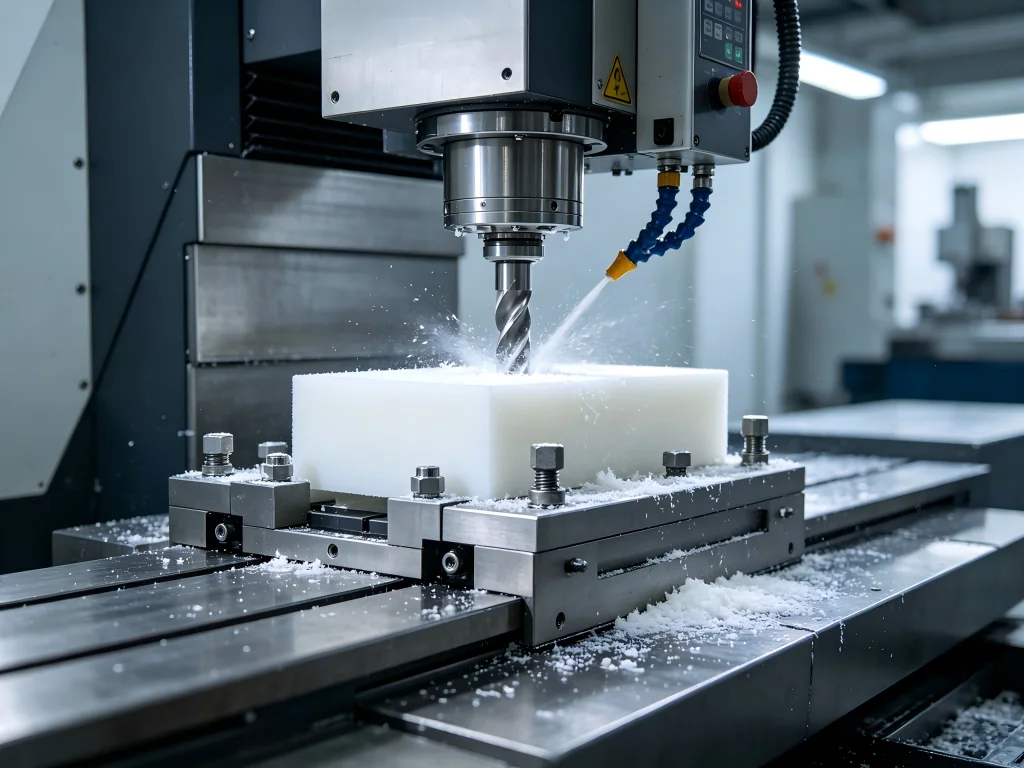
Why ABS? Understanding the Material’s Core Appeal
Acrylonitrile Butadiene Styrene—better known as ABS—is a thermoplastic polymer that has earned its place as one of the most widely used engineering plastics in CNC machining. Its popularity isn’t accidental. ABS combines three monomers—acrylonitrile (which contributes chemical resistance and heat stability), butadiene (which provides impact resistance and toughness), and styrene (which imparts rigidity and ease of processing)—into a material that machines cleanly, holds tight tolerances, and delivers reliable mechanical performance at a fraction of the cost of most metals.
For ABS CNC cutting and ABS CNC milling operations, the material offers several distinct advantages:
- Exceptional machinability: ABS is one of the easiest plastics to machine. It supports CNC milling, turning, and drilling with minimal tool wear and produces clean, stable edges. Unlike some plastics that melt or smear during cutting, ABS responds predictably to standard tooling.
- Dimensional stability: With a glass transition temperature around 105°C, ABS remains dimensionally stable under normal ambient conditions. CNC machining can achieve precision down to ±0.02mm, making it suitable for parts that require tight tolerances.
- Cost efficiency: ABS material costs approximately $2–$4 per kilogram, and machining time is typically 30% shorter than for metals. For prototyping and low-to-medium volume production, this translates into significant savings.
- Impact resistance: With notched Izod impact values ranging from 200–400 J/m, ABS offers excellent toughness that holds up even at low temperatures.
That said, ABS isn’t without its limitations. Standard grades degrade under prolonged UV exposure, making them less suitable for outdoor applications without protective coatings. The material is also inherently flammable, though flame-retardant grades are available. Perhaps most critically for machining, ABS has poor thermal conductivity—heat buildup during cutting can cause softening, warping, or surface defects if not properly managed.
The Real Challenge: Heat Management in ABS CNC Machining
If there’s one issue that separates successful ABS machining projects from problematic ones, it’s heat control. ABS has low thermal conductivity and a relatively low heat deflection temperature (approximately 70–100°C). When cutting generates excessive heat, the material can soften at the cutting zone, leading to smearing, melting, or dimensional inaccuracy.
Experienced machinists on forums like r/CNC frequently emphasize that managing heat is the single most important factor in achieving good results with ABS. One Reddit user noted that “ABS melted more” compared to other plastics like Delrin, highlighting the need for careful parameter control. The consensus among hobbyists and professionals alike is that sharp tools, appropriate feed rates, and effective cooling make all the difference.
For ABS precision machining, this means paying close attention to:
- Tool selection: Sharp, polished carbide tools with a positive rake angle of 10° to 15° and relief angle of 5° to 10° are recommended to minimize friction and heat generation.
- Cutting parameters: Moderate spindle speeds (1,000–3,000 rpm) with light cutting depths (0.5 mm to 2 mm) help reduce cutting forces and heat accumulation.
- Cooling strategy: Compressed air cooling is often sufficient for ABS machining, though some machinists prefer mist or flood coolant to ensure consistent heat dissipation. The key is to avoid letting heat build up in the first place.
- Workholding: Excessive clamping force can warp ABS parts, particularly thin-walled sections. Vacuum tables or tabs are recommended for supporting thin sheets.
What does this mean for you as a buyer? It means that the quality of your ABS machined parts depends not just on the material itself, but on the expertise of the shop doing the work. A machinist who understands how to manage heat, choose the right tools, and optimize cutting parameters will deliver parts that meet your specifications reliably. A shop that treats ABS like metal and pushes feeds and speeds too aggressively will produce parts with melted edges, poor surface finish, or dimensional drift.
ABS vs. Aluminum: A Head-to-Head Comparison
The most common comparison buyers make is between ABS and aluminum. Both materials are widely used for prototyping and production parts, but they serve fundamentally different purposes. Here’s how they stack up across the factors that matter most:
| Factor | ABS Plastic | Aluminum (6061) |
|---|---|---|
| Material cost | $2–$4 per kg | $5–$40 per kg |
| Machining time | ~30% shorter than metals | Baseline reference |
| Machinability | Easy; forgiving on tools | Good; standard tooling works well |
| Tensile strength | 30–60 MPa | 200–600 MPa |
| Impact resistance | Excellent (200–400 J/m) | Good but lower than ABS per weight |
| Heat deflection | ~70–100°C | ~200°C+ (melting point ~660°C) |
| Weight | 1.04–1.06 g/cm³ | 2.7 g/cm³ |
| Typical applications | Housings, brackets, prototypes, enclosures | Structural components, brackets, functional prototypes |
| UV resistance | Poor (degrades outdoors) | Good (natural oxide layer) |
The choice between ABS and aluminum often comes down to a simple question: what does your part actually need to do? If your part needs to withstand high temperatures, carry significant loads, or survive in outdoor environments, aluminum is the clear winner. But if your priorities are cost, speed, weight reduction, and impact resistance—and your operating environment stays within ABS’s thermal limits—then ABS offers compelling advantages.
One engineer on a CNC forum put it this way: “ABS is a go-to option for low-stress prototypes that don’t require high thermal or mechanical performance. It cuts cleanly and gets the job done without breaking the bank”. For many projects, that’s exactly what’s needed.
ABS vs. Other Engineering Plastics: Where Does It Fit?
Beyond the metal comparison, buyers often consider other plastics. Here’s a quick breakdown of how ABS compares to common alternatives:
ABS vs. Polycarbonate (PC)
Polycarbonate offers superior impact resistance and transparency, but it’s harder to machine and more expensive. PC is prone to stress whitening, cracking, and heat-related distortion if cutting parameters aren’t carefully controlled. ABS, by contrast, is easier to machine, more forgiving on tools, and significantly cheaper. Choose ABS when cost, speed, and stable tolerances are the priority; choose PC when transparency or extreme impact resistance is non-negotiable.
ABS vs. Delrin (POM)
Delrin (acetal) offers higher stiffness, lower friction, and better dimensional stability than ABS. However, it’s more brittle and can be more challenging to machine without specialized tooling. ABS is often preferred for parts that need impact resistance and a good surface finish, while Delrin is better for gears, bearings, and precision mechanical components.
ABS vs. Nylon (PA)
Nylon offers higher tensile strength and better heat resistance than ABS, but it absorbs moisture, which can affect dimensional stability. ABS is more dimensionally stable and easier to machine, making it a better choice for parts that require tight tolerances without the complications of moisture management.
Making the Right Choice: A Decision Framework
When evaluating whether ABS CNC machining is right for your project, consider these questions:
- What’s your operating temperature range? If your part will be exposed to temperatures above 70–100°C, ABS may not be suitable. Consider PC, nylon, or aluminum instead.
- Does the part need to be transparent? ABS is opaque. If clarity is required, PC is the practical choice.
- Will the part be used outdoors? Standard ABS degrades under UV exposure. For outdoor use, consider ASA (a UV-stable cousin of ABS) or specify a UV-resistant coating.
- What’s your production volume? For prototypes and low-volume runs (1–500 units), CNC machining is cost-effective and fast. For high-volume production (5,000+ units), injection molding may be more economical.
- What tolerances do you need? ABS can achieve ±0.02mm with proper machining. If you need tighter than that, you may need to consider metal or a different plastic with better dimensional stability.
- What’s your budget? ABS offers one of the lowest material and machining costs among engineering plastics. If cost is a primary constraint, ABS is hard to beat.
Why Jucheng for ABS CNC Machining?
Choosing the right material is only half the equation. The other half is choosing the right manufacturing partner. Jucheng brings a combination of technical expertise, advanced equipment, and quality systems that make it a strong choice for ABS precision machining projects.
Technical Expertise in ABS Machining
Jucheng’s team understands the nuances of machining ABS—from tool selection and cutting parameters to heat management and workholding. The company has published extensive technical resources on ABS and nylon manufacturing, guiding B2B buyers through the upgrade path from FDM prototyping to high-precision CNC machining. This depth of knowledge translates into parts that meet specifications consistently, without the defects that plague less experienced shops.
Advanced Equipment Capabilities
Jucheng’s facility houses 150+ CNC machines, including 25+ Haas and Mazak 5-axis systems. This isn’t just about capacity—it’s about capability. Multi-axis machining enables complex geometries, tighter tolerances, and better surface finishes. For ABS parts that require intricate features or tight assembly fits, this equipment makes a measurable difference.
Quality Systems and Certifications
Jucheng operates under ISO 9001:2015 quality management systems and maintains additional certifications including ISO 13485 (medical devices), IATF 16949 (automotive), and ISO 14001 (environmental management). For buyers in regulated industries, these certifications provide assurance that parts will meet rigorous quality standards. The company also works with CNAS-accredited labs for material testing and dimensional inspection.
Value-Added Services
Beyond machining, Jucheng offers services that simplify the supply chain: cleaning, deburring, press-fit assembly, thread locking, and adhesive bonding. This means you can receive finished, ready-to-use parts rather than raw machined components that require secondary operations. The company also provides CMM inspection, optical comparators, and full dimensional reporting to verify part quality.
Material Selection and Sourcing
Jucheng machines ABS in natural, black, and flame-retardant grades, as well as ABS/PC blends. The company sources high-quality raw materials and maintains strict quality control over incoming stock. This attention to material quality is critical for ABS machining, where impurities or inconsistent material properties can lead to surface defects or machining problems.
Common Applications for ABS CNC Machined Parts
ABS CNC machining finds applications across a wide range of industries. Here are some of the most common use cases:
- Automotive: Instrument panels, interior trim, mirror housings, dashboard components, and center console brackets. One notable example is a new energy vehicle’s center console bracket machined from ABS+PC alloy, achieving a 0.05mm assembly tolerance.
- Electronics: Housing parts, enclosures, and structural components for consumer electronics. ABS’s combination of impact resistance and dimensional stability makes it ideal for protecting sensitive electronics.
- Medical devices: Prototypes and production parts for medical equipment, where ABS’s machinability and ability to achieve tight tolerances are valuable.
- Consumer products: Product housings, jigs and fixtures, and tooling enclosures. ABS is widely used in consumer goods due to its low cost and excellent mechanical properties.
- Prototyping: Functional prototypes that need to look and perform like production parts. ABS machines quickly and finishes well, making it a favorite for design verification and testing.
One production case study illustrates the process: the main housing of a joystick unit, produced in a quantity of 500 units from ABS+PC blend. The project combined 5-axis CNC machining for the outer geometry and hole features, followed by 3-axis machining for the internal structure. This hybrid approach optimized cost and delivery time while ensuring shape accuracy and hole position precision.
Installation and Maintenance Considerations
While CNC-machined ABS parts are typically ready for use upon delivery, a few considerations can help ensure long-term performance:
- Thermal expansion: ABS has a relatively high coefficient of thermal expansion compared to metals. For assemblies that will experience temperature variations, ensure that clearance and fit allowances account for this expansion.
- Chemical exposure: ABS is resistant to many chemicals but can be damaged by solvents like acetone and certain hydrocarbons. Check chemical compatibility for your specific operating environment.
- UV protection: For parts used outdoors or in sunlight, specify UV-stabilized ABS or apply a protective coating to prevent degradation and discoloration.
- Handling: Machined ABS parts can be scratched or damaged if handled roughly. Proper packaging and handling procedures help maintain surface quality.
Frequently Asked Questions
Can ABS be machined using CNC?
Yes, ABS is one of the most machinable thermoplastics available. It is successfully machined using CNC milling, turning, and drilling operations. The material produces clean cuts, stable dimensions, and good surface finish when proper machining practices are followed.
What are the most important tips for ABS CNC machining?
Prioritize heat management to prevent melting. Use sharp, uncoated carbide tools; cut at moderate speeds (1,000–3,000 rpm); use light cutting depths (0.5 mm to 2 mm); avoid excessive clamping force; and use compressed air or appropriate coolant for cooling. Proper tool selection and parameter control are the keys to successful ABS machining.
What tolerances can ABS CNC machining achieve?
CNC machining can achieve precision down to ±0.02mm or even tighter for ABS parts. This makes ABS suitable for parts that require tight fits and precise dimensions. However, achieving these tolerances requires proper machining practices, including heat management and stable workholding.
Which is better for CNC machining, ABS or PC?
The better choice depends on your requirements. ABS offers superior machinability, lower cost, and good dimensional stability. PC offers higher impact resistance and transparency but is harder to machine and more expensive. For most non-transparent parts where cost and speed matter, ABS is the better choice.
What are the challenges of ABS machining?
The primary challenges are low thermal conductivity and low heat deflection temperature, which can cause melting, warping, or poor surface finish if heat isn’t managed properly. Other challenges include potential surface defects from dull tools, deformation from excessive clamping force, and dimensional instability if thermal expansion isn’t accounted for.
What industries use ABS CNC-machined parts?
ABS CNC-machined parts are used across automotive, electronics, medical devices, consumer products, and prototyping applications. The material’s combination of cost, machinability, and mechanical properties makes it suitable for a wide range of industries and use cases.
How does ABS machining compare to ABS injection molding?
CNC machining is better for prototyping and low-volume production (1–500 units) without the need for expensive tooling. It can achieve tighter tolerances (±0.02mm vs. ±0.1mm for injection molding) and allows easy design modifications. Injection molding is more cost-effective for high-volume production (5,000+ units).
Is ABS suitable for outdoor applications?
Standard ABS degrades under prolonged UV exposure and is not recommended for outdoor use without protective measures. For outdoor applications, consider UV-stabilized ABS grades, ASA (a UV-resistant alternative), or apply a protective coating to shield the material from sunlight.
Making Your Decision: A Practical Summary
ABS CNC machining offers a compelling combination of cost, machinability, and mechanical performance that makes it suitable for a wide range of applications. It excels in prototyping, low-volume production, and parts that require impact resistance, dimensional stability, and good surface finish—all at a fraction of the cost of metal alternatives.
The key to success lies in two areas: first, ensuring that ABS is the right material for your specific application based on operating conditions, performance requirements, and budget; second, choosing a manufacturing partner with the expertise, equipment, and quality systems to machine ABS reliably and consistently.
Jucheng brings both to the table. With 150+ CNC machines, multi-axis capabilities, ISO-certified quality systems, and deep technical expertise in ABS machining, Jucheng is well-positioned to deliver precision ABS parts that meet your specifications—on time and on budget. Whether you’re prototyping a new product, producing functional test parts, or scaling up to low-volume production, Jucheng’s capabilities and commitment to quality make it a partner worth considering.
Ready to discuss your ABS machining project? Visit jccncmachining.com to learn more about Jucheng’s capabilities, request a quote, or speak with a technical expert about your specific requirements.