
عملية الخراطة CNC التخطيط مبني على حقيقة فيزيائية واحدة: قطعة العمل تدور بينما تتحكم أداة القطع في الأقطار والكتفين والأخاديد والتجاويف واللولبات. وهذا يجعل الخراطة خيارًا قويًا للأجزاء التي تشترك ملامحها المهمة في خط محوري واحد، لكنه اختصار غير مناسب للأشكال الهندسية التي تحتاج إلى وصول واسع للأسطح أو ملامح متعددة خارج المحور. يوضح هذا الدليل كيفية اختيار مسار الخراطة انطلاقًا من الأسطح الوظيفية للجزء، ونسبة الطول إلى القطر، والمادة، وتثبيت قطعة العمل، واحتياجات الفحص، وكمية الإنتاج. ولمعرفة التسلسل الأوسع من CAD إلى الجزء المُشطّب، راجع نظرة عامة على عملية التشغيل CNC.
لماذا تغيّر الهندسة المحورية العملية
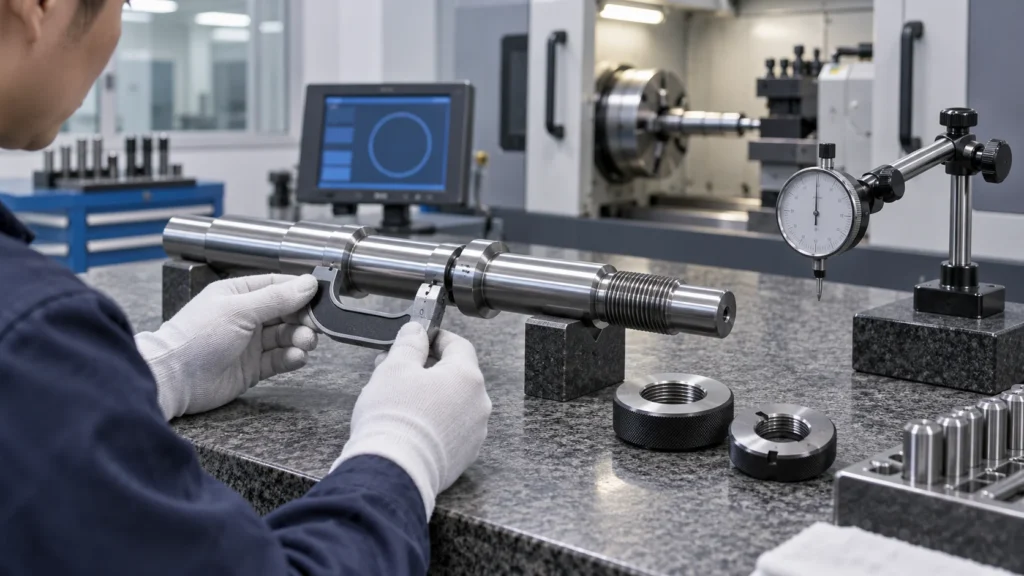
تشمل الأجزاء المخروطة النموذجية الأعمدة، والمسامير، والجلبات، والحشوات، والوصلات، وسيقان الصمامات، وأجسام الموصلات، والفوهات، والمكونات الملولبة. تصبح العملية أقل وضوحًا عندما يبدو الجزء دائريًا فقط ولكنه يحتوي أيضًا على ثقوب جانبية أو أسطح مستوية أو فتحات أو ميزات تركيب. قد تتطلب هذه الميزات أدوات دوارة، أو مغزلًا فرعيًا، أو مركز خراطة وتفريز، أو عملية مخطط لها أخرى.
يجب أن يتبع اختيار العملية خريطة الميزات. لا يكفي القطر الخارجي الدائري لتبرير الخراطة إذا كانت الوظيفة الحرجة للجزء تعتمد على علاقة خارج المحور لا يمكن للمخرطة الوصول إليها أو فحصها بشكل موثوق.
ابدأ من المادة الخام والطول والدعم
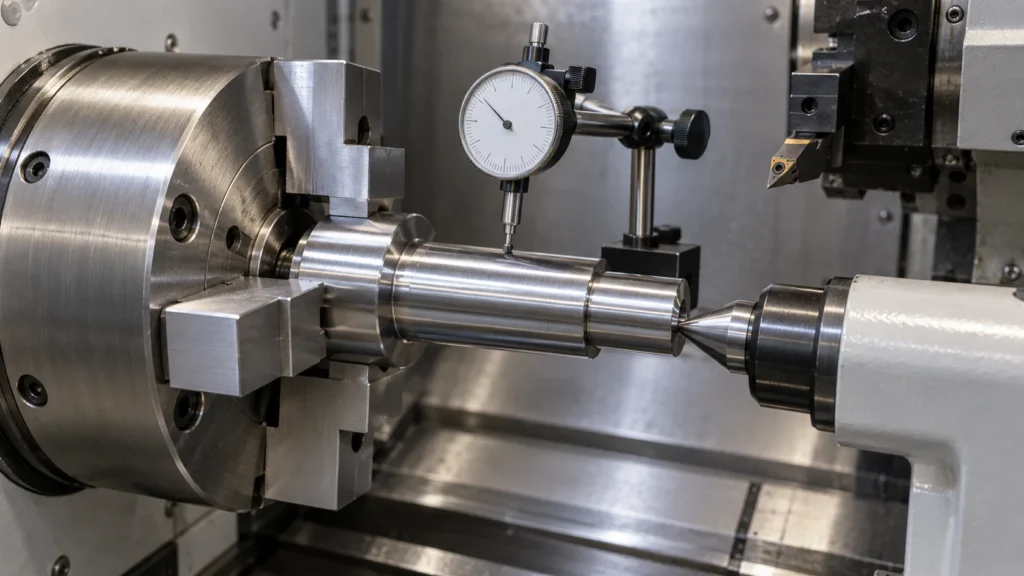
كيف تؤثر نسبة الطول إلى القطر على المخاطر؟
تكون المواد الخام الطويلة والنحيلة أكثر حساسية للانحراف والاهتزاز والحرارة وضغط الأداة. يؤثر الطول غير المدعوم، وقبضة الظرف أو الكوليت، ودعم الذيل، والمساند الثابتة، وجلب التوجيه، وترتيب إزالة المواد جميعًا على ما إذا كان المحور النهائي يظل مستقرًا. قد يؤدي القطع العميق المقبول على جزء قصير وصلب إلى ظهور علامات اهتزاز أو استدقاق على عمود طويل.
يجب التخطيط للدعم حول الشكل الهندسي النهائي، وليس فقط الفراغ الأولي. قد تؤدي إزالة قطر كبير مبكرًا جدًا إلى إضعاف الجزء قبل الانتهاء من قطر صغير أو سن لولبي. قد يؤدي ترك منطقة دعم حتى وقت متأخر من التسلسل إلى حماية الاستقامة وتقليل الحاجة إلى تمريرات تصحيحية قوية.
ما تفاصيل المادة الخام التي يجب تضمينها في طلب عرض السعر؟
اذكر درجة المادة، وحالتها، وتفضيل القضيب أو الأنبوب، والقطر الأولي، وطول القطع، واحتياجات الشهادات، والكمية المتوقعة. إذا تم إنتاج جزء من مسبوكة أو مطروقة، فقم بتضمين الحالة الموردة وأي بدل تصنيع. قد تؤدي معلومات المادة الخام المفقودة إلى تشويه كل من العملية المسعرة والمردود المتوقع للمادة.
ابنِ تسلسل الخراطة حول الاستقرار
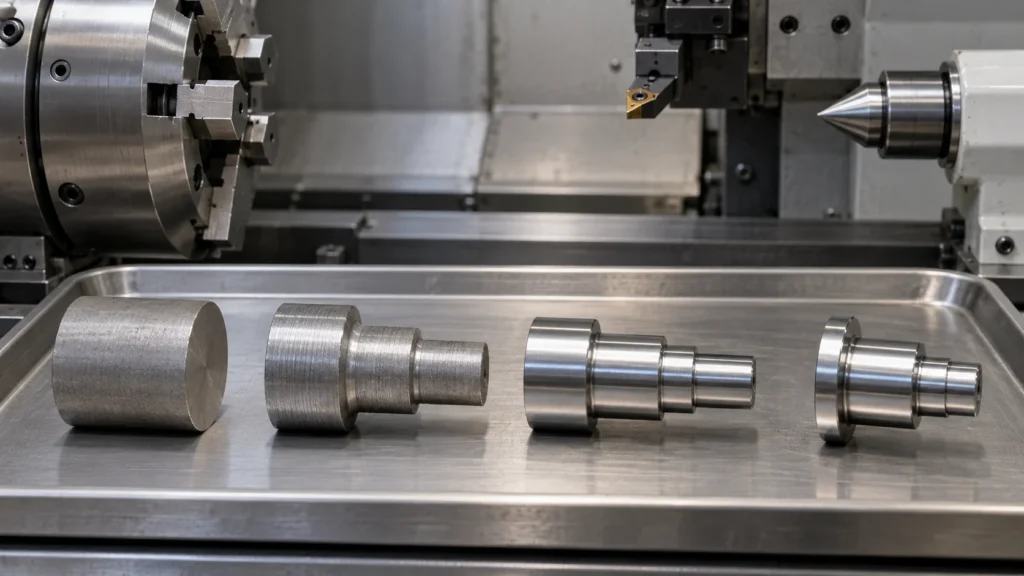
| مرحلة العملية | الغرض الرئيسي | المخاطر الواجب إدارتها |
|---|---|---|
| التسوية وإنشاء المرجع | Establish an end surface and controlled starting point | Poor seating, runout, or an incorrect work offset |
| Rough turning | Remove material efficiently while retaining support | Deflection, heat, chip control, and excessive tool load |
| Finish turning | Create final diameters, shoulders, tapers, and surface condition | Tool wear, vibration, residual stress, and thermal drift |
| Parting and secondary work | Separate the component or complete back-end features | Burrs, weak support, back-end runout, and handling damage |
The most economical sequence is not always the one with the fewest tool changes. A stable sequence that avoids rework, protects a locating surface, and produces a measurable first article can lower total cost more effectively than a nominally shorter cycle.
اختر العمليات وفق الملامح المطلوبة
Turning operations should be selected by feature function. Straight turning controls an outside diameter. Facing creates a flat end. Boring refines an internal diameter. Grooving creates a relief or retaining feature. Threading generates the specified internal or external connection, and parting separates the component from the remaining stock.
What makes a turned feature easy to control?
- Diameter, bore, shoulder, and thread features share a practical spindle axis.
- Tool access is clear and does not require excessive reach or unsupported cutting.
- Drawing datums match the surfaces used to locate the part in the chuck, collet, or fixture.
- Critical diameters have enough stock for a stable finishing pass.
- Grooves, reliefs, radii, and thread runouts give the tool a controlled exit condition.
Threads deserve their own callouts. Identify the standard, size, fit or class where applicable, depth, starting chamfer, sealing function, and gauge requirement. A nominal thread note without a clear use case can still leave the supplier uncertain about inspection and finishing.
طابق الأدوات وظروف القطع مع المادة
Tool geometry, insert grade, nose radius, speed, feed, depth of cut, coolant, and chip evacuation should match the material and the feature. Ductile materials may produce long chips or built-up edge. Hardened or work-hardening materials can increase heat and tool wear. Plastics may deform under heat or clamping instead of behaving like a metal workpiece.
Material grade and condition should be confirmed before programming. The site’s CNC turning materials information can support early route discussions, but final cutting conditions still depend on the machine, tooling, geometry, stock, and required surface.
Chasing maximum removal rate can create a bad trade. If tool pressure bends a slender part or heat shifts a critical diameter, the apparent cycle-time gain is lost in rework. Good turning balances productivity with rigidity, repeatability, and inspection evidence.
أبقِ الانحراف الانتقالي ونقل مرجع القياس تحت السيطرة
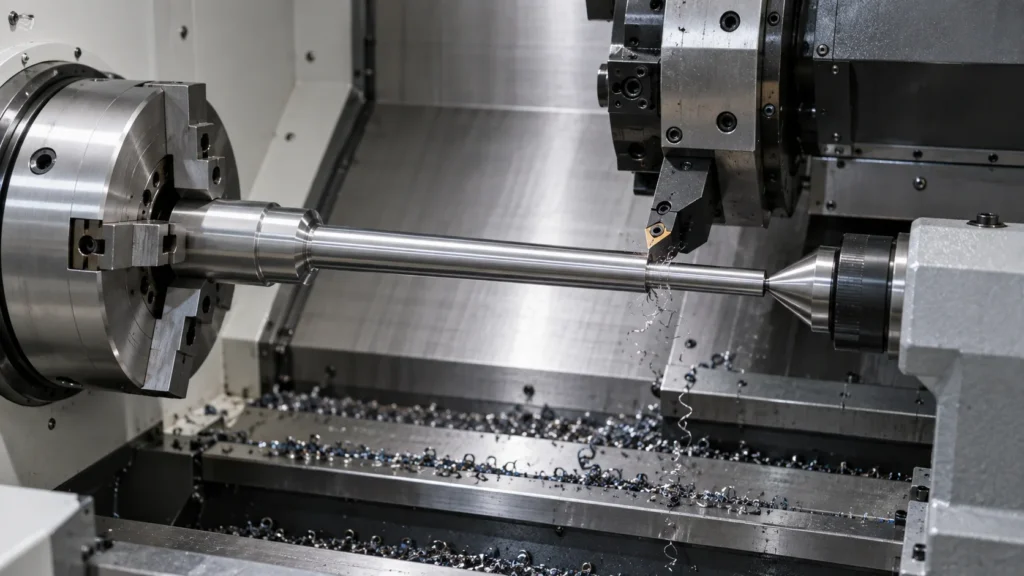
When the reverse end is completed in a second operation, the transfer method becomes part of the tolerance stack. Define which diameter or face is used for re-location, how runout is checked, and which relationships must be verified after the second chucking. If cross-holes or flats are required, live tooling or a turn-mill route may reduce the number of transfers.
اعرف متى تحتاج إلى أدوات دوارة أو عملية ثانية
Standard turning is efficient when the part is primarily rotational. A component with side holes, milled flats, slots, or off-axis features may need live tooling, a sub-spindle, or a dedicated mill operation. Combining features in one machine can reduce transfer risk, but the route may require more programming, tooling, and collision verification.
Review the supplier’s CNC turning capability against the drawing, then confirm whether the part should remain on a turning center or move to a turn-mill workflow. Process choice should be based on access and relationships, not on the assumption that one machine type is always superior.
افحص العلاقات التي تتحكم في التلاؤم
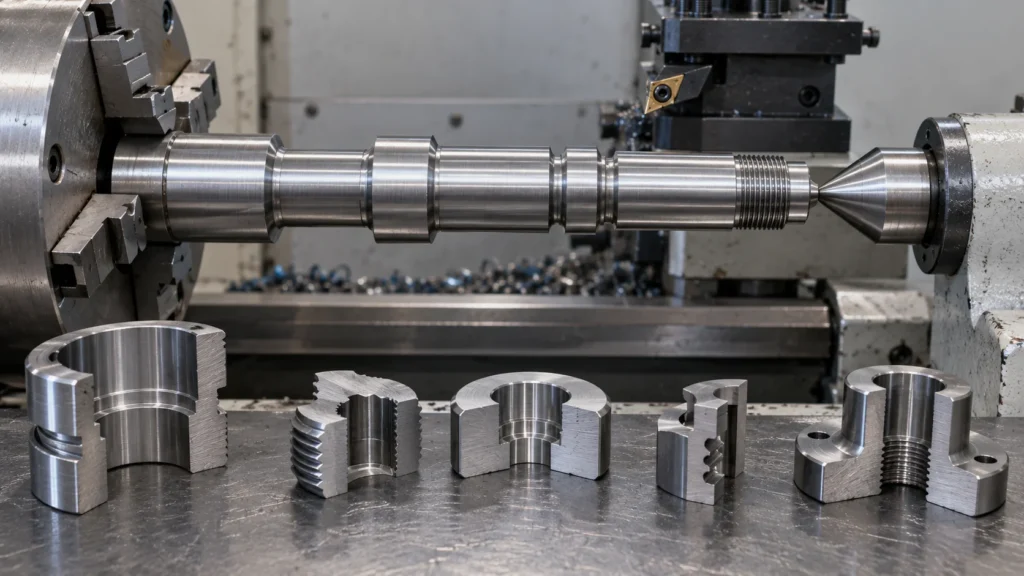
- Verify material identity and required certification.
- Measure critical outside diameters, bores, shoulders, grooves, and lengths.
- Check thread size, depth, fit, gauge result, and sealing condition.
- Evaluate runout, concentricity, perpendicularity, and reverse-operation relationships.
- Inspect burrs, chips, surface condition, cleaning, and packaging protection.
Use the required measurement method rather than adding a generic “100% inspected” statement. For complex relationships, coordinate measurement or a defined gauge plan may be appropriate. Supplier quality expectations can be aligned with the CNC quality management information.
جهّز طلب عرض سعر للخراطة قابلًا للتسعير
Send the latest CAD model and controlled drawing with part number, revision, quantity, forecast, material, stock preference, thread standards, surface requirements, and delivery expectations. Mark the features that control assembly, sealing, rotation, pressure, or alignment.
- Identify primary and secondary datums and the surfaces used for chucking or re-location.
- State length-to-diameter concerns, unsupported lengths, thin sections, and required support.
- Define threads, grooves, bores, fits, runout, concentricity, and surface requirements.
- List live-tooling features, back-end operations, coating, passivation, polishing, or cleaning.
- Specify first-article, sampling, gauge, CMM, material-traceability, and packaging documents.
الأسئلة الشائعة حول عملية الخراطة CNC
What parts are best suited to CNC turning?
CNC turning suits shafts, pins, bushings, fittings, sleeves, valve stems, threaded bodies, and other parts whose primary features are rotational or concentric about a centerline.
What is the difference between CNC turning and CNC milling?
Turning rotates the workpiece and uses tools to create rotational features. Milling generally holds the workpiece on a table or fixture while a rotating cutter creates faces, pockets, slots, holes, and profiles. Parts with both feature families may require turn-mill machining.
Why do long turned parts chatter or taper?
Long parts are more sensitive to deflection, vibration, heat, tool pressure, and insufficient support. Stock support, tool reach, workholding, cutting conditions, and the order of material removal all affect stability.
Can CNC turning produce threads and bores?
Yes. CNC turning can produce many internal and external threads, bores, grooves, shoulders, tapers, and diameters when the drawing defines the required standard, fit, depth, and inspection method.
When should a turned part use live tooling?
Live tooling is useful when a rotational part also needs cross-holes, flats, slots, or other off-axis features. The decision depends on access, quantity, setup risk, tolerance relationships, and the cost of a separate milling operation.
Reliable turning comes from matching centerline geometry, stock support, tool sequence, workholding, material behavior, and inspection. When those decisions are made before the first cut, a turning center can deliver repeatable diameters and relationships without hiding risk inside the setup.