
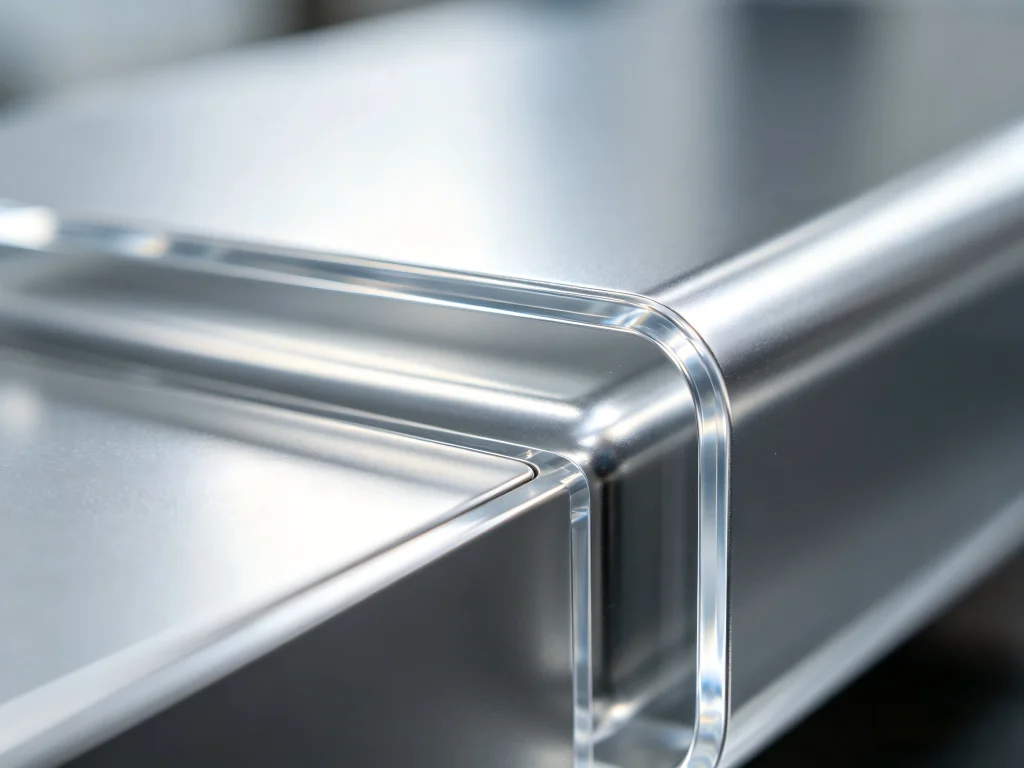
ما هو طلاء الأنودة الشفافة بالضبط؟
A طلاء الأنودة الشفافة هي عملية تحويل كهروكيميائية تنمّي طبقة أكسيد شفافة ومتينة على سطح الألومنيوم. على عكس الطلاء أو التغطية الكهربائية، لا تضع الأنودة طلاءً فوق المعدن—بل تحوّل الألومنيوم الأساسي نفسه. والنتيجة هي طبقة شبه شفافة صلبة تشبه السيراميك تحافظ على المظهر المعدني للمعدن الخام مع تحسين مقاومته للتآكل والتآكل الكيميائي والخدش بشكل كبير. تشير كلمة “شفافة” هنا إلى عدم وجود أصباغ أو خضب؛ فأكسيد الألومنيوم الطبيعي شفاف بطبيعته، مما يمنح القطعة لونًا فضيًا مطفأ قليلاً يفضله العديد من المصممين لجماليته الصناعية عالية التقنية.
من حيث الأكواد الفنية التي غالبًا ما تظهر على الرسومات الهندسية، قد ترى رموزًا مثل رمز طلاء الأنودة الشفافة التي تشير إلى MIL-A-8625 النوع II أو النوع III، أو تسميات تجارية مثل #14 طلاء الأنودة الشفافة و #17 طلاء الأنودة الشفافة التي يستخدمها موردو الألومنيوم المعماري مثل Kawneer. إن طلاء الأنودة الشفافة Kawneer هو عملية محددة بعلامة تجارية معينة غالبًا ما تكون مطلوبة في مشاريع البناء حيث يكون ثبات اللون ومقاومة التآكل في البيئات الخارجية أمرًا بالغ الأهمية. وبالمثل، فإن الاختلافات مثل لمسة نهائية أنودة ساتان شفافة يشير إلى مستوى اللمعان أو الملمس الذي يتم تحقيقه من خلال تحضير السطح قبل الأنودة، عادةً باستخدام نفخ حبيبات خفيف أو تنميش حمضي قبل حمام الأنودة.
العلم وراء الأنودة الشفافة
لفهم سبب أداء لمسة نهائية أنودة شفافة بمثل هذه الكفاءة، عليك أن تُقدّر التفاعل الكهروكيميائي في جوهره. يعمل جزء الألومنيوم كمصعد في خلية إلكتروليتية، عادةً مغمورة في حمام حمض الكبريتيك. عند تطبيق التيار، تُطلق أيونات الأكسجين على سطح الألومنيوم، وتتفاعل مع الألومنيوم لتكوين أكسيد الألومنيوم (Al₂O₃). على عكس أفلام الأكسيد الطبيعية التي تكون رقيقة وغير منتظمة، تُنشئ العملية المُتحكَّم بها بنية عمودية عالية الانتظام من خلايا سداسية، لكل منها مسام مركزي. تمتد هذه المسام تقريبًا على كامل عمق الطلاء، والذي يمكن أن يتراوح من بضعة ميكرونات للتطبيقات الزخرفية حتى 100 ميكرون أو أكثر للأنودة الصلبة. ولأن الطلاء ينمو جزئيًا داخل سطح المعدن الأصلي وجزئيًا خارجه، فإن التغيرات الأبعادية تكون متوقعة—غالبًا ما يكون نصف سمك الطلاء تراكمًا فوق السطح الأصلي. بعد التكوين، تُغلق المسام في حمام ماء ساخن أو أسيتات النيكل، مما يُسبب انتفاخ الأكسيد لإغلاق المسام وتثبيت اللمسة النهائية الشفافة بشكل دائم.
النوع II مقابل النوع III من الأنودة الشفافة: تحليل عملي
بالنسبة للمكونات المُشكَّلة بالتحكم الرقمي (CNC)، ستحدد دائمًا تقريبًا إما النوع II (التقليدي) أو النوع III (الطلاء الصلب) من الأنودة الشفافة. الفروق مهمة للغاية من حيث الملاءمة والوظيفة والتكلفة.
- النوع II (أنودة حمض الكبريتيك): يتراوح سمك الطلاء عادةً من 1.8 ميكرومتر إلى 25 ميكرومتر (0.00007″ إلى 0.001″). يوفر مقاومة ممتازة للتآكل ومقاومة جيدة للتآكل الاحتكاكي مع الحفاظ على مظهر لامع ونظيف. هذا هو الأكثر شيوعًا لمسة نهائية أنودة شفافة للألومنيوم مواصفة للإلكترونيات الاستهلاكية والأجهزة الطبية والأجزاء الصناعية العامة. يمكن إضافة الصباغة ولكن بالنسبة للشفاف، يتم إغلاقه بدون لون. تبلغ صلابة السطح حوالي 200-400 HV، وهي كافية لمعظم التطبيقات غير الانزلاقية.
- النوع III (الأنودة الصلبة): يُصنع في نفس حمام حمض الكبريتيك ولكن عند درجات حرارة قريبة من التجمد وكثافات تيار أعلى، يُنشئ النوع III طبقة أكسيد أكثر كثافة وسمكًا من 25 ميكرومتر حتى 150 ميكرومتر (0.001″ إلى 0.006″). يكون الطلاء أكثر صلابة (حتى 600-700 HV)، وغالبًا ما يكون رماديًا أو داكنًا قليلاً بسبب سمكه، لكنه لا يزال مصنفًا كـ لمسة نهائية أنودة شفافة عند عدم إضافة صبغة. إنه الخيار الأمثل لمشغلات الفضاء والأسطوانات الهيدروليكية ومكونات الأسلحة النارية حيث تكون مقاومة التآكل القصوى مطلوبة. كن على علم بأن الطبقة الأكثر سمكًا ستغير التفاوتات الأبعاد بشكل كبير.
لماذا يختار المهندسون الأكسدة الأنودية الشفافة: الفوائد الرئيسية
عبر مناقشات Reddit في r/engineering و r/CNC، يتكرر طرح سؤال واحد: “لماذا لا نتركه خامًا أو نطليه بالبودرة؟” يشير إجماع المجتمع إلى عدة مزايا مميزة لسطح الأكسدة الأنودية الشفافة:
- مقاومة التآكل: يمكن للألمنيوم المؤكسد أن يتحمل مئات الساعات من اختبار رش الملح (ASTM B117) دون تنقر. لهذا السبب تتطلب التطبيقات البحرية والمعمارية الخارجية بشكل شبه عالمي تشطيب الأكسدة الأنودية الشفافة للألمنيوم.
- صلابة السطح دون هشاشة: طبقة الأكسيد أكثر صلابة من فولاذ الأدوات في كثير من الحالات، ومع ذلك يمنع قلب الألمنيوم المطيل الكسر الكارثي. تقاوم الخدوش الناتجة عن المناولة والتجميع.
- العزل الكهربائي: الأكسيد مادة سيراميكية غير موصلة، مما يجعله مفيدًا للحاويات الكهربائية ومشتتات الحرارة حيث تحتاج إلى عزل الدوائر عن الهيكل.
- الاستقرار الحراري: يمكن للتشطيبات المؤكسدة أن تتحمل درجات حرارة تصل إلى نقطة انصهار الألمنيوم (حوالي 660°م أو 1220°ف) دون تدهور، على عكس الدهانات العضوية. هذا أمر بالغ الأهمية لمكونات حجرة المحرك أو تركيبات الإضاءة.
- الاتساق الجمالي: يوفر لمسة نهائية أنودة ساتان شفافة سطحًا موحدًا منخفض اللمعان يخفي بصمات الأصابع والخدوش الطفيفة بشكل أفضل من المعدن العاري أو الطلاء الشفاف، وهي صفة كثيرًا ما يُشاد بها في منتديات تصميم المنتجات.
التطبيقات الشائعة لتشطيب الأكسدة الأنودية الشفافة عبر الصناعات
إن تنوع هذه المعالجة السطحية يجعلها عنصرًا أساسيًا في قطاعات تتراوح من السلع الاستهلاكية إلى الصناعات الثقيلة. دعنا نستكشف أين ستواجهها لمسة نهائية أنودة شفافة يوميًا.
أنظمة الألمنيوم المعمارية: معيار Kawneer
ربما يكون الاستخدام الأكثر شهرة على إطارات النوافذ والجدران الستائرية وواجهات المتاجر. شركات مثل Kawneer بنت سمعتها على تشطيبات شفافة متسقة وطويلة الأمد. عندما ترى طلاء الأنودة الشفافة Kawneer على المظهر الخارجي لمبنى، فأنت تنظر إلى عقود من الأداء المُثبت ضد الأشعة فوق البنفسجية والمطر الحمضي والدورات الحرارية. غالبًا ما يطلب المحددون رمز طلاء الأنودة الشفافة مثل “#14 Clear” أو “#17 Clear” المقابلة لمعالجات تمهيدية مختلفة للنقش/التلميع. عادةً ما يشير تشطيب #14 إلى سطح مطفي منقوش كيميائيًا، بينما يشير #17 إلى مظهر أكثر لمعانًا وصقلًا. معرفة هذه الرموز أمر حيوي عند طلب قطع الغيار أو مطابقة جماليات المبنى الحالية.
مكونات السيارات ورياضة السيارات
من قضبان الوقود إلى حلقات التعليق، العديد من قطع الألمنيوم المخصصة المشغلة بـ CNC تحت غطاء المحرك تكون مؤكسدة بشكل شفاف. الفائدة هنا مزدوجة: الطلاء يحمي من ملح الطرق ومواد التبريد الكيميائية، ويوفر سطحًا غير موصل كهربائيًا يمنع التآكل الجلفاني عند التلامس مع المثبتات الفولاذية. غالبًا ما يناقش المتحمسون في المنتديات الحاجة إلى تغطية الثقوب الملولبة وتجاويف المحامل قبل الأكسدة للحفاظ على الدقة الأبعادية—وهو تفصيل تتعامل معه ورشة دقيقة مثل Jucheng بشكل روتيني من خلال التغطية الدقيقة والاستشارات الهندسية.
الأجهزة الطبية ومعدات المختبرات
يُفضل الأكسدة الشفافة للأدوات الجراحية وإطارات أجهزة التشخيص ومنصات الأتمتة المخبرية لأن طبقة الأكسيد المختومة خاملة كيميائيًا وسهلة التعقيم وخالية من انبعاث الغازات. التشطيب غير المصبوغ يلغي خطر تلوث الصبغة، الذي قد يتداخل مع الاختبارات الحساسة. بالإضافة إلى ذلك، الانعكاسية الطفيفة لـ لمسة نهائية أنودة شفافة تساعد في الفحوصات البصرية وفحوصات النظافة، وهو موضوع غالبًا ما يطرحه مهندسو الجودة في مجال التكنولوجيا الطبية على LinkedIn.
الإلكترونيات الاستهلاكية والصوتيات الراقية
فكر في هيكل الحاسوب المحمول الفضي الأنيق، أو سماعات الرأس الراقية، أو علب لوحات المفاتيح المخصصة. شاعت Apple جمالية الألمنيوم المؤكسد الشفاف والمضروب بالخرز، مما يخلق سطحًا يبدو فاخرًا ويقاوم بصمات الأصابع ويبدد الحرارة بفعالية. توصي مجموعات عشاق الصوتيات على Reddit باستمرار بأغلفة CNC المؤكسدة الشفافة لأجهزة DAC والمكبرات لأن الطلاء غير الموصل يمنع الدوائر القصيرة العرضية مع توفير حماية EMF عند دمجه مع التأريض المناسب.
البحرية والسلع الرياضية الخارجية
البيئات المالحة معروفة بعدوانيتها. بكرات الصيد الدقيقة، وخطافات القوارب، ومعدات الغوص، ومكونات الدراجات، كلها تعتمد على لمسة نهائية أنودة شفافة للألومنيوم لتحمل التعرض المستمر. غالبًا ما يشارك المستخدمون صورًا لمعداتهم بعد سنوات من الاستخدام، ويعزون الفضل إلى الأنودة في منع التنقر والحفاظ على السلامة الهيكلية للمكوّن. ويشيرون إلى أن المفتاح هو الإغلاق المناسب والشطف المنتظم بالماء العذب لإزالة رواسب الكلوريد.
كيفية اختيار تشطيب الأنودة الشفافة المناسب لمشروعك
إن اختيار عملية الأنودة الشفافة الصحيحة ليس بالأمر البسيط كوضع علامة في مربع. يجب أن يوازن قرارك عدة عوامل يمكن أن تؤثر بشكل كبير على أداء الجزء والتكلفة ومدة التسليم. استنادًا إلى محادثات مع مديري المشتريات وورش التصنيع باستخدام الحاسب الآلي، إليك معايير الاختيار الأساسية.
| العامل | الاعتبارات | المواصفة الموصى بها |
|---|---|---|
| سبيكة الألومنيوم | تنتج السبائك المطاوع (6061، 7075، 5052) أفضل جودة للأنودة الشفافة. قد تبدو السبائك المصبوبة (A380) ذات المحتوى العالي من السيليكون باهتة أو داكنة. | 6061-T6 للحصول على أفضل النتائج؛ تجنب الصب بالقالب عالي السيليكون. |
| تفاوت الأبعاد | تضيف الأنودة سماكة (عادةً 50% اختراق، 50% تراكم). يضيف النوع II حوالي 5-15 ميكرومتر، ويمكن أن يضيف النوع III أكثر من 50 ميكرومتر. المناطق المقنّعة لا تنمو. | حدد الأبعاد قبل الطلاء ومتطلبات التقنيع على الرسم. |
| متطلبات التآكل/التآكل | داخلي زخرفي: 5-10 ميكرومتر النوع II. خارجي/معماري: 15-25 ميكرومتر النوع II مع إغلاق مناسب. تآكل شديد: أكثر من 50 ميكرومتر النوع III. | Refer to MIL-A-8625 for detailed performance classes. |
| Surface Appearance | Raw machined surface anodized will show tool marks. For uniform satin, specify bead blast or chemical etch before anodizing. | Add note: “Bead blast 120 grit, then لمسة نهائية أنودة ساتان شفافة per MIL-A-8625 Type II, Class 1.” |
| التوصيل الكهربائي | Anodized coating is insulating. If grounding needed, mask specific areas or call out conductive masking. | Define conductive areas on drawing; consider chem film (Alodine) as alternative. |
| Sealing Method | Hot water seal is standard and leaves a clean surface. Nickel acetate seal can slightly improve corrosion resistance but may impart a faint green tint. | Specify seal type if color sensitivity is critical. |
When selecting a manufacturer for your anodized CNC parts, you should also evaluate their quality certifications and process control. On professional networks, buyers often stress that not all anodizing shops are equal. A shop that invests in automated process lines, chemical analysis, and thickness testing tools (like eddy current gauges) will deliver consistent color and coating depth batch after batch. At Jucheng, for example, every anodized order undergoes visual inspection and selective thickness verification, with full inspection reports available for demanding industries like aerospace and medical.
Clear Anodized Finish vs. Alternatives: A Comparison for Buyers
While clear anodizing is excellent, it isn’t always the best solution. Here’s how it stacks up against common alternative finishes to help you decide.
Clear Anodize vs. Powder Coat
Powder coating offers a thicker, organic polymer layer available in virtually any color, with excellent chip resistance. However, it can hide defects, is thicker (often 50-150 μm), and is less dimensionally controllable. For precision fits or heat dissipation, لمسة نهائية أنودة شفافة is superior. In a Facebook group poll among CNC machinists, 68% preferred anodizing for parts with tolerances under 0.05mm, while powder coat was favored for aesthetic-only brackets.
Clear Anodize vs. Alodine (Chemical Conversion Coating)
Alodine (chromate or non-chromate conversion coating) provides corrosion resistance and electrical conductivity but almost no wear resistance. It’s often used as a touch-up for anodized parts or for electrical bonding. A Reddit user described Alodine as “a quick dip for protection while keeping it conductive,” whereas anodizing is “when you need that part to outlast the machine it’s in.”
Clear Anodize vs. Nickel Plating
Electroless nickel plating offers uniform thickness, conductivity, and superb corrosion resistance. However, it’s more expensive, adds weight, and can be problematic in high-temperature cycling due to different thermal expansion coefficients. Anodized aluminum maintains the substrate’s lightweight nature and thermal properties, making it the choice for aerospace weight-critical components.
Preparing Aluminum for Clear Anodize: Tips from the Shop Floor
Many quality issues in anodizing originate not in the anodizing tank but upstream during machining and handling. After interviewing several finishing technicians and recalling discussions on practicalmachinist.com, here are essential pre-anodizing steps.
- Alloy Selection and Homogeneity: Use wrought, heat-treatable alloys like 6061-T6. Ensure material is from a reputable mill to avoid inconsistent grain structure that leads to patchy anodizing. Ask your CNC supplier about material traceability.
- Machining Fluids and Cleaning: Residual coolant and lubricants must be thoroughly removed. A shop like Jucheng uses multistage ultrasonic cleaning and alkaline degreasing before parts ever touch the anodizing bath. Any silicone-based cutting fluid left on the part will repel the anodizing, causing “burning” or white spots.
- Surface Finish Pre-treatment: The final anodized appearance is a direct reflection of the surface before treatment. A polished surface yields a bright, reflective clear finish; a bead-blasted surface yields a لمسة نهائية أنودة ساتان شفافة; a heavily machined surface might show tool paths. Specify “pre-anodize surface finish” in your PO. Grit size (e.g., 180 grit aluminum oxide blast) can be dialed in to match aesthetics.
- Racking and Electrical Contact: Parts must be securely attached to racks or fixtures with good electrical contact. Rack marks are a necessary evil but can be minimized by positioning them on non-cosmetic surfaces. Discuss rack mark locations with your anodizing partner.
- Masking for Precision Features: Threaded holes, press-fit bores, and bearing journals will grow in dimension if not masked. Specifying which features to plug is a collaborative effort. At Jucheng, engineering teams review customer CAD files and suggest masking strategies to save time and cost.
Installation and Maintenance of Clear Anodized Parts
Unlike some coatings that require delicate handling, clear anodized surfaces are robust, but a few maintenance practices will maximize their lifespan. Drawing from architectural maintenance manuals and user experiences shared on home improvement forums:
- Initial Handling: Despite its hardness, the anodized layer can be scratched by diamond or carbide tools. Use clean gloves when assembling parts to avoid fingerprint acids that can stain over time. If rack marks or light handling marks are visible, a quick rinse with isopropyl alcohol can clean without damaging the seal.
- Routine Cleaning: For architectural طلاء الأنودة الشفافة Kawneer frames, the manufacturer often recommends a mild detergent (pH neutral, non-abrasive) and soft cloth every three to six months. Avoid alkaline cleaners (like diluted bleach or ammonia) that can attack the oxide seal, causing clouding. A discussion on a home restoration Facebook group noted that a simple mix of warm water and car wash soap kept 30-year-old anodized window frames looking nearly new.
- Repair of Scratches: Minor scratches can be touched up with clear anodizing touch-up pens that contain a mild acidic compound, though they rarely match perfectly. In most industrial applications, a scratched anodized part still provides corrosion protection because the surrounding oxide continues to shield the aluminum. Deep gouges into base metal require re-anodizing after resurfacing, a process many CNC shops like Jucheng can support as a refinishing service.
- Avoiding Galvanic Corrosion: When anodized aluminum contacts dissimilar metals in the presence of an electrolyte (like rainwater), galvanic corrosion can occur. The anodized layer acts as an insulator, but at cut edges or scratches, the bare aluminum is exposed. Using stainless steel fasteners with a nylon washer is a common preventative measure, often discussed in marine maintenance forums.
Case Study: Achieving Consistent Clear Anodized Finish on a Complex Medical Enclosure
To illustrate how specification and collaboration lead to success, consider a recent project handled by Jucheng for a medical device startup. The part was a 6061-T6 aluminum enclosure for a portable diagnostic unit, requiring a uniform لمسة نهائية أنودة ساتان شفافة to meet aesthetic and hygiene standards. The original drawings called for generic “clear anodize” with no surface prep notes. Jucheng’s engineering team reviewed the CAD and identified several potential pitfalls: blind tapped holes that could trap acid and cause leaching, large flat surfaces that would highlight any tool mark, and the need for EMC grounding on specific pads. They proposed a bead-blast with #120 aluminum oxide to create the satin texture, and designed silicone plugs for all threaded holes with tapered fits to prevent acid seepage. After a sample run, the team noticed slight color variation on one batch due to rack density in the anodizing tank. By reducing rack load by 20% and adjusting the tank agitation, the next batch achieved perfect color uniformity across all enclosures. The result was a flawless, fingerprint-resistant enclosure that passed the customer’s 500-hour salt spray test and received praise on a MedTech LinkedIn group as “the best finish we’ve seen on an anodized aluminum part.” This case underscores the importance of choosing a precision-focused manufacturer that understands anodizing not as an afterthought but as a critical process integrated with CNC machining.
Frequently Asked Questions About Clear Anodize Finish
- What is the difference between a #14 and a #17 clear anodized finish?
- The numbers refer to mechanical and chemical pretreatments defined by architectural standards. #14 طلاء الأنودة الشفافة is typically a matte, etched surface that hides scratches and fingerprints well, often used for building exteriors. #17 طلاء الأنودة الشفافة undergoes a bright dip or chemical polishing step resulting in a shiny, reflective appearance, more common for interior decorative trim or storefronts. Both achieve the same corrosion protection but differ in gloss and texture.
- Can you clear anodize all aluminum alloys?
- Technically, yes, but the results vary. Wrought 5xxx, 6xxx, and 7xxx series anodize beautifully and provide a clear, silvery finish. High-copper alloys (2xxx) often turn yellowish or brownish due to intermetallic particles. Castings with high silicon (like A380) anodize to a dark gray, non-reflective coating that many would not call “clear.” Always consult your CNC shop to pick the right alloy.
- How do you read a clear anodized finish code from a drawing?
- Drawings may reference standards like “MIL-A-8625 Type II, Class 1” (clear anodize), or commercial codes such as “AA-C22-A21” or simply “clear anodized aluminum finish code per Kawneer spec.” It’s crucial to include the desired thickness range and seal class. If in doubt, Jucheng can interpret these codes and confirm before production, preventing costly mistakes.
- Will clear anodize hide machining marks?
- No, it will not hide them; in fact, it can make them more visible if severe. The anodized layer is transparent, so the underlying surface texture shows through. For a smooth, consistent look, pre-anodizing surface preparation like bead blasting, tumbling, or chemical etching is necessary. A لمسة نهائية أنودة ساتان شفافة is specifically designed to diffuse light and minimize the appearance of tool paths.
- Is clear anodize conductive?
- No, the aluminum oxide layer is dielectric. You cannot rely on a clear anodized surface for electrical bonding or grounding unless you mask off a pad and either leave it bare or apply a conductive conversion coating. This is a frequent pitfall discussed in electrical engineering subreddits where anodized enclosures challenged EMC compliance.
- How long does clear anodizing last?
- Properly sealed and maintained clear anodize on aluminum can last several decades even in harsh outdoor environments. There are buildings with Kawneer clear anodized curtain walls still serving strong after 40+ years with minimal cleaning. Industrial parts in controlled indoor settings may last indefinitely. The key is correct thickness for the environment and regular cleaning to remove corrosive deposits.
Why Source Your Precision Clear Anodized CNC Parts from Jucheng
When your project demands not just any لمسة نهائية أنودة شفافة but one that enhances fit, function, and longevity, choosing the right manufacturing partner makes all the difference. Jucheng Precision (jccncmachining.com) brings a distinctive combination of CNC machining prowess and in-depth anodizing process knowledge, treating surface finish as an integral part of the part, not a box-ticking exercise. Here is what sets Jucheng apart.
In-House Process Integration: Unlike brokers that outsource both machining and coating, Jucheng maintains tight control over the entire workflow. From 5-axis milling of complex aluminum geometries to the final sealing of the anodized oxide, every step is coordinated under one quality management system. This vertical integration reduces the risk of contamination, transport damage, and communication errors that plague multi-vendor supply chains. As one buyer from a large OEM commented on a Facebook manufacturing group, “Once we found a shop that does both the CNC and the anodize themselves, our rejection rate dropped to near zero.”
Technical Expertise and Code Compliance: Specifying رمز طلاء الأنودة الشفافة requirements can be daunting, especially when dealing with industry-specific standards. Jucheng’s engineering team is well-versed in MIL-A-8625, ASTM B580, and commercial specs like Kawneer’s #14 and #17. They proactively review your prints and suggest optimal masking methods, rack contact placement, and pre-treatment to achieve the exact finish you envision, whether it’s a لمسة نهائية أنودة ساتان شفافة for a consumer product or a robust Type III hardcoat for an aerospace actuator.
Quality Assurance That Goes Beyond Visual: Jucheng employs eddy current thickness gauges, salt spray chambers per ASTM B117, and color spectrophotometers for critical architectural orders. Every batch comes with a certificate of conformance; full inspection reports are available for high-compliance sectors. A recent client in the medical robotics field shared on LinkedIn that Jucheng’s documented process capability was the deciding factor in awarding them a multi-year contract for clear anodized aluminum end-effector components.
Capacity and Lead Time: With modern automated anodizing lines alongside dedicated CNC work cells, Jucheng can scale from prototype runs of 10 parts to full production of 10,000+ without compromising consistency. They understand that a delayed finish can stall an entire assembly line. Their integrated scheduling means the anodizing queue is part of the production plan, reducing overall lead time compared to fragmented supply chains.
Sustainability Commitment: Anodizing generates chemical waste, but Jucheng operates an advanced wastewater treatment and recycling system that meets strict environmental regulations. For clients in Europe and North America with ESG mandates, this compliance is a crucial differentiator. They can provide documentation on waste management and RoHS compliance for the تشطيب الأكسدة الأنودية الشفافة للألمنيوم used in your products.
Ultimately, choosing Jucheng for your clear anodized finish CNC parts means gaining a partner who treats your project with the same rigor and care as if it were their own. Whether you need a single prototype or production volumes, the team is ready to discuss your requirements and provide a competitive quotation. Visit jccncmachining.com today, upload your design files, and experience the clarity of confidence that comes with a perfect finish.