
Uma peça CNC não está pronta simplesmente porque saiu da máquina. A superfície pode precisar resistir à corrosão, reduzir o atrito, suportar vedação, aceitar um revestimento, proporcionar uma aparência específica ou preservar uma dimensão crítica. O acabamento superficial correto depende do material, da função, do ambiente, da geometria, da tolerância, da quantidade e do orçamento. Escolher apenas pela aparência pode criar problemas de adesão, alterações dimensionais, custo desnecessário ou uma superfície que parece boa, mas falha em serviço.
Comece pelo que a Superfície Deve Fazer
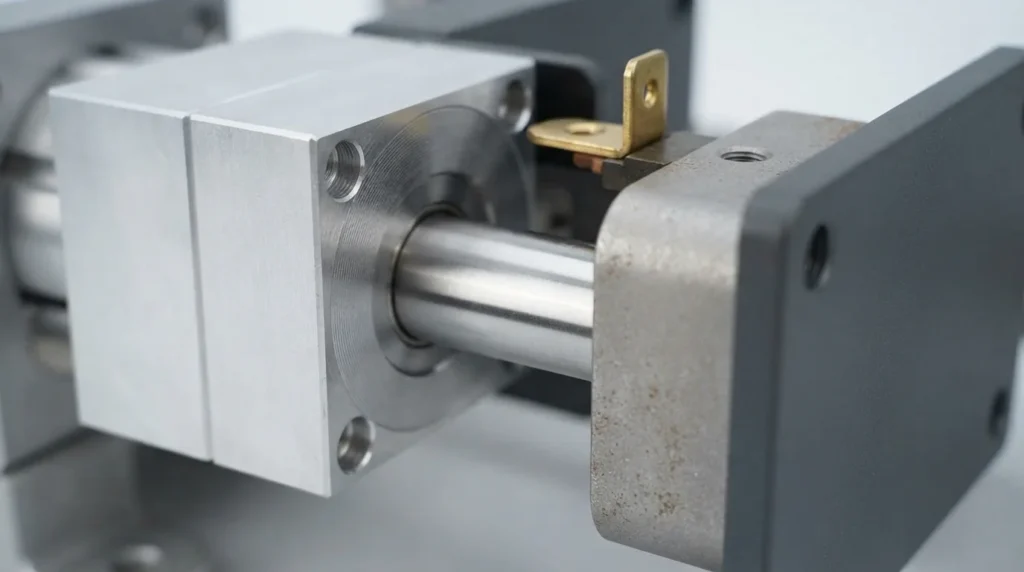
| Finalidade da superfície | Decisão de acabamento a revisar | Risco comum |
|---|---|---|
| Proteção contra corrosão | Compatibilidade de material, cobertura do revestimento, bordas, furos e ambiente de serviço | O tratamento protege a aparência, mas não a condição real de exposição |
| Controle de desgaste ou atrito | Dureza, rugosidade, lubrificação, material de contato e espessura do revestimento | A superfície é lisa, mas desgasta rapidamente ou altera o ajuste |
| Vedação ou contato com fluidos | Direção da rugosidade, ondulação, rebarbas, planicidade, limpeza e compatibilidade do tratamento | Um acabamento cosmético é especificado sem um método de aceitação funcional |
| Aparência ou manuseio | Textura, cor, brilho, uniformidade, mascaramento e amostras de referência | A descrição escrita não define o que o cliente aceitará |
Uma peça pode usar diferentes requisitos de acabamento em faces diferentes. Mantenha interfaces críticas, zonas estéticas e superfícies ocultas distintas, em vez de aplicar o acabamento mais caro em todos os lugares.
Usinado Como Está é uma Escolha de Engenharia Real
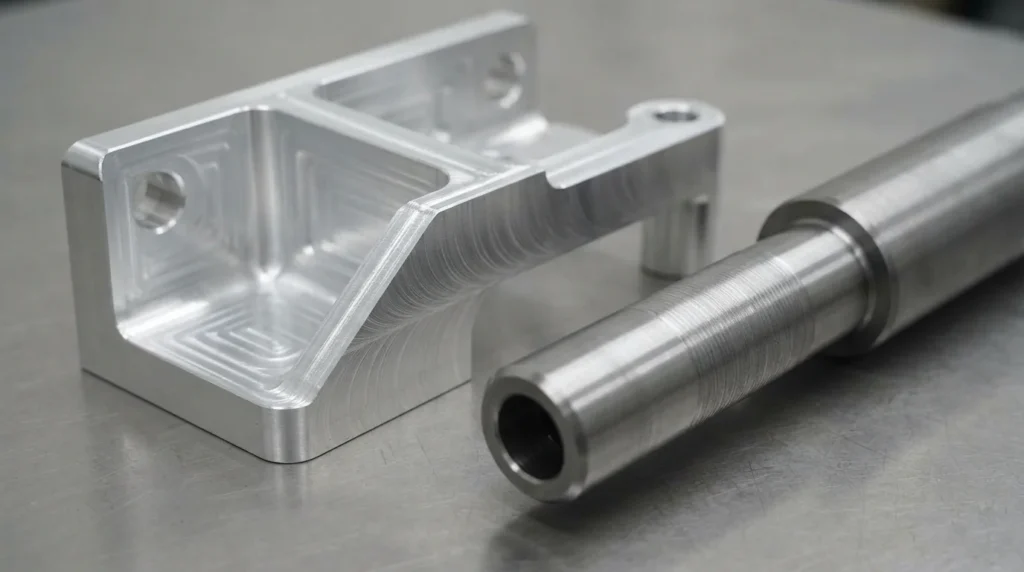
Quando uma superfície usinada é suficiente
- A superfície está oculta ou não fica exposta a um ambiente corrosivo.
- As marcas visíveis da ferramenta não afetam a aparência ou a percepção do cliente.
- A rugosidade e a condição das arestas são adequadas para a função de acoplamento ou vedação.
- Um revestimento adicionaria risco ou espessura sem um benefício de desempenho significativo.
Se for necessário um resultado mais liso, especifique a superfície funcional e o valor de aceitação em vez de pedir o acabamento “mais liso possível”. Este último é difícil de orçar e inspecionar de forma consistente.
Acabamentos Mecânicos para Textura e Aparência
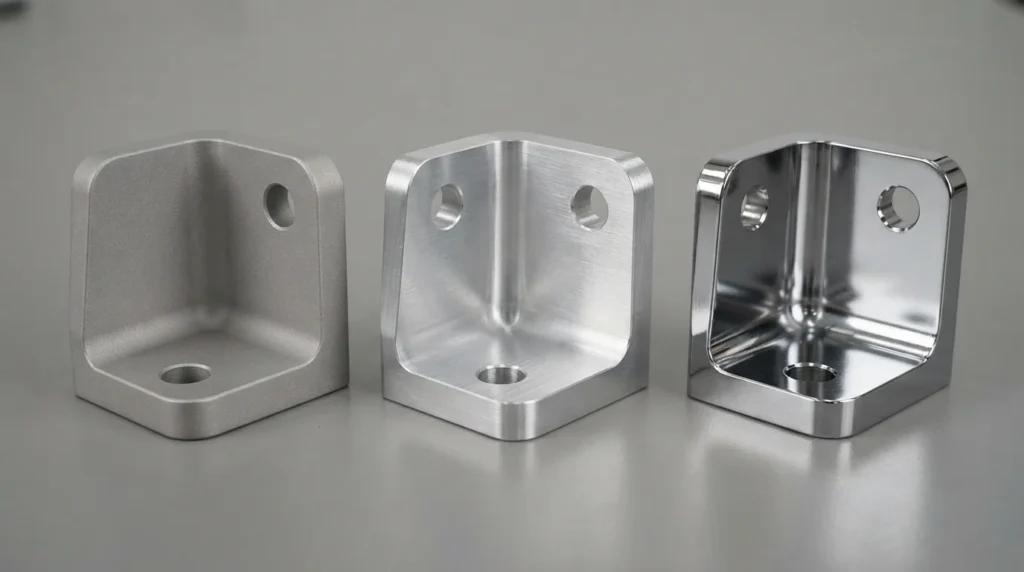
O jateamento pode criar uma aparência fosca ou acetinada mais uniforme e reduzir o destaque visual das marcas de ferramenta. Também pode suavizar arestas, alterar pequenos recursos, afetar a rugosidade ou deixar resíduos de mídia em reentrâncias. Defina mascaramento e superfícies protegidas quando furos, roscas, assentos de rolamento ou faces de vedação precisarem permanecer controlados.
Escovação e textura direcional
Acabamentos escovados criam uma aparência direcional que pode ajudar a ocultar marcas de manuseio, mas a direção, a sobreposição, as transições de arestas e a consistência estética são importantes. Um painel de amostra ou referência aprovada pode ser mais útil do que um adjetivo como “premium”.”
Polimento
O polimento remove ou suaviza material e pode melhorar a aparência, a capacidade de limpeza ou o comportamento de contato. Pode arredondar arestas, alterar dimensões locais, revelar inclusões e exigir um método de inspeção separado. Indique se o requisito é acetinado, brilhante, espelhado ou um nível de rugosidade medido.
Acabamentos Químicos e Eletroquímicos
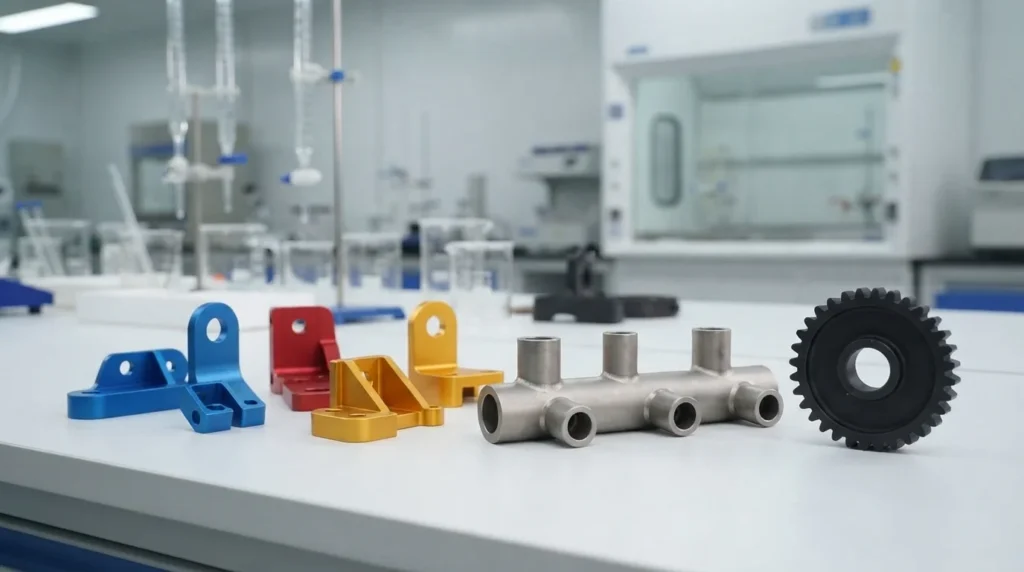
A anodização pode proporcionar proteção contra corrosão, cor, dureza e uma aparência controlada em ligas de alumínio adequadas. A liga, o preparo da superfície, a cor, o mascaramento e o tipo de tratamento afetam o resultado. O crescimento ou a penetração do revestimento pode influenciar furos, roscas, ajustes e contato elétrico, portanto as dimensões críticas devem ser revisadas em relação à condição acabada.
Passivation for stainless steel
Passivation is used to improve the corrosion behavior of suitable stainless steel surfaces after machining and cleaning. It is not an all-purpose appearance treatment, and the cleaning, surface condition, chemical environment, and acceptance requirement still need to be defined.
Black oxide and other chemical treatments
Chemical finishes are material-specific. A treatment that works for one alloy may be ineffective or inappropriate for another. State the base material before selecting the finish, and confirm whether an oil, sealant, topcoat, or dimensional allowance is part of the specification.
Revestimentos, Galvanoplastia e Controle Dimensional
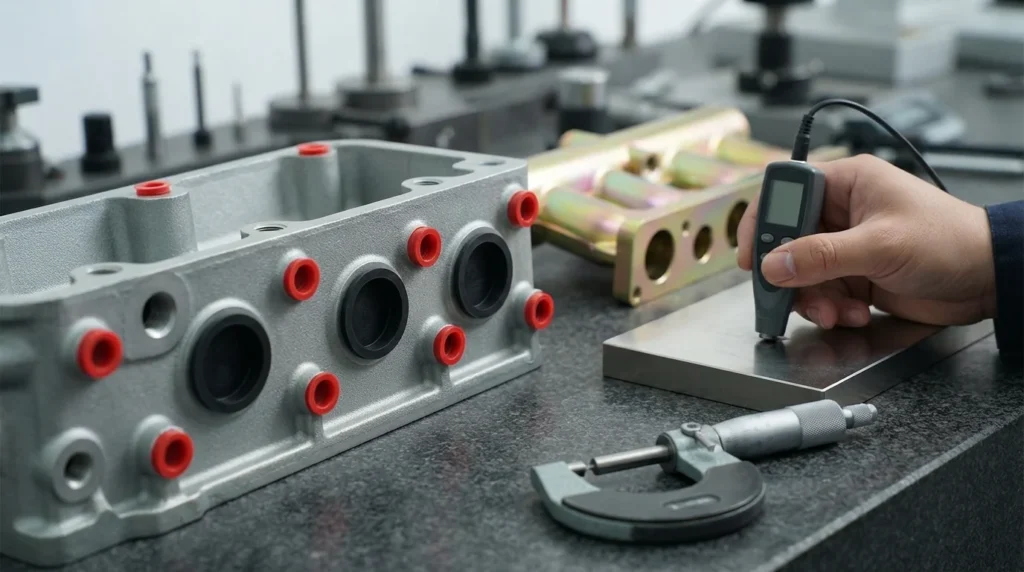
| Question | Why it matters |
|---|---|
| Which surfaces are masked? | Threads, bores, electrical contacts, sealing faces, and locating surfaces may not accept the same coating |
| What is the required thickness or range? | Thickness can change fits, hole size, edge buildup, friction, and electrical behavior |
| When is the critical dimension measured? | The part may need machining allowance before treatment and verification after treatment |
| How is adhesion or appearance accepted? | A general color name does not define adhesion, gloss, texture, coverage, or acceptable variation |
Ra, Rz e a Questão da Inspeção
Ra is a common arithmetic-average roughness parameter, while Rz and other parameters describe the surface differently. A single roughness value does not fully describe waviness, lay direction, burrs, scratches, pores, or cosmetic uniformity. The correct parameter and measurement direction depend on the function.
Write a measurable requirement
- Identify the exact surface or zone that requires the finish.
- State the roughness parameter, unit, limit, and measurement direction when relevant.
- Define whether the value applies before or after coating, polishing, blasting, or passivation.
- Separate roughness from visual appearance, color, scratches, tool marks, and edge condition.
- Agree on the instrument, reference area, and sample or report expectation.
Surface finish and dimensional control are connected. Review the CNC tolerance guide when a finish may change a critical fit or inspection result.
A Compatibilidade com o Material Vem Primeiro
The base material affects which finishes are available, how uniform the result will be, what color is possible, and how the surface behaves in service. Alloy, temper, hardness, reinforcement, porosity, and prior machining condition can all matter.
Use the CNC materials selection guide to connect finish decisions to the material’s environment, wear, heat, electrical, and dimensional requirements. Do not specify a finish only because it is common on another alloy.
Como Especificar um Acabamento em um Desenho
A useful finish callout answers four questions: what process, on which surfaces, to what result, and how will it be accepted?
- Name the base material and condition.
- Name the treatment or mechanical finish and the required class, type, color, texture, or roughness.
- Mark protected, masked, cosmetic, sealing, electrical, and fit-critical surfaces.
- State coating thickness, allowance, dimensional condition, or post-finish measurement where needed.
- Define samples, visual limits, roughness measurement, adhesion, cleanliness, and documentation.
- Identify any approved supplier, customer specification, or substitute-approval process.
A finish note should be specific enough for an estimator to quote and an inspector to accept. “Nice cosmetic finish” is neither.
Acabamento, Custo e Risco de Produção
Surface treatment affects more than the external processing charge. It can change masking, packaging, inspection, rework, lead time, yield, and the dimensional strategy used during machining. Over-specifying every surface can add cost without improving the product; under-specifying a functional surface can create field failure or rework.
When comparing options, consider appearance, corrosion, wear, friction, sealing, electrical behavior, cleanability, dimensional effect, material compatibility, quantity, documentation, and total route cost. The goal is a finish that solves the actual service problem.
Perguntas Frequentes sobre Acabamento Superficial CNC
What is the best surface finish for a CNC part?
There is no universal best finish. Select it from the surface’s function, material, environment, appearance, tolerance, quantity, inspection method, and budget. An as-machined surface may be correct for one area while another needs a coating or polished condition.
Does anodizing change CNC part dimensions?
It can. The treatment may change the condition of edges, holes, threads, fits, and electrical contacts. Critical dimensions should identify whether they apply before or after treatment and which surfaces are masked.
What is the difference between surface finish and surface roughness?
Surface finish is a broader description of texture, appearance, treatment, and condition. Surface roughness is a measured characteristic such as Ra or Rz. A roughness number alone may not define scratches, waviness, lay, burrs, color, or visual acceptance.
Is bead blasting suitable for every CNC material?
No. The media, pressure, base material, geometry, masking, and cleanliness requirement affect the result. Confirm compatibility and protect critical surfaces, threads, bores, and cosmetic zones when needed.
How can I reduce surface finishing cost?
Apply the finish only to surfaces that need it, choose a material-compatible process, define measurable acceptance, avoid unnecessary masking, and coordinate the finish with tolerances and inspection. A supplier DFM review can identify a simpler finish that still meets function.