
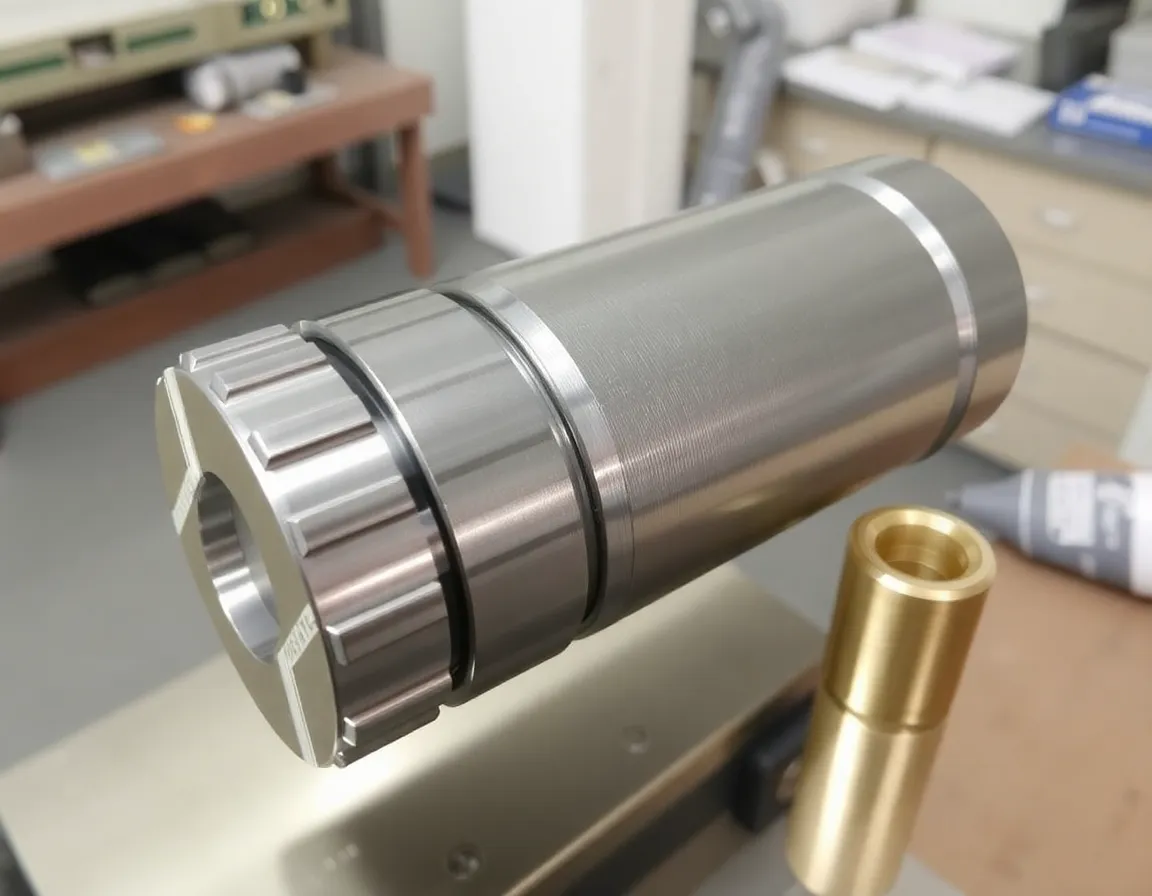
真鍮CNC加工の紹介
真鍮CNC加工は、コンピュータ数値制御(CNC)技術を利用して真鍮部品を卓越した精度と再現性で成形・仕上げする精密製造プロセスです。この除去加工法では、回転切削工具、ドリル、旋盤を用いて、事前にプログラムされたコンピュータソフトウェアに導かれながら、真鍮のソリッドビレットまたは棒材から材料を自動的に除去します。主に銅と亜鉛からなる合金である真鍮は、優れた被削性、耐食性、美観で知られ、配管や電子機器から自動車、装飾金物に至るまで、さまざまな産業で好まれる材料です。CNC技術と真鍮加工の統合により、複雑な形状、厳しい公差(多くの場合±0.005インチ以内)、および手動加工だけでは達成が困難な高品質の表面仕上げが可能になります。.
鋼やアルミニウムなどの他の金属とは異なり、真鍮は強度、延性、低摩擦特性の独自の組み合わせを提供し、工具摩耗を減らし切削効率を高めます。本記事では、真鍮CNC加工の基礎を掘り下げ、その動作原理、主な利点、多様な用途、最適な結果を得るためのベストプラクティスを探ります。.
真鍮CNC加工の仕組み
中核プロセス
真鍮のCNC加工は、デジタル設計から始まり、完成した物理的な部品で終わる体系的なワークフローに従います。このプロセスは通常、3つの主要な段階を含みます: 設計とプログラミング,セットアップと治具取り付け, 、そして加工操作. まず、エンジニアが所望の部品の3D CAD(コンピュータ支援設計)モデルを作成します。このモデルは次に、CAM(コンピュータ支援製造)ソフトウェアを使用して機械可読な命令セットに変換され、切削工具の正確な動き、主軸回転数、送り速度、および切込み深さを指定するツールパスを生成します。.
セットアップ中、真鍮のワークピースはバイス、コレット、またはカスタム治具を使用してCNC機械のワークテーブルまたはチャックに確実に取り付けられます。機械オペレーターは、エンドミル、ドリル、タップ、リーマーなどの適切な切削工具をツールチェンジャーに装填します。プログラムが開始されると、CNCコントローラーはGコード命令を解釈し、切削工具を高速(真鍮の場合、通常6,000~20,000 RPM)で回転させる主軸を起動します。その後、工具は複数の軸(一般に3、4、または5軸)に沿って移動し、材料を層ごとに除去して所望の形状を作り出します。.
真鍮の主要な加工操作
- 旋削: CNC旋盤で行われ、この操作は真鍮のワークピースを回転させながら、固定された切削工具がその外径を成形し、シャフト、継手、コネクタなどの円筒形部品を作り出します。.
- フライス加工:CNCフライス盤を使用し、回転する多刃カッターが固定または移動するワークピースから材料を除去して、平坦な面、スロット、ポケット、および複雑な3D輪郭を製作します。.
- 穴あけとタップ加工:ツイストドリルを使用して真鍮部品に精密な穴が開けられ、続いてタップ加工によりファスナーや配管接続用の雌ねじが形成されます。.
- リーマ加工とボーリング加工:これらの仕上げ操作は穴径を精密化し、より厳しい公差と滑らかな表面仕上げを実現します。これは流体制御および精密アセンブリに不可欠です。.
真鍮に対するCNC加工の重要な利点の一つは、ライブツーリングや多軸機能を備えた高度な機械を使用して、単一のセットアップで複数の操作を実行できることです。これにより、取り扱いエラーが減少し、生産サイクルが短縮されます。.
Key Benefits of Brass CNC Machining
Superior Machinability and Tool Life
Brass is widely regarded as one of the most machinable metals available. Its inherent softness and low melting point allow for higher cutting speeds and feed rates compared to steel or stainless steel, resulting in faster cycle times. Additionally, brass produces small, easily breakable chips that do not clog cutting tools or cause excessive heat buildup. This characteristic significantly extends tool life—often by 3 to 5 times longer than when machining carbon steel—reducing production costs and downtime for tool changes. The alloy's natural lubricity also minimizes friction, allowing for superior surface finishes without the need for extensive secondary polishing.
Excellent Mechanical and Corrosion Resistance
Brass components machined via CNC exhibit outstanding mechanical properties. The material offers a good balance of strength and ductility, making it resistant to cracking under stress while still being formable. Crucially, brass possesses excellent corrosion resistance, particularly in moist environments and exposure to freshwater or mild chemicals. This makes it ideal for plumbing fixtures, valves, and marine hardware. Furthermore, brass is non-sparking and non-magnetic, which is essential for applications in hazardous environments such as oil refineries, gas handling, and electronic instrumentation.
Aesthetic and Functional Versatility
The warm, golden hue of brass provides an attractive aesthetic that is often desired for decorative hardware, architectural trims, and luxury goods. CNC machining can achieve a variety of surface finishes, from a mirror-like polish to a matte satin, through different tool paths and post-processing techniques like bead blasting or chemical passivation. Beyond appearance, brass is also an excellent conductor of electricity and heat, making it a preferred choice for electrical connectors, terminals, and heat exchangers. The ability to combine these functional properties with precise geometries in a single machined part is a significant advantage over casting or forging.
High Precision and Repeatability
CNC technology ensures that each brass part produced is virtually identical to the next, with tolerances as tight as ±0.001 inches achievable on modern equipment. This repeatability is critical for industries like aerospace and medical devices, where component interchangeability and reliability are paramount. The digital nature of CNC machining also allows for rapid design modifications without the need for expensive tooling changes, enabling efficient prototyping and low-volume production runs.
Common Applications of Brass CNC Machining
Plumbing and Fluid Control Systems
Brass CNC machining is the backbone of the plumbing industry. Components such as brass fittings, valves, couplings, and faucet bodiesare routinely produced using this method. The material's resistance to dezincification and corrosion ensures long-term durability in water systems. For example, CNC-machined brass ball valves and gate valves provide reliable shut-off and flow control in residential and commercial plumbing. The precision of CNC machining allows for leak-proof threaded connections and smooth internal passages that minimize pressure drops.
Electrical and Electronic Components
Due to its excellent electrical conductivity (approximately 28% of copper's conductivity) and machinability, brass is widely used for electrical terminals, connectors, switch components, and relay parts. CNC machining produces intricate shapes with tight tolerances required for high-density circuit boards and power distribution systems. Brass components are also commonly found in battery contacts, fuse holders, and grounding lugs, where reliable electrical contact and mechanical strength are essential.
Automotive and Transportation
In the automotive sector, brass CNC machining is employed for manufacturing sensor housings, fuel system components, brake fittings, and air conditioning parts. Brass's ability to withstand vibration and thermal cycling makes it suitable for under-hood applications. For instance, CNC-machined brass fuel injector nozzles require precise orifice diameters to ensure optimal fuel atomization and engine performance. Additionally, brass is used in classic car restoration for replicating original hardware and trim pieces.
Decorative and Architectural Hardware
The aesthetic appeal of brass makes it a popular choice for door handles, knobs, hinges, escutcheons, and lighting fixtures. CNC machining allows for the creation of intricate designs, including custom engravings, filigree patterns, and ergonomic shapes that would be impossible or cost-prohibitive with traditional casting. The ability to produce small batches with consistent quality is particularly valuable for high-end architectural projects and bespoke furniture hardware.
Medical and Scientific Instruments
While stainless steel is more common in surgical tools, brass is used in diagnostic equipment, laboratory fittings, and pneumatic controlswhere non-magnetic properties and corrosion resistance are required. CNC-machined brass components are found in pressure gauges, flow meters, and optical mounts. The material's machinability allows for the production of miniature parts with intricate internal features, such as micro-valves and precision orifices used in analytical instruments.
Best Practices for Brass CNC Machining
工具の選定と形状
Choosing the right cutting tools is critical for maximizing efficiency and part quality in brass CNC machining. 超硬工具are generally preferred over high-speed steel (HSS) due to their superior hardness and wear resistance. For roughing operations, tools with a positive rake angle (typically 5° to 15°) and sharp cutting edges help reduce cutting forces and prevent work hardening. Polished flute tools are recommended to minimize chip adhesion, as brass can sometimes weld to uncoated tools under high heat. For finishing passes, wiper inserts or tools with a small corner radius can produce superior surface finishes.
Cutting Parameters and Coolant Usage
Brass allows for aggressive cutting parameters. Recommended spindle speeds range from 800 to 1,200 surface feet per minute (SFM) for turning and 600 to 1,000 SFM for milling. Feed rates should be adjusted to maintain consistent chip loads, typically 0.002 to 0.008 inches per tooth. While brass can be machined dry, using a light mist of water-soluble coolantor compressed air is advisable to control chip evacuation and prevent thermal expansion, especially for tight-tolerance features. Flood coolant is generally unnecessary and can cause thermal shock to the workpiece. For threading operations, using a rigid tap or thread mill with a spiral flute design helps produce clean, burr-free threads.
Workholding and Vibration Dampening
Due to brass's relative softness, proper workholding is essential to avoid part deflection and chatter. Use serrated or knurled jawson vises or chucks to grip the workpiece securely without marring the surface. For thin-walled parts, consider using soft jaws or custom fixtures that distribute clamping pressure evenly. When machining long, slender shafts, employ a steady rest or tailstock support to minimize vibration. Reducing tool overhang and using sturdy tool holders with high clamping force also contribute to improved surface finish and dimensional accuracy.
Deburring and Surface Finishing
Brass machining often produces sharp burrs, particularly on edges and threaded areas. Automated deburringusing CNC programs with chamfering tools or brushes can be integrated into the machining cycle to save time. For manual deburring, use fine files or abrasive pads with care to avoid scratching the surface. After machining, parts may be polished using a buffing wheel with rouge compound to achieve a high-gloss finish, or bead blasted for a uniform matte texture. For applications requiring enhanced corrosion resistance or tarnish prevention, a clear lacquer or passivation coating can be applied.
Quality Control and Inspection
Given the tight tolerances often required for brass components, rigorous inspection is necessary. Use CMM (Coordinate Measuring Machines), optical comparators, or laser micrometers to verify critical dimensions. For threaded parts, go/no-go gauges are essential. It is also important to monitor tool wear regularly, as worn tools can cause dimensional drift and poor surface finishes. Implementing in-process probing on the CNC machine allows for real-time adjustments and reduces scrap rates. Documenting inspection results and maintaining a robust quality management system ensures consistency across production runs.
結論
Brass CNC machining represents a synergy between a versatile, high-performance material and advanced automated manufacturing technology. Its ability to produce complex, precise, and aesthetically pleasing components with excellent efficiency makes it indispensable across numerous industries. From the plumbing systems that deliver clean water to the electrical connectors that power our devices, brass parts machined with CNC precision play a vital, often unseen, role in modern life. By adhering to best practices in tool selection, cutting parameters, workholding, and quality control, manufacturers can fully leverage the benefits of brass—its machinability, corrosion resistance, and beauty—to deliver products that meet the highest standards of performance and reliability. As CNC technology continues to evolve with multi-axis capabilities and automation, the potential for brass machining will only expand, enabling even more innovative applications in the future.