
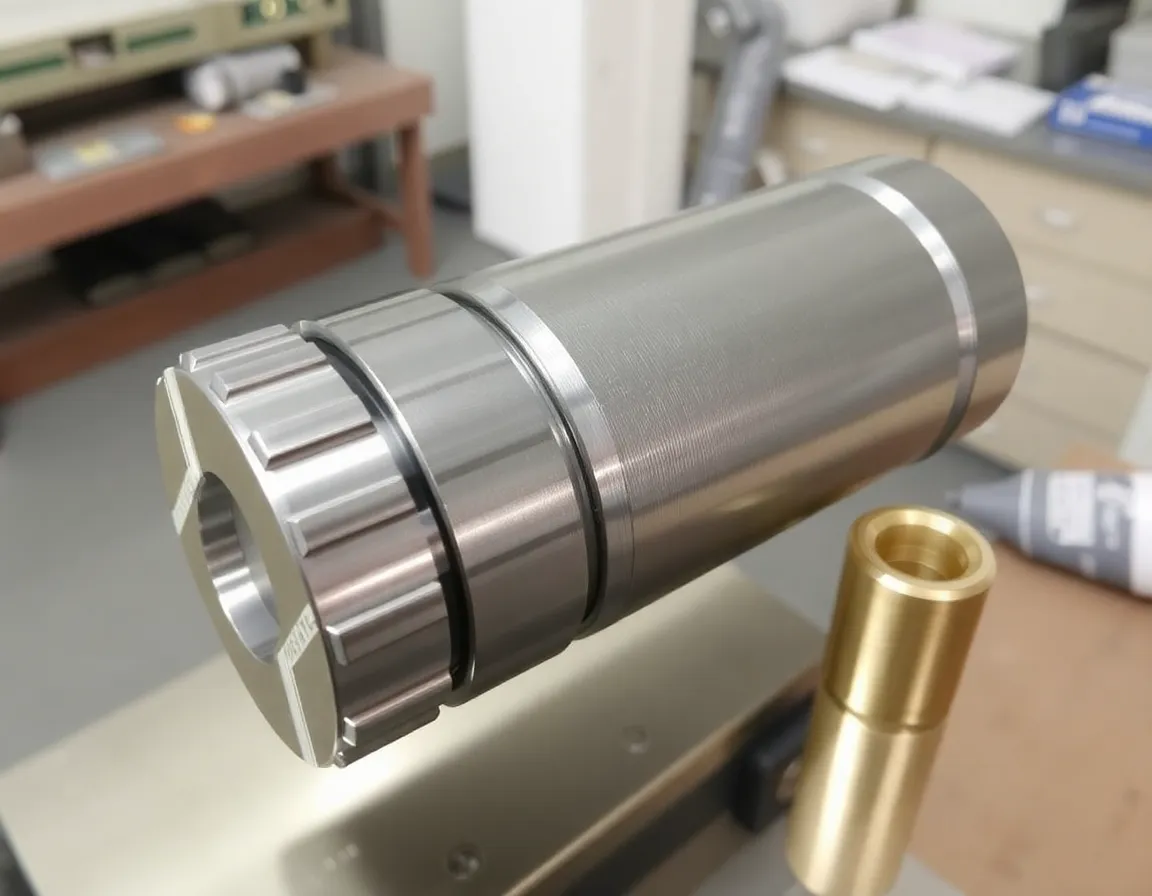
Introduction to Brass CNC Machining
Brass CNC machining is a precision manufacturing process that utilizes computer numerical control (CNC) technology to shape and finish brass components with exceptional accuracy and repeatability. This subtractive manufacturing method involves the automated removal of material from a solid brass billet or rod using rotating cutting tools, drills, and lathes, all guided by pre-programmed computer software. Brass, an alloy primarily composed of copper and zinc, is renowned for its excellent machinability, corrosion resistance, and aesthetic appeal, making it a preferred material across industries ranging from plumbing and electronics to automotive and decorative hardware. The integration of CNC technology with brass processing allows for the creation of complex geometries, tight tolerances (often within ±0.005 inches), and high-quality surface finishes that are difficult to achieve through manual machining alone.
Unlike other metals such as steel or aluminum, brass offers a unique combination of strength, ductility, and low friction properties, which reduces tool wear and enhances cutting efficiency. This article delves into the fundamentals of brass CNC machining, exploring its working principles, key benefits, diverse applications, and best practices for achieving optimal results.
How Brass CNC Machining Works
The Core Process
Brass CNC machining follows a systematic workflow that begins with a digital design and ends with a finished physical part. The process typically involves three primary stages: design and programming,setup and fixturing, andmachining operations. First, engineers create a 3D CAD (Computer-Aided Design) model of the desired component. This model is then converted into a set of machine-readable instructions using CAM (Computer-Aided Manufacturing) software, which generates toolpaths specifying the exact movements of the cutting tools, spindle speeds, feed rates, and depth of cuts.
During setup, the brass workpiece is securely mounted onto the CNC machine's worktable or chuck using vises, collets, or custom fixtures. The machine operator loads the appropriate cutting tools—such as end mills, drills, taps, and reamers—into the tool changer. Once the program is initiated, the CNC controller interprets the G-code commands and activates the spindle, which rotates the cutting tool at high speeds (typically 6,000 to 20,000 RPM for brass). The tool then moves along multiple axes (commonly 3, 4, or 5 axes) to remove material layer by layer, creating the desired shape.
Key Machining Operations for Brass
- Turning: Performed on CNC lathes, this operation rotates the brass workpiece while a stationary cutting tool shapes its outer diameter, creating cylindrical parts like shafts, fittings, and connectors.
- Milling:Using CNC milling machines, rotating multi-point cutters remove material from a stationary or moving workpiece to produce flat surfaces, slots, pockets, and complex 3D contours.
- Drilling and Tapping:Precision holes are drilled into brass components using twist drills, followed by tapping operations to create internal threads for fasteners and plumbing connections.
- Reaming and Boring:These finishing operations refine hole diameters to achieve tighter tolerances and smoother surface finishes, essential for fluid control and precision assemblies.
One of the critical advantages of CNC machining for brass is the ability to perform multiple operations in a single setup using advanced machines with live tooling or multi-axis capabilities. This reduces handling errors and shortens production cycles.
Key Benefits of Brass CNC Machining
Superior Machinability and Tool Life
Brass is widely regarded as one of the most machinable metals available. Its inherent softness and low melting point allow for higher cutting speeds and feed rates compared to steel or stainless steel, resulting in faster cycle times. Additionally, brass produces small, easily breakable chips that do not clog cutting tools or cause excessive heat buildup. This characteristic significantly extends tool life—often by 3 to 5 times longer than when machining carbon steel—reducing production costs and downtime for tool changes. The alloy's natural lubricity also minimizes friction, allowing for superior surface finishes without the need for extensive secondary polishing.
Excellent Mechanical and Corrosion Resistance
Brass components machined via CNC exhibit outstanding mechanical properties. The material offers a good balance of strength and ductility, making it resistant to cracking under stress while still being formable. Crucially, brass possesses excellent corrosion resistance, particularly in moist environments and exposure to freshwater or mild chemicals. This makes it ideal for plumbing fixtures, valves, and marine hardware. Furthermore, brass is non-sparking and non-magnetic, which is essential for applications in hazardous environments such as oil refineries, gas handling, and electronic instrumentation.
Aesthetic and Functional Versatility
The warm, golden hue of brass provides an attractive aesthetic that is often desired for decorative hardware, architectural trims, and luxury goods. CNC machining can achieve a variety of surface finishes, from a mirror-like polish to a matte satin, through different tool paths and post-processing techniques like bead blasting or chemical passivation. Beyond appearance, brass is also an excellent conductor of electricity and heat, making it a preferred choice for electrical connectors, terminals, and heat exchangers. The ability to combine these functional properties with precise geometries in a single machined part is a significant advantage over casting or forging.
High Precision and Repeatability
CNC technology ensures that each brass part produced is virtually identical to the next, with tolerances as tight as ±0.001 inches achievable on modern equipment. This repeatability is critical for industries like aerospace and medical devices, where component interchangeability and reliability are paramount. The digital nature of CNC machining also allows for rapid design modifications without the need for expensive tooling changes, enabling efficient prototyping and low-volume production runs.
Common Applications of Brass CNC Machining
Plumbing and Fluid Control Systems
Brass CNC machining is the backbone of the plumbing industry. Components such as brass fittings, valves, couplings, and faucet bodiesare routinely produced using this method. The material's resistance to dezincification and corrosion ensures long-term durability in water systems. For example, CNC-machined brass ball valves and gate valves provide reliable shut-off and flow control in residential and commercial plumbing. The precision of CNC machining allows for leak-proof threaded connections and smooth internal passages that minimize pressure drops.
Electrical and Electronic Components
Due to its excellent electrical conductivity (approximately 28% of copper's conductivity) and machinability, brass is widely used for electrical terminals, connectors, switch components, and relay parts. CNC machining produces intricate shapes with tight tolerances required for high-density circuit boards and power distribution systems. Brass components are also commonly found in battery contacts, fuse holders, and grounding lugs, where reliable electrical contact and mechanical strength are essential.
Automotive and Transportation
In the automotive sector, brass CNC machining is employed for manufacturing sensor housings, fuel system components, brake fittings, and air conditioning parts. Brass's ability to withstand vibration and thermal cycling makes it suitable for under-hood applications. For instance, CNC-machined brass fuel injector nozzles require precise orifice diameters to ensure optimal fuel atomization and engine performance. Additionally, brass is used in classic car restoration for replicating original hardware and trim pieces.
Decorative and Architectural Hardware
The aesthetic appeal of brass makes it a popular choice for door handles, knobs, hinges, escutcheons, and lighting fixtures. CNC machining allows for the creation of intricate designs, including custom engravings, filigree patterns, and ergonomic shapes that would be impossible or cost-prohibitive with traditional casting. The ability to produce small batches with consistent quality is particularly valuable for high-end architectural projects and bespoke furniture hardware.
Medical and Scientific Instruments
While stainless steel is more common in surgical tools, brass is used in diagnostic equipment, laboratory fittings, and pneumatic controlswhere non-magnetic properties and corrosion resistance are required. CNC-machined brass components are found in pressure gauges, flow meters, and optical mounts. The material's machinability allows for the production of miniature parts with intricate internal features, such as micro-valves and precision orifices used in analytical instruments.
Best Practices for Brass CNC Machining
Tool Selection and Geometry
Choosing the right cutting tools is critical for maximizing efficiency and part quality in brass CNC machining. Carbide toolsare generally preferred over high-speed steel (HSS) due to their superior hardness and wear resistance. For roughing operations, tools with a positive rake angle (typically 5° to 15°) and sharp cutting edges help reduce cutting forces and prevent work hardening. Polished flute tools are recommended to minimize chip adhesion, as brass can sometimes weld to uncoated tools under high heat. For finishing passes, wiper inserts or tools with a small corner radius can produce superior surface finishes.
Cutting Parameters and Coolant Usage
Brass allows for aggressive cutting parameters. Recommended spindle speeds range from 800 to 1,200 surface feet per minute (SFM) for turning and 600 to 1,000 SFM for milling. Feed rates should be adjusted to maintain consistent chip loads, typically 0.002 to 0.008 inches per tooth. While brass can be machined dry, using a light mist of water-soluble coolantor compressed air is advisable to control chip evacuation and prevent thermal expansion, especially for tight-tolerance features. Flood coolant is generally unnecessary and can cause thermal shock to the workpiece. For threading operations, using a rigid tap or thread mill with a spiral flute design helps produce clean, burr-free threads.
Workholding and Vibration Dampening
Due to brass's relative softness, proper workholding is essential to avoid part deflection and chatter. Use serrated or knurled jawson vises or chucks to grip the workpiece securely without marring the surface. For thin-walled parts, consider using soft jaws or custom fixtures that distribute clamping pressure evenly. When machining long, slender shafts, employ a steady rest or tailstock support to minimize vibration. Reducing tool overhang and using sturdy tool holders with high clamping force also contribute to improved surface finish and dimensional accuracy.
Deburring and Surface Finishing
Brass machining often produces sharp burrs, particularly on edges and threaded areas. Automated deburringusing CNC programs with chamfering tools or brushes can be integrated into the machining cycle to save time. For manual deburring, use fine files or abrasive pads with care to avoid scratching the surface. After machining, parts may be polished using a buffing wheel with rouge compound to achieve a high-gloss finish, or bead blasted for a uniform matte texture. For applications requiring enhanced corrosion resistance or tarnish prevention, a clear lacquer or passivation coating can be applied.
Quality Control and Inspection
Given the tight tolerances often required for brass components, rigorous inspection is necessary. Use CMM (Coordinate Measuring Machines), optical comparators, or laser micrometers to verify critical dimensions. For threaded parts, go/no-go gauges are essential. It is also important to monitor tool wear regularly, as worn tools can cause dimensional drift and poor surface finishes. Implementing in-process probing on the CNC machine allows for real-time adjustments and reduces scrap rates. Documenting inspection results and maintaining a robust quality management system ensures consistency across production runs.
Conclusion
Brass CNC machining represents a synergy between a versatile, high-performance material and advanced automated manufacturing technology. Its ability to produce complex, precise, and aesthetically pleasing components with excellent efficiency makes it indispensable across numerous industries. From the plumbing systems that deliver clean water to the electrical connectors that power our devices, brass parts machined with CNC precision play a vital, often unseen, role in modern life. By adhering to best practices in tool selection, cutting parameters, workholding, and quality control, manufacturers can fully leverage the benefits of brass—its machinability, corrosion resistance, and beauty—to deliver products that meet the highest standards of performance and reliability. As CNC technology continues to evolve with multi-axis capabilities and automation, the potential for brass machining will only expand, enabling even more innovative applications in the future.