
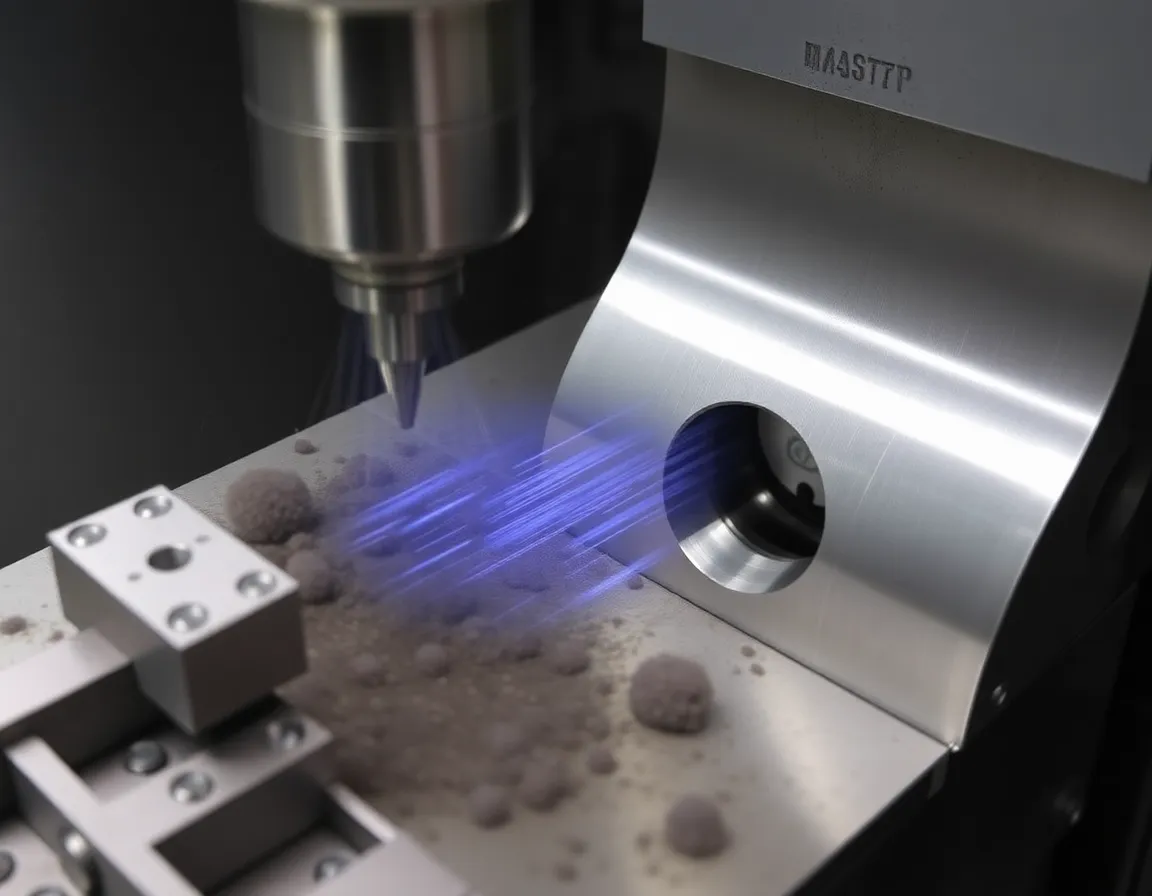
はじめに:産業界の不屈の働き手
精度、耐久性、性能が譲れない製造の世界において、工具鋼は基盤となる材料です。標準的な鋼とは異なり、工具鋼は他の材料を切断、成形、形成するという唯一の重要な目的のために設計されています。しかし、工具鋼の加工はそれ自体が一つの専門分野です。工具に最適なその特性—卓越した硬度、耐摩耗性、強度—は、加工プロセスにおいて重大な課題ももたらします。したがって、工具鋼の加工をマスターすることは単なるスキルではなく、現代産業を支える優れた金型、ダイス、切削工具、治具の生産を可能にする競争上の優位性です。.
工具鋼の性質を理解する
加工戦略に踏み込む前に、工具鋼を際立たせているものを理解することが重要です。工具鋼は高炭素合金鋼であり、精密な熱処理によってその決定的な特性を得ます。それらは用途、硬化方法、およびタングステン、モリブデン、クロム、バナジウムなどの合金元素に基づいて、いくつかのタイプ(A、D、H、M、Sなど)に分類されます。.
加工に影響を与える主な特性
工具鋼の利点そのものが、加工難易度の原因となります:
- 高い硬度と強度: 工具鋼は変形に抵抗するため、切削工具に多大な応力をかけます。.
- 耐摩耗性: マトリックス内の硬質炭化物が切削刃を急速に摩耗させます。.
- 低い熱伝導率: 切削中に発生する熱は速やかに放散されず、工具と工作物の界面に集中し、両方に熱損傷のリスクをもたらします。.
- 寸法不安定性: 不適切な取り扱いや過度の熱は、特に熱処理後に反りや歪みを引き起こす可能性があります。.
前加工:成功の基盤
工具鋼加工の成功は、最初の切削のはるか前から始まります。適切な計画と準備が最も重要です。.
材料の選定と状態
工具鋼は多くの場合、焼なまし(軟化)状態で供給され、これが加工に理想的な条件です。完全に硬化した工具鋼の加工は可能ですが、専用の工具と技術(研削や放電加工など)が必要であり、複雑な形状では避けるべきです。経験則は次のとおりです: 焼なまし状態で可能な限り加工し、熱処理後の仕上げに最小限の取り代だけを残す。.
確実で剛性の高いワーク保持
Any vibration or movement is the enemy of machining hard materials. Use vises, clamps, or fixtures that provide maximum rigidity. Ensure the workpiece is fully supported to prevent deflection under cutting forces. A chattering cut will lead to poor surface finish and accelerated tool failure.
Machining Strategies and Best Practices
This is the core of mastering tool steel. Adhering to these principles will dramatically improve results, tool life, and dimensional accuracy.
Tooling Selection: The Cutting Edge
Using the wrong tool is the fastest path to failure. For tool steel, the choice is critical:
- Carbide Inserts: The default choice for most operations. Use micro-grain or sub-micro-grain carbide grades (e.g., C2/C3 classification) for their excellent wear resistance and toughness. Coatings like TiAlN (Aluminum Titanium Nitride) or AlCrN (Aluminum Chromium Nitride) are highly recommended as they provide a thermal barrier, reduce friction, and enhance lubricity.
- High-Speed Steel (HSS): Can be used for simpler operations on annealed tool steels or for specialized tool forms, but expect significantly lower cutting speeds compared to carbide.
- 形状: Select inserts with a positive rake angle to reduce cutting forces and heat generation. A strong, honed edge preparation helps prevent chipping on entry. Ensure tools are sharp; a dull tool generates exponentially more heat.
The Golden Rules of Cutting Parameters
Balancing speed, feed, and depth of cut is an art. For tool steel, err on the side of caution with speed and aggression with feed.
- Speed (SFM - Surface Feet per Minute): Start conservative. For annealed tool steel with coated carbide, speeds between 150-350 SFM are a common starting point. Harder conditions demand slower speeds. The goal is to avoid generating excessive heat.
- Feed Rate (IPR - Inches per Revolution): Use a consistent and adequate feed rate. Too light of a feed allows the tool to rub instead of cut, creating heat and work-hardening the surface. A firm, deliberate cut is better.
- 切込み深さ: Take depths of cut that are large enough to engage the cutting edge below any work-hardened surface, but within the power and rigidity limits of your machine. It's often more efficient to take fewer, deeper passes than many light, skimming passes.
Heat Management: Your Constant Battle
Controlling heat is the single most important factor in successful tool steel machining.
Use Copious, Targeted Coolant: A high-pressure flood coolant system is ideal. It cools the cutting zone, lubricates to reduce friction, and flushes chips away. For operations where flood coolant isn't possible, use a high-quality, sulfur-based cutting oil or a powerful mist system.
Engage the Chipbreaker: Modern insert geometries are designed to curl and break chips efficiently. A well-formed chip carries away the majority of the heat generated in the cut. Long, stringy chips are a sign of incorrect parameters and are dangerous and inefficient.
Post-Machining and Heat Treatment Considerations
The journey doesn't end when the machining cycle finishes. Proper handling after machining ensures the final part meets specifications.
応力除去
For complex or high-precision parts, a stress-relief anneal 摩耗する前に final hardening can be beneficial. This process involves heating the machined part to a sub-critical temperature (e.g., 1200-1300°F for many grades) and holding, then slowly cooling. This relieves internal stresses induced during rough machining, minimizing distortion during the final, full hardening process.
Finishing After Hardening
As mentioned, the final hardening process (quenching and tempering) will cause dimensional changes. Always leave a small, uniform stock allowance (typically 0.005-0.020 inches per side, depending on part size and geometry) for a final finishing operation. This is often done with grinding, electrical discharge machining (EDM), or hard turning/milling with specialized CBN (Cubic Boron Nitride) or PCD (Polycrystalline Diamond) tooling.
結論:習得への道
Mastering tool steel machining is a synthesis of knowledge, preparation, and disciplined execution. It demands respect for the material's properties and a meticulous approach to every stage of the process—from selecting the right stock and securing it rigidly, to choosing premium tooling and dialing in conservative yet effective cutting parameters, all while waging a constant war on heat. By viewing the process holistically and adhering to these proven tips, machinists and manufacturers can consistently transform these unyielding alloys into the precise, durable, and high-performance tools that form the backbone of advanced manufacturing. The reward is not just a successfully machined part, but a tool that will, in turn, produce thousands of components with unwavering reliability.