光と機械の重要な交差点
高度な光学の世界では、光子の旅は極限の精度を要求されます。レンズ、ミラー、センサーが注目を集める一方で、その性能は縁の下の力持ちである光学ハウジングに完全に依存しています。光学ハウジング加工とは、敏感な光学部品を保持し、位置合わせし、保護する機械構造を製作する専門分野です。そこでは、光の抽象的な波面が、材料科学と超精密製造の現実と出会います。完璧に研磨されたレンズも、応力、位置ずれ、熱歪みを引き起こす粗悪な加工のハウジングに取り付けられれば無用の長物となります。したがって、完璧なハウジングの加工は単なる機械作業ではなく、あらゆる光学システムの理論上の潜在能力を実現するための基礎的なステップなのです。.
光学ハウジング加工とは何か?
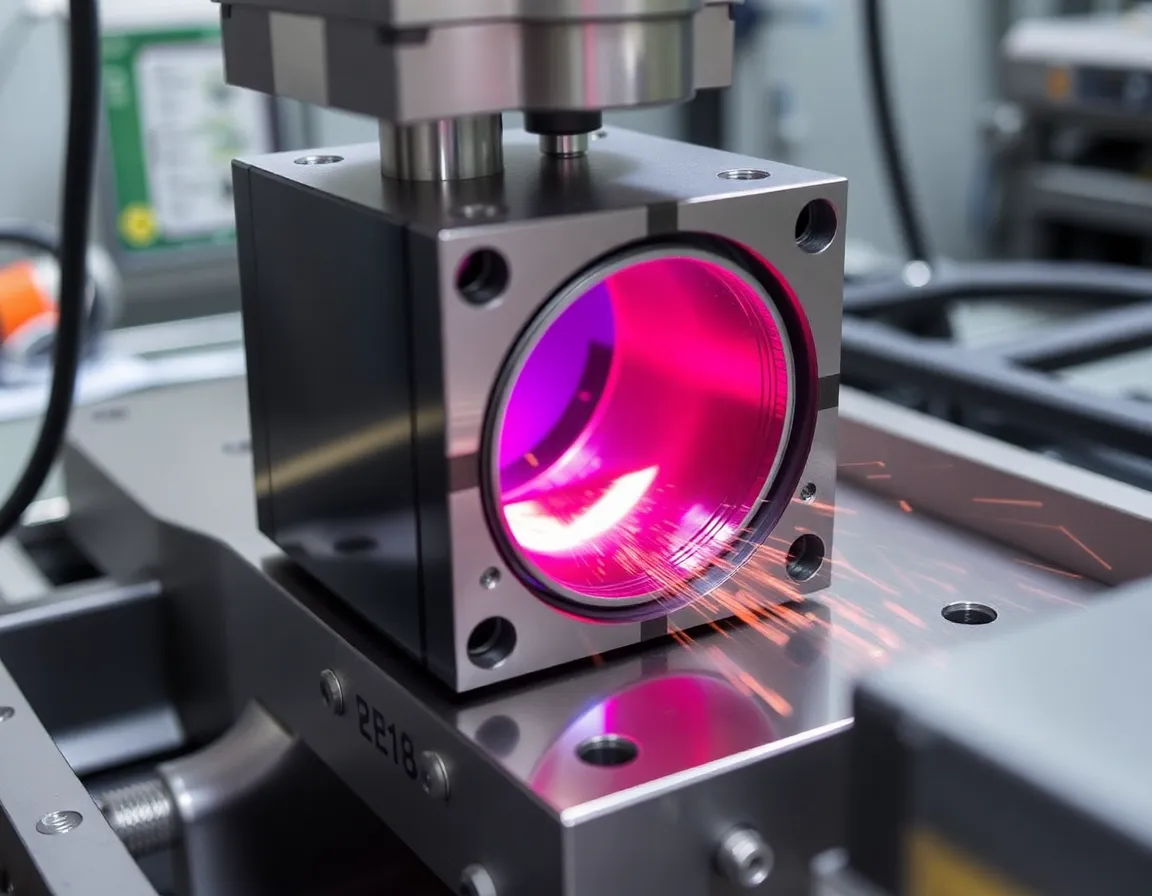
光学ハウジング加工とは、光学システム専用の筐体、マウント、鏡筒、ブラケット、複雑なシャーシを設計・製造するプロセスを指します。これらのコンポーネントは、並外れたレベルの寸法精度、熱安定性、そして多くの場合、複雑な内部形状を達成する必要があります。従来の加工とは異なり、公差はしばしばミクロンあるいはサブミクロン単位で測定され、表面仕上げは迷光散乱(以下として知られる現象)を防ぐために極めて滑らかでなければなりません。 迷光)。ハウジングは光学システムの骨格であり、要素間の正確な空間的関係を規定し、さまざまな環境条件下でもそれらの関係が一定に保たれることを保証します。.
主要コンポーネントとその機能
光学アセンブリにおける典型的な機械加工部品には以下が含まれます:
- レンズ鏡筒とセル: レンズを光軸に沿って拘束し、半径方向に中心合わせする円筒形のホルダー。多くの場合、精密なねじ、ショルダー、押さえリングを備えています。.
- ミラーマウント: ミラーを最小限の歪みで保持するキネマティックまたはセミキネマティックマウントで、一部の用途では精密なチルト/チップ調整が可能です。.
- 光学ベンチとブレッドボード: 実験室や産業環境で複雑な光学系を構築するための、精密に配置されたタップ穴グリッドを備えた大型で安定したプラットフォーム。.
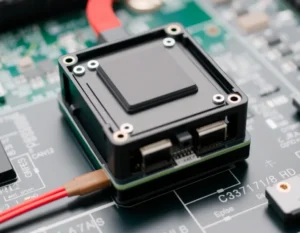
- センサーハウジング: レンズ系の正確な焦点面にイメージセンサー(CCDやCMOSチップなど)を位置決めする筐体で、多くの場合、統合された熱管理を備えています。.
- 複雑なシャーシ: 双眼鏡、顕微鏡、衛星撮像システムなどのデバイス用の多面筐体で、複数の光学チャネルと電子部品を統合します。.
機械加工プロセス:設計図から現実へ
完璧な光学ハウジングへの道のりは、光学エンジニア、機械設計者、熟練機械工の緊密な協力を必要とする多段階のプロセスです。.
設計と材料選定
プロセスは、光学システムの要件を深く理解することから始まります。設計者は以下のような要因を考慮する必要があります: 熱膨張係数, 、剛性対重量比、長期安定性(最小化 クリープ)、時には透磁率も含まれます。一般的な材料には以下が含まれます:
- アルミニウム合金(例:6061-T6、7075): 優れた切削加工性、良好な強度対重量比、および適度なコストで広く使用されています。耐摩耗性と耐食性のために陽極酸化処理されることが多いです。.
- ステンレス鋼(例:304、416): 高い剛性、優れた耐久性、および特定のグレードでは低い熱膨張のために選ばれます。加工は困難ですが、高応力または超安定性が求められる用途には不可欠です。.
- インバー(Fe-Ni合金): その極めて低い熱膨張係数で有名であり、熱安定性が最重要視される宇宙搭載光学系や計測システムに最適な材料です。.
- チタン: 卓越した強度対重量比と良好な耐食性を提供し、航空宇宙や厳しい環境のポータブルシステムに使用されています。.
- 銅およびアルミニウム青銅: 能動的な放熱が必要なハウジングにおいて、その高い熱伝導率のために使用されることがあります。.
精密加工技術
Once designed, the housing is brought to life using advanced machining technologies:
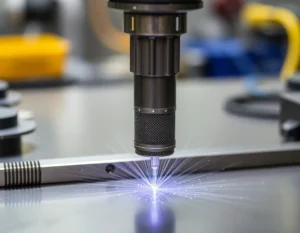
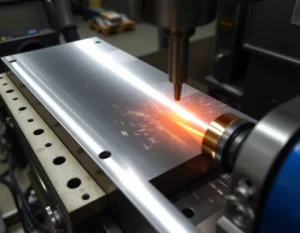
- CNCフライス加工と旋盤加工: Computer Numerical Control (CNC) machining is the backbone of optical housing production. Multi-axis CNC mills (4-axis, 5-axis) can create complex geometries, internal cavities, and precise mounting features from solid blocks of material with micron-level repeatability.
- Ultra-Precision Diamond Turning: For applications requiring optical-quality surfaces on the housing itself (e.g., reflective inner surfaces, reference flats), single-point diamond turning (SPDT) is employed. This process uses a diamond-tipped tool on a lathe of extreme precision to achieve nanometer-level surface finishes and form accuracy.
- Precision Boring and Honing: For creating perfectly cylindrical, round, and straight bores for lens seats, these processes ensure optimal lens centration and alignment.
- Thread Whirling and Precision Threading: Producing high-accuracy, fine-pitch threads for lens focusing mechanisms or component attachment without inducing runout or misalignment.
Post-Machining: Finishing and Verification
Machining is only part of the story. Critical finishing steps include:
- 応力除去: Thermal or vibrational stress relieving is often performed to remove internal stresses induced during machining, which could cause the part to warp over time.
- Surface Treatments: Anodizing (for aluminum), passivation (for stainless steel), or specialized blackening processes are applied to enhance durability, prevent corrosion, and reduce surface reflectivity to mitigate stray light.
- Metrology and Inspection: Every critical dimension is verified using high-precision tools like coordinate measuring machines (CMM), laser interferometers, optical comparators, and profilometers. This step is non-negotiable for quality assurance.
Benefits and Applications of Precision-Machined Housings
The investment in high-quality optical housing machining pays dividends across a vast spectrum of technologies.
Key Benefits
- Preserved Optical Performance: Maintains wavefront error, modulation transfer function (MTF), and designed spot size by ensuring perfect alignment.
- Environmental Robustness: Protects delicate optics from shock, vibration, humidity, and temperature fluctuations, ensuring reliability in the field.
- Long-Term Stability: Prevents "drift" in optical alignment over time and through thermal cycles, which is critical for scientific instruments and permanent installations.
- System Integration: Provides a reliable mechanical interface for integrating optics with electronics, actuators, and other subsystems.
Critical Applications
- 航空宇宙・防衛: Satellite imaging systems, missile guidance seekers, UAV cameras, and laser targeting systems. Housings must survive launch vibrations and extreme thermal vacuums.
- Life Sciences and Medical: High-resolution microscopes, DNA sequencers, endoscopes, and diagnostic imaging systems (OCT, confocal microscopy). Precision here directly impacts diagnostic capability.
- Semiconductor Manufacturing: Photolithography stepper and scanner lenses, wafer inspection tools. These represent the pinnacle of precision, with housings contributing to nanometer-scale patterning accuracy.
- Telecommunications: Fiber optic alignment ferrules, laser diode packages, and transceiver modules where micron-scale alignment is crucial for signal integrity.
- コンシューマーエレクトロニクス: Smartphone camera modules, LiDAR sensors for autonomous vehicles, and VR/AR headsets. Here, precision machining enables miniaturization and mass production of robust optical systems.
Best Practices in Optical Housing Machining
Success in this field hinges on adhering to a set of rigorous best practices.
- Design for Manufacturability (DFM): Involve machinists early in the design phase. Simplify geometries where possible, specify realistic tolerances, and consider tool access for internal features.
- Thermal Management by Design: Integrate thermal considerations from the start. Use symmetric designs to promote uniform expansion/contraction and incorporate mounting strategies that minimize thermal stress on optics.
- Master the Art of Kinematics: Employ kinematic or semi-kinematic mounting principles (using balls, grooves, and planes) to constrain components without over-constraint, which induces stress and distortion.
- Control Stray Light from the Ground Up: Design baffles, light traps, and knife-edges into the housing geometry. Specify low-reflectivity surface finishes (e.g., black anodize, specialized paints) on internal non-optical surfaces.
- Document and Control Processes: Maintain meticulous records of machining parameters, inspection results, and material certifications. This traceability is essential for high-reliability applications and troubleshooting.
- Partner with Specialists: Optical housing machining is a niche expertise. Partnering with machine shops that have proven experience in optics, equipped with the right metrology and a culture of precision, is often the most critical decision of all.
Conclusion: The Foundation of Optical Fidelity
In the relentless pursuit of optical perfection—sharper images, more accurate measurements, more powerful lasers—the significance of the mechanical foundation cannot be overstated. Precision optics are only as good as their mounts. Optical housing machining is the critical bridge between optical design theory and real-world performance. It demands a unique synergy of advanced engineering, state-of-the-art manufacturing technology, and meticulous craftsmanship. By machining the perfect housing, manufacturers do not merely create a container; they build the stable, predictable, and reliable environment in which light can behave exactly as intended, enabling the technologies that define our modern world.