
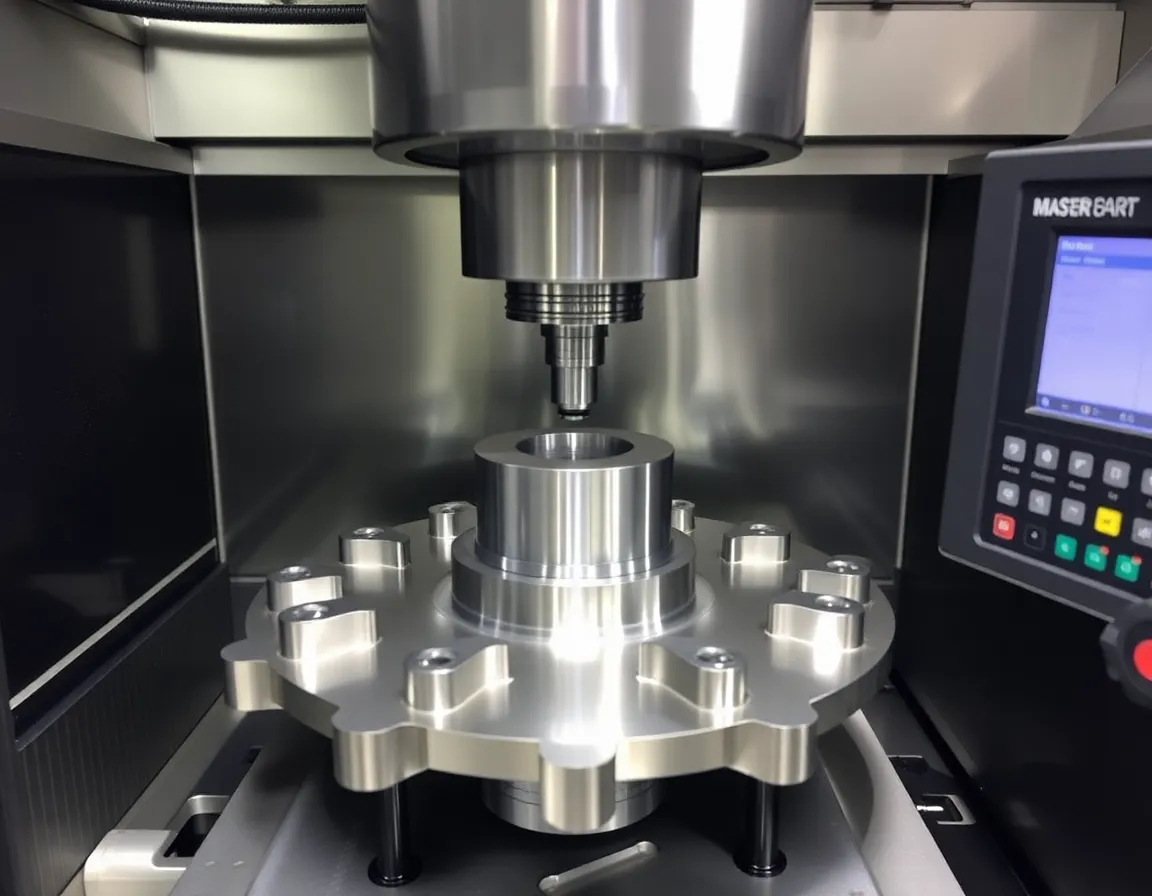
What continuous five-axis machining means
Continuous 5 axis machining coordinates movement across multiple axes while the cutting tool follows a path. It differs from indexed 3+2 machining, where the part or tool is positioned at an angle and then cut with the remaining axes. These are different strategies, not a ranking where one is always better.
When simultaneous movement may matter
Continuous motion may be considered for a surface or feature path that requires the tool orientation to change during cutting. The geometry, access, clearance and surface requirements determine whether this strategy is useful. Many parts can be made with simpler setups; a five-sided part does not automatically need continuous five-axis motion.
Make the model and drawing reviewable
Provide the 3D model and a drawing with datums, critical dimensions, finish and inspection requirements. Identify areas where tool access is constrained or where surface transitions matter. The manufacturing team can review whether simultaneous motion, indexed positioning or another route is appropriate for the specific part.
Compare related machining approaches
Guarda il nostro capacità di fresatura a 5 assi for broader process context. For indexed positioning, review 3+2 axis CNC machining. La multi-axis CNC machining page covers the broader service category.
Send project details for a route review
Include material, quantity, datums, critical features, finish and inspection scope with the drawing package. State the desired output and any constrained setups. The route and achievable requirements are confirmed for the project; no general accuracy or cycle-time claim should replace drawing review.