continuous 5 axis machining solutions are available with stable quality control, flexible manufacturing capacity, and responsive technical support. Contact us for drawings review and quotation.

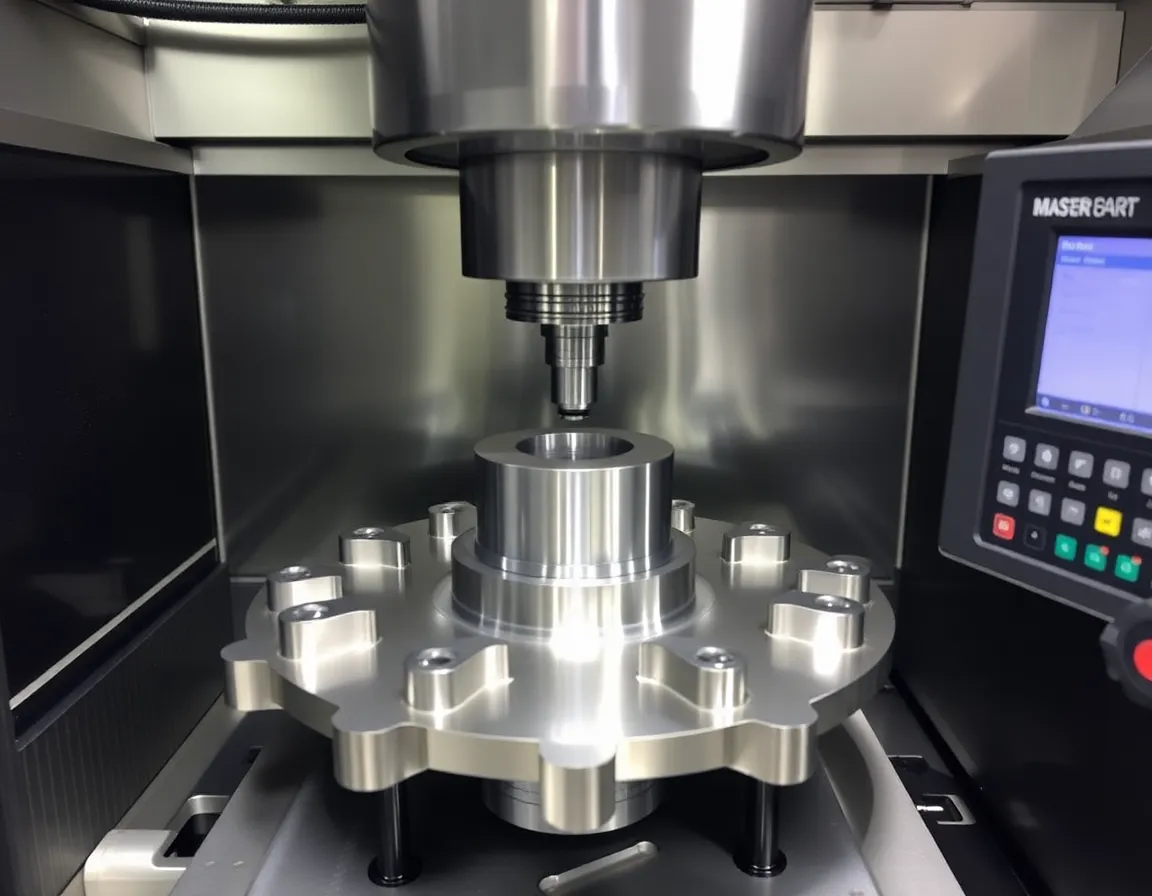
تصنيع مستمر عالي الدقة بخمسة محاور للأجزاء المعقدة. احصل على جودة مستقرة، وقدرة إنتاجية مرنة، ودعم فني متخصص لقطاعات الطيران، والمراوح الدافعة، والنماذج الأولية.
Complete complex parts in one operation, eliminating multiple setups and handling.
Maintains optimal tool orientation, reducing cusps and achieving smoother surfaces.
Machines intricate shapes and undercuts impossible with 3-axis machines.
Uses shorter, stiffer tools at higher feed rates, drastically cutting machining time.
continuous 5 axis machining solutions are available with stable quality control, flexible manufacturing capacity, and responsive technical support. Contact us for drawings review and quotation.
التشغيل الآلي المستمر بخمسة محاور هو عملية تصنيع متقدمة بالتحكم الرقمي بالحاسوب (CNC) حيث يمكن لأداة القطع وقطعة العمل التحرك ديناميكيًا على طول خمسة محاور مختلفة في وقت واحد. وخلافًا للتشغيل الآلي بثلاثة محاور، الذي يتحرك في الاتجاهات الخطية X وY وZ، تضيف ماكينة الخمسة محاور محوري دوران (عادةً A وB). وهذا يسمح للأداة بالوصول إلى قطعة العمل من أي اتجاه تقريبًا في إعداد واحد وانسيابي. ويعني الجانب 'المستمر' أن هذه الحركات تحدث في حركة متناسقة وغير متقطعة، مما يتيح إنشاء أشكال هندسية عضوية معقدة للغاية—مثل مكونات الطيران أو الدفاعات أو الغرسات الطبية—التي سيكون من المستحيل تحقيقها أو تتطلب إعدادات متعددة باستخدام ماكينة بثلاثة محاور. ويمثل ذلك قفزة كبيرة في الدقة والقدرة للأجزاء المعقدة.
تعمل المعالجة المستمرة بخمسة محاور باستخدام وحدة تحكم CNC لتنسيق حركة محاور الآلة الخمسة بدقة في الوقت نفسه. تُثبَّت قطعة العمل على طاولة يمكنها الإمالة والدوران (محوران)، بينما يتحرك المغزل الذي يحمل أداة القطع على طول المحاور الخطية الثلاثة (X، Y، Z). تتيح هذه الحركة المتزامنة للأداة الحفاظ على زاوية القطع والموضع الأمثلين بالنسبة للأسطح الكنتورية للقطعة. ومن خلال الضبط المستمر لاتجاه الأداة، يمكنها القطع في التجاويف السفلية والتجاويف العميقة والمنحنيات المعقدة دون إعادة تموضع قطعة العمل. ويُعد برنامج CAM المتطور ضروريًا لبرمجة هذه المسارات المعقدة للأداة، حيث يحسب ملايين نقاط البيانات لضمان حركة سلسة وخالية من التصادم تؤدي إلى مكوّن نهائي واحد عالي الدقة.
The primary benefits of continuous 5 axis machining are unparalleled geometric complexity, superior surface finish, and significant time savings. It allows for the production of parts with intricate contours and compound angles in a single setup, which dramatically improves accuracy by eliminating errors from multiple fixture changes. This single-setup capability also reduces lead times. Furthermore, because the tool can be optimally oriented, you can use shorter cutting tools at higher speeds, which improves surface finish, reduces vibration, and extends tool life. This process is ideal for industries like aerospace, automotive, and medical where lightweight, strong, and complex components are critical. It ultimately provides design freedom, higher precision, and cost-efficiency for complex, low-to-medium volume production.
Your concerns are common and valid. The initial investment for continuous 5 axis machines and the required advanced CAM software is significantly higher than for 3-axis equipment. Furthermore, the programming and operational expertise is more specialized, requiring skilled machinists and programmers. However, for the right projects, the return on investment is substantial. The cost per part can be lower due to reduced setup time, fewer fixtures, and less manual labor. For prototyping or complex production parts, it often eliminates the need for multiple machines or expensive custom fixtures. Many manufacturers partner with experienced job shops to access this technology without the capital outlay. The key is to evaluate your part's complexity—if it has organic shapes or requires multiple angled features, the benefits will likely outweigh the costs.
The process typically begins with a consultation and design review to ensure the part is suitable for 5-axis machining and optimized for manufacturability (DFM). Next, expert programmers use CAM software to create the complex toolpaths, which includes simulation to prevent collisions. The part is then machined in a single setup from a solid block of material (like aluminum, titanium, or engineering plastics). Pricing is usually project-based and depends on several factors: part complexity and size, material cost, required tolerances and finishes, programming time, and machine run time. Unlike simpler jobs charged mainly by machine hours, the sophisticated programming for continuous 5 axis machining is a significant cost component. Requesting a detailed quote from a reputable shop with a proven track record is crucial for an accurate budget.
Our investment in continuous 5-axis machining has been transformative. We're now producing complex a
The capability is outstanding for our medical device prototypes. We can machine bone-like structures
As a job shop, this lets us bid on work we used to turn away. Just finished a monolithic aluminum ho
The machining time for our complex molds has been cut dramatically. The continuous motion allows for