
Chiedete a qualsiasi ingegnere di prodotto informazioni sulla lavorazione delle leghe di zinco, e probabilmente otterrete uno sguardo perplesso. “Lo zinco è un materiale per pressofusione”, potrebbero dire. “Perché mai qualcuno dovrebbe lavorarlo alle macchine?” Questa domanda è precisamente il problema che questa guida intende risolvere. La realtà è che la lavorazione CNC delle leghe di zinco è diventata una delle strategie più intelligenti per gli sviluppatori di prodotto che necessitano di prototipi funzionali, attrezzature ponte o parti in produzione a basso volume senza impegnarsi in costose attrezzature rigide. Che stiate cercando un fornitore di leghe di zinco che comprenda la prototipazione o vi stiate chiedendo se la lega di zinco sia un buon metallo per la vostra applicazione specifica, questa guida illustra le sfide pratiche e le soluzioni che rendono la lavorazione CNC dello zinco una scelta convincente.
Questa guida adotta un approccio problema-soluzione. Inizia con i punti critici più comuni che gli ingegneri affrontano quando considerano lo zinco per componenti lavorati alle macchine, poi presenta un quadro di soluzioni dettagliato e infine fornisce indicazioni pratiche sulla selezione della lega, del partner e dei parametri di processo giusti. Alla fine, comprenderete non solo se la lega di zinco si lavori efficacemente sulle attrezzature CNC, ma anche come sfruttare le sue proprietà uniche per il vostro prossimo progetto.
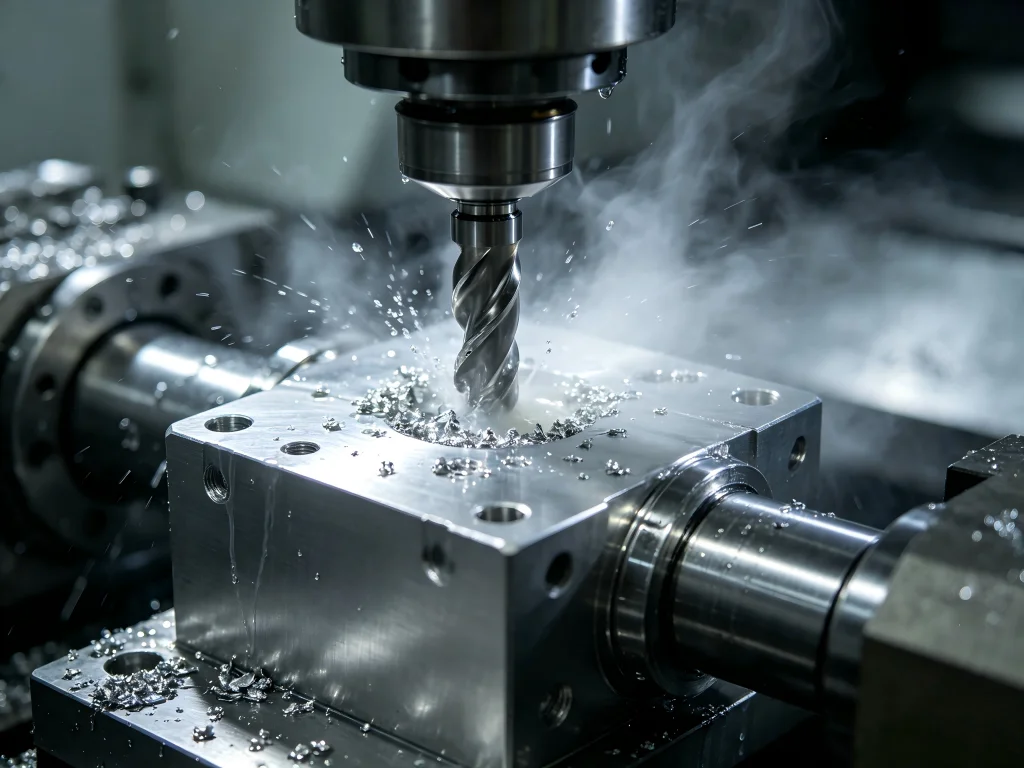
Indice dei contenuti
- Il problema: perché la lavorazione dello zinco sembra controintuitiva
- La soluzione: cosa offre realmente la lavorazione CNC delle leghe di zinco
- Comprendere il materiale: gradi e proprietà delle leghe di zinco
- Superare le sfide comuni di lavorazione
- Come scegliere la lega di zinco giusta per il tuo progetto
- Perché scegliere Jucheng per le tue esigenze di lavorazione CNC dello zinco
- Domande frequenti sulla lavorazione delle leghe di zinco
Il problema: perché la lavorazione dello zinco sembra controintuitiva
Le leghe di zinco — in particolare la serie Zamak — sono tra i metalli più ampiamente colati al mondo. Oltre il 70% di tutte le fusioni in conchiglia di zinco nordamericane utilizza solo lo Zamak 3. Il materiale è celebrato per la sua eccellente colabilità, stabilità dimensionale e convenienza nella produzione ad alto volume. Allora perché un ingegnere dovrebbe scegliere deliberatamente la via più costosa della lavorazione CNC delle leghe di zinco invece di semplicemente colare il pezzo?
La risposta risiede in una serie di sfide che ogni sviluppatore di prodotto prima o poi affronta:
Punto critico 1: la trappola dell'attrezzatura
L'attrezzatura rigida per la fusione in conchiglia può costare decine di migliaia di dollari. Trovare un difetto di progettazione dopo che lo stampo è stato realizzato è un disastro finanziario. Il tempo di consegna dell'attrezzatura può estendersi a mesi, ritardando il lancio del prodotto. Per prototipi, modifiche iterative di progettazione o lotti di produzione a basso volume, l'economia dell'attrezzatura rigida semplicemente non funziona. È qui che la lavorazione delle leghe di zinco entra in scena come alternativa strategica.
Punto critico 2: il problema della fedeltà del prototipo
Un prototipo in plastica stampato in 3D è ottimo per verificare la forma e l'accoppiamento di base. Ma non ti dice nulla sulle prestazioni reali del tuo pezzo metallico finale. È troppo leggero, troppo debole e non può essere galvanizzato. Se il tuo prodotto finale è un componente in zinco pressofuso — ad esempio, una maniglia di un rubinetto di pregio o un elemento di finitura interna per auto — un prototipo in plastica non può simulare il peso, la sensazione termica o le caratteristiche di finitura che definiscono l'esperienza utente.
Punto critico #3: La sfida della lavorazione “gommosa”
Anche quando gli ingegneri prendono in considerazione la lavorazione CNC dello zinco, spesso incontrano difficoltà inaspettate. Le leghe di zinco sono relativamente morbide e duttili. Durante la lavorazione, il materiale può diventare “gommoso” o “appiccicoso”, aderendo al tagliente dell'utensile. Questa tendenza a formare un tagliente di riporto (BUE) compromette la finitura superficiale, aumenta le forze di taglio e accelera l'usura dell'utensile. Il basso punto di fusione delle leghe di zinco — circa 380°C-420°C — significa che il calore generato durante una lavorazione aggressiva può portare a un rammollimento termico, a imprecisioni dimensionali o a deformazioni. Senza l'approccio giusto, lavorazione delle leghe di zinco può rapidamente trasformarsi in un esercizio frustrante di produzione di scarti.
Punto critico #4: Trovare un fornitore affidabile di leghe di zinco con capacità CNC
Molti fornitori di leghe di zinco si concentrano esclusivamente sulla pressofusione. Potrebbero non disporre dell'infrastruttura di lavorazione CNC, delle competenze in materia di attrezzature o dei sistemi di controllo qualità necessari per produrre componenti in zinco lavorati con tolleranze strette. Gli ingegneri si ritrovano spesso a destreggiarsi tra più fornitori — uno per la fusione, un altro per la lavorazione e un altro ancora per la finitura — il che introduce complessità di coordinamento, variabilità della qualità e tempi di consegna prolungati.
Questi punti critici sono reali, ed è esattamente per questo che un numero crescente di ingegneri si rivolge a fornitori specializzati che comprendono sia il materiale sia il processo. La domanda allora diventa: come si presenta concretamente una soluzione?
La soluzione: cosa offre realmente la lavorazione CNC delle leghe di zinco
lavorazione CNC delle leghe di zinco non consiste nel sostituire la pressofusione. Si tratta di risolvere problemi specifici che la pressofusione non può affrontare in modo economicamente vantaggioso. Il quadro della soluzione si basa su quattro pilastri:
1. Prototipazione ad alta fedeltà senza investimento in attrezzature
Mediante la lavorazione di la lavorazione delle leghe di zinco prototipi da barre o lastre piene, gli ingegneri possono creare modelli funzionali che hanno esattamente il peso, l'equilibrio e le proprietà termiche del prodotto finale pressofuso. Questo è essenziale per verificare vestibilità, funzionalità ed estetica — in particolare la fattibilità della placcatura — prima di impegnarsi in costose attrezzature rigide. Un prototipo in zinco lavorato può essere sottoposto agli stessi processi di finitura dei pezzi di produzione, consentendo test utente realistici, servizi fotografici di marketing e presentazioni agli investitori.
2. Attrezzature ponte e produzione a basso volume
For production volumes that do not justify hard tooling — typically under 1,000 to 5,000 units — la lavorazione CNC dello zinco offers a viable path to market. It eliminates the upfront tooling cost and allows for design changes between batches without penalty. This is particularly valuable for custom or specialty components where volume is uncertain or where product lifecycles are short.
3. Tighter Tolerances Than As-Cast Parts
While die casting can achieve repeatability of less than ±0.001 inches for small components, CNC machining can hold even tighter tolerances. Jucheng’s CNC milling centers, for example, can maintain tolerances of ±0.02mm, significantly tighter than typical “as-cast” tolerances. This precision is critical for bearing surfaces, threaded holes, and mating interfaces that require perfect assembly fit.
4. Superior Surface Finish and Plating Readiness
Zinc is one of the easiest metals to electroplate. Machined zinc parts can be polished and plated with chrome, nickel, or gold to achieve Class-A cosmetic finishes. This is a decisive advantage for consumer-facing products where perceived quality matters — automotive trims, bathroom fixtures, and premium hardware, to name a few.
The solution is clear: lavorazione CNC delle leghe di zinco bridges the gap between digital design and mass production. It provides real, trustworthy data about your product’s performance and appearance before you spend a dollar on a die casting tool. But to execute this solution effectively, you need to understand the material itself.
Comprendere il materiale: gradi e proprietà delle leghe di zinco
Before diving into machining parameters, it is essential to understand the specific grade of zinc alloy being used. The composition directly influences chip formation, tool wear, surface finish, and ultimately, the success of your project. Here is a breakdown of the most common grades encountered in la lavorazione CNC dello zinco:
Zamak Grades
The Zamak series — Zinc, Aluminum, Magnesium, and Copper — is the most common family of zinc alloys.
Zamak 3 (ASTM AG40A): This is the baseline and most widely used zinc alloy worldwide. It contains approximately 95.8% zinc with small amounts of aluminum, magnesium, and copper. It offers an excellent balance of mechanical strength, ductility, and dimensional stability. Machining Zamak 3 is relatively straightforward, producing fine, curly chips and a good surface finish with standard tooling. With a tensile strength of 230 MPa and a yield strength of 215 MPa, it is suitable for a wide range of applications. This is the grade most commonly used for prototyping because it matches the composition of the majority of production die castings.
Zamak 5 (ASTM AC41A): With a higher copper content than Zamak 3, Zamak 5 offers greater strength, hardness, and creep resistance. The increased hardness can lead to higher tool wear and a more challenging machining process. Proper tool geometry and cutting parameters are essential to prevent premature tool failure. This grade is preferred for parts requiring more structural integrity and durability.
Zamak 2 (Kirksite): This alloy has the highest copper content in the Zamak series, resulting in superior strength and hardness. Machining Zamak 2 requires robust tooling and careful parameter selection to manage heat generation and tool wear effectively.
Zamak 4: Positioned between Zamak 3 and Zamak 5, this alloy combines the castability of Zamak 3 with improved ductility and medium-level strength. A modest copper addition raises strength while keeping friendlier ductility. It is suitable for applications requiring thin, uniform walls and crisp edges.
ZA (Zinc-Aluminum) Grades
The ZA series features a higher aluminum content than the Zamak alloys, which significantly impacts their properties and machinability.
ZA-8: With approximately 8.4% aluminum, this alloy offers good strength and hardness, falling between Zamak 3 and Zamak 5. It exhibits better performance at elevated temperatures and has excellent bearing properties. Its machinability is comparable to Zamak 5.
ZA-12: Containing about 11% aluminum, this is the best gravity casting alloy but remains machinable. It offers excellent wear resistance and strength comparable to cast iron.
ZA-27: With approximately 27% aluminum, this is the strongest of the common zinc alloys. The higher aluminum content and increased hardness make it more abrasive and slightly more challenging to machine than the Zamak alloys, requiring more robust tooling considerations.
Key Physical Properties of Zinc Alloys
Understanding the material properties helps explain why zinc alloy is a good metal for certain applications and less suitable for others:
| Property | Zamak 3 | Zamak 5 | ZA-8 | ZA-27 |
|---|---|---|---|---|
| Ultimate Tensile Strength | 230 MPa | ~310 MPa | ~370 MPa | ~420 MPa |
| Carico di snervamento | 215 MPa | ~280 MPa | ~300 MPa | ~380 MPa |
| Allungamento a rottura | 10% | ~7% | ~6% | ~3% |
| Hardness (Brinell) | ~82 | ~91 | ~100 | ~115 |
| Densità | 6.6 g/cm³ | |||
| Punto di fusione | 380-420°C | |||
Zinc’s density of 6.6 g/cm³ is similar to steel and significantly heavier than aluminum. This density gives zinc parts a solid, premium “hand-feel” that is critical for high-end consumer products. The material also offers excellent EMI/RFI shielding properties due to its electrical conductivity.
Superare le sfide comuni di lavorazione
Despite their generally high machinability rating, zinc alloys present specific challenges that CNC operators must manage. Understanding these challenges and their solutions is key to successful lavorazione delle leghe di zinco.
Challenge 1: Gummy Behavior and Built-Up Edge (BUE)
Zinc alloys are relatively soft and ductile. During machining, the material can adhere to the cutting edge, forming a built-up edge that compromises surface finish and accelerates tool wear.
Solution: The single most important factor is tool sharpness. Sharp tools apply focused cutting forces, reduce tool wear, and create short chips that easily break away. Tools with sharp cutting edges and a positive rake angle are ideal, as they slice through the material cleanly, reducing cutting forces and minimizing burr formation. Polished tool faces can also improve chip flow, preventing material from sticking to the tool.
Challenge 2: Thermal Softening and Low Melting Point
Heat generated during aggressive machining can lead to thermal softening, which exacerbates gummy behavior and can result in dimensional inaccuracies or warping.
Solution: Effective cooling is non-negotiable. Using a coolant or lubricant during machining helps dissipate heat and improve tool life. For turning operations, finish turning requires sharp high-speed steel tools or ultrafine-grain carbides with a ground edge roughness of Ra ≤ 0.02μm to avoid scratching the workpiece. Maintaining appropriate cutting speeds and feeds — generally on the higher side for zinc alloys — helps manage heat generation.
Challenge 3: Tool Wear from Abrasive Alloys
High-aluminum zinc alloys like ZA-27 are more abrasive on cutting tools. The increased hardness leads to faster tool wear and reduced tool life.
Solution: For harder alloys like Zamak 5 and the ZA series, carbide tools are the superior choice. Their high hardness and wear resistance are crucial for maintaining tool life and achieving consistent results when cutting more abrasive material. High-speed steel (HSS) tools are generally effective for Zamak grades, offering a good balance of performance and cost.
Challenge 4: Chip Management
Zinc produces short, brittle chips similar to brass. While they evacuate easily, they can be abrasive.
Solution: Proper chip evacuation strategies are essential. Using the correct tool geometry and cutting parameters ensures chips break cleanly and do not recut, which can damage the surface finish. Flood cooling can also help flush chips away from the cutting zone.
Challenge 5: Dimensional Changes During Machining
Like many materials, zinc alloys may experience dimensional changes during machining due to tool wear and thermal effects.
Solution: Implementing robust quality control measures, including in-process inspection and compensation for tool wear, helps maintain dimensional accuracy. Post-machining treatments such as plating, coating, or polishing may be applied to enhance surface properties.
By understanding and addressing these challenges, you can unlock the full potential of lavorazione CNC delle leghe di zinco for your projects. The next step is selecting the right alloy and partner for your specific needs.
Come scegliere la lega di zinco giusta per il tuo progetto
Selecting the right zinc alloy is the first critical step in any machining project. The choice affects everything from tool life and cycle times to final part performance and cost. Here is a practical selection framework:
Step 1: Define Your Application Requirements
Start by answering these questions:
- What are the mechanical requirements? (Strength, hardness, ductility, creep resistance)
- What are the dimensional requirements? (Tolerances, stability over time)
- What are the cosmetic requirements? (Surface finish, plating, painting)
- What is the production volume? (Prototype, bridge tooling, low-volume production)
- What are the environmental conditions? (Temperature, corrosion exposure, wear)
Step 2: Match Alloy to Requirements
Based on the answers above, here is a practical alloy selection matrix:
- Choose Zamak 3 if: You need a balance of strength, ductility, and dimensional stability. This is the default choice for most prototypes and general-purpose components. It machines easily and accepts plating well.
- Choose Zamak 5 if: You need higher strength, hardness, and creep resistance. This is suitable for structural parts and hardware.
- Choose ZA-8 if: You need good performance at elevated temperatures and excellent bearing properties. This is a good choice for functional components that see moderate loads and temperatures.
- Choose ZA-27 if: You need maximum strength, hardness, and wear resistance. This is the strongest common zinc alloy. Be prepared for more challenging machining and higher tool wear.
- Choose Zamak 4 if: You need a balance between Zamak 3’s castability and improved ductility, particularly for thin-walled parts.
Step 3: Consider the Machining Trade-Offs
There is always a trade-off between material performance and machinability. Higher-strength alloys generally require more robust tooling, slower cutting speeds, and more careful process control. For prototyping, Zamak 3 is often the best choice because it matches production material while offering the easiest machining.
Step 4: Evaluate Your Zinc Alloy Supplier’s Capabilities
Not all fornitori di leghe di zinco are created equal. When evaluating a potential partner, consider:
- Material sourcing: Do they source high-quality Zamak alloy blocks that match your production intent?
- Machining capabilities: Do they have the right CNC equipment, tooling, and expertise for zinc? Can they hold the tolerances you need?
- Finishing capabilities: Can they provide in-house polishing and plating?
- Quality control: Do they have robust inspection and testing processes?
- Experience: Have they successfully machined zinc alloys for applications similar to yours?
Step 5: Run a Test
Before committing to full production, run a test with your chosen alloy and supplier. Evaluate surface finish, dimensional accuracy, tool life, and cycle times. This validation step is critical for ensuring the final product meets your expectations.
Perché scegliere Jucheng per le tue esigenze di lavorazione CNC dello zinco
When you are ready to move forward with lavorazione delle leghe di zinco, partnering with the right service provider makes all the difference. Jucheng Precision brings a unique combination of capabilities that address the specific challenges of zinc CNC machining.
Specialized Zinc Prototyping Expertise
Jucheng understands that zinc alloy is a good metal for prototyping precisely because it simulates the exact weight, strength, and thermal properties of a final die-cast product. They machine solid zinc blocks to create high-fidelity prototypes that look and feel exactly like the production part. This process is essential for verifying fit, function, and aesthetics before committing to expensive hard tooling.
Comprehensive In-House Capabilities
Jucheng operates a fleet of high-speed hot chamber die casting machines optimized for efficiency, supported by precision CNC machining for secondary operations. They offer both expert zinc CNC machining for high-fidelity prototypes and full-scale die casting services for production. This one-stop-shop approach eliminates the coordination complexity of juggling multiple vendors.
Tight Tolerance Control
Jucheng’s CNC milling centers can hold tolerances of ±0.02mm, significantly tighter than typical “as-cast” tolerances. For bearing surfaces and tapped holes that require precision beyond what casting can deliver, they perform secondary CNC machining.
Superior Surface Finishing
Zinc is one of the easiest metals to electroplate. Jucheng offers in-house polishing followed by chrome, nickel, or gold plating to achieve Class-A cosmetic finishes. This is critical for verifying cosmetic finishes like mirror-chrome automotive trims or bathroom fixtures.
End-to-End Quality Control
Jucheng executes rapid hot chamber injection, CNC machining, and final electroplating entirely under one roof. This integrated approach ensures consistent quality and eliminates the risk of third-party vendors compromising your premium cosmetic hardware.
Material Sourcing Expertise
Jucheng sources high-quality Zamak alloy blocks to ensure the material composition matches your production intent. They handle common alloys like Zamak 3 and Zamak 5, delivering precise prototypes that are indistinguishable from the final production part.
Whether you are developing a new consumer electronics product, designing automotive interior components, or creating premium hardware, Jucheng’s expertise in lavorazione delle leghe di zinco can help you bring your vision to life with confidence.
Domande frequenti sulla lavorazione delle leghe di zinco
Does zinc alloy turn well on CNC equipment?
Yes, zinc alloy does turn effectively on CNC equipment. Zamak 3, in particular, has good machinability and can be turned, milled, drilled, and tapped relatively easily. However, turning zinc alloys does present unique challenges related to the material’s low strength and hardness, which can cause tool sticking and built-up edge. Success depends on using sharp tools, appropriate cutting parameters, and effective cooling. With the right approach, turning zinc alloys produces excellent surface finishes and dimensional accuracy.
Can you sharpen zinc alloy?
While you cannot “sharpen” zinc alloy itself — it is not a cutting tool material — the question often refers to whether zinc alloy components can be machined to sharp edges or fine details. The answer is yes. lavorazione CNC delle leghe di zinco can produce sharp features, crisp edges, and fine details. However, the material’s ductility means that sharp tools and proper cutting parameters are essential to prevent burr formation. Polished tool faces and positive rake angles help achieve clean, sharp edges.
Is zinc alloy a good metal for CNC machining?
Yes, zinc alloy is a good metal for CNC machining, particularly for specific applications. Zinc alloys offer excellent machinability, good dimensional stability, and the ability to achieve high-quality surface finishes. They are cost-effective, recyclable, and accept a wide range of finishes including plating and coating. While not as strong as steel or as light as aluminum, zinc alloys occupy a sweet spot for components that require a premium feel, good strength, and complex geometries. The material’s density of 6.6 g/cm³ gives zinc parts a solid, substantial feel that is valued in consumer products.
Where can I find zinc alloy CNC machining services in Malaysia?
There are several providers of zinc alloy CNC machining services in Malaysia. Companies like Castmax (M) Sdn. Bhd. offer precision CNC and conventional machining for zinc and aluminum alloys. Keiteq Group operates die casting machines supported by CNC machines for precision machining. Cape Manufacturing specializes in precision aluminum and zinc die casting with CNC machining capabilities. However, for specialized zinc prototyping and low-volume production, working with an experienced provider like Jucheng offers the advantage of end-to-end capabilities including material sourcing, CNC machining, and finishing all under one roof.
How does zinc alloy compare to other metal alloys for CNC machining?
When comparing zinc alloy vs metal alloy options for CNC machining, several factors come into play. Zinc alloys are denser than aluminum (6.6 g/cm³ vs ~2.7 g/cm³), making them heavier but excellent for applications where weight is not a primary concern. Zinc alloys demonstrate superior castability and exceptional strength, making them preferred for die-casting applications. Compared to aluminum, zinc alloys are harder and stronger, machine more easily, and have substantially better wear and bearing characteristics. However, aluminum offers a higher strength-to-weight ratio and is more readily available in some regions. The choice ultimately depends on your specific application requirements — weight, strength, cost, and finishing needs all factor into the decision.
What is zinc alloy 4 used for?
Zinc alloy 4 (Zamak 4) is engineered to provide a zinc alloy that combines the castability of Zamak 3 with improved ductility and medium-level strength. It offers stable casting properties with good fluidity and excellent dimensional repeatability. The alloy’s lower cracking tendency during assembly and mechanical loading makes it suitable for applications requiring thin, uniform walls and crisp edges. Common applications include ceiling fans, zippers, kitchen utensils, bathroom accessories, and electronics. Its physical and mechanical properties, castability, dimensional stability, and creep resistance fall between Zamak 3 and Zamak 5.
What are the main challenges in machining zinc alloys?
The main challenges in lavorazione delle leghe di zinco include gummy behavior and chip management, thermal softening due to the material’s low melting point, tool wear from abrasive high-aluminum alloys, and potential dimensional changes during machining. Zinc alloys can become “sticky” during machining, adhering to the cutting edge and forming a built-up edge that compromises surface finish. Heat generation can lead to thermal softening, exacerbating these issues. These challenges are manageable with proper tool selection, optimized cutting parameters, effective cooling, and robust quality control.
Why choose CNC machining over die casting for zinc parts?
Choosing CNC machining over die casting for zinc parts makes sense in several scenarios. For prototypes and low-volume production, CNC machining eliminates the high upfront cost and lead time of hard tooling. Machined parts can hold tighter tolerances than as-cast parts. CNC machining allows for design changes between batches without penalty, which is valuable during product development. While die casting is more cost-effective for high volumes, CNC machining offers flexibility, precision, and faster time-to-market for low-volume and development projects.
Ready to explore how CNC machining zinc alloys can solve your prototyping or low-volume production challenges? Contact Jucheng Precision today to discuss your project requirements. Our team of experts will help you select the right alloy, optimize your design for manufacturability, and deliver high-fidelity zinc prototypes that give you confidence in your final production decision.
Richiedi un preventivo | Learn More About Our Zinc CNC Machining Capabilities
For additional technical resources, explore Jucheng’s guide to zinc prototyping or review industry best practices for zinc alloy machining.