
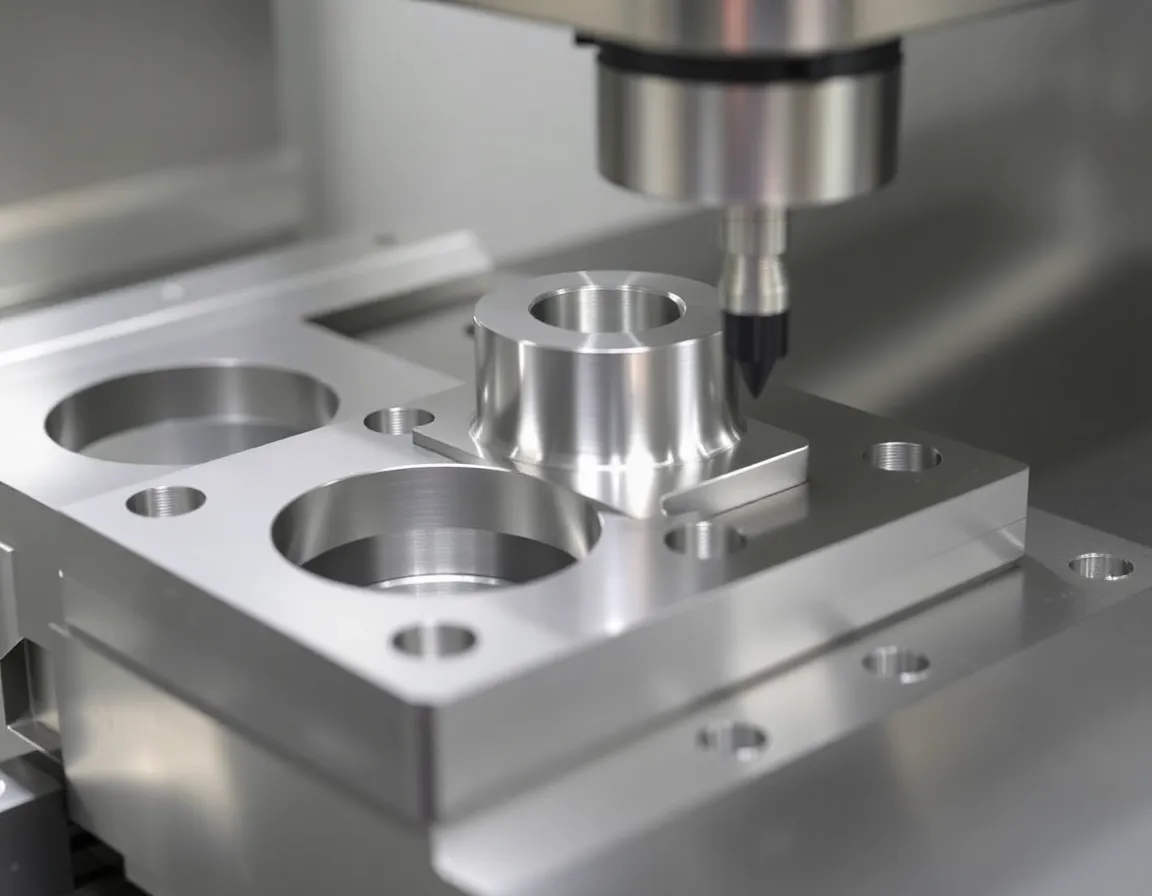
Choose the axis strategy from the geometry
Simultaneous 5-axis machining moves rotary and linear axes together during a cut. Indexed 3+2 machining positions rotary axes and then performs a three-axis cut. Both are multi-axis approaches, but they solve different access and tool-orientation problems.
For the broader service overview, see Fresado CNC de 5 ejes. For a cost and setup comparison, read 3-axis versus 5-axis machining cost. This page focuses specifically on the question of continuous simultaneous motion.
Where simultaneous movement may matter
Continuous rotary motion can be relevant when tool orientation must change along a surface or when the geometry cannot be reached with a fixed indexed position. Whether it is required depends on the controlled contour, cutter access, fixture and acceptance requirements. An axis count alone does not guarantee a particular finish, tolerance or one-setup result.
What to include in a route review
- Send the current model and drawing revision and mark the surfaces that drive the toolpath.
- Identify datum relationships, undercuts, deep features and clamping restrictions.
- State material, quantity, finish and secondary operations.
- List critical dimensions and how they must be inspected.
We review simultaneous and indexed options for the actual part and confirm the route in the project scope. We supply machined parts, not machine sales or training.