
Black oxide is usually chosen when low dimensional change, dark appearance, and oil-assisted protection matter; zinc plating is chosen when a more substantial sacrificial corrosion barrier is required. Neither finish can rescue poor drainage, trapped moisture, damaged edges, an unsuitable base metal, or an undefined service environment. For CNC parts, the decision belongs beside the fit, thread, hardness, hydrogen-embrittlement risk, masking, and post-finish inspection plan.
Name the Rust Scenario Before the Finish
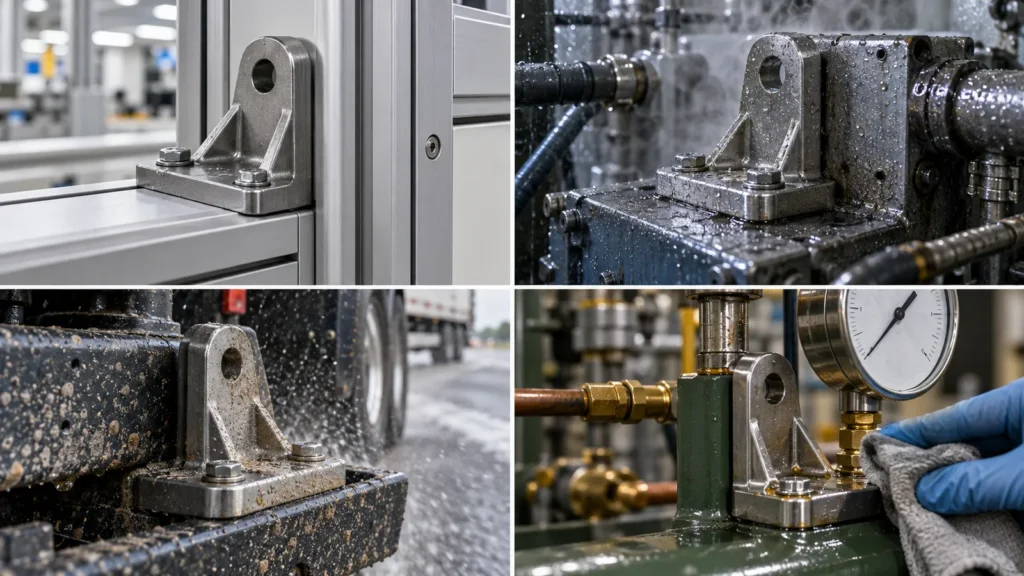
| Exposure question | Why it changes the decision |
|---|---|
| Indoor, outdoor, marine, washdown, or chemical? | The severity and type of corrosion mechanism differ |
| Will oil or wax be maintained? | Black oxide protection commonly depends on its supplementary seal |
| Will surfaces rub or be handled? | Wear can remove or damage the protective system |
| Are scratches acceptable? | A sacrificial coating and a conversion finish respond differently to damage |
| Is a test method required? | Finish name alone does not define corrosion performance |
Appearance can obscure these functional differences. A uniformly black sample may seem ideal, yet its protection can fall quickly if the supplementary oil is removed by cleaning or handling. A bright zinc surface may suggest stronger protection, yet thin coverage at edges, damaged areas, trapped solution, or the wrong conversion system can still shorten service life.
Ask the supplier to describe the complete system: preparation, conversion or deposit, seal or topcoat, dimensional target, and verification. This also makes future replacement orders more repeatable than a color-only purchase description.
Use la Guía de acabados superficiales de mecanizado CNC when the environment may instead favor painting, powder coating, nickel plating, passivation, or another material-specific treatment.
Black Oxide and Zinc Protect in Different Ways
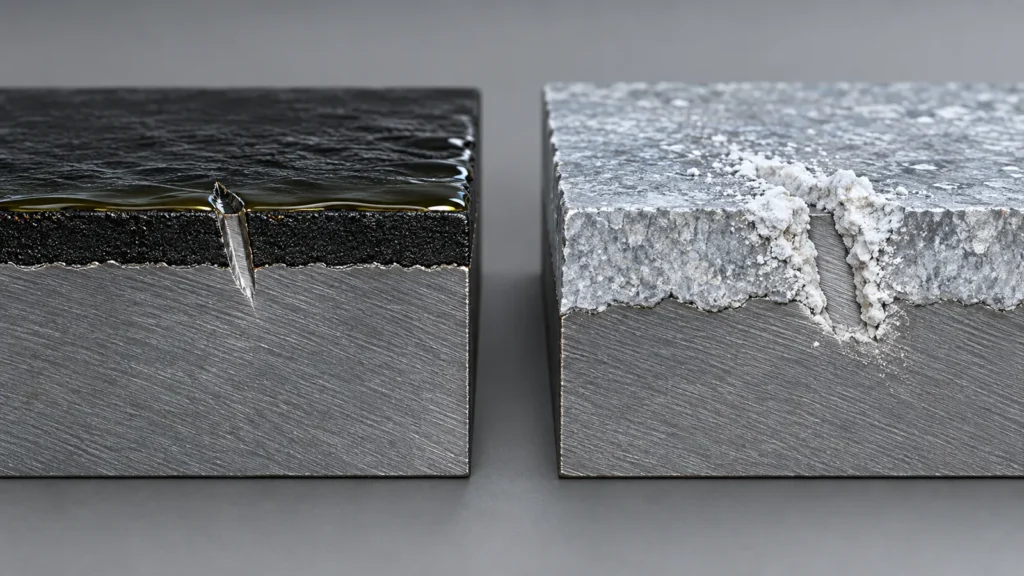
Zinc plating deposits zinc on the steel surface. Zinc can act sacrificially, protecting exposed steel within the limits of the coating system. Plating thickness, conversion coating, seal, rack or barrel method, geometry, edge coverage, and post-treatment all affect performance and fit.
Practical distinction: black oxide preserves geometry well but offers limited protection without its seal; zinc adds a more meaningful coating system but demands more dimensional and material-risk control.
Choose by Consequence, Not by Color

Protect Corrosion Resistance Without Ruining the Fit

Features that deserve an explicit decision
- External and internal threads, especially where torque or gauge acceptance matters
- Bearing journals, dowel holes, sliding interfaces, and press fits
- Electrical contacts, weld zones, ground points, and sealing faces
- Deep recesses, blind holes, sharp edges, and overlapping joints
- Laser marks, fine engraving, and surfaces intended for adhesive bonding
Black oxide may simplify fit control, but that advantage should not be traded for inadequate field protection. Zinc may improve environmental resistance, but its thickness and coverage need a drawing strategy. The correct route balances both consequences.
High-Strength Steel Requires a Separate Risk Review

Provide the exact material grade, heat treatment, hardness or strength condition, and governing standard. The process supplier can then evaluate cleaning restrictions, plating suitability, relief requirements, timing, and verification. If these inputs are unknown, do not approve zinc plating solely from a generic finish table.
Stress concentration matters too. Threads, notches, sharp transitions, press fits, and highly loaded small sections can be less tolerant of a material-condition mistake than a thick unstressed bracket. The coating review should therefore include how the part is loaded, not just what steel is listed in the bill of materials.
If the required risk controls make the proposed route impractical, the engineering answer may be a different coating, a different material condition, or a corrosion-resistant alloy. Changing the finish without reviewing the design only moves the uncertainty downstream.
Inspect the Coating System, Not Just the Shade

- Verify base material and heat-treatment condition.
- Confirm process specification, coating or conversion type, supplementary seal, and color where required.
- Measure critical finished dimensions and thread acceptance after processing.
- Check coverage, burns, blisters, pits, rack marks, stains, and trapped solution by agreed visual zones.
- Apply corrosion or adhesion tests only with defined samples, methods, and acceptance criteria.
- Protect finished parts during packaging so rubbing and moisture do not invalidate the process.
See the process pages for recubrimiento de óxido negro y zinc plating services, then place the project-specific class, color, seal, test, and dimensional requirements on the drawing.
Three Parts, Three Different Answers

Low glare, close fits, and controlled storage may make black oxide with an agreed seal attractive. The maintenance plan and handling environment must be realistic.
General steel mounting bracket near humidity
Zinc plating may offer the more appropriate protection system, provided edges, holes, contact faces, and coating thickness are controlled.
If the bracket is later painted, grounded, welded, or bonded, the zinc system must also support that downstream operation. A finish optimized only for storage corrosion can create adhesion or electrical problems during assembly.
Hardened loaded component
The first decision is not color. It is whether the material and stress state can safely use the proposed electroplating route under the governing specification. An alternative finish or process may be required after engineering review.
These cases illustrate why a finish library should never be used as a one-click selector. Environment, maintenance, geometry, load, interfaces, and inspection determine the route together.
What a Complete RFQ Should State

This information allows the machining and finishing routes to be planned together. It prevents the common late-stage conflict in which the corrosion choice changes a fit that was already machined to final size.
Buyer Questions at a Glance

Do not assume so. Exposure, seal, maintenance, drainage, abrasion, and required life determine suitability. For sustained outdoor or salt exposure, compare more robust coating systems against a defined test and service requirement.
Does zinc plating change thread size?
It can. Coating buildup affects internal and external threads differently and may require allowance, masking, post-process gauging, or another thread strategy. State the acceptance condition after plating.
Can zinc be made black?
Zinc coating systems can include different conversion finishes and colors, but “black zinc” is not the same process as black oxide. Specify the coating system and performance requirement, not color alone.