
Introducción a los servicios de electroerosión por hilo: Corte de precisión para piezas complejas
En el mundo de la fabricación avanzada, donde la complejidad se une a una precisión inquebrantable, servicios de electroerosión por hilo se erige como una tecnología fundamental. También conocido como mecanizado por electroerosión por hilo (Wire EDM), este proceso es la solución definitiva para producir piezas intrincadas que serían imposibles, poco prácticas o prohibitivamente costosas de crear con mecanizado convencional. Trasciende las limitaciones de las herramientas de corte físicas, utilizando chispas eléctricas controladas para erosionar el material con una precisión asombrosa. Para ingenieros y diseñadores que trabajan con aceros endurecidos, aleaciones exóticas o componentes con características delicadas y tolerancias ajustadas, la electroerosión por hilo no es solo una opción: es una capacidad esencial que tiende un puente entre el diseño ambicioso y la realidad fabricable. Esta guía profundiza en la ciencia, los beneficios y las aplicaciones prácticas de esta tecnología transformadora.
¿Qué es el Wire EDM? La ciencia del mecanizado por electroerosión explicada
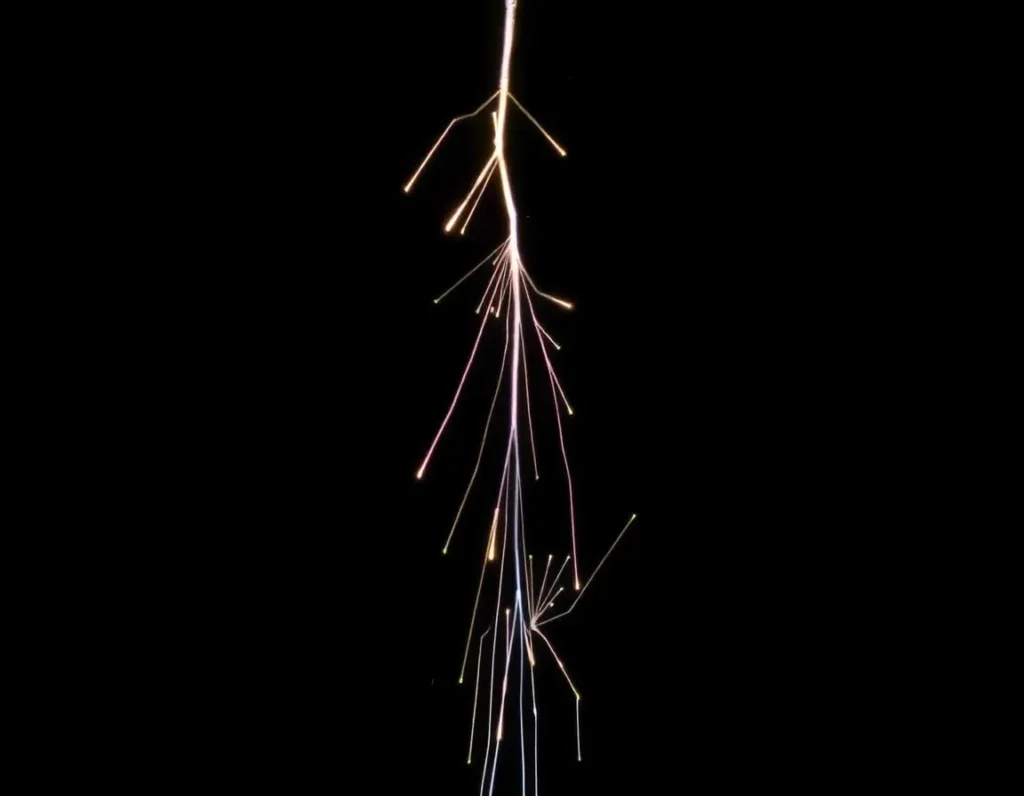
En esencia, el Wire EDM es un proceso de mecanizado termoeléctrico. Elimina material mediante una serie de descargas eléctricas rápidas y controladas (chispas) entre un electrodo de hilo delgado y guiado con precisión y la pieza de trabajo conductora. Ambos nunca están en contacto físico, lo que elimina la tensión mecánica y el desgaste de la herramienta asociados al fresado o al torneado.
El proceso se desarrolla dentro de un tanque de agua desionizada, que cumple una doble función crítica. Primero, actúa como fluido dieléctrico, aislando el hilo y la pieza de trabajo hasta que el voltaje alcanza un umbral lo suficientemente alto como para ionizar una trayectoria diminuta y crear una chispa. Segundo, el fluido colapsa violentamente después de cada chispa, arrastrando partículas microscópicas de material erosionado y evitando que se vuelvan a soldar a la superficie.
Una bobina de hilo, típicamente de latón o cobre estratificado, se alimenta continuamente entre guías superiores e inferiores. Estas guías, controladas por un sistema CNC, se mueven de forma independiente a lo largo de los ejes X e Y, lo que permite a la máquina cortar perfiles bidimensionales intrincados y formas cónicas a través de bloques de material gruesos. A medida que el hilo avanza, se renueva constantemente, lo que garantiza un electrodo fresco y consistente. Cada chispa vaporiza un cráter minúsculo en la pieza de trabajo, y el efecto acumulativo de miles de chispas por segundo da como resultado un corte suave y preciso. El “kerf”, o ancho del corte, está determinado por el diámetro del hilo más el espacio de chispa, que normalmente oscila entre 0,001” y 0,012”, lo que permite la creación de características extremadamente finas y esquinas internas afiladas.
Principales ventajas y beneficios de utilizar servicios de electroerosión por hilo
El único mecanismo sin contacto basado en chispas del Wire EDM confiere un conjunto de ventajas que lo hacen indispensable para desafíos de fabricación específicos.
- Precisión y exactitud extremas: Las máquinas de Wire EDM son capaces de mantener tolerancias dentro de ±0,0001 pulgadas (0,0025 mm). Este nivel de exactitud es consistente independientemente de la dureza del material, lo que lo hace ideal para producir utillajes, calibres y componentes aeroespaciales críticos.
- Capacidad para mecanizar materiales endurecidos: Dado que el proceso no depende de la fuerza de corte, destaca en el mecanizado de aceros para herramientas endurecidos, carburos y aleaciones exóticas en su estado acabado. Esto elimina los riesgos de distorsión asociados con el tratamiento térmico de una pieza después del mecanizado en desbaste.
- Geometría compleja y características finas: El alambre delgado y en movimiento continuo puede cortar perfiles intrincados, orificios de tamaño micro y piezas con paredes excepcionalmente delgadas. Produce esquinas internas afiladas que son imposibles de lograr con una fresa de extremo, que tiene un radio finito.
- Acabado superficial superior: El proceso de erosión deja inherentemente un acabado superficial fino y mate, a menudo en el rango de 16 a 64 micropulgadas Ra, directamente de la máquina. Esto a menudo elimina la necesidad de operaciones de acabado secundarias para muchas aplicaciones.
- Producción sin rebabas: La naturaleza termoeléctrica del proceso significa que no se generan rebabas mecánicas. Las piezas salen limpias de la máquina, lo que ahorra tiempo y costo en el desbarbado, especialmente para geometrías internas complejas.
- Tensión mínima del material: Sin contacto directo ni fuerzas de corte, no hay posibilidad de inducir tensión mecánica, distorsión o microfisuras en la pieza de trabajo, lo cual es crucial para componentes frágiles o de alta integridad.
Wire EDM vs. otros procesos de fabricación: cuándo elegir la erosión por hilo
Seleccionar el proceso de fabricación adecuado es un equilibrio entre geometría, material, tolerancia y costo. Así se compara el wire EDM con otros métodos comunes y cuándo se convierte en la opción óptima.
Electroerosión por hilo frente al fresado CNC
El fresado CNC utiliza una herramienta de corte giratoria para eliminar material y es excepcionalmente versátil para contornos 3D, bolsillos y roscas. Elija el fresado para una eliminación de material más rápida en materiales más blandos, formas 3D complejas y cuando se requieren orificios roscados o características roscadas. Cambie a servicios de erosión por hilo cuando se trate de materiales endurecidos (superiores a 45 HRC), cuando requiera esquinas internas afiladas o cuando la geometría de la pieza implique ranuras profundas y estrechas que romperían una fresa de extremo pequeña.
Electroerosión por hilo frente al corte por láser
El corte por láser es extremadamente rápido para perfilar chapa metálica y puede cortar materiales no conductores. Es la opción preferida para piezas 2D de gran volumen a partir de chapa. Sin embargo, los láseres generan una zona afectada por el calor (HAZ) y conicidad, especialmente en materiales más gruesos. El wire EDM no produce HAZ, ofrece una precisión y un acabado superficial superiores a mayores espesores (comúnmente hasta 150 mm y más) y crea paredes perfectamente verticales o conicidades controladas según lo programado.
Wire EDM vs. grabado fotoquímico
Photo etching is excellent for producing extremely thin, flat, burr-free parts with complex through-features, like stencils or lead frames. However, it is limited in material thickness (generally under 2mm) and cannot produce blind features or 3D forms. As noted in the knowledge base, wire erosion is the necessary alternative “for those metals whose chemical composition make photo etching impossible,” and for any part where depth and true 3D profiling are required.
The Decision Rule: Strongly consider wire EDM if your project involves a conductive material that is very hard, requires ultra-precise 2D/tapered profiles, has delicate features prone to tool deflection, or must be machined burr-free and stress-free after heat treatment.
Materials Compatible with Wire Erosion: From Aluminum to Exotic Alloys
A primary strength of wire EDM is its remarkable material versatility. Any electrically conductive material can be machined, with the process being particularly advantageous for those that are difficult for traditional methods.
- Tool Steels & Die Steels: This is a classic application. D2, A2, H13, and other hardened tool steels (often at 58-62 HRC) are machined with ease to create punches, dies, and mold inserts.
- Stainless Steels: All grades, including 303, 304, 316, and 17-4 PH, are perfectly suited. Wire EDM avoids the work-hardening issues that can plague milling of certain stainless grades.
- Aluminum and Alloys: Readily machined, though settings are adjusted for higher conductivity. Ideal for precision aerospace or prototype components.
- Copper, Brass, and Phosphor Bronze: These conductive materials are easily processed, making wire EDM suitable for electrical components and intricate decorative pieces.
- Exotic & High-Temperature Alloys: The process excels with materials like Inconel, Hastelloy, titanium, and tungsten carbide. Their toughness and hardness, which wear down conventional tools rapidly, pose no problem for the non-contact EDM spark.
- Other Conductive Materials: This includes molybdenum, nickel silver, and even specialized graphites. The key determinant is electrical conductivity, not mechanical hardness.
It is important to note that while all these materials are compatible, the specific EDM parameters—wire type, feed rate, voltage, and flush pressure—are meticulously optimized for each material type and thickness to achieve the desired cutting speed, surface finish, and dimensional accuracy. This expertise is a critical value provided by professional wire erosion service providers.
The Wire EDM Process: A Step-by-Step Guide from Design to Finished Part
Understanding the workflow of a wire EDM project demystifies how complex parts are created with such high precision. The journey from a digital concept to a physical component is a collaborative and methodical process, typically managed by your chosen servicios de electroerosión por hilo provider.
Step 1: Design and File Preparation
It all begins with a 2D CAD drawing or a 3D model. The most critical information for the wire EDM machine is the precise cutting path. Engineers convert the design into machine code (typically G-code), defining the wire’s trajectory. At this stage, factors like the kerf (the width of material removed by the wire) are automatically compensated for in the toolpath to ensure final dimensions are exact.
Step 2: Material Setup and Workpiece Mounting
The selected conductive material is securely clamped onto the machine’s worktable. Accurate alignment is crucial. For internal cuts that don’t start at an edge, a starter hole must be pre-drilled, often using a dedicated EDM hole-drilling machine. The thin brass or coated wire is then threaded through this hole and connected to the spooling mechanism.
Step 3: Dielectric Fluid System Activation
The work area is flooded with deionized water, which serves as the dielectric fluid. This fluid electrically insulates the wire and workpiece until the voltage is high enough to create a spark. It also rapidly cools the vaporized material, flushing away microscopic debris from the cut zone to ensure a clean, consistent spark and prevent short-circuiting.
Step 4: The Cutting Operation
With the system energized, a controlled electrical discharge sparks across the small gap between the wire and the workpiece. Each spark generates intense heat, locally melting and vaporizing a tiny particle of the material. The wire, which is constantly fed from a spool to present a fresh, unworn section, moves along the programmed path. The upper and lower wire guides can move independently, allowing for the creation of tapered shapes and complex geometries in the X, Y, U, and V axes.
Step 5: Completion and Post-Processing
Once the cut is complete, the wire is retracted, the dielectric fluid is drained, and the finished part is removed from the remnant material (the “slug”). Depending on the application requirements, the part may then move to post-processing, such as deburring (though wire EDM typically leaves minimal burrs), surface finishing, or heat treatment.
Design Considerations and Best Practices for Wire EDM Parts
Designing with wire EDM’s unique capabilities in mind unlocks its full potential for cost-effectiveness and precision. Adhering to a few key principles ensures manufacturability and optimal results.
Internal Corners and Radii
Wire EDM can produce exceptionally sharp internal corners, a significant advantage over milling. However, it’s important to remember that the wire is a physical object with a diameter. An internal corner will always have a minimum radius slightly larger than the wire’s radius plus the spark gap. Specifying a small, achievable corner radius (e.g., 0.1mm) is better than demanding a perfectly sharp corner, which is physically impossible.
Material Thickness and Layering
While wire EDM can cut very thick materials (often over 150mm), thinner parts pose a challenge as they can warp or vibrate. For very thin sheets, it is often more economical and stable to layer multiple sheets of the same material, bolt them together, and cut them as a single block—a process known as stack cutting.
Start Holes and Unattended Features
Any internal cutout requires a start hole for the wire to thread through. The location and size of these holes should be considered in the design phase. Furthermore, “unattached” features that will fall out when cut must be accounted for; the machine may need to pause to allow an operator to secure them before continuing.
Tolerances and Surface Finish Expectations
Wire EDM is renowned for holding tight tolerances, often within ±0.005 mm for high-precision work. However, specifying tolerances that are tighter than necessary increases cost and time. Similarly, the as-cut surface finish is typically smooth but matte, ranging from 16 to 64 microinches (Ra). If a finer finish is required, it should be noted as a post-processing step.
Minimizing Cut Time and Cost
Reducing the total linear length of cutting directly reduces cost. Designers should aim for efficient nesting of parts within the raw material and consider simplifying non-critical contours. The choice of material and its thickness also significantly impacts cutting speed and, consequently, price.
Surface Finishes and Post-Processing Options for Wire Eroded Components
The standard finish from wire EDM is a uniform, matte surface free of tool marks, often suitable for functional parts without further work. However, many applications demand enhanced properties, which are achieved through various post-processing techniques.
Standard Finishes
- As-Cut (Standard Finish): The default state after EDM. It has a consistent texture but may exhibit fine recast layers and microscopic pitting from the sparks. It is ideal for non-wearing internal components or where further finishing is not justified.
- Chorreado de perlas: Uses fine abrasive media propelled by air to clean the surface and create a uniform, satin-matte appearance. It can lightly improve surface texture and remove minor discoloration.
- Tumbling/Vibratory Finishing: A batch process where parts are placed in a vibrating tub with abrasive media. It is excellent for radiusing edges, removing microscopic burrs, and producing a smooth, uniform finish on all exposed surfaces.
Enhanced and Protective Coatings
- Anodizado (Tipo II y III): Primarily for aluminum. Type II provides corrosion resistance and color for identification or aesthetics. Type III (Hardcoat) adds a thick, wear-resistant ceramic layer, invaluable for moving parts and tools.
- Pasivación: A chemical bath for stainless steel that removes free iron from the surface and promotes the formation of a passive chromium oxide layer, dramatically enhancing corrosion resistance without altering dimensions.
- Electroless Nickel Plating: Deposits a uniform, hard, and highly corrosion-resistant nickel-phosphorus alloy coating. It provides excellent lubricity and wear resistance, even on complex geometries.
- Recubrimiento en polvo: Provides a thick, durable, and decorative polymer coating. It offers superior corrosion protection and a wide range of colors for consumer-facing or harsh-environment components.
Specialized Finishes
- Electropulido: An electrochemical process that removes a thin surface layer, smoothing micro-peaks and leaving a bright, shiny, and more corrosion-resistant finish. Common for medical and food-grade stainless steel components.
- PTFE-Impregnated Hard Anodize: A hardcoat anodize infused with Teflon, creating a self-lubricating, dry-contact surface with exceptional wear and corrosion resistance for aluminum parts in dynamic assemblies.
Industries and Applications: Where Wire Erosion Services Excel
The unique capabilities of wire EDM make it indispensable across a spectrum of high-tech and demanding industries where precision, complex geometry, and hard materials are the norm.
Aeroespacial y Defensa
This sector relies on wire EDM for manufacturing mission-critical components from exotic, high-strength alloys like Inconel and titanium. Applications include turbine blades, fuel system components, structural brackets with lightening pockets, and flight control parts. The process’s ability to produce stress-free cuts in heat-treated materials is paramount here.
Medical and Surgical Device Manufacturing
Precision is literally a matter of life and death. Wire EDM is used to create intricate bone screws, orthopedic implants (like knee and hip replacements), surgical instrument jaws, and components for minimally invasive devices. The biocompatible materials used, such as specific grades of stainless steel and titanium, are machined flawlessly to meet stringent FDA and ISO 13485 standards.
Tool and Die Making
Wire erosion is a cornerstone technology for producing stamping dies, extrusion dies, and injection molds. It can create complex punch and die shapes with exceptional accuracy and fine surface finishes, often as the final machining step on hardened tool steel. This eliminates distortion that could occur if the tool were machined before heat treatment.
Automotive and Motorsports
From prototyping to production, wire EDM creates gears, transmission components, sensor parts, and lightweight structural elements. In high-performance motorsports, it is used to machine one-off parts from the toughest materials, where weight savings and absolute reliability are critical.
Electronics and Semiconductor Manufacturing
The process fabricates precise components for connectors, micro-electromechanical systems (MEMS), and fixtures used in semiconductor production. Its ability to cut delicate, thin-walled features in conductive materials like copper, brass, and beryllium copper is highly valued.
General Engineering and Prototyping
For any project requiring a one-off precision part, a complex prototype, or a low-volume production run in a hard material, wire EDM offers a fast and cost-effective solution. It enables engineers to test designs with real-world materials without the high cost of dedicated hard tooling.