
Si está buscando componentes mecanizados y el plano simplemente dice “acero inoxidable”, tiene una decisión que tomar. La elección entre 304 y mecanizado de acero inoxidable 316L podría añadir entre un 25 y un 40 por ciento al costo de su pieza sin ningún beneficio funcional, o podría ahorrarle fallas catastróficas en campo que empequeñecen cualquier ahorro de material. Esta guía explica lo que realmente importa al seleccionar acero inoxidable 316L para piezas mecanizadas por CNC, cómo se compara con las alternativas y cómo evaluar a un socio de mecanizado capaz de manejar este material exigente.
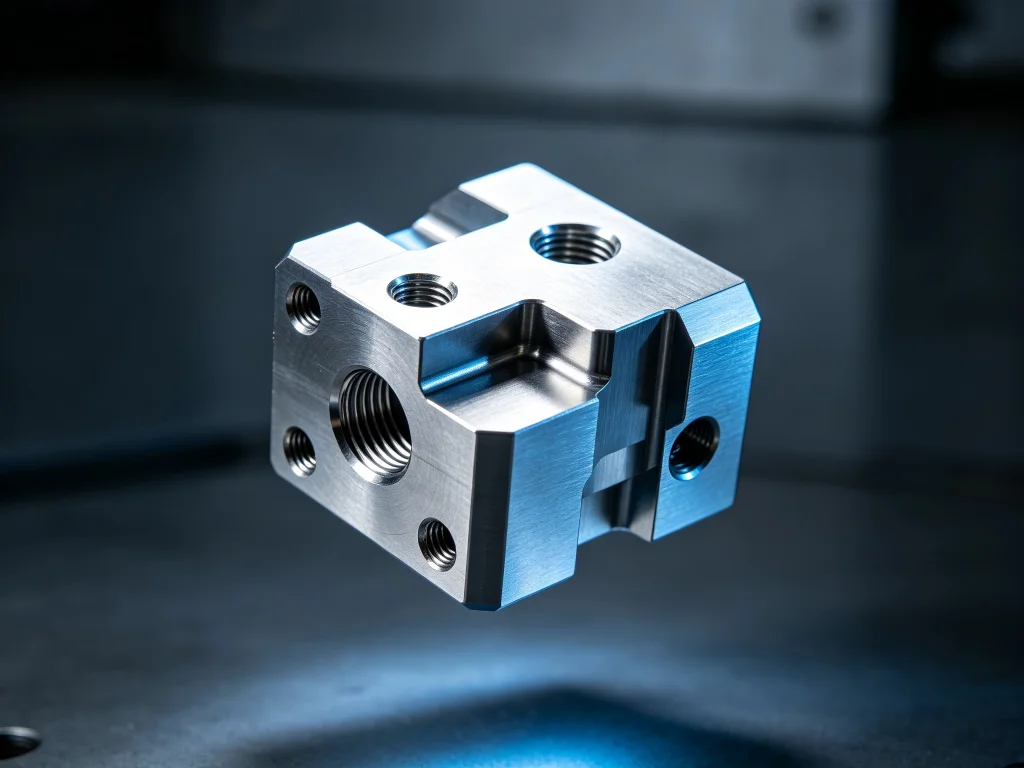
Por qué el acero inoxidable 316L exige una segunda mirada
Cuando el acero inoxidable 304 estándar no puede resistir el entorno, el 316L es la mejora obligatoria. La diferencia se reduce a un solo elemento químico: molibdeno. El 316L contiene de 2 a 3 por ciento de molibdeno; el 304 no contiene nada. Esa única adición es responsable de cada diferencia de rendimiento significativa entre los dos grados.
En entornos marinos, los iones cloruro del agua salada atacan la capa protectora de óxido de cromo del acero inoxidable estándar, lo que provoca picaduras localizadas: agujeros profundos y verticales que pueden penetrar un casco a presión. El molibdeno actúa como estabilizador molecular, reforzando la película pasiva y haciéndola exponencialmente más resistente a la degradación inducida por cloruros. La “L” en 316L indica bajo contenido de carbono (máximo 0,03 por ciento), lo que evita la precipitación de carburos durante la soldadura y reduce la corrosión intergranular.
Para cualquier estructura de acero inoxidable soldada en un entorno corrosivo, un grado “L” es esencial. Por eso industrias que van desde dispositivos médicos hasta equipos farmacéuticos e ingeniería marina especifican 316L cuando el fallo simplemente no es una opción.
La realidad del mecanizado: el 316L no es 304
Esta es la parte que la mayoría de las guías de comparación de materiales omite por completo. Desde la perspectiva del mecanizado, el 304 y el 316 no son el mismo material, y tratarlos como intercambiables al configurar los parámetros del proceso le costará caro.
Ambos grados son aceros inoxidables austeníticos, lo que significa que comparten el desafío central: se endurecen por deformación rápidamente. Cuando la herramienta de corte aplica tensión mecánica, el material se endurece por delante de la herramienta. Si las velocidades de avance son demasiado bajas o la herramienta se detiene en lugar de cortar limpiamente, termina mecanizando una superficie más dura que el material base, lo que aumenta las fuerzas de corte, degrada el acabado superficial y acelera el desgaste de la herramienta.
El 316L amplifica este comportamiento. El contenido de molibdeno aumenta la resistencia del material a la deformación, lo que se traduce directamente en mayores fuerzas de corte—típicamente de 8 a 12 por ciento más que el 304 en condiciones equivalentes. La vida útil de la herramienta es más corta. Lograr un acabado superficial fino requiere un control más estricto de los parámetros.
Como aprendió directamente un taller de producción: un lote de cuerpos de válvula de 316L llegó con un requisito de acabado superficial de Ra 0,8 μm en los barrenos internos. Configurar el trabajo utilizando parámetros derivados de corridas previas con 304 provocó problemas inmediatos. El material simplemente no se comporta de la misma manera.
Características clave del maquinado del 316L
- Índice de maquinabilidad: Aproximadamente 35 por ciento frente al B1112, significativamente más difícil de mecanizar que el 304
- Endurecimiento por deformación: Rápido y agresivo; permanecer sin avance o frotar provoca endurecimiento superficial instantáneo y falla de la herramienta
- Fuerzas de corte: De 8 a 12 por ciento más altas que el 304 en condiciones equivalentes
- Requisito de refrigerante: El refrigerante en abundancia no es negociable para eliminar el calor y prolongar la vida útil de la herramienta
- Estrategia de herramientas: Son esenciales las herramientas de carburo recubiertas y afiladas con velocidad de avance constante
- Formación de viruta: Virutas resistentes y fibrosas que son difíciles de romper
304 vs 316L: Comparación lado a lado para compradores
Comprender las ventajas y desventajas entre estos dos grados es la base para tomar la decisión correcta sobre el material. La siguiente tabla resume las diferencias clave que importan para las decisiones de compra e ingeniería.
| Característica | Acero inoxidable 304 | Acero inoxidable 316L |
|---|---|---|
| Contenido de molibdeno | Ninguno | 2–3% |
| Resistencia a la corrosión (cloruros) | Moderada: vulnerable a la picadura en agua salada | Superior: grado marino, resiste la picadura y la corrosión por rendija |
| Contenido de carbono | ≤0,08% | ≤0,03% (bajo en carbono, evita el deterioro por soldadura) |
| Soldabilidad | Buena, pero con riesgo de sensibilización en la zona afectada por el calor | Excelente: normalmente no requiere recocido posterior a la soldadura |
| Maquinabilidad | Moderada; desafíos estándar de los austeníticos | Más difícil; fuerzas de corte 8–12% superiores |
| Relative cost | Baseline | 25–40% higher material and machining cost |
| Typical applications | Food equipment, architecture, general industrial | Marine hardware, medical implants, pharmaceutical, chemical processing |
The decision often comes down to environment. If your part will live on the deck of a ship constantly sprayed with saltwater, or be implanted inside the human body exposed to corrosive fluids for decades, “good” corrosion resistance is not good enough. You need the best. You need 316L.
What to Look for in a 316L Machining Partner
Not every CNC shop is equipped to handle 316L stainless steel effectively. Here is a framework for evaluating potential suppliers.
1. Equipment Rigidity and Capability
Machining 316L requires high-rigidity CNC centers to handle the higher cutting forces without vibration, ensuring dimensional accuracy. Shops with lighter-duty machines or older equipment may struggle with the demands of this material. Look for facilities with modern, multi-axis machines capable of maintaining tight tolerances under heavy cutting loads.
Jucheng Precision, for example, operates a fleet of high-precision 5-axis CNC machines across its manufacturing campus, providing the technical depth required for complex 316L components.
2. Tooling and Cooling Strategy
Sharp, coated carbide tools and a constant feed rate are non-negotiable for 316L machining. Heavy flood coolant is essential to remove heat and extend tool life. Ask potential suppliers about their tooling selection process and coolant management systems. Shops that treat 316L like standard carbon steel are setting themselves up for broken end-mills and distorted geometries.
3. Quality Control and Material Traceability
For medical, marine, and pharmaceutical applications, full material traceability is often a regulatory requirement. Reputable suppliers provide Mill Certificates confirming the molybdenum content and overall chemistry, essential for compliant products. Advanced quality control measures like CMM inspection and documented dimensional verification should be standard practice.
4. Post-Processing Capabilities
Machining 316L is only half the equation. Passivation—typically using nitric or citric acid—is highly recommended after machining to remove any free iron and maximize the chrome-oxide passive layer. Some applications benefit from electropolishing to further enhance corrosion resistance for medical and semiconductor parts. A supplier that offers these services in-house can reduce lead times and ensure consistent quality.
5. Industry Experience
Ask about the supplier’s experience with your specific industry. 316L is the standard material for surgical instruments, marine hardware, pharmaceutical tanks, and semiconductor vacuum chambers. A shop that already serves these sectors will understand the regulatory requirements, surface finish expectations, and quality standards that matter.
Common Questions About 316L Stainless Steel
What gauge is 316L stainless steel?
Gauge refers to sheet thickness in the US standard system. 316L stainless steel is available in a wide range of gauges from thin foil to heavy plate. For CNC machining applications, material is typically specified by actual thickness in millimeters or inches rather than gauge number, as gauge standards vary by material type.
Is 316L stainless steel real stainless steel?
Yes. 316L is a fully certified austenitic stainless steel grade (UNS S31603) with the same chromium-based corrosion resistance as other stainless steels, enhanced by molybdenum addition. It meets ASTM, ISO, and other international standards for stainless steel.
Does 316L stainless steel tarnish?
Under normal conditions, 316L does not tarnish. The chromium oxide passive layer protects the surface from discoloration. However, in extremely aggressive environments or if the passive layer is compromised, some surface change may occur. Proper passivation after machining helps maintain the protective layer.
Can you shower with 316L stainless steel?
Yes. 316L is highly resistant to the chlorides and chemicals found in tap water and soaps. It is commonly used in jewelry, watch cases, and body jewelry precisely because it withstands daily exposure to water and sweat without corroding.
Is 316L stainless steel biocompatible?
Yes. 316L is highly resistant to body fluids and sterilization processes, making it the standard material for surgical instruments and temporary medical implants. The low carbon content reduces the possibility of in vivo corrosion for medical implant use.
What industries use 316L stainless steel?
316L is specified across marine engineering, medical devices, pharmaceutical processing, chemical processing, food processing, semiconductor manufacturing, and power generation. Any application requiring superior corrosion resistance in chloride-rich or biologically active environments.
How does 316L compare to 316 stainless steel?
The difference is carbon content. 316L has a maximum of 0.03% carbon, while standard 316 allows up to 0.08%. The lower carbon content of 316L prevents carbide precipitation during welding, making it the preferred choice for heavy-gauge welded assemblies that cannot be annealed after fabrication.
Why Jucheng Precision for 316L Stainless Steel Machining
Jucheng Precision specializes in providing high-quality CNC machining services for stainless steel parts, with particular expertise in the demanding 316L grade. Here is what sets the company apart:
Technical Depth in Difficult Materials
Machining 316L is a daily operation at Jucheng. The company employs rigid machining strategies and premium cutting tools to produce high-precision components for the most demanding marine, medical, and pharmaceutical applications. The technical team understands the physics of work-hardening management and enforces a strict heavy-chip machining philosophy across its production floor.
Advanced Equipment Infrastructure
Jucheng operates a fleet of high-rigidity CNC centers, including 5-axis machines capable of handling complex geometries with maximum precision. This equipment base allows the company to handle the higher cutting forces required for 316L without vibration, ensuring dimensional accuracy.
Quality Assurance and Traceability
Every dimension on every critical part is verified with advanced CMMs, and results are documented. Jucheng provides full material traceability with Mill Certificates confirming molybdenum content, essential for compliant medical and marine products.
Comprehensive Post-Processing
Beyond machining, Jucheng offers passivation and electropolishing services to enhance corrosion resistance. This vertically integrated approach ensures consistent quality and shorter lead times for finished components.
Industry-Focused Solutions
Jucheng serves sectors where 316L is the material of choice: medical devices, marine hardware, pharmaceutical equipment, and semiconductor manufacturing. The company understands the regulatory requirements and quality standards that matter in each industry.
Making Your Decision: A Practical Framework
When evaluating whether 316L stainless steel machining is right for your project, consider these questions:
- Entorno: Will the part be exposed to chlorides, saltwater, chemicals, or biological fluids?
- Soldadura: Will the part be welded? If yes, 316L’s low carbon content is a significant advantage.
- Regulatory requirements: Does the application require material traceability or specific certifications?
- Cost tolerance: Can the project absorb the 25-40% premium for 316L, or would 304 suffice for the application?
- Supplier capability: Does your chosen machining partner have the equipment, tooling strategy, and experience to handle 316L effectively?
If the answer to the first three questions points toward 316L, and the budget supports the investment, the material delivers corrosion resistance and performance that 304 simply cannot match. The key is partnering with a shop that understands the material’s machining challenges and has the infrastructure to overcome them.
Ready to Move Forward with 316L Stainless Steel Machining?
Selecting the right material and the right machining partner are two sides of the same coin. With 316L stainless steel, both decisions carry significant weight. Jucheng Precision brings the technical expertise, equipment infrastructure, and quality systems required to deliver high-precision 316L components for the most demanding applications.
Contact Jucheng Precision today to discuss your 316L stainless steel machining requirements. Whether you need prototypes, low-volume production, or full-scale manufacturing, the team can provide guidance on material selection, design for manufacturability, and production timelines.
Visit Jucheng Precision to learn more about CNC machining capabilities and request a quote for your next project.