
+86-188-7042-1176
project@jcproto.com
Mon-Fri: 8am-6pm (GMT+8)
EN
ISO 9001:2015 Certified
Sandblasting (Bead Blasting)
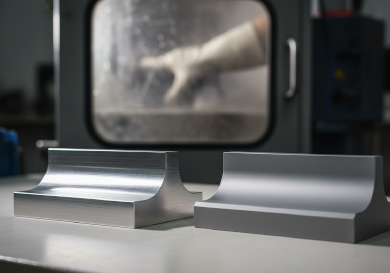
Sandblasting (often referred to as Bead Blasting when using glass beads) is a surface finishing process where abrasive media is propelled at high velocity against a part’s surface. At Jucheng Precision, this is one of our most popular post-processing steps. It effectively removes CNC machine tool marks, burrs, and surface impurities, creating a uniform, non-directional matte texture.
We operate both manual cabinets for delicate prototypes and automated tumble-blasting systems for high-volume production. Whether you need a satin finish for cosmetic appeal or a rough etched surface to prepare parts for painting or bonding, our range of media (Glass, Aluminum Oxide, Ceramic) ensures the perfect surface profile for your specific application.
Key Specifications
| Specification | Technical Range | Note |
|---|---|---|
| Max Part Size | 1200 mm x 800 mm x 800 mm | Cabinet internal dimensions |
| Media Types | Glass Beads, Aluminum Oxide, Ceramic | Affects roughness and brightness |
| Grit Size (Mesh) | #80 (Coarse) to #220 (Fine) | #120 is standard for cosmetic matte |
| Surface Effect | Matte, Satin, Etched | Non-reflective finish |
| Dimensional Change | -0.005mm to -0.02mm | Removes minimal material |
| Compatible Materials | Aluminum, Steel, Stainless, Titanium, Plastics | Softer plastics require lower pressure |
| Standard Lead Time | 1 – 2 Days | Very fast process |
Blasting Media Types
| Media Type | Description | Key Benefits & Applications |
|---|---|---|
| Glass Bead Blasting | Spherical glass beads are used. The impact creates a dimpled surface (“peening”) rather than cutting the metal. | Benefit: Creates a bright, smooth, satin finish. Does not remove much material. App: Preparation for Anodizing, cosmetic electronic parts. |
| Aluminum Oxide Blasting | Angular, sharp grit. It cuts into the surface, creating a rougher, darker matte finish. | Benefit: Aggressive cleaning and etching. Increases surface area for bonding. App: Pre-treatment for Powder Coating or Painting, rust removal. |
| Plastic Media Blasting | Soft plastic particles used for delicate stripping or cleaning without damaging the substrate. | Benefit: Extremely gentle. Won’t erode sharp edges or threads. App: Cleaning molds, stripping paint from fiberglass or soft metals. |
Design Guidelines for Sandblasting
Masking Requirements:
Blasting is abrasive. Critical features like threaded holes, bearing bores, or sealing surfaces must be masked (plugged) to prevent dimensional change or loss of tolerance. Tip: Clearly indicate “Mask” zones on your 2D drawings.
Material Removal:
While minimal, aggressive blasting (Al Oxide) can remove 0.01-0.02mm of surface material. Glass beads typically displace material rather than remove it, but can still affect ultra-tight fits (e.g., H7 tolerance holes).
Part Geometry:
Blasting is a “line of sight” process. Deep holes or internal channels cannot be blasted effectively. The media will not reach deep recesses, leaving them with the original machined finish.
Surface Hardness:
Blasting softer materials (like plastics or copper) requires lower pressure to avoid embedding the media into the surface, which creates a gritty feel.
Industry Applications
Medical Devices
Used on surgical instruments to create a non-reflective matte finish that reduces glare under bright operating room lights.
Consumer Electronics
The standard pre-treatment for Mac-style aluminum finishes. Blasting removes tool marks before Anodizing for a uniform cosmetic look.
Automotive
Used for cleaning die-cast engine parts or preparing suspension components for heavy-duty powder coating.
Bonding Prep
Creating a rough surface profile on metal parts to maximize the adhesion strength of glues, epoxies, or rubber overmolding.