
In the rapidly evolving landscape of modern electronics and industrial machinery, thermal management has transitioned from a secondary consideration to a primary engineering challenge. As components become smaller and more powerful, the density of heat generation increases exponentially. This is where machined heat sinks play a critical role. Unlike standard extruded or cast alternatives, a cnc machined heat sinks solution offers the precision and geometric complexity required to keep sensitive electronics within safe operating temperatures. Whether you are designing for aerospace, automotive, or high-end computing, understanding the nuances of how these components are designed and manufactured is essential for project success.
What Are Machined Heat Sinks and How Do They Function?
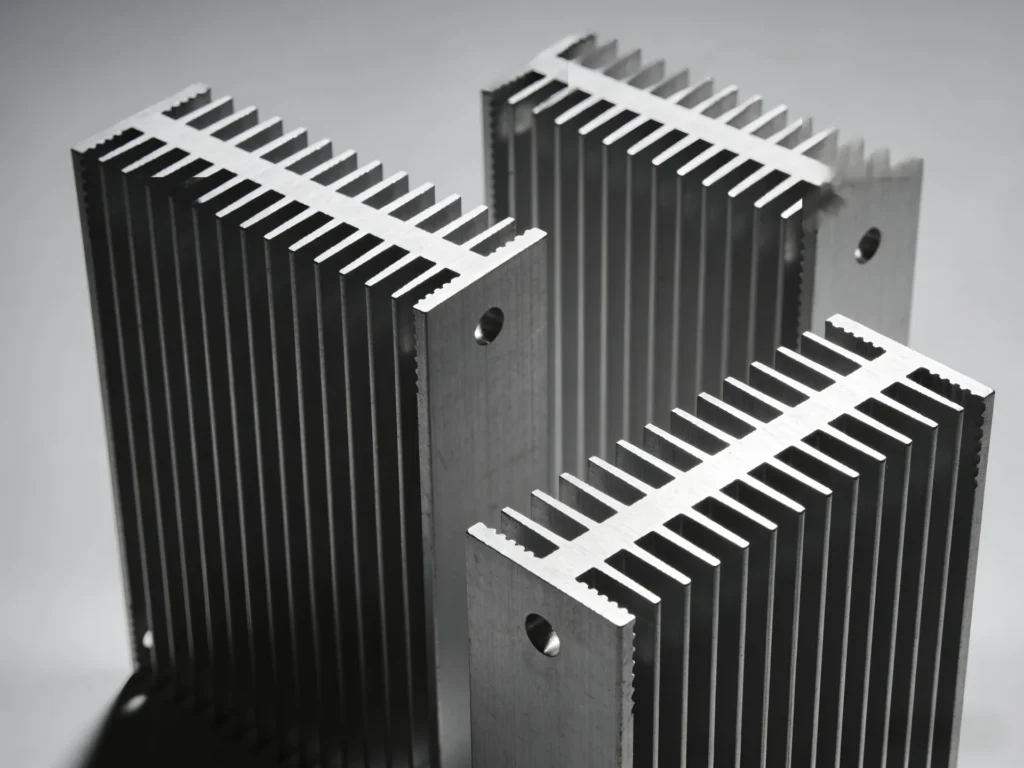
At its core, a heat sink is a passive heat exchanger that transfers the heat generated by an electronic or mechanical device to a fluid medium, often air or a liquid coolant, where it is dissipated away from the device. When we discuss machined heat sinks, we are referring to components created through subtractive manufacturing processes, typically using high-precision CNC milling. This method allows for the creation of intricate fin patterns and base thicknesses that are simply not achievable through traditional extrusion.
The fundamental principle relies on thermal conductivity. Heat moves from a high-temperature region (the component) to a lower-temperature region (the heat sink fins). To understand how effective are heat sinks, one must look at the surface area. The more surface area available, the more effectively the heat can be transferred to the surrounding air. Machining heat sink fins allows for a much higher “aspect ratio”—the ratio of the fin height to the gap between fins—which significantly boosts cooling performance in a compact footprint. Users often ask, do heat sinks work in vacuum environments? While they are less effective without a fluid medium for convection, they still function via radiation, though most industrial applications rely on airflow.
Material Science: What Are Heat Sinks Made Of?
When engineers ask what are heat sinks made of, the answer usually begins with two primary metals: aluminum and copper. However, the choice of material heat sink goes much deeper than just picking a metal; it involves analyzing thermal conductivity, weight, cost, and machinability. Jucheng specializes in selecting the exact alloy grade that aligns with the specific thermal demands of the client’s application.
- Aluminum (6061 and 6063): These are the most common materials. Aluminum 6061 offers excellent structural integrity and decent thermal conductivity, making it ideal for machined heat sinks that also serve as a mounting frame.
- Copper (C11000): Copper has nearly double the thermal conductivity of aluminum. It is often used in high-power density applications where heat must be moved very quickly from a small source. However, it is heavier and more difficult to machine.
- Composite Solutions: Sometimes, a copper base is bonded to aluminum fins to balance weight and thermal performance. CNC machining is the only way to ensure the interface between these materials is perfectly flat to minimize thermal resistance.
The effectiveness of the material heat sink is also influenced by surface treatments. Anodizing aluminum, for example, not only protects against corrosion but may also improve emissivity, helping the heat sink radiate heat more efficiently.
The Precision of Machining Heat Sink Fins
The primary advantage of choosing cnc machined heat sinks over other manufacturing methods is the ability to customize the geometry of the fins. In high-performance computing or telecommunications, standard “off-the-shelf” parts may not fit the tight spatial constraints or provide the necessary cooling. Machining heat sink fins using multi-axis CNC machines allows for variable fin heights, thicknesses, and even elliptical or pin-fin designs that optimize airflow turbulence.
When machining heat sink fins, the tool path must be meticulously planned. High-speed spindles and specialized cutters are required to prevent the thin fins from vibrating or deforming during the cut. This level of precision ensures that the base of the heat sink remains perfectly flat. A flat base is crucial because even a microscopic gap between the heat source and the heat sink can create a pocket of air, which acts as an insulator, drastically reducing the thermal transfer efficiency.
Comparison of Manufacturing Methods
To help you make an informed decision, the following table compares machined heat sinks with other common manufacturing techniques.
| Feature | CNC Machining | Extrusion | Die Casting | Skiving |
|---|---|---|---|---|
| Design Flexibility | Very High | Low (Uniform profile) | Moderate | Moderate |
| Fin Density | High | Medium | Low | Very High |
| Initial Tooling Cost | Zero/Low | High | Very High | Moderate |
| Material Choice | Unlimited | Restricted alloys | Specific casting alloys | Mainly soft metals |
| Lead Time | Short (Fast Prototyping) | Long (Due to die making) | Very Long | Moderate |
While extrusion is cost-effective for high volumes of simple designs, cnc machined heat sinks are the preferred choice for complex, high-precision, or low-to-medium volume production runs where thermal performance cannot be compromised.
Core Application Scenarios: What Are Heat Sinks Used For?
Understanding what are heat sinks used for requires a look at the various industries that push the boundaries of power. At Jucheng, we see these components utilized in diverse and demanding environments.
1. Automotive and Electric Vehicles (EVs)
In the automotive sector, power electronics for EV battery management and motor controllers generate significant heat. Machined heat sinks are often integrated directly into the housing of these controllers to save space and weight while providing maximum cooling. The durability of machined aluminum is also a factor here, as it may withstand the vibrations and harsh environments of a moving vehicle better than thin-walled castings.
2. Telecommunications and 5G Infrastructure
5G base stations require high-frequency processing that generates localized “hot spots.” Custom cnc machined heat sinks are designed to wrap around specific components, ensuring that even in high-ambient-temperature outdoor environments, the electronics stay cool and functional.
3. Aerospace and Defense
Weight is the enemy in aerospace. Machined heat sinks allow engineers to remove every unnecessary gram of metal while maintaining structural integrity and thermal paths. Using 5-axis CNC machining, Jucheng can create complex internal cooling channels that would be impossible with other methods.
4. High-End Medical Devices
MRI machines, laser equipment, and diagnostic tools rely on precise temperature control to ensure accuracy. The reliability of machined heat sinks ensures that these life-saving machines do not fail during operation.
Key Factors to Consider When Selecting a Heat Sink Manufacturer
When searching for a heat sink manufacturer in malaysia or looking for a global partner like Jucheng, several factors must be evaluated to ensure you receive a product that meets your specifications. Precision is not just a buzzword; it is a requirement for thermal performance.
- Tolerance and Surface Flatness: As mentioned, the contact surface must be exceptionally flat. Ask your manufacturer about their tolerances—usually, a flatness of 0.001 inches per inch is a standard for high-quality machined heat sinks.
- Prototyping Capabilities: Can the manufacturer quickly iterate on a design? In the R&D phase, you may need three different fin configurations to test in a wind tunnel. CNC machining is ideal for this because it requires no expensive molds.
- Quality Certifications: Look for ISO 9001 or AS9100 certifications. These ensure that the material heat sink being used is exactly what was specified and that the manufacturing process is consistent.
- Secondary Operations: A complete solution often includes anodizing, chromate conversion coating, or the installation of PEM nuts and inserts. A one-stop shop like Jucheng simplifies the supply chain.
While some might look for a local heat sink malaysia provider for proximity, the global reach and technical expertise of specialized CNC facilities often provide better value and higher technical support for complex projects.
Installation and Maintenance Tips for Optimal Performance
Even the best-engineered machined heat sinks can fail if not installed or maintained correctly. To ensure your cooling system remains efficient, consider the following guidelines:
Thermal Interface Material (TIM): Never mount a heat sink “dry.” Use a high-quality thermal paste or thermal pad to fill the microscopic air gaps between the component and the heat sink base. This might seem like a small detail, but it can reduce operating temperatures by 10-15 degrees Celsius.
Mounting Pressure: Ensure that the mounting screws provide even pressure across the base. Uneven pressure can tilt the heat sink, creating a wedge-shaped air gap that hampers performance. Many cnc machined heat sinks include precisely located mounting holes for this reason.
Dust Management: Over time, dust may accumulate between the fins. This acts as an insulator and restricts airflow. Regular cleaning with compressed air is recommended for industrial applications to maintain the effectiveness of the machining heat sink fins.
Why Jucheng is Your Ideal Partner for Machined Heat Sinks
At Jucheng, we do not just “cut metal”; we provide thermal solutions. Our expertise in CNC machining allows us to tackle the most challenging designs that other manufacturers might decline. We understand that in the world of machined heat sinks, a fraction of a millimeter can mean the difference between a system that runs cool and one that suffers from thermal throttling.
Our facility is equipped with state-of-the-art CNC centers capable of machining heat sink fins with incredible precision. We have a deep understanding of what are heat sinks made of and maintain a robust inventory of high-grade aluminum and copper alloys. This allows us to offer competitive lead times, whether you are looking for a single prototype or a large production run.
Furthermore, our engineering team may collaborate with you during the design phase (DfM) to suggest ways to reduce costs without sacrificing thermal performance. This collaborative approach has made us a trusted partner for companies worldwide, from those seeking a heat sink manufacturer in malaysia to tech giants in North America and Europe.
Frequently Asked Questions (FAQ)
1. How effective are heat sinks made via CNC machining compared to extruded ones?
Machined heat sinks are generally more effective because they allow for thinner fins and tighter spacing, which increases the total surface area for a given volume. Additionally, the base of a machined heat sink is typically flatter, providing better thermal contact with the heat source.
2. Can I use copper for the fins and aluminum for the base?
Technically, yes, though it is more common to use a copper base (to spread the heat) and aluminum fins (to dissipate it). CNC machining allows for the precise preparation of these components for bonding or mechanical fastening.
3. What is the typical lead time for custom cnc machined heat sinks?
Depending on the complexity, prototypes could be ready in as little as 3 to 7 days. Large-scale production usually takes a few weeks, which is still significantly faster than waiting for custom extrusion dies to be manufactured.
4. Do heat sinks work better with a fan?
Yes, this is known as “active cooling.” While machined heat sinks work in passive environments (natural convection), adding a fan (forced convection) significantly increases the amount of heat they can dissipate by moving more air across the fins.
5. What surface finish is best for a material heat sink?
For aluminum, black anodizing is very popular. It provides corrosion resistance and increases surface emissivity. For copper, an electroless nickel plating might be used to prevent oxidation without significantly affecting thermal conductivity.
6. Why should I choose a specialized manufacturer like Jucheng?
Specialization ensures that the manufacturer understands the specific stresses and requirements of thermal components. Jucheng provides not only the machining but also the technical oversight to ensure the material heat sink and geometry are optimized for your specific thermal load.
Take Your Thermal Management to the Next Level
If you are struggling with thermal limitations in your current design or are starting a new project that demands the highest levels of precision, Jucheng is here to help. Our team of experts specializes in machined heat sinks that meet the rigorous standards of today’s high-tech industries. Don’t let heat be the bottleneck in your innovation.
Ready to optimize your cooling performance? Contact Jucheng today for a technical consultation and a fast quote on your cnc machined heat sinks requirements. Let us help you turn your thermal challenges into a competitive advantage.