
In the high-stakes world of aerospace, medical device manufacturing, and precision mold making, engineers often encounter a recurring nightmare: designing a component with intricate geometries, razor-sharp internal corners, or extremely hard materials that conventional CNC milling simply cannot touch. When traditional mechanical force meets its physical limit, the manufacturing industry pivots toward a more sophisticated, thermal-based solution. This is where wire cut parts become the silent heroes of modern engineering. If you have ever struggled with material deformation or the inability to achieve tolerances within microns, understanding the nuances of Electrical Discharge Machining (EDM) is not just beneficial—it is essential for your project’s success.
At jucheng, we have observed a consistent trend among our global clientele. Whether they are sourcing wire edm parts for satellite propulsion systems or delicate surgical instruments, the core problem remains the same: how to maintain structural integrity while achieving impossible levels of precision. Conventional machining might leave burrs or introduce thermal stresses that compromise the part. However, by utilizing high-end cnc wire cut machine parts, we provide a pathway to perfection that bypasses the limitations of physical cutting tools. This guide delves deep into the problem-solving nature of wire cut pieces and why they are the preferred choice for mission-critical applications.
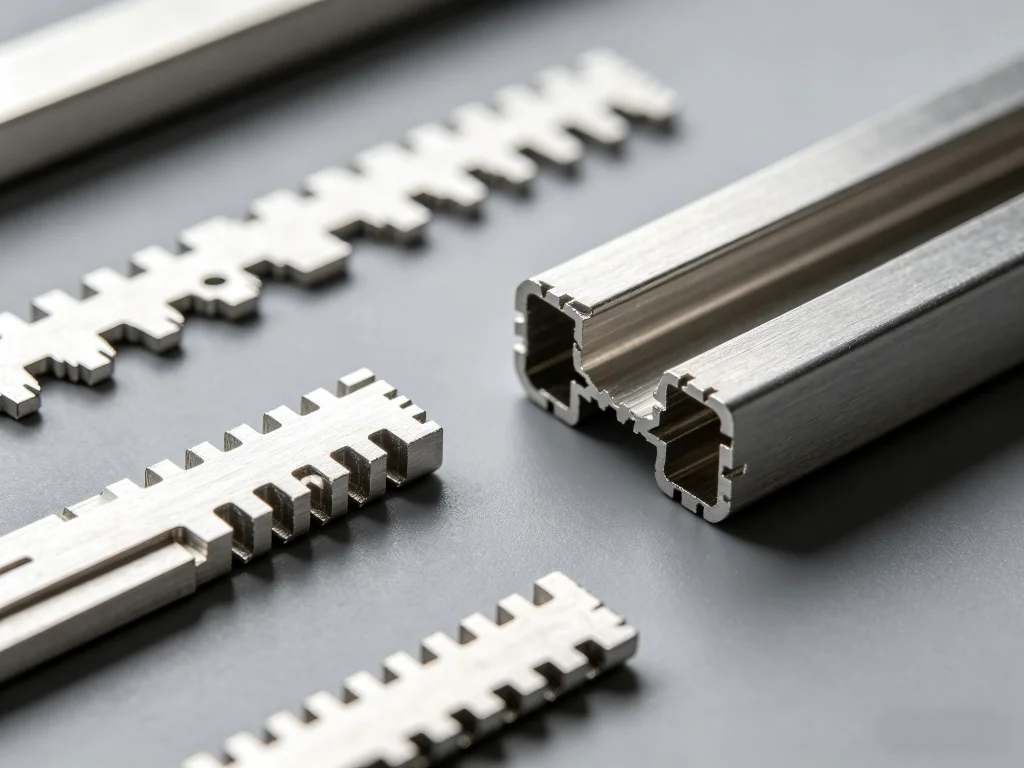 The Dilemma of Traditional Machining vs. The Wire EDM Solution
To understand the value of a high-quality wire cut machine parts, one must first understand the fundamental limitation of “contact” machining. When a drill bit or end mill touches a workpiece, it creates friction, heat, and mechanical pressure. For thin-walled components or brittle materials like tungsten carbide, this pressure is a recipe for failure. Users on platforms like Reddit’s r/Machining frequently discuss the “chatter” and tool deflection issues when trying to mill deep, narrow slots. These discussions highlight a universal pain point: traditional tools are often too “clumsy” for the microscopic precision required today.
What is Wire Cut and How Does It Solve the Precision Gap?
If you are asking what is wire cut, think of it as a “surgical lightning bolt.” Formally known as Wire Electrical Discharge Machining (WEDM), the process uses a thin, electrically charged brass or stratified copper wire to “erode” material rather than “cut” it. The wire never actually touches the workpiece. Instead, it creates a series of rapid electrical sparks in a dielectric fluid, vaporizing the material along a programmed path. This allows for the production of edm wire cut parts with zero mechanical force, meaning even the most fragile or hardened materials remain perfectly stable during the process.
This “spark erosion” technology is the cornerstone of why jucheng has invested heavily in the latest Sodick and Fanuc EDM technologies. By removing the physical contact, we eliminate tool wear and the risk of part breakage, allowing us to deliver wire cut pieces that are identical from the first unit to the thousandth.
Core Application Scenarios: Where Wire Cut Parts Excel
The versatility of wire edm parts allows them to span across industries that demand the highest levels of accountability. When a failure could cost millions of dollars or, more importantly, human lives, engineers turn to jucheng for reliable cnc wire cut machine parts. Let’s explore the primary sectors where this technology is non-negotiable.
1. Aerospace and Defense
In aerospace, weight reduction and material strength are paramount. Components are often made from “superalloys” like Inconel or Titanium, which are notoriously difficult to machine. Wire cut parts are used to create complex turbine blades, fuel injection nozzles, and structural brackets where the weight-to-strength ratio must be optimized through intricate webbing and internal cutouts that a standard mill could never reach.
2. Medical and Surgical Instruments
The medical industry requires biocompatible materials that are often very hard or very thin. Edm wire cut parts are used to produce miniature surgical tools, orthopedic implants, and components for diagnostic machinery. The ability to produce a mirror-like surface finish directly from the machine reduces the need for secondary polishing, which is critical for maintaining the sanitary standards of medical devices.
3. Tool and Die Making
This is perhaps the most traditional home for wire cut machine spare parts. Creating hardened steel molds for plastic injection or metal stamping requires precision that accommodates for thermal expansion. Jucheng specializes in producing the “mother tools” that other industries use to mass-produce their products. Our wire cut pieces ensure that your molds fit together with zero light-gap, ensuring flash-free production for your factory.
4. Electronics and Micro-Components
As electronics shrink, the components inside them follow suit. Connectors, lead frames, and heat sinks often require features measured in microns. Using edm wire cut machine parts, we can achieve radii as small as the wire itself (typically 0.1mm to 0.25mm), solving the problem of miniaturization that plagues modern hardware developers.
Critical Factors When Sourcing Wire Cut Parts
Not all wire cut parts are created equal. When you are looking for a manufacturing partner, especially for high-stakes projects, several technical factors must be evaluated to ensure you aren’t just getting a part, but a solution. At jucheng, we emphasize the following criteria to help our clients make informed decisions.
| Factor | Impact on Quality | Jucheng’s Standard |
|---|---|---|
| Positional Accuracy | Determines how well the part fits into a larger assembly. | ±0.002mm to ±0.005mm |
| Surface Roughness (Ra) | Affects friction, wear, and aesthetic quality. | Up to 0.1μm Ra with fine-finish power circuits. |
| Material Conductivity | The material must be conductive for the EDM process to work. | Expertise in Titanium, Carbide, Hardened Steel, and Copper. |
| Wire Diameter Selection | Dictates the minimum internal corner radius. | Range of wires from 0.1mm to 0.3mm for varied precision needs. |
| Lead Time | Critical for R&D and rapid prototyping cycles. | Dramatically reduced via multi-axis automated setups. |
Choosing the right wire cutting machine parts hs code (typically under 8460 or 8456 depending on the specific machine type) is also essential for international shipping and customs compliance. Our logistics team at jucheng handles these complexities to ensure your wire cut pieces arrive at your facility without administrative delays.
Technical Deep Dive: The Problem of Heat Affected Zones (HAZ)
One common critique of thermal cutting processes found on engineering forums like Facebook’s “CNC Machinists” group is the “Heat Affected Zone.” Since edm wire cut parts involve melting and vaporizing metal, a microscopic layer of the surface can be re-hardened or altered. This is a significant problem for parts subject to high fatigue, such as aerospace fasteners.
How does jucheng solve this? We utilize “skim cuts.” After the initial roughing cut, the machine performs multiple low-power passes. These skim cuts act like microscopic sandpaper, removing the HAZ and leaving a surface that is not only incredibly smooth but also metallurgically sound. When you buy wire cut machine spare parts from us, you are benefiting from a multi-stage process designed to eliminate the inherent flaws of thermal machining.
Maintenance and Longevity of CNC Wire Cut Machine Parts
For our B2B partners who operate their own facilities, the quality of wire cut machine spare parts is the difference between 99% uptime and costly repairs. The EDM environment is harsh—deionized water, constant sparking, and metallic sludge can wear down even the toughest components.
- Power Feed Contacts: These deliver the electrical current to the wire. Worn contacts lead to unstable sparking and poor accuracy. We recommend checking these every 50 hours of operation.
- Diamond Wire Guides: The guides keep the wire perfectly vertical or at a specific taper. High-quality cnc wire cut machine parts use industrial-grade diamonds to prevent the wire from vibrating.
- Filtration Systems: The dielectric fluid must be pristine. Using the wrong filters for your edm wire cut machine parts can result in “arc-tracking,” where the spark jumps unpredictably, ruining the workpiece.
At jucheng, we don’t just produce parts; we understand the machines that make them. This “operator’s perspective” ensures that the wire cut parts we ship meet the rigorous standards of an expert machinist.
Why Jucheng is the Strategic Choice for Wire Cut Parts
In a global market flooded with low-cost options, jucheng differentiates itself through a fusion of advanced technology and deep metallurgical research. We recognize that when you search for wire cut pieces, you aren’t just looking for a vendor—you are looking for a partner who understands the “Business Intent” behind the part. You need a part that works the first time, stays within budget, and arrives on schedule.
Advanced Machinery and Expertise
We utilize the latest generation of CNC EDM machines that feature automatic wire threading (AWT). This allows for 24/7 “lights-out” manufacturing, significantly lowering the cost per part for our clients without sacrificing the precision of our wire edm parts. Our engineers have over 15 years of experience in programming complex 4-axis and 5-axis wire paths, allowing us to create tapered shapes and variable geometries that most shops would find impossible.
Quality Assurance and Certification
Every batch of edm wire cut parts undergoes a rigorous QA process. We use CMM (Coordinate Measuring Machines) and optical comparators to verify dimensions against your CAD files. Our commitment to quality is backed by our ISO certifications, ensuring that jucheng remains a top-tier provider for regulated industries like medical and aerospace.
Material Versatility
Whether it is PVD-coated tool steel or exotic alloys like Nitinol, our machines are calibrated to handle a wide spectrum of conductivity. This versatility makes jucheng a one-stop shop for all your cnc wire cut machine parts, reducing the complexity of your supply chain.
Frequently Asked Questions (FAQ)
1. What materials are best suited for wire cut parts?
Any material that is electrically conductive can be processed. This includes hardened steels, titanium, aluminum, copper, brass, and even certain types of conductive ceramics. It is the perfect solution for materials that are too hard for traditional milling, such as tungsten carbide.
2. Can wire EDM produce 3D shapes or only 2D outlines?
While wire EDM is primarily used for 2D outlines with high precision, 4-axis machines can create complex tapers and “transition” shapes (e.g., a square at the top of the part transitioning into a circle at the bottom). However, it cannot create blind holes; the wire must be able to pass completely through the part.
3. How does the cost of wire edm parts compare to laser or waterjet?
Wire cut parts are typically more expensive than laser or waterjet cutting because the process is slower. However, the precision and surface finish are far superior. If your tolerance is ±0.1mm, use a laser. If your tolerance is ±0.005mm, wire edm parts are the only viable solution.
4. What is the typical lead time for custom wire cut pieces?
Lead times vary based on complexity and quantity. At jucheng, we often provide prototypes within 3-5 business days. Production runs depend on the total “linear inches” of cutting required, as the process is inherently time-bound by the spark erosion rate.
5. Is there a limit to the thickness of the material?
Modern EDM machines can cut through very thick blocks of metal, sometimes up to 400mm or more. However, as the thickness increases, maintaining the straightness of the wire becomes more challenging, requiring expert calibration which jucheng provides as a standard service.
6. Why is deionized water used in the process?
Deionized water acts as an insulator until enough voltage is applied to create a spark. It also acts as a coolant to prevent the part from overheating and flushes away the microscopic debris (chips) from the cutting zone.
7. What is the wire cutting machine parts hs code for international shipping?
The common wire cutting machine parts hs code is 8456.30, which refers to machine tools for removing material by electro-discharge processes. This code is vital for ensuring correct duty rates during import/export.
Conclusion: Elevate Your Manufacturing with Jucheng
When you are faced with a design that seems “un-machinable,” don’t compromise on your vision. The limitations of the past no longer apply when you leverage the power of wire cut parts. From the microscopic intricacies of medical components to the robust demands of aerospace engineering, jucheng provides the technical mastery and reliable edm wire cut parts needed to push the boundaries of what is possible.
If you are ready to solve your most complex geometric challenges with the highest degree of accuracy, our team of experts is standing by. We invite you to experience the precision, quality, and dedicated service that has made jucheng a leader in the CNC machining industry.
Ready to transform your designs into high-precision reality?
Contact jucheng today for a detailed technical consultation and a competitive quote on your next project involving wire cut parts.