
In the high-stakes world of industrial manufacturing, a single component often bears the weight of an entire system’s reliability. Mechanical engineers and procurement specialists frequently encounter a recurring nightmare: premature equipment failure caused by shaft deflection, vibration, or poor surface integrity. When a rotational component fails, the downtime could cost a facility thousands of dollars per hour. This is where the necessity for high-quality machined shafts becomes more than just a procurement line item; it becomes a critical strategic decision. By moving away from off-the-shelf components and embracing custom machined shafts, companies may effectively eliminate the root causes of mechanical instability and extend the operational lifespan of their machinery.
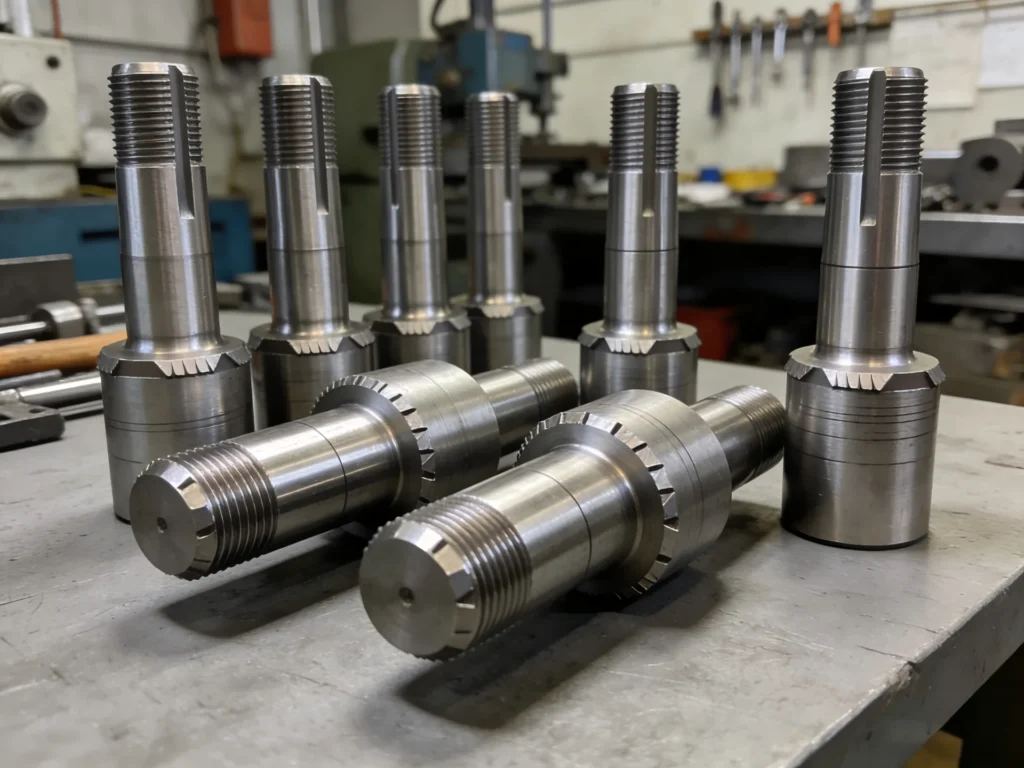
The Critical Role of Machined Shafts in Modern Industry
At its most fundamental level, a shaft is a rotating machine element, usually circular in cross-section, which is used to transmit power from one part to another, or from a machine which produces power to a machine which absorbs power. However, the simplicity of this definition belies the extreme precision required for modern applications. Machined shafts serve as the structural spine for electric motors, automotive transmissions, industrial pumps, and aerospace turbines. Without the rigorous application of the shaft machining process, these components would lack the geometric accuracy needed to maintain concentricity at high rotational speeds.
The transition from a raw bar of steel to a high-performance component involves sophisticated subtractive manufacturing. Using cnc machined shafts ensures that every micron of material is accounted for, adhering to strict tolerances that prevent the catastrophic resonance often discussed in engineering forums like Reddit’s r/machining. When a shaft is not perfectly balanced or its diameter varies even slightly beyond the specification, it creates centrifugal forces that lead to bearing wear and eventual system collapse. Therefore, understanding the interplay between material science and CNC technology is the first step in solving these common industrial bottlenecks.
Addressing the Pain Points: Accuracy, Tolerance, and Material Integrity
One of the most frequent complaints among maintenance managers on platforms like Facebook’s CNC Professional groups is the “out-of-box” inaccuracy of mass-produced shafts. These components might meet basic dimensions but fail under the thermal and mechanical stresses of real-world environments. Precision machined shafts offer a solution by incorporating advanced heat treatment and multi-stage grinding. If a project requires a shaft to operate at 10,000 RPM, a standard turned finish might not suffice. In such cases, the shaft grinding process is employed to achieve a mirror-like surface finish and sub-micron dimensional accuracy, which significantly reduces friction and heat generation.
Material selection is another area where many projects stumble. Choosing between 304 stainless steel, 4140 alloy steel, or specialized titanium grades could determine whether a shaft survives a corrosive chemical environment or snaps under high torque. A custom machined shafts provider like jucheng works closely with clients to match the material’s fatigue strength and corrosion resistance to the specific application. This consultative approach ensures that the solution is tailored to the problem, rather than forcing a standard product into a specialized role.
Key Applications Across Diverse Sectors
The versatility of machined shafts allows them to permeate almost every sector of modern technology. Their application is not limited to a single industry but spans across various demanding environments:
- Automotive Industry: Drive shafts, axle shafts, and camshafts require extreme durability and precision to ensure passenger safety and fuel efficiency.
- Medical Devices: Small-scale precision machined shafts are vital in surgical robotics and diagnostic equipment where zero failure is the only acceptable standard.
- Renewable Energy: Wind turbine main shafts must withstand immense torque and variable weather conditions for decades.
- Robotics and Automation: Precision actuators and robotic arms rely on cnc machined shafts for smooth, repeatable motion control.
- Aerospace: Engine shafts must maintain integrity under extreme thermal gradients and high-altitude pressures.
The Technical Blueprint: How the Shaft Machining Process Works
To produce a shaft that meets the rigorous demands of 21st-century engineering, the shaft machining process must be a masterclass in controlled precision. It typically begins with a thorough analysis of the CAD model, where engineers at jucheng determine the optimal toolpaths to minimize internal stress in the metal. The process usually involves several key stages:
First, the raw material undergoes “roughing” on a CNC lathe. This stage removes the bulk of the material to get the part close to its final shape. However, the heat generated during this stage could potentially warp the material. To counteract this, a finishing pass is performed at lower speeds with specialized cooling systems. For components requiring the highest level of straightness, the shaft grinding process follows the initial machining. This utilizes abrasive wheels to remove minute amounts of material, ensuring that the shaft is perfectly cylindrical and the surface finish is smooth enough to prevent seal leakage in hydraulic applications.
The shaft cutter machine price is often a consideration for smaller shops, but for high-end production, the focus shifts to the capability of the machine rather than its initial cost. Sophisticated Swiss-type lathes or multi-axis turning centers are used to create complex features like keyways, splines, and threads in a single setup, which reduces the margin for human error and ensures that all features are perfectly aligned with the shaft’s axis.
Critical Factors When Sourcing Custom Machined Shafts
When searching for a manufacturing partner, the decision-making process should be guided by more than just a quote. Buyers must evaluate the technical depth and quality assurance protocols of the supplier. The following table provides a comparison of what to look for when selecting a provider for precision machined shafts.
| Feature | Standard Components | jucheng Custom Machined Shafts |
|---|---|---|
| Dimensional Tolerance | +/- 0.1mm (May cause fitment issues) | Up to +/- 0.005mm (Ensures perfect assembly) |
| Surface Finish | Standard turned finish (Ra 3.2) | Ground finish (Ra 0.4 or better) |
| Material Traceability | Often generic or undocumented | Full MTR (Material Test Reports) provided |
| Customization | Limited to catalog sizes | Fully bespoke geometry, splines, and threads |
| Quality Control | Batch sampling | 100% CMM inspection and dynamic balancing |
It is also essential to consider the shaft cutter machine price and the overall investment in technology. A supplier that invests in the latest CNC equipment and shaft grinding process technology may offer a higher per-unit price, but the total cost of ownership is lower due to the reduced risk of field failures and the longer lifespan of the machined shafts.
Installation and Maintenance: Preserving Shaft Integrity
Even the most perfectly cnc machined shafts can fail if they are not installed and maintained correctly. Misalignment during installation is the leading cause of shaft failure. When two shafts are coupled, their axes must be perfectly collinear. Even a few degrees of angular misalignment could lead to cyclic fatigue. It is highly recommended to use laser alignment tools during the setup phase to ensure that the precision machined shafts are positioned within their designed tolerances.
Maintenance professionals should also implement a routine vibration analysis. By monitoring the frequency of vibrations, technicians could identify early signs of shaft wear or imbalance before they lead to a catastrophic breakdown. Regular lubrication of bearings and checking for signs of fretting corrosion at the shaft-hub interface are also vital steps in ensuring the longevity of custom machined shafts.
Why Jucheng is the Trusted Partner for CNC Shaft Solutions
When it comes to the complex world of machined shafts, jucheng stands out as a leader in both technical expertise and manufacturing capability. Based on the rigorous standards found at jucheng’s official website, the company integrates advanced CNC turning, milling, and grinding to deliver components that meet the most demanding specifications. Their commitment to quality is backed by ISO certifications and a robust quality management system that ensures every cnc machined shafts leaving the facility is a masterpiece of engineering.
What sets jucheng apart is their ability to handle the entire shaft machining process in-house. From initial material sourcing to complex shaft grinding process and final surface treatments like nitriding or chrome plating, they provide a one-stop-shop solution. This vertical integration reduces lead times and ensures that the communication between the design team and the shop floor is seamless, resulting in custom machined shafts that perfectly match the client’s vision.
Frequently Asked Questions (FAQ)
1. What are the main benefits of using custom machined shafts over standard ones?
Custom shafts allow for specific material choices, exact tolerances, and unique geometries like internal splines or specific thread pitches that standard parts cannot provide. This leads to better performance and longer machine life.
code
Code
2. How does the shaft grinding process improve performance?
The shaft grinding process provides a significantly smoother surface finish and tighter dimensional accuracy than turning alone. This is crucial for reducing friction, improving the effectiveness of oil seals, and ensuring high-speed stability.
3. Can Jucheng handle high-volume production of cnc machined shafts?
Yes, jucheng is equipped with automated CNC centers that could handle both small-scale prototyping and high-volume production runs while maintaining consistent quality across every unit.
4. What materials are commonly used for precision machined shafts?
Common materials include carbon steel (like 1045), alloy steel (like 4140 or 4340), stainless steel (304, 316, 17-4 PH), and even specialized materials like titanium or Inconel for extreme environments.
5. What is the typical lead time for a custom shaft order?
Lead times vary depending on the complexity and material availability, but jucheng is known for its efficient production cycles, often delivering custom machined shafts in a few weeks compared to the months required by other suppliers.
6. Does Jucheng provide quality certification for their shafts?
Absolutely. jucheng provides full inspection reports, material certifications, and could offer third-party testing if required by the client’s industry standards.
7. Is the shaft cutter machine price a major factor in the final cost?
While the cost of the machinery influences the overhead, the final price is more significantly affected by material costs, machining time, and the complexity of the finishing processes like grinding or coating.
In conclusion, the path to mechanical reliability begins with the quality of your machined shafts. Whether you are dealing with high-speed rotation, corrosive environments, or extreme torque, choosing the right partner for your custom machined shafts is paramount. By focusing on precision, material integrity, and advanced shaft machining process techniques, jucheng provides the solutions that keep global industries moving forward without interruption.
Ready to Optimize Your Machinery with High-Precision Shafts?
Don’t let subpar components slow down your production. Experience the Jucheng difference in quality and reliability.