
In the contemporary landscape of precision engineering, the ability to manipulate electricity-carrying components with absolute accuracy is paramount. Conductive material machining stands at the intersection of material science and mechanical excellence, providing the backbone for industries ranging from telecommunications to electric vehicle (EV) manufacturing. As global demand for high-performance electronics and power distribution systems surges, understanding the nuances of how these materials behave under cutting forces is no longer just an advantage—it is a necessity for any hardware innovator or procurement specialist.
When we discuss the conductive material machining process, we are referring to a sophisticated suite of subtractive manufacturing techniques designed to shape metals and composites that allow the free flow of electrons. This guide serves as an encyclopedic resource, detailing the methodologies, challenges, and strategic advantages of partnering with experts like jucheng to achieve world-class results. Whether you are dealing with high-purity copper, aerospace-grade aluminum, or specialized alloys, the following insights will clarify how to navigate the complexities of modern fabrication.
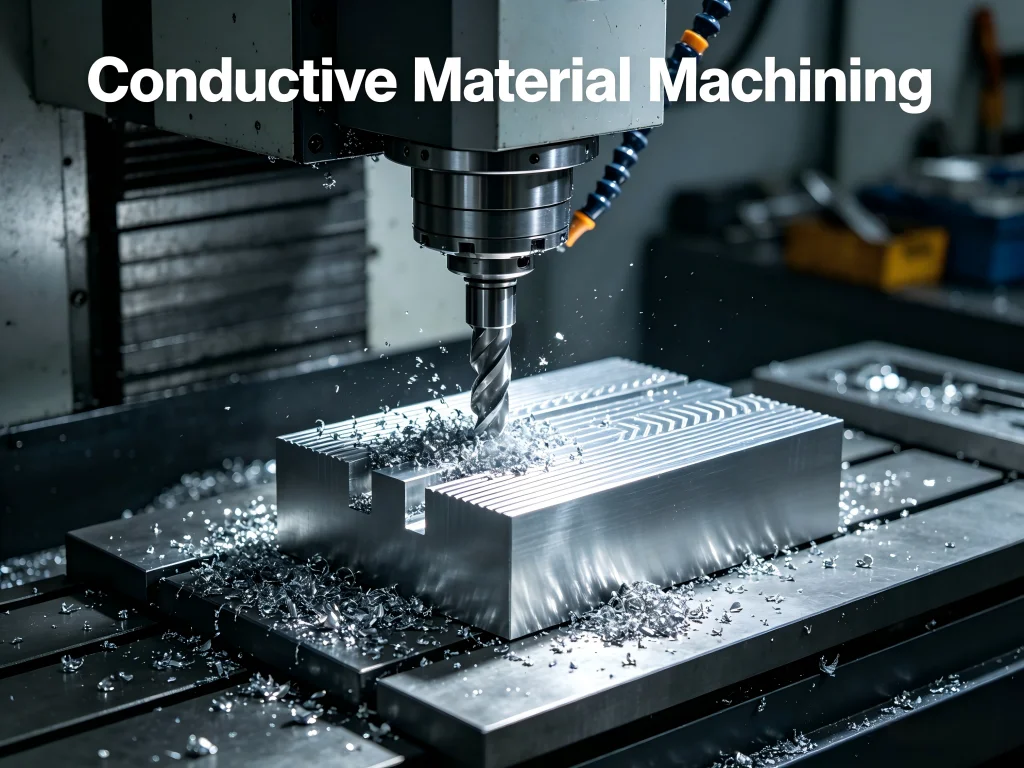
Understanding the Fundamentals: What is Conductive Material Machining?
At its core, conductive material machining involves the removal of material from a workpiece that possesses high electrical conductivity. Unlike insulators or semi-conductors, conductive materials present unique thermal and electrical challenges during the machining phase. The most common materials in this category include copper, aluminum, brass, bronze, and certain types of stainless steel or titanium alloys used in high-frequency applications.
The fundamental principle relies on maintaining the physical and electrical integrity of the part while achieving tight tolerances. For instance, in high-power applications, a micro-scratch or an uneven surface finish can lead to electrical arcing or increased resistance. Therefore, the conductive material machining process must account for ductility—especially in soft metals like pure copper—which often leads to “gumming” of tools if not managed with the correct feeds, speeds, and cooling strategies.
Modern CNC (Computer Numerical Control) systems, such as those utilized at jucheng, employ advanced algorithms to compensate for tool wear and thermal expansion. This ensures that every cut remains consistent with the original CAD design, even when the material being shaped is prone to shifting under heat. The integration of conductive material machining 9005 standards or similar high-spec finishing requirements ensures that the final product meets both aesthetic and functional benchmarks for global distribution.
The Essential Conductive Material Machining Process: A Step-by-Step Breakdown
The journey from a raw billet of conductive metal to a finished precision component involves several critical stages. Each step requires a deep understanding of how electrical properties might be affected by mechanical stress.
1. Material Selection and Preparation
The process begins with identifying the specific conductivity requirements. Oxygen-free copper (OFC) might be required for vacuum applications, while 6061-T6 aluminum might suffice for structural components requiring moderate conductivity. The material is inspected for internal voids or inclusions that could disrupt electrical paths.
2. Tooling Strategy
Because many conductive materials are relatively soft and high-heat-conductive, specialized coatings are often applied to cutting tools. Diamond-like carbon (DLC) or Polycrystalline Diamond (PCD) tools could be used to reduce friction and prevent material adhesion to the cutting edge.
3. CNC Programming and Simulation
Using high-end CAM software, engineers plot the toolpath to minimize heat buildup. In the conductive material machining process, the sequence of cuts is vital. For example, roughing cycles must be followed by stabilization periods to allow the metal to return to ambient temperature before final finishing passes are made.
4. Machining and Real-time Monitoring
During the actual cutting, sensors may monitor spindle load and vibration. Any deviation could indicate tool dulling, which is particularly dangerous when machining expensive materials like silver or high-grade copper alloys. High-pressure coolant systems are typically employed to flush away chips immediately, preventing “re-cutting” which can ruin surface conductivity.
5. Deburring and Surface Treatment
Conductive parts often require perfectly smooth edges to prevent corona discharge in high-voltage environments. Manual or automated deburring, followed by plating (such as gold, silver, or nickel), ensures long-term reliability and prevents oxidation.
Key Applications Across Modern Industries
The versatility of conductive material machining allows it to serve as a cornerstone for various high-tech sectors. By leveraging the expertise of a specialized provider like jucheng, companies can push the boundaries of what their hardware can achieve.
- Electric Vehicles (EV): Machining of busbars, battery connectors, and cooling plates where high current density requires perfect surface contact.
- Aerospace and Defense: Production of RF (Radio Frequency) housings and waveguide components that require conductive material machining 9005 level precision to ensure signal integrity without interference.
- Telecommunications: 5G infrastructure components, including heat sinks for base stations and high-speed connectors.
- Medical Devices: Components for MRI machines and surgical tools where electrical conductivity and biocompatibility must coexist.
- Power Electronics: Custom heat sinks and power modules that manage the thermal output of high-speed switching transistors.
As noted in various industry discussions on platforms like Reddit’s r/CNC and specialized Facebook engineering groups, the move toward miniaturization has made conductive material machining even more complex. Experts often suggest that “holding 5 microns on copper is a world apart from doing it on steel,” highlighting the necessity of choosing a partner with specific experience in non-ferrous, highly conductive alloys.
Comparative Analysis: Machining Methods for Conductive Materials
Depending on the geometry and the required precision, different machining methods may be selected. The following table compares the most common techniques used in the industry today.
| Machining Method | Best For | Precision Level | Surface Integrity |
|---|---|---|---|
| High-Speed CNC Milling | Complex 3D geometries, heat sinks | Very High (±0.005mm) | Excellent with right tooling |
| EDM (Electrical Discharge Machining) | Hardened conductive metals, deep slots | Extreme (±0.002mm) | Leaves a matte, recast layer |
| CNC Turning | Cylindrical connectors, pins | High | Superior for circularity |
| Laser Cutting | Thin sheets, busbars | Moderate | May cause heat-affected zones |
Choosing the right method often involves a trade-off between speed and surface requirements. For instance, while EDM is inherently designed for conductive material machining, the process is significantly slower than high-speed milling. A facility like jucheng often combines these methods to deliver the most cost-effective and precise solution for a specific project.
Crucial Factors to Consider When Selecting a Machining Partner
When you are outsourcing the conductive material machining process, the stakes are high. A failed batch of parts can delay a product launch by months. Here are the critical factors that procurement teams and engineers must evaluate:
1. Technical Expertise in Material Behavior
Does the shop understand the “spring-back” effect in copper? Do they know how to prevent work hardening in aluminum? A partner that lacks experience with conductive alloys will likely produce parts with internal stresses that lead to warping after the part is removed from the fixture.
2. Quality Management Systems (QMS)
Look for certifications such as ISO 9001:2015. For high-reliability sectors, AS9100 (Aerospace) or IATF 16949 (Automotive) may be necessary. jucheng maintains rigorous quality standards to ensure that every part, from the first to the thousandth, adheres to the specified tolerances.
3. Advanced Metrology Equipment
You cannot manage what you cannot measure. A top-tier provider should have CMM (Coordinate Measuring Machines), optical comparators, and surface roughness testers. For conductive material machining 9005 compliant projects, documentation of these measurements is usually a mandatory requirement.
4. Scaling Capabilities and Lead Times
In today’s fast-paced market, a “quick-turn” prototype is often as important as the mass-production run. Verify that the shop has the machine capacity to handle surges in demand without compromising the precision of the conductive material machining process.
Installation and Maintenance Tips for Conductive Components
Once the conductive material machining is complete, the longevity of the part depends on how it is handled and maintained. Because conductive metals are often prone to oxidation, specific protocols should be followed.
- Surface Protection: Always handle high-conductivity parts with gloves. The oils from human skin can cause localized corrosion, which increases contact resistance.
- Proper Torquing: For connectors and busbars, use calibrated torque wrenches. Over-tightening can deform the machined surface, while under-tightening can lead to electrical “hot spots.”
- Environmental Sealing: If the part will be used in a humid or corrosive environment, ensure that the conductive material machining process included a compatible plating (like tin or silver) or apply conductive grease during assembly.
- Regular Inspection: Periodically check for signs of pitting or discoloration, which could indicate that the part is being subjected to electrical loads beyond its design capacity.
Why Choose jucheng for Your Machining Needs?
In the competitive world of CNC services, jucheng distinguishes itself through a blend of technological innovation and artisanal attention to detail. Our facility is designed to handle the most demanding conductive material machining projects with a focus on efficiency and accuracy.
We understand that when you search for the conductive material machining process, you are looking for more than just a vendor; you are looking for a manufacturing partner who can provide design-for-manufacturability (DFM) feedback. Our engineers could suggest minor geometry changes that significantly reduce costs without affecting the electrical performance of your part. Furthermore, our commitment to conductive material machining 9005 standards ensures that even the most complex aesthetic and functional requirements are met with ease.
With jucheng, you benefit from:
- State-of-the-art multi-axis CNC machines capable of holding sub-micron tolerances.
- Deep experience in machining oxygen-free copper, tellurium copper, and high-strength aluminum alloys.
- A transparent supply chain with full material traceability.
- Rapid prototyping services that transition seamlessly into high-volume production.
Frequently Asked Questions (FAQ)
What is the most difficult conductive material to machine?
Pure copper is widely considered one of the most challenging. Its high ductility makes it “sticky,” which can lead to tool breakage and poor surface finish. However, through specialized conductive material machining techniques, such as using high-speed spindles and specific cooling agents, jucheng consistently achieves superior results.
Does machining affect the electrical conductivity of the metal?
In general, the conductive material machining process does not change the intrinsic bulk conductivity of the metal. However, excessive heat during cutting can cause localized changes in grain structure or oxidation, which may slightly impact surface conductivity. This is why thermal management is a core priority at our facility.
What is meant by “9005” in conductive material machining?
While “9005” can refer to several things depending on the context, in many industrial settings, conductive material machining 9005 refers to a specific finishing standard or an RAL color code (Jet Black) often used for high-end electronics enclosures that require conductive EMI/RFI shielding on the interior while maintaining a specific exterior look.
How do you prevent burrs in soft conductive metals?
Burr prevention is achieved by using extremely sharp tools with positive rake angles and maintaining high cutting speeds. In cases where burrs are unavoidable, we utilize advanced deburring processes, including electrochemical or thermal deburring, to ensure the part is perfectly clean.
Can you machine conductive composites?
Yes, materials like carbon-filled polymers or metal-matrix composites (MMCs) can be machined. These require different tooling (often PCD) compared to pure metals, but they follow the same rigorous conductive material machining process standards to ensure the conductive fibers remain intact.
What are the typical lead times for a custom project?
Lead times vary based on complexity, but for standard conductive material machining projects, jucheng typically offers a 2-3 week turnaround for production parts, with expedited options available for prototypes.
Is plating necessary after machining?
It depends on the application. For aluminum, anodizing is common, but for electrical contact points, a conductive plating like gold or nickel is often required to prevent the formation of non-conductive oxide layers.
Conclusion: Powering Your Next Innovation
The world of conductive material machining is one of narrow margins and high expectations. As we have explored, the conductive material machining process requires a harmony of specialized equipment, expert knowledge, and rigorous quality control. By prioritizing factors like tool geometry, thermal stability, and post-process treatments, manufacturers can ensure that their components deliver peak performance in the field.
As you move forward with your next project, remember that the quality of your machined parts is the foundation of your device’s reliability. Whether you are navigating the requirements of conductive material machining 9005 or developing a revolutionary new EV component, the expertise of a seasoned partner is invaluable. We invite you to explore the possibilities of precision engineering with a team that understands the pulse of the industry.
Ready to Elevate Your Production?
At jucheng, we specialize in turning complex designs into high-performance realities. If your project demands the highest level of precision in conductive material machining, our team is ready to assist. From material selection to final quality assurance, we provide the technical depth required to succeed in today’s competitive market.
Visit us at jccncmachining.com to request a quote or consult with our engineering experts today. Let us help you bridge the gap between design and excellence.
For more insights into the world of manufacturing, you may also find value in exploring the Modern Machine Shop or participating in discussions on Reddit’s CNC community, where professionals share the latest advancements in subtractive technology.