
Ask any product engineer about machining zinc alloys, and you will likely get a puzzled look. “Zinc is a die-casting material,” they might say. “Why would anyone machine it?” That question is precisely the problem this guide intends to solve. The reality is that CNC machining zinc alloys has become one of the smartest strategies for product developers who need functional prototypes, bridge tooling, or low-volume production parts without committing to expensive hard tooling. Whether you are searching for a zinc alloy supplier who understands prototyping or wondering is zinc alloy a good metal for your specific application, this guide walks through the practical challenges and solutions that make zinc CNC machining a compelling choice.
This guide adopts a problem-solution approach. It begins with the most common pain points engineers face when considering zinc for machined components, then presents a detailed solution framework, and finally provides actionable guidance on selecting the right alloy, partner, and process parameters. By the end, you will understand not only does zinc alloy turn effectively on CNC equipment but also how to leverage its unique properties for your next project.
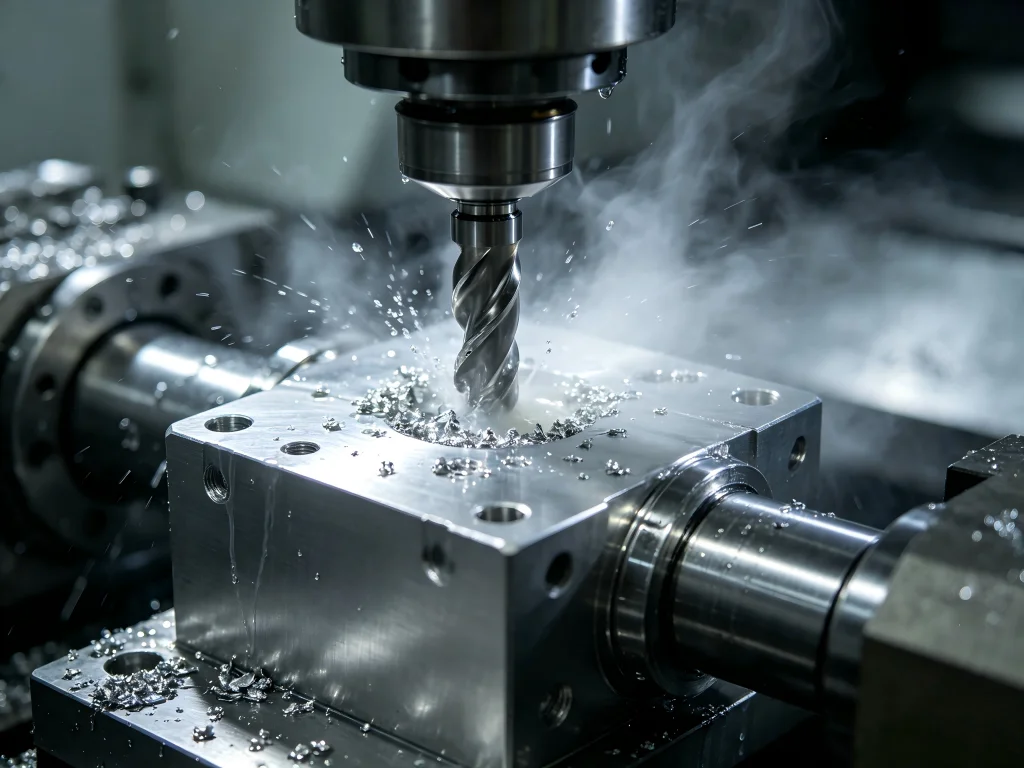
Table of Contents
- The Problem: Why Machining Zinc Seems Counterintuitive
- The Solution: What CNC Machining Zinc Alloys Actually Delivers
- Understanding the Material: Zinc Alloy Grades and Properties
- Overcoming Common Machining Challenges
- How to Choose the Right Zinc Alloy for Your Project
- Why Jucheng for Your Zinc CNC Machining Needs
- Frequently Asked Questions About Machining Zinc Alloys
The Problem: Why Machining Zinc Seems Counterintuitive
Zinc alloys — particularly the Zamak series — are among the most widely cast metals on the planet. Over 70% of all North American zinc die castings use Zamak 3 alone. The material is celebrated for its excellent castability, dimensional stability, and cost-effectiveness in high-volume production. So why would any engineer deliberately choose the more expensive route of CNC machining zinc alloys instead of simply casting the part?
The answer lies in a set of challenges that every product developer eventually faces:
Pain Point #1: The Tooling Trap
Hard tooling for die casting can cost tens of thousands of dollars. Finding a design flaw after that tool is made is a financial disaster. The lead time for tooling can stretch to months, delaying product launches. For prototypes, iterative design changes, or low-volume production runs, the economics of hard tooling simply do not work. This is where machining zinc alloy enters the picture as a strategic alternative.
Pain Point #2: The Prototype Fidelity Problem
A 3D-printed plastic prototype is great for checking basic shape and fit. But it tells you nothing about the real-world performance of your final metal part. It is too light, too weak, and cannot be electroplated. If your final product is a die-cast zinc component — say, a premium faucet handle or an automotive interior trim piece — a plastic prototype cannot simulate the weight, thermal feel, or finishing characteristics that define the user experience.
Pain Point #3: The “Gummy” Machining Challenge
Even when engineers do consider CNC machining zinc, they often encounter unexpected difficulties. Zinc alloys are relatively soft and ductile. During machining, the material can become “gummy” or “sticky,” adhering to the cutting edge of the tool. This tendency to form a built-up edge (BUE) compromises surface finish, increases cutting forces, and accelerates tool wear. The low melting point of zinc alloys — around 380°C to 420°C — means that heat generated during aggressive machining can lead to thermal softening, dimensional inaccuracies, or warping. Without the right approach, machining zinc alloys can quickly become a frustrating exercise in scrap generation.
Pain Point #4: Finding a Reliable Zinc Alloy Supplier with CNC Capability
Many zinc alloy suppliers focus exclusively on die casting. They may not have the CNC machining infrastructure, tooling expertise, or quality control systems to produce machined zinc components with tight tolerances. Engineers often find themselves juggling multiple vendors — one for casting, another for machining, and yet another for finishing — which introduces coordination complexity, quality variability, and extended lead times.
These pain points are real, and they are exactly why a growing number of engineers are turning to specialized providers who understand both the material and the process. The question then becomes: what does a solution actually look like?
The Solution: What CNC Machining Zinc Alloys Actually Delivers
CNC machining zinc alloys is not about replacing die casting. It is about solving specific problems that die casting cannot address cost-effectively. The solution framework rests on four pillars:
1. High-Fidelity Prototyping Without Tooling Investment
By machining zinc alloy prototypes from solid bar or plate stock, engineers can create functional models that have the exact weight, balance, and thermal properties of the final die-cast product. This is essential for verifying fit, function, and aesthetics — especially plating feasibility — before committing to expensive hard tooling. A machined zinc prototype can go through the same finishing processes as production parts, enabling realistic user testing, marketing photoshoots, and investor presentations.
2. Bridge Tooling and Low-Volume Production
For production volumes that do not justify hard tooling — typically under 1,000 to 5,000 units — CNC machining zinc offers a viable path to market. It eliminates the upfront tooling cost and allows for design changes between batches without penalty. This is particularly valuable for custom or specialty components where volume is uncertain or where product lifecycles are short.
3. Tighter Tolerances Than As-Cast Parts
While die casting can achieve repeatability of less than ±0.001 inches for small components, CNC machining can hold even tighter tolerances. Jucheng’s CNC milling centers, for example, can maintain tolerances of ±0.02mm, significantly tighter than typical “as-cast” tolerances. This precision is critical for bearing surfaces, threaded holes, and mating interfaces that require perfect assembly fit.
4. Superior Surface Finish and Plating Readiness
Zinc is one of the easiest metals to electroplate. Machined zinc parts can be polished and plated with chrome, nickel, or gold to achieve Class-A cosmetic finishes. This is a decisive advantage for consumer-facing products where perceived quality matters — automotive trims, bathroom fixtures, and premium hardware, to name a few.
The solution is clear: CNC machining zinc alloys bridges the gap between digital design and mass production. It provides real, trustworthy data about your product’s performance and appearance before you spend a dollar on a die casting tool. But to execute this solution effectively, you need to understand the material itself.
Understanding the Material: Zinc Alloy Grades and Properties
Before diving into machining parameters, it is essential to understand the specific grade of zinc alloy being used. The composition directly influences chip formation, tool wear, surface finish, and ultimately, the success of your project. Here is a breakdown of the most common grades encountered in CNC machining zinc:
Zamak Grades
The Zamak series — Zinc, Aluminum, Magnesium, and Copper — is the most common family of zinc alloys.
Zamak 3 (ASTM AG40A): This is the baseline and most widely used zinc alloy worldwide. It contains approximately 95.8% zinc with small amounts of aluminum, magnesium, and copper. It offers an excellent balance of mechanical strength, ductility, and dimensional stability. Machining Zamak 3 is relatively straightforward, producing fine, curly chips and a good surface finish with standard tooling. With a tensile strength of 230 MPa and a yield strength of 215 MPa, it is suitable for a wide range of applications. This is the grade most commonly used for prototyping because it matches the composition of the majority of production die castings.
Zamak 5 (ASTM AC41A): With a higher copper content than Zamak 3, Zamak 5 offers greater strength, hardness, and creep resistance. The increased hardness can lead to higher tool wear and a more challenging machining process. Proper tool geometry and cutting parameters are essential to prevent premature tool failure. This grade is preferred for parts requiring more structural integrity and durability.
Zamak 2 (Kirksite): This alloy has the highest copper content in the Zamak series, resulting in superior strength and hardness. Machining Zamak 2 requires robust tooling and careful parameter selection to manage heat generation and tool wear effectively.
Zamak 4: Positioned between Zamak 3 and Zamak 5, this alloy combines the castability of Zamak 3 with improved ductility and medium-level strength. A modest copper addition raises strength while keeping friendlier ductility. It is suitable for applications requiring thin, uniform walls and crisp edges.
ZA (Zinc-Aluminum) Grades
The ZA series features a higher aluminum content than the Zamak alloys, which significantly impacts their properties and machinability.
ZA-8: With approximately 8.4% aluminum, this alloy offers good strength and hardness, falling between Zamak 3 and Zamak 5. It exhibits better performance at elevated temperatures and has excellent bearing properties. Its machinability is comparable to Zamak 5.
ZA-12: Containing about 11% aluminum, this is the best gravity casting alloy but remains machinable. It offers excellent wear resistance and strength comparable to cast iron.
ZA-27: With approximately 27% aluminum, this is the strongest of the common zinc alloys. The higher aluminum content and increased hardness make it more abrasive and slightly more challenging to machine than the Zamak alloys, requiring more robust tooling considerations.
Key Physical Properties of Zinc Alloys
Understanding the material properties helps explain why zinc alloy is a good metal for certain applications and less suitable for others:
| Property | Zamak 3 | Zamak 5 | ZA-8 | ZA-27 |
|---|---|---|---|---|
| Ultimate Tensile Strength | 230 MPa | ~310 MPa | ~370 MPa | ~420 MPa |
| Yield Strength | 215 MPa | ~280 MPa | ~300 MPa | ~380 MPa |
| Elongation at Break | 10% | ~7% | ~6% | ~3% |
| Hardness (Brinell) | ~82 | ~91 | ~100 | ~115 |
| Density | 6.6 g/cm³ | |||
| Melting Point | 380-420°C | |||
Zinc’s density of 6.6 g/cm³ is similar to steel and significantly heavier than aluminum. This density gives zinc parts a solid, premium “hand-feel” that is critical for high-end consumer products. The material also offers excellent EMI/RFI shielding properties due to its electrical conductivity.
Overcoming Common Machining Challenges
Despite their generally high machinability rating, zinc alloys present specific challenges that CNC operators must manage. Understanding these challenges and their solutions is key to successful machining zinc alloys.
Challenge 1: Gummy Behavior and Built-Up Edge (BUE)
Zinc alloys are relatively soft and ductile. During machining, the material can adhere to the cutting edge, forming a built-up edge that compromises surface finish and accelerates tool wear.
Solution: The single most important factor is tool sharpness. Sharp tools apply focused cutting forces, reduce tool wear, and create short chips that easily break away. Tools with sharp cutting edges and a positive rake angle are ideal, as they slice through the material cleanly, reducing cutting forces and minimizing burr formation. Polished tool faces can also improve chip flow, preventing material from sticking to the tool.
Challenge 2: Thermal Softening and Low Melting Point
Heat generated during aggressive machining can lead to thermal softening, which exacerbates gummy behavior and can result in dimensional inaccuracies or warping.
Solution: Effective cooling is non-negotiable. Using a coolant or lubricant during machining helps dissipate heat and improve tool life. For turning operations, finish turning requires sharp high-speed steel tools or ultrafine-grain carbides with a ground edge roughness of Ra ≤ 0.02μm to avoid scratching the workpiece. Maintaining appropriate cutting speeds and feeds — generally on the higher side for zinc alloys — helps manage heat generation.
Challenge 3: Tool Wear from Abrasive Alloys
High-aluminum zinc alloys like ZA-27 are more abrasive on cutting tools. The increased hardness leads to faster tool wear and reduced tool life.
Solution: For harder alloys like Zamak 5 and the ZA series, carbide tools are the superior choice. Their high hardness and wear resistance are crucial for maintaining tool life and achieving consistent results when cutting more abrasive material. High-speed steel (HSS) tools are generally effective for Zamak grades, offering a good balance of performance and cost.
Challenge 4: Chip Management
Zinc produces short, brittle chips similar to brass. While they evacuate easily, they can be abrasive.
Solution: Proper chip evacuation strategies are essential. Using the correct tool geometry and cutting parameters ensures chips break cleanly and do not recut, which can damage the surface finish. Flood cooling can also help flush chips away from the cutting zone.
Challenge 5: Dimensional Changes During Machining
Like many materials, zinc alloys may experience dimensional changes during machining due to tool wear and thermal effects.
Solution: Implementing robust quality control measures, including in-process inspection and compensation for tool wear, helps maintain dimensional accuracy. Post-machining treatments such as plating, coating, or polishing may be applied to enhance surface properties.
By understanding and addressing these challenges, you can unlock the full potential of CNC machining zinc alloys for your projects. The next step is selecting the right alloy and partner for your specific needs.
How to Choose the Right Zinc Alloy for Your Project
Selecting the right zinc alloy is the first critical step in any machining project. The choice affects everything from tool life and cycle times to final part performance and cost. Here is a practical selection framework:
Step 1: Define Your Application Requirements
Start by answering these questions:
- What are the mechanical requirements? (Strength, hardness, ductility, creep resistance)
- What are the dimensional requirements? (Tolerances, stability over time)
- What are the cosmetic requirements? (Surface finish, plating, painting)
- What is the production volume? (Prototype, bridge tooling, low-volume production)
- What are the environmental conditions? (Temperature, corrosion exposure, wear)
Step 2: Match Alloy to Requirements
Based on the answers above, here is a practical alloy selection matrix:
- Choose Zamak 3 if: You need a balance of strength, ductility, and dimensional stability. This is the default choice for most prototypes and general-purpose components. It machines easily and accepts plating well.
- Choose Zamak 5 if: You need higher strength, hardness, and creep resistance. This is suitable for structural parts and hardware.
- Choose ZA-8 if: You need good performance at elevated temperatures and excellent bearing properties. This is a good choice for functional components that see moderate loads and temperatures.
- Choose ZA-27 if: You need maximum strength, hardness, and wear resistance. This is the strongest common zinc alloy. Be prepared for more challenging machining and higher tool wear.
- Choose Zamak 4 if: You need a balance between Zamak 3’s castability and improved ductility, particularly for thin-walled parts.
Step 3: Consider the Machining Trade-Offs
There is always a trade-off between material performance and machinability. Higher-strength alloys generally require more robust tooling, slower cutting speeds, and more careful process control. For prototyping, Zamak 3 is often the best choice because it matches production material while offering the easiest machining.
Step 4: Evaluate Your Zinc Alloy Supplier’s Capabilities
Not all zinc alloy suppliers are created equal. When evaluating a potential partner, consider:
- Material sourcing: Do they source high-quality Zamak alloy blocks that match your production intent?
- Machining capabilities: Do they have the right CNC equipment, tooling, and expertise for zinc? Can they hold the tolerances you need?
- Finishing capabilities: Can they provide in-house polishing and plating?
- Quality control: Do they have robust inspection and testing processes?
- Experience: Have they successfully machined zinc alloys for applications similar to yours?
Step 5: Run a Test
Before committing to full production, run a test with your chosen alloy and supplier. Evaluate surface finish, dimensional accuracy, tool life, and cycle times. This validation step is critical for ensuring the final product meets your expectations.
Why Jucheng for Your Zinc CNC Machining Needs
When you are ready to move forward with machining zinc alloys, partnering with the right service provider makes all the difference. Jucheng Precision brings a unique combination of capabilities that address the specific challenges of zinc CNC machining.
Specialized Zinc Prototyping Expertise
Jucheng understands that zinc alloy is a good metal for prototyping precisely because it simulates the exact weight, strength, and thermal properties of a final die-cast product. They machine solid zinc blocks to create high-fidelity prototypes that look and feel exactly like the production part. This process is essential for verifying fit, function, and aesthetics before committing to expensive hard tooling.
Comprehensive In-House Capabilities
Jucheng operates a fleet of high-speed hot chamber die casting machines optimized for efficiency, supported by precision CNC machining for secondary operations. They offer both expert zinc CNC machining for high-fidelity prototypes and full-scale die casting services for production. This one-stop-shop approach eliminates the coordination complexity of juggling multiple vendors.
Tight Tolerance Control
Jucheng’s CNC milling centers can hold tolerances of ±0.02mm, significantly tighter than typical “as-cast” tolerances. For bearing surfaces and tapped holes that require precision beyond what casting can deliver, they perform secondary CNC machining.
Superior Surface Finishing
Zinc is one of the easiest metals to electroplate. Jucheng offers in-house polishing followed by chrome, nickel, or gold plating to achieve Class-A cosmetic finishes. This is critical for verifying cosmetic finishes like mirror-chrome automotive trims or bathroom fixtures.
End-to-End Quality Control
Jucheng executes rapid hot chamber injection, CNC machining, and final electroplating entirely under one roof. This integrated approach ensures consistent quality and eliminates the risk of third-party vendors compromising your premium cosmetic hardware.
Material Sourcing Expertise
Jucheng sources high-quality Zamak alloy blocks to ensure the material composition matches your production intent. They handle common alloys like Zamak 3 and Zamak 5, delivering precise prototypes that are indistinguishable from the final production part.
Whether you are developing a new consumer electronics product, designing automotive interior components, or creating premium hardware, Jucheng’s expertise in machining zinc alloys can help you bring your vision to life with confidence.
Frequently Asked Questions About Machining Zinc Alloys
Does zinc alloy turn well on CNC equipment?
Yes, zinc alloy does turn effectively on CNC equipment. Zamak 3, in particular, has good machinability and can be turned, milled, drilled, and tapped relatively easily. However, turning zinc alloys does present unique challenges related to the material’s low strength and hardness, which can cause tool sticking and built-up edge. Success depends on using sharp tools, appropriate cutting parameters, and effective cooling. With the right approach, turning zinc alloys produces excellent surface finishes and dimensional accuracy.
Can you sharpen zinc alloy?
While you cannot “sharpen” zinc alloy itself — it is not a cutting tool material — the question often refers to whether zinc alloy components can be machined to sharp edges or fine details. The answer is yes. CNC machining zinc alloys can produce sharp features, crisp edges, and fine details. However, the material’s ductility means that sharp tools and proper cutting parameters are essential to prevent burr formation. Polished tool faces and positive rake angles help achieve clean, sharp edges.
Is zinc alloy a good metal for CNC machining?
Yes, zinc alloy is a good metal for CNC machining, particularly for specific applications. Zinc alloys offer excellent machinability, good dimensional stability, and the ability to achieve high-quality surface finishes. They are cost-effective, recyclable, and accept a wide range of finishes including plating and coating. While not as strong as steel or as light as aluminum, zinc alloys occupy a sweet spot for components that require a premium feel, good strength, and complex geometries. The material’s density of 6.6 g/cm³ gives zinc parts a solid, substantial feel that is valued in consumer products.
Where can I find zinc alloy CNC machining services in Malaysia?
There are several providers of zinc alloy CNC machining services in Malaysia. Companies like Castmax (M) Sdn. Bhd. offer precision CNC and conventional machining for zinc and aluminum alloys. Keiteq Group operates die casting machines supported by CNC machines for precision machining. Cape Manufacturing specializes in precision aluminum and zinc die casting with CNC machining capabilities. However, for specialized zinc prototyping and low-volume production, working with an experienced provider like Jucheng offers the advantage of end-to-end capabilities including material sourcing, CNC machining, and finishing all under one roof.
How does zinc alloy compare to other metal alloys for CNC machining?
When comparing zinc alloy vs metal alloy options for CNC machining, several factors come into play. Zinc alloys are denser than aluminum (6.6 g/cm³ vs ~2.7 g/cm³), making them heavier but excellent for applications where weight is not a primary concern. Zinc alloys demonstrate superior castability and exceptional strength, making them preferred for die-casting applications. Compared to aluminum, zinc alloys are harder and stronger, machine more easily, and have substantially better wear and bearing characteristics. However, aluminum offers a higher strength-to-weight ratio and is more readily available in some regions. The choice ultimately depends on your specific application requirements — weight, strength, cost, and finishing needs all factor into the decision.
What is zinc alloy 4 used for?
Zinc alloy 4 (Zamak 4) is engineered to provide a zinc alloy that combines the castability of Zamak 3 with improved ductility and medium-level strength. It offers stable casting properties with good fluidity and excellent dimensional repeatability. The alloy’s lower cracking tendency during assembly and mechanical loading makes it suitable for applications requiring thin, uniform walls and crisp edges. Common applications include ceiling fans, zippers, kitchen utensils, bathroom accessories, and electronics. Its physical and mechanical properties, castability, dimensional stability, and creep resistance fall between Zamak 3 and Zamak 5.
What are the main challenges in machining zinc alloys?
The main challenges in machining zinc alloys include gummy behavior and chip management, thermal softening due to the material’s low melting point, tool wear from abrasive high-aluminum alloys, and potential dimensional changes during machining. Zinc alloys can become “sticky” during machining, adhering to the cutting edge and forming a built-up edge that compromises surface finish. Heat generation can lead to thermal softening, exacerbating these issues. These challenges are manageable with proper tool selection, optimized cutting parameters, effective cooling, and robust quality control.
Why choose CNC machining over die casting for zinc parts?
Choosing CNC machining over die casting for zinc parts makes sense in several scenarios. For prototypes and low-volume production, CNC machining eliminates the high upfront cost and lead time of hard tooling. Machined parts can hold tighter tolerances than as-cast parts. CNC machining allows for design changes between batches without penalty, which is valuable during product development. While die casting is more cost-effective for high volumes, CNC machining offers flexibility, precision, and faster time-to-market for low-volume and development projects.
Ready to explore how CNC machining zinc alloys can solve your prototyping or low-volume production challenges? Contact Jucheng Precision today to discuss your project requirements. Our team of experts will help you select the right alloy, optimize your design for manufacturability, and deliver high-fidelity zinc prototypes that give you confidence in your final production decision.
Request a Quote | Learn More About Our Zinc CNC Machining Capabilities
For additional technical resources, explore Jucheng’s guide to zinc prototyping or review industry best practices for zinc alloy machining.